TL;DR:
- Water feature installation involves planning, construction, and setup of decorative outdoor water elements like fountains and ponds. Proper placement, sizing, and regular maintenance are essential for long-term enjoyment and landscape value. Starting with simpler features near frequently used areas enhances accessibility, enjoyment, and reduces ongoing upkeep.
Water feature installation is the process of planning, constructing, and setting up decorative water elements, such as fountains, ponds, and waterfalls, in outdoor spaces. The work covers everything from site assessment and excavation to pump sizing, filtration setup, and final landscaping integration. Done well, it adds both aesthetic value and measurable wellness benefits to any residential property. This guide walks homeowners and property developers through the types of water features available, the step-by-step installation process, realistic costs, and what long-term maintenance actually looks like.
What is water feature installation, and what types are available?
Water feature installation covers a wide range of outdoor water elements, each with different scale, complexity, and cost. Choosing the right type starts with understanding what each option requires, not just how it looks.
| Feature Type | Typical Cost Range | Installation Time | Maintenance Level |
|---|---|---|---|
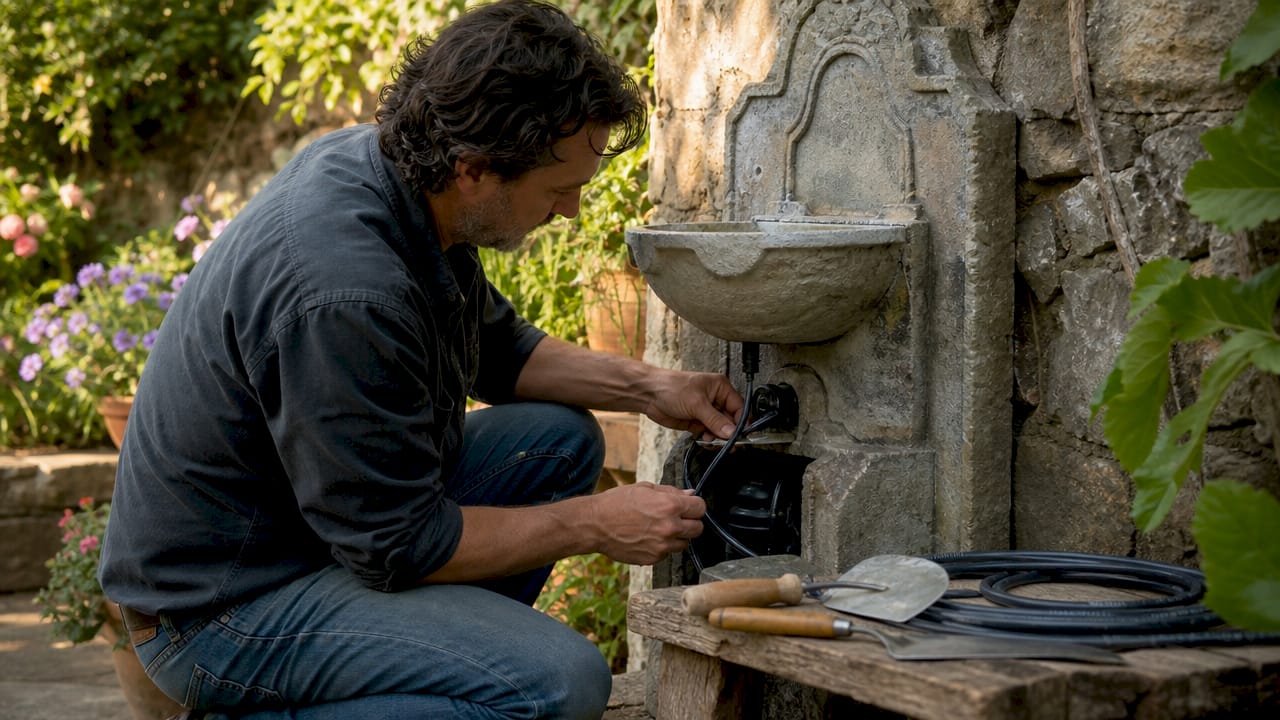
| Wall-mounted fountain | $1,200–$3,000 | 1–2 days | Low |
| Freestanding fountain | $1,500–$4,500 | 1–2 days | Low to moderate |
| Tiered fountain | $2,000–$6,000 | 2–3 days | Moderate |
| Pondless waterfall | $5,000–$20,000+ | 3–5 days | Moderate |
| Koi pond | $10,000–$35,000+ | 5–7 days | High |
| Natural swimming pond | $35,000+ | 4–8 weeks | High |
Outdoor fountains are the most accessible entry point. Wall-mounted versions suit smaller patios and courtyard walls. Freestanding and tiered fountains work well as focal points in larger garden beds or open yard areas.
Pondless waterfalls are a popular middle-ground option. They deliver the sound and visual appeal of a waterfall without an open pond, which reduces safety concerns and algae management. Pondless waterfalls professionally installed typically cost between $5,000 and $20,000, depending on size and stone selection.
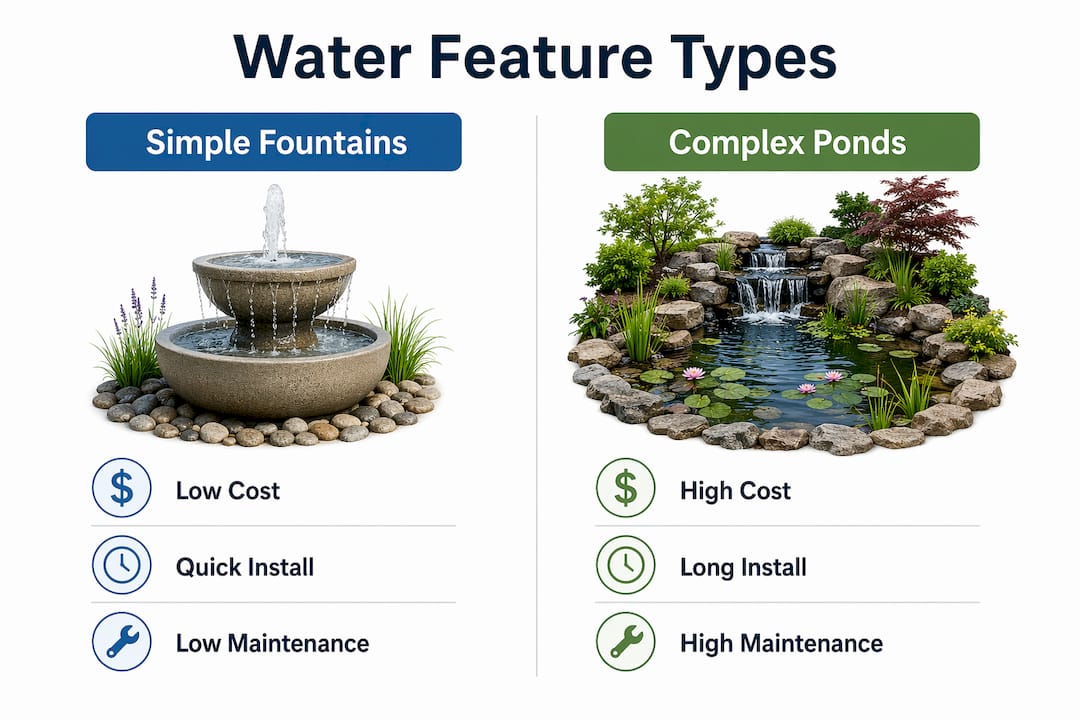
Koi ponds and natural swimming ponds sit at the high end of complexity. They require biological filtration systems, regular water testing, and careful plant management. These are long-term investments that reward homeowners who plan for ongoing care from the start. Uniquecompanies specializes in desert-climate water features that account for Arizona’s heat and evaporation rates.
How to install a water feature: step-by-step process
Water feature setup follows a clear sequence. Skipping steps, especially in the technical phase, leads to murky water, pump failures, and costly repairs.
-
Site assessment and design. Choose a location with good visibility from the home and easy access for maintenance. Placing water features near pathways enhances both therapeutic benefit and ease of upkeep. Avoid low-lying areas where runoff collects, and position the feature near an existing water source to simplify refilling.
-
Excavation and basin preparation. Dig the basin to the required depth and volume. For pondless systems, proper basin volume calculations prevent overflow during pump restarts, which protects surrounding landscape and avoids water damage to hardscape.
-
Pump and filtration installation. Select a submersible pump sized to the total water volume and head height of the feature. Pump sizing and filtration setup directly determine long-term water clarity and system health. Undersized pumps create stagnant zones; oversized pumps waste energy and cause erosion.
-
Rockwork and landscaping integration. Set boulders and stone to frame the feature naturally. For waterfalls, the spillway weir lip must tilt slightly off-level, typically 1–2 inches, to direct water flow evenly and avoid uneven spreading. This detail separates professional-looking results from DIY attempts that look forced.
-
Optional lighting. Submersible LED lights and low-voltage landscape lighting extend the feature’s visual impact into evening hours. This is especially valuable in Phoenix-area properties where outdoor living continues well after sunset.
-
Filling, cycling, and testing. Fill the system and run the pump continuously for at least 24 hours before evaluating flow. If the feature will include fish, cycling the water feature before introducing aquatic life establishes biological filtration and prevents high fish mortality. This cycling period allows beneficial bacteria to colonize the filtration media.
Pro Tip: Never skip the cycling phase for pond systems. Beneficial bacteria take time to establish, and adding fish too early is the single most common cause of pond failure in the first season.
What does water feature installation cost?
The average cost to install an outdoor water fountain is $2,730, though the full range runs from a few hundred dollars for a DIY kit to well over $35,000 for a custom natural pond. That spread reflects real differences in materials, labor, and technical complexity.
Key cost factors include:
- Feature type and size. A wall-mounted fountain at $1,200–$3,000 costs a fraction of a pondless waterfall at $5,000–$20,000+. Scale drives cost more than any other single variable.
- Materials. Natural stone costs more than precast concrete or fiberglass, but it holds up better in high-UV climates like Arizona and looks more integrated with the landscape.
- Pump and filtration grade. Commercial-grade pumps and multi-stage filtration add upfront cost but reduce long-term repair frequency.
- DIY vs. professional installation. DIY kits start around $300–$1,500 for simple fountains. Professional installation adds labor, permits, and warranty coverage, which matters when the feature involves electrical work or excavation.
- Ongoing maintenance. Budget for annual pump inspections, filter media replacement, and algae treatment. These costs are modest for fountains but significant for koi ponds.
Budgeting tips for homeowners:
- Get at least two detailed quotes that itemize labor, materials, and pump specifications separately.
- Ask contractors about energy-efficient pump options. Solar-powered water features reduce ongoing energy costs and require minimal maintenance compared to traditional electric systems.
- Plan for a 10–15% contingency on excavation projects, since underground conditions are rarely exactly as expected.
What are the real benefits of adding water features?
Water features deliver benefits that go well beyond curb appeal. Moving water releases negative ions that neutralize airborne allergens, contributing to cleaner air in the immediate outdoor area. The evaporative cooling effect also lowers the ambient temperature around the feature, which is a practical advantage in Phoenix summers.
The psychological benefits are equally well-documented. Water features promote mindfulness, social interaction, and relaxation by creating soothing sounds and a visual focal point. They function as natural gathering spots that encourage homeowners and guests to spend more time outdoors.
Environmental benefits include:
- Attracting pollinators such as bees and butterflies to garden areas
- Improving local biodiversity by providing habitat for birds and beneficial insects
- Reducing noise pollution from street traffic through the masking effect of moving water
- Cooling surrounding plant beds through localized evaporation
The backyard landscaping benefits of water features extend to property value as well. A well-designed water feature signals quality and attention to detail, which resonates with buyers in luxury residential markets.
Maintenance and long-term care for water features
A water feature that runs well requires consistent, scheduled care. The good news is that most maintenance tasks are straightforward when the system was installed correctly from the start.
The filtration and circulation system is the core of any water feature’s health. Run the pump continuously rather than on a timer. Stopping and starting the pump allows organic matter to settle and decompose, which accelerates algae growth and strains the motor.
Pro Tip: Clean the pump intake screen monthly. A partially blocked intake is the leading cause of premature pump failure, and it takes less than five minutes to check.
Seasonal care matters, especially in climates with temperature extremes:
- Spring startup. Drain and clean the basin, inspect all fittings, and check the pump impeller for debris before refilling.
- Summer. Top off water levels weekly to account for evaporation. Arizona features may need topping off twice a week during peak heat.
- Fall. Remove fallen leaves promptly. Decomposing organic matter depletes oxygen and feeds algae.
- Winter (where applicable). In freezing climates, remove and store the pump indoors. In Phoenix, most features run year-round with minimal adjustment.
Algae management is the most common ongoing challenge. Beneficial bacteria treatments added monthly reduce algae without harming plants or wildlife. UV clarifiers integrated into the filtration system provide an additional layer of control for larger ponds.
Key Takeaways
Water feature installation requires careful site planning, correctly sized pumps and filtration, and consistent maintenance to deliver lasting aesthetic and wellness value.
| Point | Details |
|---|---|
| Define the feature type first | Feature type determines cost, installation time, and long-term maintenance commitment. |
| Size the pump correctly | An undersized or oversized pump causes water quality problems and shortens system life. |
| Cycle before adding fish | Biological filtration must establish before aquatic life is introduced to prevent fish mortality. |
| Plan for ongoing maintenance | Budget time and cost for monthly pump checks, algae treatment, and seasonal adjustments. |
| Place features for accessibility | Features near pathways and water sources are easier to maintain and deliver greater therapeutic benefit. |
Why placement and simplicity matter more than most homeowners expect
After working with residential water feature projects across the Phoenix area, the pattern I see most often is this: homeowners choose a feature based on how it looks in a photo, not how it fits their actual yard and lifestyle. A dramatic multi-tier waterfall looks stunning in a showroom. In a backyard with no nearby water access and a tight maintenance schedule, it becomes a source of frustration within a year.
The research backs this up. Features too isolated from daily use reduce their positive psychological impact and complicate upkeep. The best-performing water features I’ve seen are the ones placed where people already spend time, near a patio, along a frequently walked path, or adjacent to an outdoor kitchen.
My honest recommendation: start with a feature one level simpler than what you think you want. A well-maintained pondless waterfall delivers more daily enjoyment than a neglected koi pond. Once you understand the maintenance rhythm, scaling up is straightforward. Scaling back after a complex installation is expensive and discouraging.
The most critical factor in any landscape project is not the feature itself. It is the planning that happens before a single shovel hits the ground.
— Philipp
How Uniquecompanies approaches custom water feature design
Uniquecompanies has spent over 24 years designing and building custom outdoor living environments across Scottsdale, Chandler, Queen Creek, and the greater Phoenix area. Water features are a core part of that work, integrated with pools, hardscape, and landscaping into a single cohesive design.
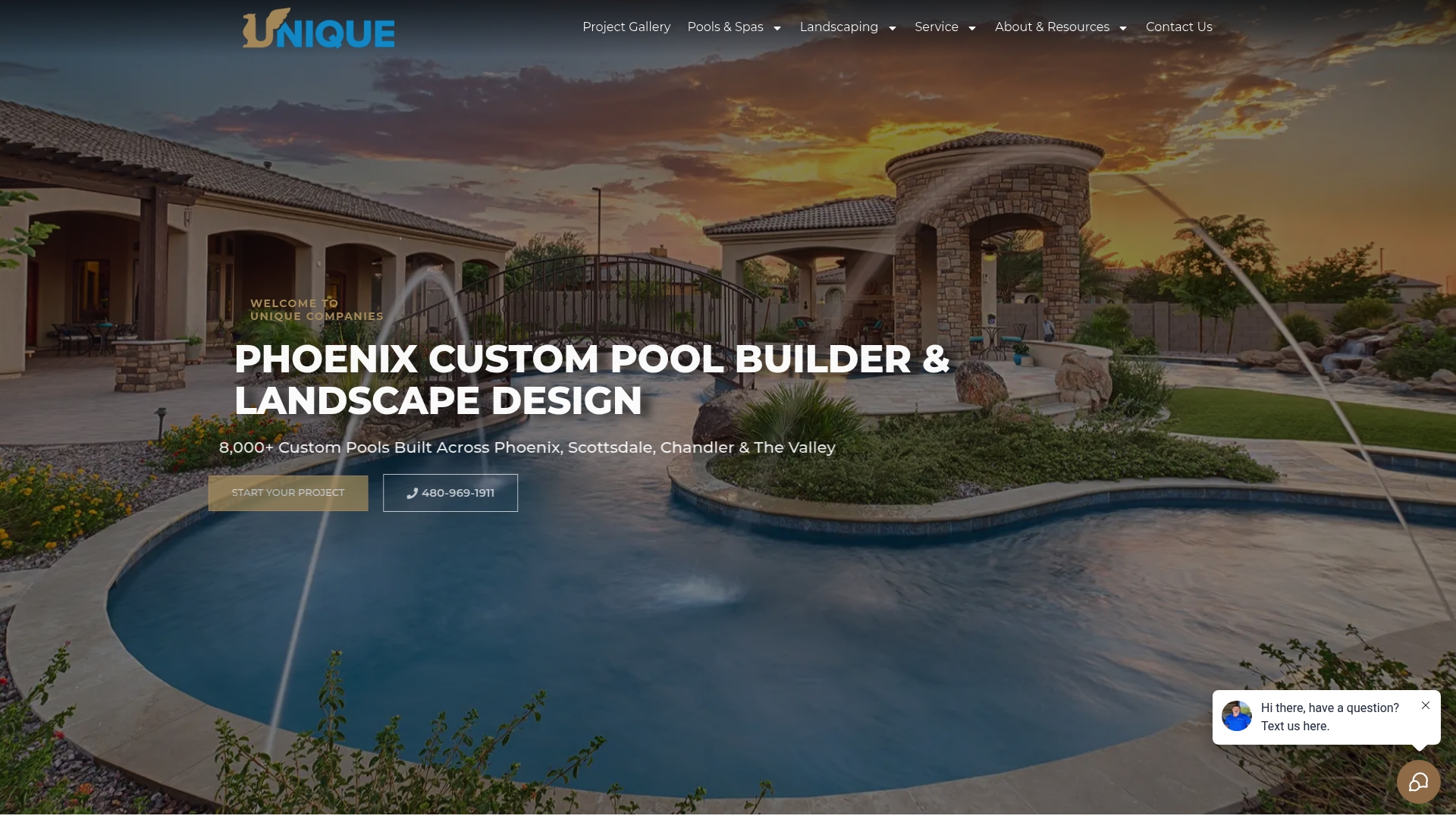
The team handles every phase in-house, from initial design and permitting through excavation, pump installation, and final landscaping. That integrated approach means pump sizing, filtration, and aesthetic decisions are made together, not handed off between separate contractors. If you are planning a custom pool feature or a standalone water element for your outdoor space, Uniquecompanies offers 3D design previews so you can see the finished result before construction begins. Contact the team to schedule a consultation.
FAQ
What is water feature installation?
Water feature installation is the process of planning, constructing, and setting up decorative water elements such as fountains, ponds, or waterfalls in outdoor spaces. It includes site preparation, pump and filtration setup, rockwork, and system testing.
How much does water feature installation cost?
The average cost to install an outdoor fountain is $2,730, with ranges from $1,200 for a wall-mounted fountain to over $35,000 for a natural swimming pond, depending on size, materials, and complexity.
How long does it take to install a water feature?
Simple fountains take 1–2 days to install. Pondless waterfalls typically take 3–5 days, koi ponds take 5–7 days, and natural swimming ponds can take 4–8 weeks from excavation to completion.
Do water features require a lot of maintenance?
Maintenance level depends on the feature type. Fountains require minimal upkeep, while koi ponds need regular water testing, filtration checks, and algae management. Proper installation with correctly sized pumps significantly reduces long-term maintenance demands.
What are the main benefits of water features?
Water features reduce noise pollution, cool surrounding areas through evaporation, attract pollinators, and promote relaxation and mindfulness. Moving water also releases negative ions that contribute to cleaner outdoor air quality.