Paver patios in Phoenix typically run $8 to $26 installed per square foot, depending on material and site conditions, according to Angi’s regional pricing data. A modest 200 to 400 square foot patio lands between roughly $2,500 and $7,200 before permits, with permit fees and hidden site costs commonly adding additional percentages on top.
TL;DR:
- Material choices significantly influence costs, with concrete being the most affordable, while travertine or natural stone can cost up to $26 per square foot.
- Site preparation, drainage work, and access issues can add 10% to 25% to the base project cost, often more than online estimates suggest.
- Permits and taxes typically add several hundred to over a thousand dollars to a mid-sized patio project, depending on valuation and floodplain status.
- Requesting a detailed line-item quote from a local design-build firm ensures accurate budgeting based on your specific yard conditions.
Table of Contents
- What Does a Paver Patio Cost in Phoenix by Size?
- Concrete, Brick, or Travertine: Which Material Fits Your Budget?
- What Drives the Price Up Beyond the Base Material?
- How Much Are Phoenix Permit Fees and Taxes?
- How Long Does a Paver Patio Installation Take?
- Why a Local Design-Build Firm Reduces Your Risk
- Where Phoenix Homeowners Get Their Budgets Wrong
- Get a Line-Item Patio Quote Before You Budget Blind
- Where These Numbers Come From
- Sources
What Does a Paver Patio Cost in Phoenix by Size?
Square footage drives most of the price swing you’ll see between contractor bids, but the per-square-foot rate itself isn’t fixed. It shifts based on material grade, pattern complexity, and how much prep work your yard needs before the first paver goes down.
Angi’s data puts the typical Phoenix installed range at $8 to $26 per square foot, with the average project cost around mid-range values. Project Cost Atlas corroborates this, showing local budgets stretching from about $3,780 on the low end to $11,000 or more for larger or premium-finish jobs. Here’s how that translates across common patio sizes homeowners actually plan for:
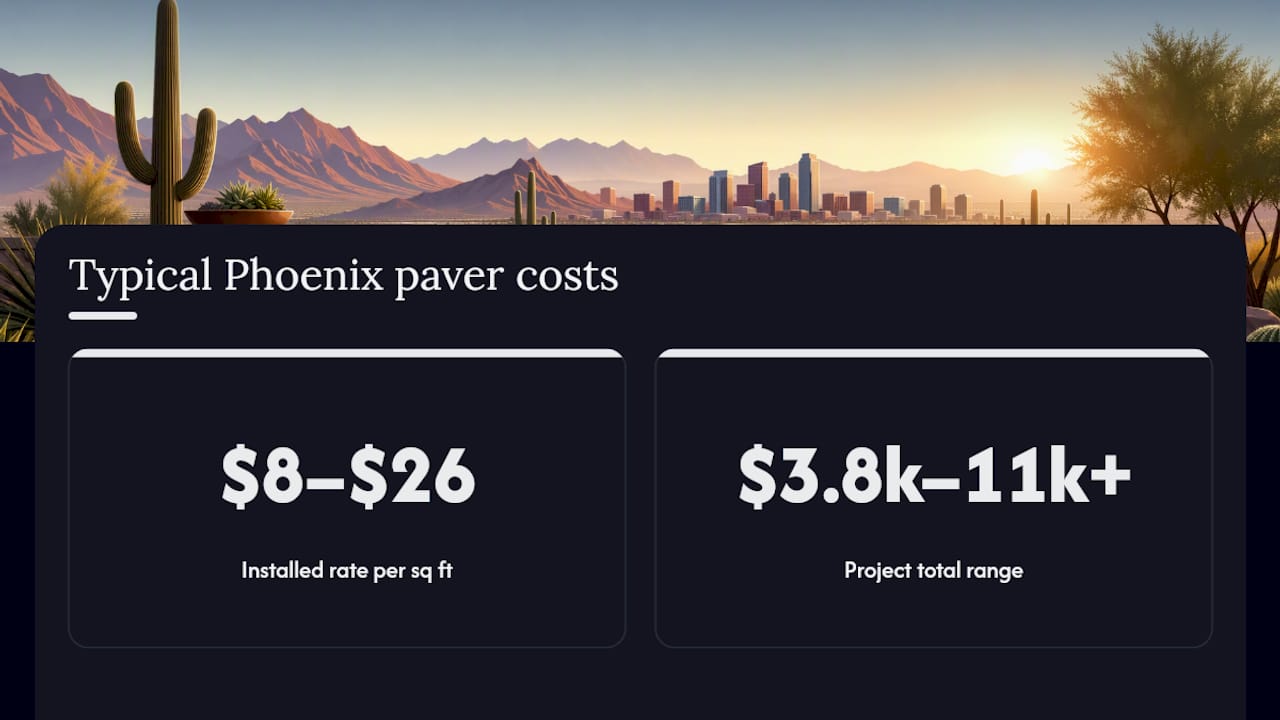
Projects hit the high end of these bands when they involve natural stone, intricate patterns like herringbone or basket weave, or a yard that needs significant grading before installation starts. A flat, easily accessible lot with standard concrete pavers in a running-bond pattern tends to land near the typical column instead.
None of these totals include Arizona’s Transaction Privilege Tax or city permit fees, which we’ll break down separately below. Add those in, and a typical job for a 400 square foot patio can reasonably cost more once taxes and a standard permit are factored in.
Concrete, Brick, or Travertine: Which Material Fits Your Budget?
Material choice affects your budget almost as much as square footage, and in Phoenix’s climate it also affects how comfortable your patio actually is to use in July.
Installed pricing generally breaks down like this:
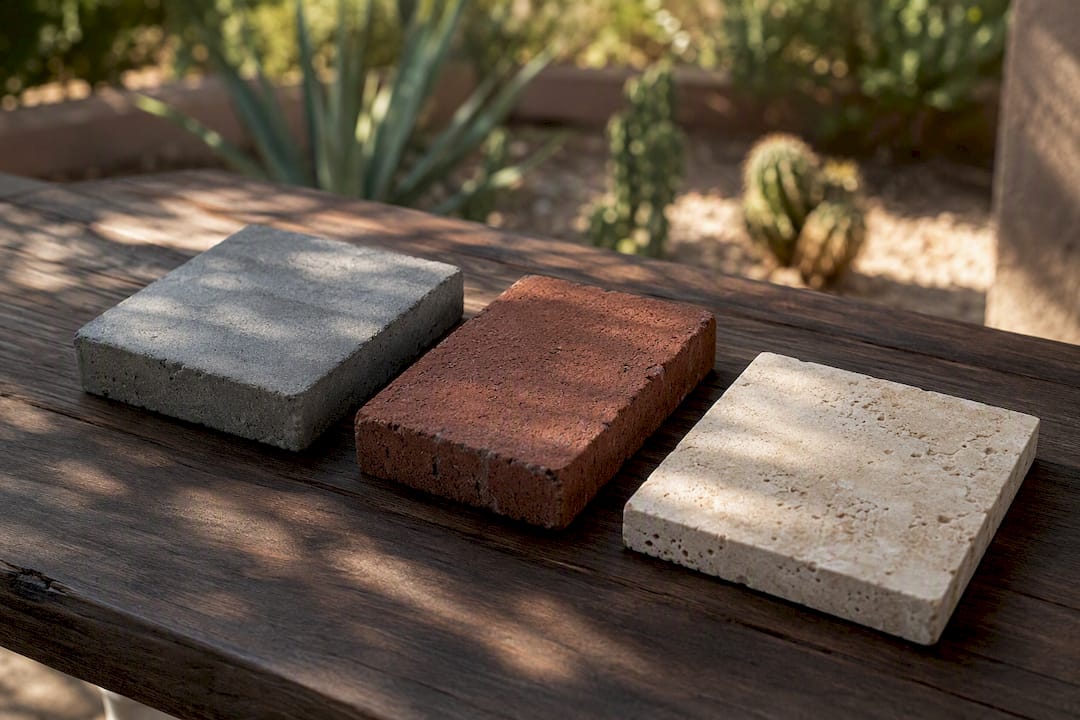
- Concrete pavers: $8 to $15 per square foot installed, the most budget-friendly option with wide color and texture choices.
- Clay or brick pavers: $12 to $20 per square foot, offering strong color retention but a tendency to hold heat.
- Travertine or natural stone: $18 to $26+ per square foot, the premium choice for heat reflection and a cooler barefoot surface.
Travertine costs more upfront, but its natural heat-reflective quality makes it noticeably cooler underfoot during summer afternoons, which matters when your patio sits exposed most of the day. Concrete pavers are the most affordable route and hold up well structurally, though darker colors absorb heat and can feel hot by midday. Brick offers a warmer aesthetic but is more prone to staining from irrigation minerals common in Phoenix water.
Custom cuts, borders, and multi-material patterns add labor hours regardless of which base material you choose. If you’re weighing long-term durability against upfront cost, durable outdoor living materials for Arizona’s climate are worth understanding before you commit to a finish.
What Drives the Price Up Beyond the Base Material?
The per-square-foot number on a quote rarely tells the whole story. Site prep is where budgets quietly expand, and it’s the part most online calculators skip entirely.
A proper base system, excavation, compacted subbase, and edge restraints, accounts for a meaningful share of total labor cost, since a patio is only as durable as what’s underneath it. Beyond the base, several line items commonly appear once a contractor actually walks the site:
- Demolition and haul-away of existing concrete or gravel
- Limited backyard access requiring hand-carried materials instead of machine delivery
- Drainage rerouting to manage monsoon runoff away from the foundation
- Electrical rough-in if you’re adding patio lighting or outlets
Professionals often advise budgeting 10% to 25% above your base quote for these Phoenix-specific realities, since site-walk assessments routinely uncover drainage or grading issues that flat online estimates never account for.
Pro Tip: Ask any contractor for a written line-item breakdown before signing anything. A quote that separates base prep, material, and drainage work makes it much easier to spot padded numbers or missing scope later.
How Much Are Phoenix Permit Fees and Taxes?
A permit is generally required when a patio is attached to the house, exceeds 200 square feet, or involves changes to drainage patterns. The City of Phoenix permit and plan-review guidance also flags floodplain properties as needing separate approval before standard review begins.
| Project Valuation | Example Permit Fee |
|---|---|
| Moderate valuation | Typical permit fee |
| Higher valuation | Higher permit fee |
These figures come from Phoenix’s permit fee calculator, which bundles multiple trades into a single fee schedule. Layer in Arizona’s Transaction Privilege Tax on top of materials and labor, and permits plus tax typically add several hundred to over a thousand dollars to a mid-size project.
How Long Does a Paver Patio Installation Take?
Labor costs and crew size scale with square footage and access difficulty, and Phoenix’s regional price parity sits close to the national average, so labor rates here track fairly closely with other Sunbelt metros.
A typical 200 to 400 square foot install moves through these stages:
- Site walk and design consult: 1 to 2 days to schedule and complete
- Permit application and approval: 1 to 3 weeks depending on plan review complexity
- Demolition and base prep: 1 to 3 days
- Paver installation and edge restraints: 2 to 4 days
- Final inspection and cleanup: 1 to 2 days
Summer heat and monsoon season both affect scheduling. Crews often shift start times earlier in June through August, and monsoon downpours in July and August can delay grading work by days at a time, so spring and fall remain the most predictable windows for on-time completion.
Why a Local Design-Build Firm Reduces Your Risk
Generic cost calculators can’t account for your specific lot, HOA rules, or drainage needs. That’s exactly the gap a local, established design-build firm closes, and it’s why Uniquecompanies has spent over 24 years building outdoor living spaces specifically for Arizona’s climate and Phoenix-area municipal requirements.
Working with an integrated contractor rather than piecing together separate trades typically means:
- A site walk that catches drainage and access issues before they become change orders
- In-house permit handling, so plan review and inspection scheduling don’t fall on you
- 3D design previews showing pattern, material, and layout before installation begins
- Coordinated electrical, lighting, and irrigation work planned alongside the hardscape, not bolted on after
Local experience also matters for details a national estimator will never flag, like grading a patio to shed monsoon runoff correctly, choosing heat-reflective stone and paver finishes suited to summer use, and navigating HOA restrictions on patio covers common throughout Scottsdale, Chandler, and Queen Creek. That kind of coordination is what keeps a quoted price from drifting once construction starts.
Where Phoenix Homeowners Get Their Budgets Wrong
The biggest mistake I see in patio budgeting isn’t picking the wrong material. It’s anchoring to a per-square-foot number pulled from a national calculator and treating it as a ceiling instead of a starting point.
Phoenix has real, recurring cost drivers, monsoon drainage, permit tiers, heat-driven material choices, that generic guides simply don’t model. The conventional advice to “get three quotes and compare per-square-foot rates” falls apart when the quotes aren’t scoped the same way. One contractor’s number might include base prep and haul-away; another’s might not.
Prioritize the site walk over the estimate. A number without a scoped site visit behind it is a guess, and Phoenix’s soil, drainage, and heat conditions punish guesses more than most markets.
— Philipp
Get a Line-Item Patio Quote Before You Budget Blind
Uniquecompanies replaces the guesswork of online calculators with a real site walk and a fixed, line-item quote, so the number you get accounts for your yard’s drainage, access, and material choices from day one, not after construction starts.
A consult with Uniquecompanies includes a detailed cost breakdown, a realistic project timeline, and guidance on Phoenix permit requirements specific to your property, whether that’s floodplain review, HOA patio-cover rules, or drainage planning ahead of monsoon season. The team’s hardscape design and installation services cover everything from paver selection to lighting and irrigation coordination, so your patio plan integrates with the rest of your backyard instead of being priced in isolation. If you’re ready to see what your specific lot actually costs, request a design consult and get a quote built around your property, not a national average.
Where These Numbers Come From
- Angi’s Phoenix paver patio cost data for per-square-foot and average project pricing.
- City of Phoenix permit guidance for permit triggers and floodplain review.
- Phoenix permit fee calculator for example fee tiers.
- Uniquecompanies for local design-build guidance and next steps.
Sources
- How Much Does a Paver Patio Cost in Phoenix, AZ? | Angi
- City of Phoenix permit / plan review guidance (PDF)
- Phoenix permit fee calculator (PermitCalculator)
- Paver patio installation cost in Phoenix, AZ | Project Cost Atlas