The right approach to desert plants around pool areas comes down to one rule: pick low-litter, non-spiny, drought-tolerant species, and keep a 3 to 5 foot hardscape buffer between the coping and any planting bed. Follow that rule and you cut skimming time, protect your filtration system, and still get a lush, resort-style look.
A strong starting shortlist for most Phoenix-area backyards includes:
- Agave (spineless varieties near walkways)
- Red yucca (Hesperaloe parviflora)
- Aloe species
- Golden barrel cactus, kept as a distant accent
- Deer grass for movement and softness
- Jojoba as a screening shrub
- Blackfoot daisy for groundcover color
Homeowners who switch to this kind of palette typically see less debris in the skimmer basket and a noticeably lower water bill, since nearly every plant on that list survives on a fraction of the irrigation a lawn or tropical bed demands.
Key Takeaways
Desert plants around pool areas succeed when homeowners combine low-litter species, spineless plants near traffic zones, a hardscape buffer at the coping, and drip irrigation on separate hydrozoned valves.
| Point | Details |
|---|---|
| Keep a hardscape buffer | Maintain 3 to 5 feet of pavers or decomposed granite between coping and planting beds to catch debris. |
| Choose plants by role | Use structural succulents, softening grasses, screening shrubs, and container accents rather than random placement. |
| Keep spines away from traffic | Place golden barrel cactus and prickly pear at least 3 to 4 feet from walkways and pool exits. |
| Water on separate valves | Group plants by water need through hydrozoning and irrigate with drip lines, not spray heads. |
| Invest in bones first | Prioritize boulders and shade structures before adding many small plants for a resort-style look. |
Table of Contents
- What Makes a Plant Pool-Friendly in a Desert Climate
- Top Pool-Friendly Desert Plants by Role
- Placement, Spacing, and Safety Around the Pool
- Irrigation, Soil, and Maintenance for Poolside Beds
- Designer Tips for a Resort-Style Desert Poolscape
- Ready to Build a Low-Maintenance Poolscape That Lasts?
- What Most Poolscape Advice Gets Backward
- Sources
What Makes a Plant Pool-Friendly in a Desert Climate
Not every drought-tolerant plant belongs next to a pool. A handful of practical filters separate the ones that work from the ones that create ongoing headaches.
- Litter volume. Trees and shrubs that drop leaves, pods, or flower petals continuously send debris into the water and clog skimmers. University of Arizona Cooperative Extension guidance specifically flags low-litter species as the priority for poolside planting.
- Spines and thorns. Anything within reach of bare feet, pool exits, or play areas needs to be spineless or placed well back from traffic.
- Reflected heat tolerance. Pool decks and water surfaces bounce heat and light back onto nearby beds, which stresses plants not built for that intensity.
- Root behavior and mature size. Aggressive roots can crack pool shells, lift decking, or invade equipment lines, so mature size matters as much as looks on day one.
- Water-use category. Grouping plants by how much water they actually need, a practice called hydrozoning, prevents the common mistake of overwatering drought-tolerant species that share a valve with thirstier neighbors.
Pro Tip: Before you plant anything, walk the pool deck at midday in July and note where reflected heat and glare are worst. That spot needs your toughest, most heat-tolerant species, not your prettiest one.
Top Pool-Friendly Desert Plants by Role
A poolscape reads as designed, not scattered, when plants are chosen by the job they do rather than picked one at a time at the nursery. Xeriscape poolscapes built around structural succulents, softening grasses, and gravel groundcover consistently outperform mixed beds on both water use and maintenance.
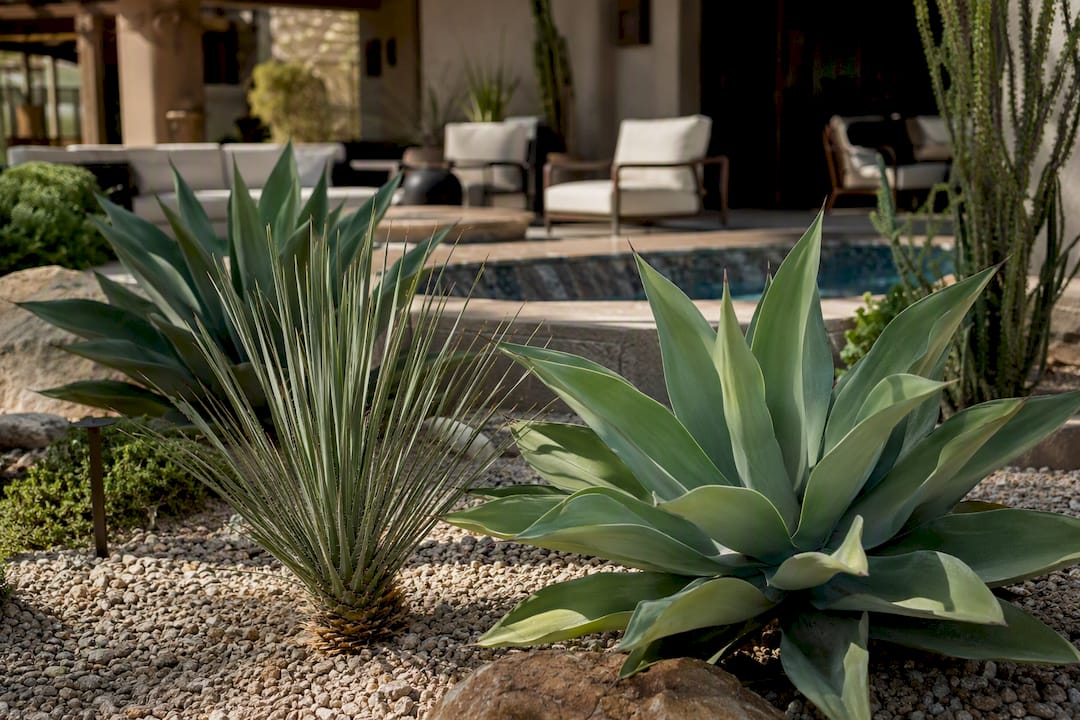
Structural and specimen plants anchor the design and read from across the yard. Agave, especially spineless cultivars like Agave desmettiana, works as a bold accent near seating areas. Desert spoon (Dasylirion wheeleri) offers a similar architectural punch with slightly softer leaf tips. Golden barrel cactus (Echinocactus grusonii) makes a striking focal point, but its spines mean it belongs 3 to 4 feet back from any path, never beside a lounge chair or pool ladder.
Screening and shrub-layer plants handle privacy and wind-blocking without dumping much litter. Jojoba (Simmondsia chinensis) is one of the most reliable choices here: it’s evergreen, tolerant of reflected heat, and drops very little debris. Texas sage and little leaf cordia serve similar roles where a softer silhouette fits the design better.
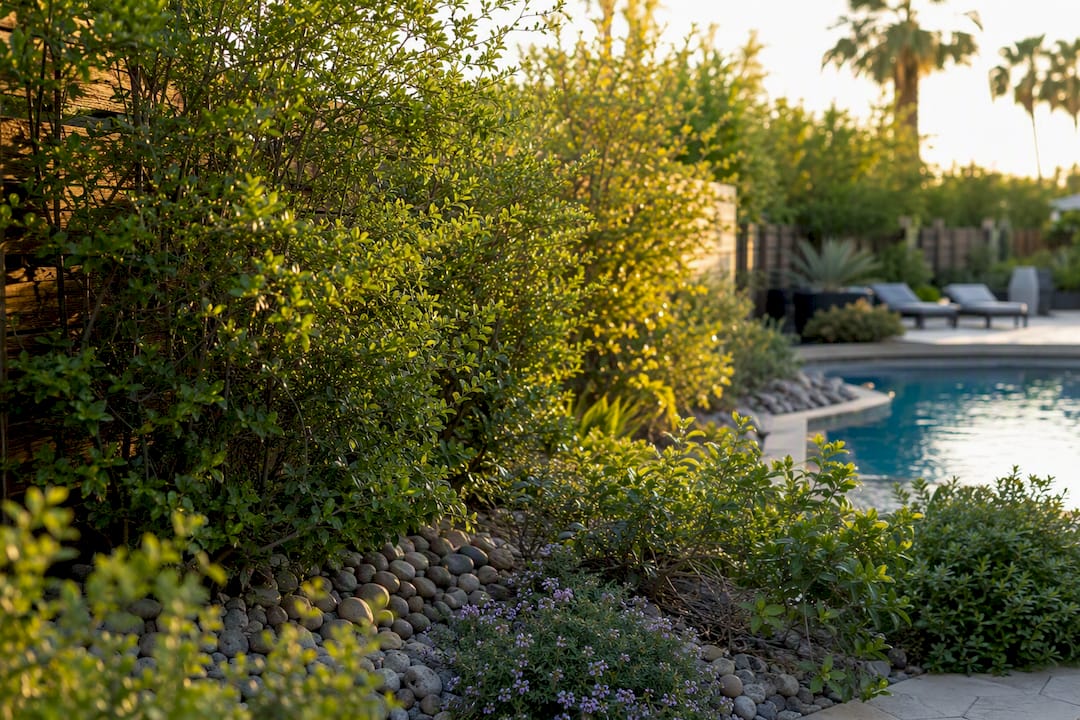
Softening and texture plants keep a poolscape from looking like a rock yard. Deer grass (Muhlenbergia rigens) adds movement in any breeze and stays tidy year-round. Pink muhly brings seasonal color. Blackfoot daisy (Melampodium leucanthum) spreads as a low, white-flowering groundcover that tolerates heat exceptionally well. Baja fairy duster (Calliandra californica) adds a burst of red blooms and works well planted slightly downwind of the pool, where its light litter drop won’t land in the water.
Near-deck and container options let you feature plants that would otherwise need more water than an in-ground bed allows. Aloe species do well in containers close to seating areas, and prickly pear (Opuntia spp.) can work in a raised planter where its pads and occasional fruit drop stay contained and easy to sweep. Dwarf olive and trailing rosemary round out container choices for homeowners who want more variety without expanding the irrigation footprint.
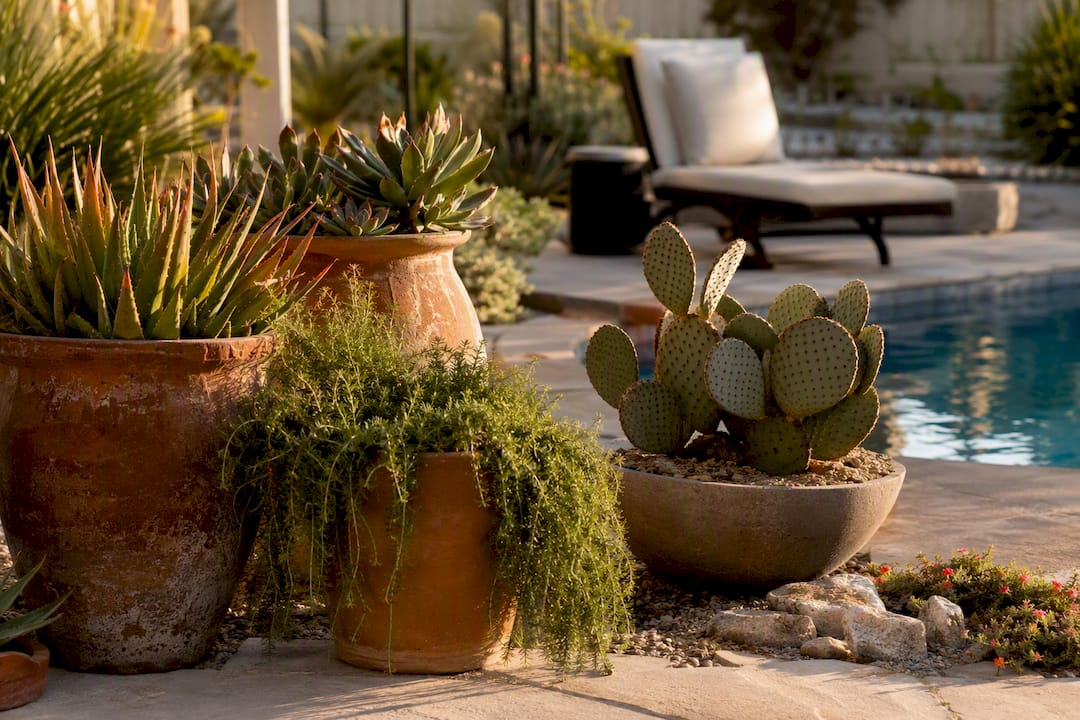
As a rule of thumb: spiny succulents need 3 to 4 feet of clearance from any walkway, while spineless or soft-leaved species like red yucca and aloe can sit closer to the deck. Always check a plant’s mature spread before placing it, since a golden barrel cactus that starts at 8 inches wide can eventually reach 3 feet across.
Placement, Spacing, and Safety Around the Pool
Where you put a plant matters as much as which plant you choose.
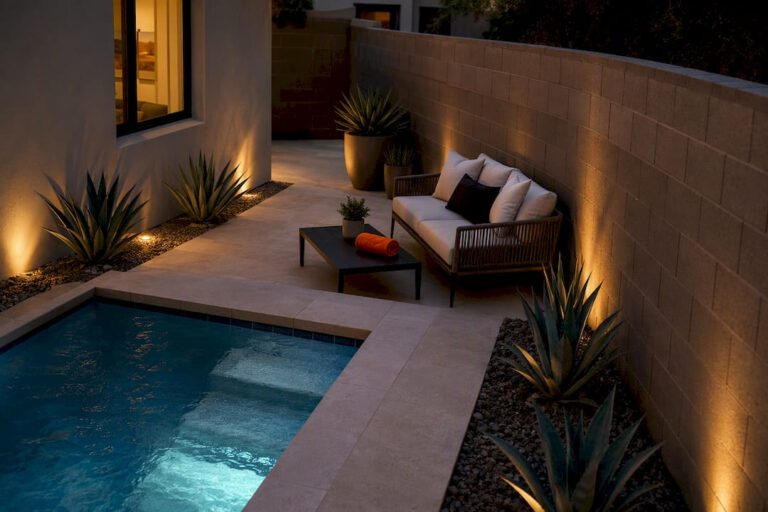
- Keep a 3 to 5 foot buffer of pavers, decking, or decomposed granite between the pool coping and the first planting bed. This clean zone catches most falling debris before it ever reaches the water.
- Route spiky or thorned species away from walkways, pool ladders, and diving areas. Save them for corners and distant focal points.
- Plant known litter-droppers on the downwind side of the pool relative to prevailing winds, so debris blows away from the water rather than into it.
- Give trees enough distance from pool shells and equipment pads. Fast, aggressive roots can crack shells or invade plumbing lines over time, so favor smaller, slow-rooted species near any hardscape.
- Use containers or raised beds for plantings closer to the deck. They contain soil and mulch and make swapping out a struggling plant far easier than digging into an in-ground bed.
Irrigation, Soil, and Maintenance for Poolside Beds
Drip irrigation, not spray heads, should water everything near a pool. Spray systems throw mineral-laden overspray onto decking and waste water to evaporation, while drip lines deliver water directly to the root zone with far less runoff. Pair drip lines with hydrozoning, grouping plants with similar water needs on the same valve, since mixing a thirsty shrub with a barrel cactus on one line reliably overwaters one or stresses the other.
- Water new plantings deeply but infrequently during establishment, then taper off once roots take hold, usually within the first growing season.
- Amend planting holes with sand or gravel where drainage is slow. Container and raised-bed mixes should drain fast by design.
- Never count on pool splash as a water source. Chlorine and salt residue can damage root zones and leaf tissue over time.
- Check drip emitters each spring for clogs, remove spent blooms before they drop, and trim any palm fronds before they set seed near the water.
Pro Tip: If you inherited a yard with sprinkler heads near the pool, cap them and retrofit to drip. It’s a small project that pays off in both water savings and a cleaner pool surface.
Designer Tips for a Resort-Style Desert Poolscape
Spend on boulders and shade structures before you spend on plants. A few large specimen boulders and a well-placed shade structure create the “bones” of a poolscape and deliver more visual impact, immediately, than a dozen small pots ever will. Repeat plant groupings in threes or fives rather than scattering single specimens, and favor a few large plants over many one-gallon starts. This is the same layering logic behind University of Arizona Cooperative Extension’s recommendation to build height in stages, groundcover to grasses to shrubs to accents, for a lush look that still runs on minimal water.
- Prioritize hardscape and shade before filling beds with plants.
- Group plants in repeated clusters, not one-offs.
- Use 3D visualization to test boulder and plant placement before construction begins.
- Bring in a design-build team once drainage, pool-edge grading, or equipment clearances get complicated.
If your project involves regrading near the pool shell or integrating new hardscape with existing equipment, that’s the point where a homeowner benefits from Phoenix desert landscaping expertise rather than a weekend DIY attempt.
Ready to Build a Low-Maintenance Poolscape That Lasts?
A well-planned desert poolscape isn’t something you assemble plant by plant over a few weekends. It’s a system: hardscape buffers, hydrozoned irrigation, and a plant palette chosen by role, all working together so the pool stays cleaner and the water bill stays lower. Unique Companies has spent over 24 years designing and building custom pools, outdoor living spaces, and desert landscaping across the Phoenix metro area, and integrates planting plans directly into pool and hardscape design from the first sketch. If your backyard needs boulders, shade structures, or a full custom pool feature redesign to make this kind of planting possible, that’s exactly the kind of project their in-house design and construction team handles from concept through completion.
What Most Poolscape Advice Gets Backward
Most guides to desert plants around pool areas lead with a plant list and treat spacing as an afterthought. The research points the other direction: buffer zones and hydrozoning determine whether a planting plan survives its first two summers, and the plant list is secondary. A gorgeous agave planted 18 inches from the coping, with no gravel buffer and a spray head aimed at the deck, will still cause maintenance headaches regardless of how drought-tolerant it is on paper.
The other overlooked point is scale. Homeowners consistently underspend on hardscape and boulders while overspending on plant variety, when the opposite investment produces a better yard faster. A few large specimens repeated in clusters, anchored by real hardscape, reads as designed. Fifteen different one-gallon plants scattered around a pool reads as unfinished, no matter how well each one is chosen.
If you take one thing from this, it’s this: solve placement and irrigation systems first, then choose plants. The species matter less than most articles suggest.
— Philipp
Sources
- Desert Landscaping: Plants for a water scarce environment — University of Arizona Cooperative Extension
- Desert pool landscaping: Xeriscape ideas & low-water plants — PoolPad