Outdoor lighting design is the intentional planning and placement of fixtures to improve a property’s safety, functionality, and visual appeal after dark. Done well, it does far more than illuminate a walkway. A thoughtfully designed system deters crime, defines outdoor living zones, highlights architectural features, and creates an atmosphere that extends your usable space well past sunset. The role of outdoor lighting design touches every corner of your property, from the front entry to the back patio, and the difference between a planned system and a collection of randomly placed fixtures is immediately visible.
Key contributions of a professional outdoor lighting plan include:
- Safety: Illuminating pathways, stairs, driveways, and entry points to prevent trips and falls
- Security: Reducing dark spots that attract unwanted activity
- Aesthetics: Uplighting trees, washing walls, and accenting architectural details
- Functionality: Zoning patios, decks, and outdoor kitchens for use after dark
- Control: Integrating timers, dimmers, and smart automation for convenience and efficiency
- Technique variety: Combining uplighting, downlighting, path lighting, and accent lighting for layered results
Professional design ties these elements together into a cohesive plan rather than leaving each decision to guesswork.
How outdoor lighting increases safety and outdoor usability
Proper lighting placement directly reduces the risk of accidents and criminal activity on your property. Pedestrian-scale lighting is most effective when focused at low levels on trip hazards rather than relying on harsh overhead glare. That distinction matters in practice: a well-aimed path light at ankle height does more for safe navigation than a flood mounted on a roofline.
The crime-reduction evidence is equally concrete. A citywide LED streetlight upgrade in Philadelphia produced a 15% decline in nighttime street crimes and a 21% reduction in outdoor nighttime gun violence. Reducing dark spots on your property operates on the same principle, making it harder for potential intruders to approach undetected.
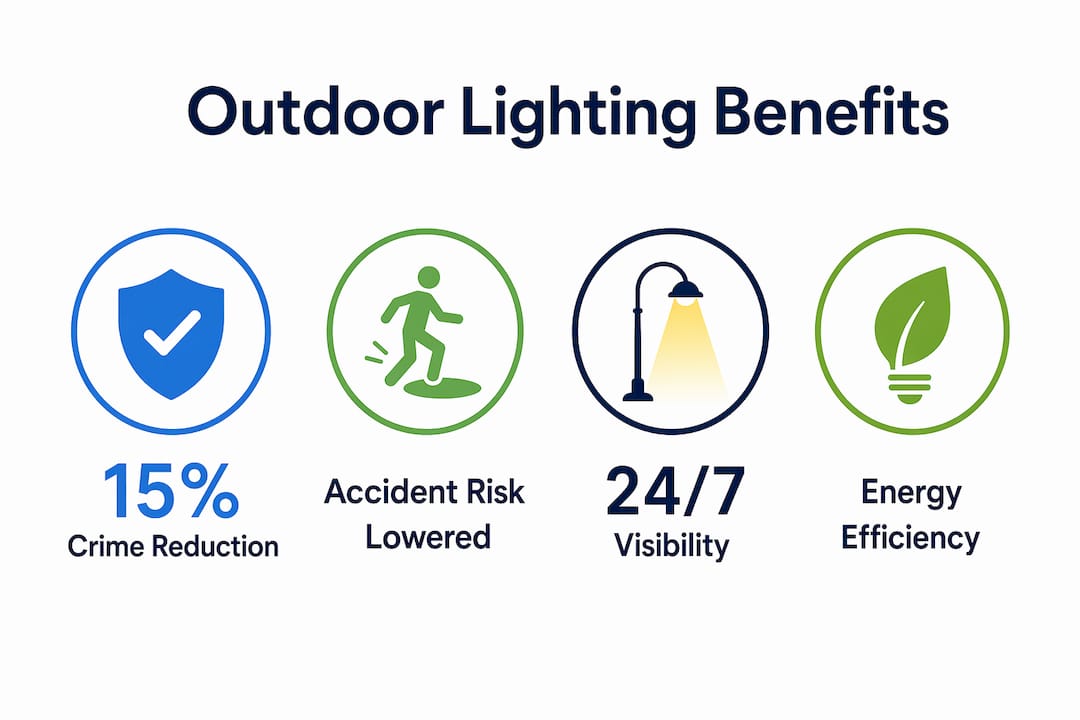
Functional zoning extends the safety benefit beyond the perimeter. Dividing outdoor spaces into distinct zones, such as entry, pathways, and backyard, lets you tailor fixture types and light intensity to each area’s specific use. A patio used for evening dining needs different illumination than a driveway or a pool deck.
Key safety and usability applications:
- Path lights spaced along walkways to guide foot traffic without creating runway-style brightness
- Step lighting recessed into risers to eliminate shadow at grade changes
- Entry lighting at doors and gates to support both visibility and security camera coverage
- Driveway edge lighting to define vehicle lanes without blinding drivers
- Timers and motion sensors that activate lighting when and where it is needed
Pro Tip: Layer light levels across your property rather than relying on a single bright source. A combination of low path lights, mid-level wall fixtures, and accent spotlights creates comfortable visibility without the glare that causes eye strain or shadows.
How outdoor lighting design elevates outdoor aesthetics
Lighting transforms the visual character of a property after dark, often more dramatically than any daytime landscaping change. Techniques like uplighting trees and shrubs, wall washing across stone or stucco facades, and accent lighting on architectural details all add depth and dimension that flat overhead illumination cannot achieve. The goal is selective emphasis, not uniform brightness.
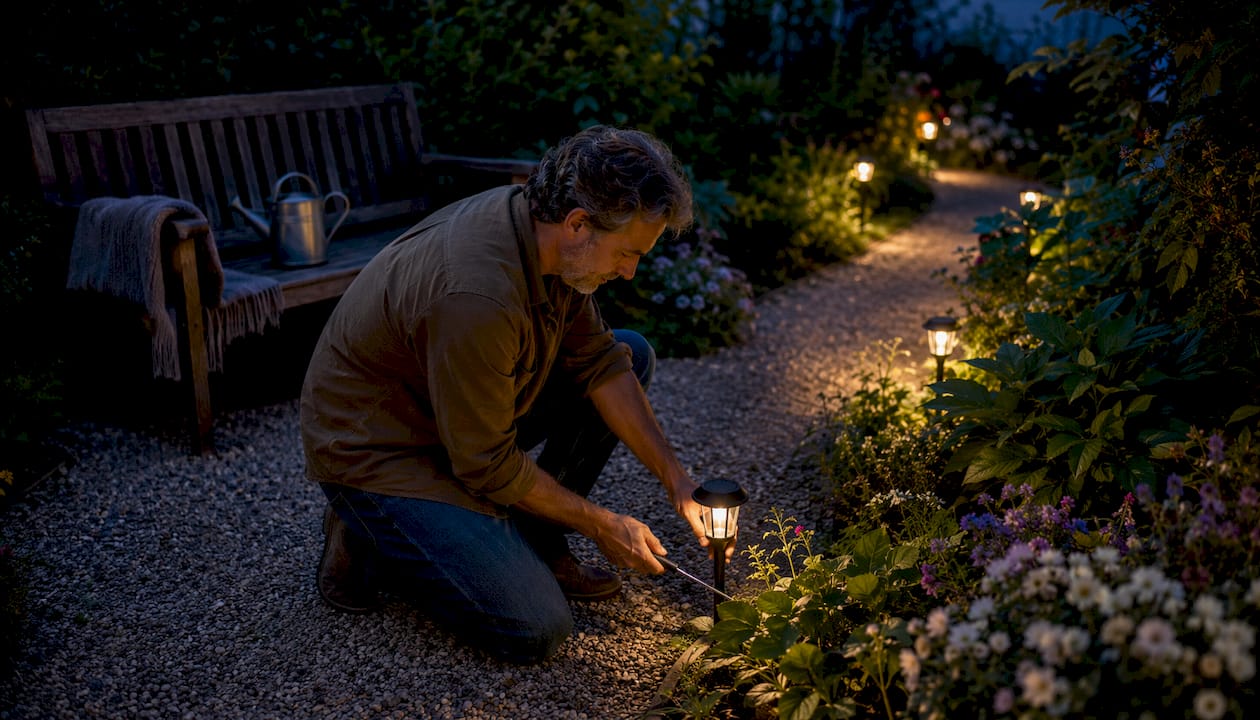
Color temperature is one of the most consequential decisions in any outdoor lighting plan. Warm-spectrum lighting around 2700K is the preferred standard for outdoor spaces because it reduces negative impacts on human and animal circadian rhythms while producing a visually inviting glow. Cooler, blue-shifted light above 3000K tends to look harsh in residential settings and contributes more to light pollution.
Beam angle selection works alongside color temperature. Intentional beam control prevents the washed-out appearance that results from over-lighting, where too many fixtures at too wide an angle flatten the very features you want to highlight. A narrow 15-degree spot aimed at a specimen tree reads as dramatic and purposeful; a wide 60-degree flood aimed at the same tree produces a muddy, undifferentiated glow.
Aesthetic techniques worth understanding:
- Uplighting: Fixtures placed at ground level aimed upward to dramatize trees, columns, or walls
- Downlighting: Fixtures mounted in trees or on structures to simulate natural moonlight
- Wall washing: Even, grazing light across textured surfaces to reveal material character
- Accent lighting: Tight-beam fixtures that draw attention to a specific sculpture, planter, or architectural detail
- Path lighting: Low fixtures that define edges and guide movement while adding visual rhythm
Well-executed outdoor lighting also adds measurable curb appeal. A property that reads clearly and attractively at night projects care and quality, which carries real value when it comes time to sell. For inspiration on how professional lighting highlights landscaping and architecture, Phoenix backyard lighting ideas from Uniquecompanies show the range of effects a planned system can achieve.
What the professional outdoor lighting design process looks like
A professional lighting project follows a structured sequence from first conversation to final adjustment. Understanding that process helps you ask the right questions and set realistic expectations before any fixtures go in the ground.
The typical phases:
- Initial consultation: The designer reviews your goals, budget range, and property characteristics. This is where priorities are established, whether safety is the primary driver, aesthetics, or both.
- Site evaluation: A daytime walk of the property maps zones, identifies structures and landscape features worth lighting, and locates utilities and moisture-sensitive areas.
- Design refinement: The designer develops fixture layouts with good, better, and best options so you can decide how far to go now and what to phase later.
- Proposal documentation: A professional lighting proposal typically includes a written scope of work, a fixture schedule with types and locations, control options such as timers or smart hubs, and warranty information.
- Installation: Fixtures are placed according to the plan, with wiring routed along existing structures where possible to manage cost and minimize disruption.
- Commissioning: After installation, the designer walks the property at night to fine-tune aim, set timers, and confirm each fixture performs as intended.
Phasing the installation is a practical approach for managing budget. Starting with safety-critical lighting at entries and pathways, then adding aesthetic elements in a subsequent phase, lets you experience the system before committing to the full scope. Electrical design deserves as much attention as fixture selection; undersized transformers and poorly planned wiring layouts are among the most common causes of underperforming systems.
For a closer look at how professionals structure this process for residential projects, Uniquecompanies’s professional lighting page outlines their approach from consultation through installation.
Energy efficiency and environmental considerations in outdoor lighting design
LED fixtures are the baseline standard for any new outdoor lighting installation. They use a fraction of the energy of older incandescent or halogen sources and last far longer, which reduces both operating costs and the frequency of fixture replacement. The efficiency gain also makes it easier to add more fixtures without proportionally increasing your electrical load.
The guiding principle for responsible outdoor lighting is “better light, not more light.” Warm color temperatures in the 2200K–2700K range reduce glare, limit energy waste, and minimize circadian disruption for both people and wildlife. Many homeowners over-light their properties, producing glare and light pollution rather than the comfortable, attractive result they intended. Fewer fixtures with intentional placement consistently outperform a higher fixture count with poor beam control.
Light pollution affects more than aesthetics. Excess artificial light at night disrupts the behavior of nocturnal insects, birds, and other wildlife that depend on darkness for navigation and feeding. Choosing warm-spectrum LEDs, shielding fixtures so light points downward rather than skyward, and using timers to limit runtime after midnight all reduce that impact without compromising the lighting you actually need. Homeowners interested in eco-friendly outdoor practices can integrate dark-sky-compliant fixtures as part of a broader commitment to responsible land stewardship.
Smart controls add another layer of efficiency. Dimmers, motion sensors, and programmable timers prevent lights from running at full output all night when no one is outside. Pairing smart controls with well-chosen fixtures is covered in detail in Uniquecompanies’s guide to outdoor living technology.
Pro Tip: Plan fixture placement and beam angles before purchasing anything. A fixture aimed correctly from the start wastes less light, requires fewer adjustments after installation, and is far less likely to create the glare or sky glow that dark-sky guidelines are designed to prevent.
Fixture material selection also affects long-term performance. Brass, copper, and marine-grade aluminum hold up well in outdoor conditions, resist corrosion, and maintain their appearance over years of exposure. Choosing durable materials upfront reduces replacement frequency and the waste that comes with it. Pairing quality fixtures with a well-planned layout, as outlined in resources like this homeowner landscaping guide, produces results that last.
Key Takeaways
Effective outdoor lighting design combines safety, aesthetics, and energy efficiency into a single planned system rather than a collection of individual fixture decisions.
| Point | Details |
|---|---|
| Safety starts with placement | Low-level, well-aimed fixtures at trip hazards outperform harsh overhead glare for pedestrian safety. |
| Crime reduction is measurable | Philadelphia’s LED upgrade produced a 15% drop in nighttime street crimes and a 21% reduction in gun violence. |
| Color temperature matters | Warm-spectrum lighting at 2700K or lower protects human and animal circadian rhythms while reducing light pollution. |
| Phase the installation | Starting with safety lighting and adding aesthetics later lets you refine the design before full investment. |
| Fewer fixtures, better results | Intentional beam control and placement consistently outperform a high fixture count with poor planning. |