If you want the short answer: epoxy paint fits a tight budget and buys three to seven years, standard white plaster is the reliable middle ground for most homeowners, aggregate finishes like pebble or quartz deliver the best long-term value for heavy pool users, and full tile is the showpiece choice for owners who want decades of durability and don’t mind paying for it. Every one of those outcomes depends on one variable more than the material itself: whether the contractor preps the shell correctly and manages the 28-day curing protocol.
- Budget-conscious: epoxy/paint for a quick, low-cost refresh, or standard plaster for a durable everyday finish
- Long-life priority: pebble or quartz aggregate for stain resistance and a 15 to 25+ year lifespan
- Showpiece/luxury: full tile or a waterline tile accent for permanence and design flexibility
Pro Tip: A $2,000 discount from a low bidder rarely covers a proper shotblast and structural repair. Ask what’s excluded before you sign anything.
Key Takeaways
The right pool resurfacing option balances upfront cost against cost-per-year and maintenance tolerance, and no material choice matters if the contractor skips proper prep or the 28-day cure.
| Point | Details |
|---|---|
| Match material to timeline | Choose paint for a short-term fix, plaster for standard use, pebble or quartz if staying 15+ years. |
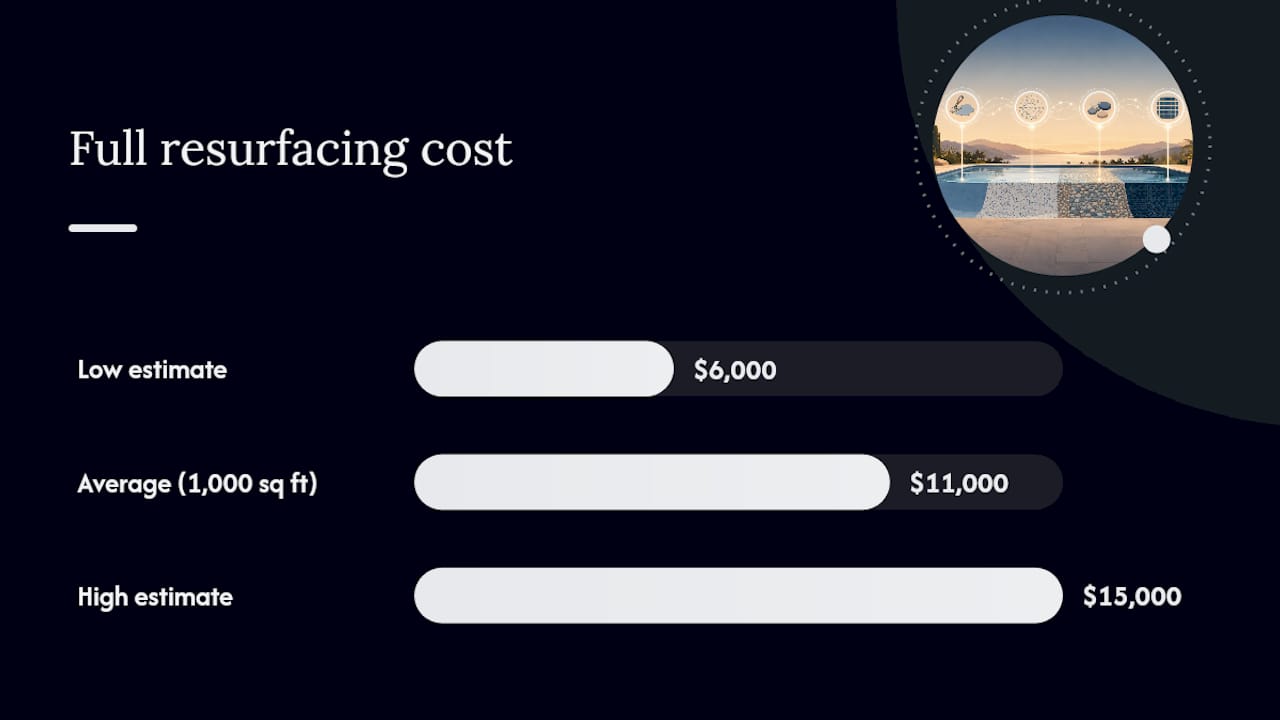
| Budget realistically | Expect $6,000 to $15,000 for a full job, with a 1,000-sq-ft pool averaging around $11,000. |
| Compare cost per year, not just upfront price | Higher-cost aggregate finishes often beat plaster on long-term value due to longer lifespans. |
| Protect the finish after installation | Follow a strict 28-day brushing and chemistry schedule regardless of material chosen. |
| Vet contractors on process, not price alone | Ask for a written scope, cure plan, and references before signing. |
| Consider a design-build approach | Unique Companies pairs in-house resurfacing expertise with 3D previews so homeowners can compare finishes before committing to a full remodel. |
Table of Contents
- What Pool Resurfacing Actually Fixes
- Standard White Plaster: The Budget Baseline
- Pebble and Aggregate Finishes: Built for the Long Haul
- Quartz-Plaster Blends: The Middle Ground Upgrade
- Tile: The Permanent, Premium Choice
- Fiberglass, Vinyl, and Paint: Niche and Short-Term Options
- What Resurfacing Really Costs Once You Add It All Up
- How the Resurfacing Job Actually Unfolds
- Choosing a Contractor Who Won’t Cut Corners
- Why Experience and In-House Coordination Matter
- The Real Trade-Off Nobody States Plainly
- Get a Resurfacing Plan Built Around Your Pool, Not a Generic Bid
- Sources
What Pool Resurfacing Actually Fixes
Resurfacing replaces the interior finish of your pool shell, the layer of plaster, aggregate, or tile that actually holds water and contacts skin. It’s different from repainting, which is a lighter, temporary coating applied over an existing surface, and different from a vinyl liner swap, which replaces a separate membrane rather than a bonded finish. Gunite and shotcrete pools need resurfacing; vinyl-liner pools need a new liner instead.
You typically need resurfacing when you notice:
- Rough or pitted texture that scrapes skin and swimsuits
- Persistent staining or discoloration that won’t respond to acid washing
- Chronic leaks at cracks or where the finish has separated from the shell
- Delamination, where the surface flakes or blisters away from the substrate
- Chalky, powdery water or finish that dissolves visibly over a season
The material you choose next doesn’t just affect appearance. It sets your maintenance workload, your water chemistry tolerance, and how many more times you’ll go through this project before you sell the house.
Standard White Plaster: The Budget Baseline
Plaster remains the most common resurfacing material because it’s the least expensive route to a smooth, swimmable finish. Expect to pay roughly $4 to $7 per square foot, with a typical lifespan of 7 to 12 years before it needs redoing.
- Lowest material cost among cementitious finishes
- Smooth, classic white or tinted appearance
- Sensitive to water chemistry swings, especially during its first month
- Prone to etching, staining, and calcium scaling over time without diligent care
The first 28 days after plaster goes in are the ones that determine whether it lasts 7 years or 15. Chemical balance has to stay tight, and brushing has to happen daily to prevent the plaster dust (sometimes called “plaster dust” or efflorescence) from settling and hardening into rough spots.
Pro Tip: If your contractor doesn’t hand you a written 28-day startup chemistry schedule, ask for one before the plaster truck arrives. Verbal instructions get forgotten by day three.
Pebble and Aggregate Finishes: Built for the Long Haul
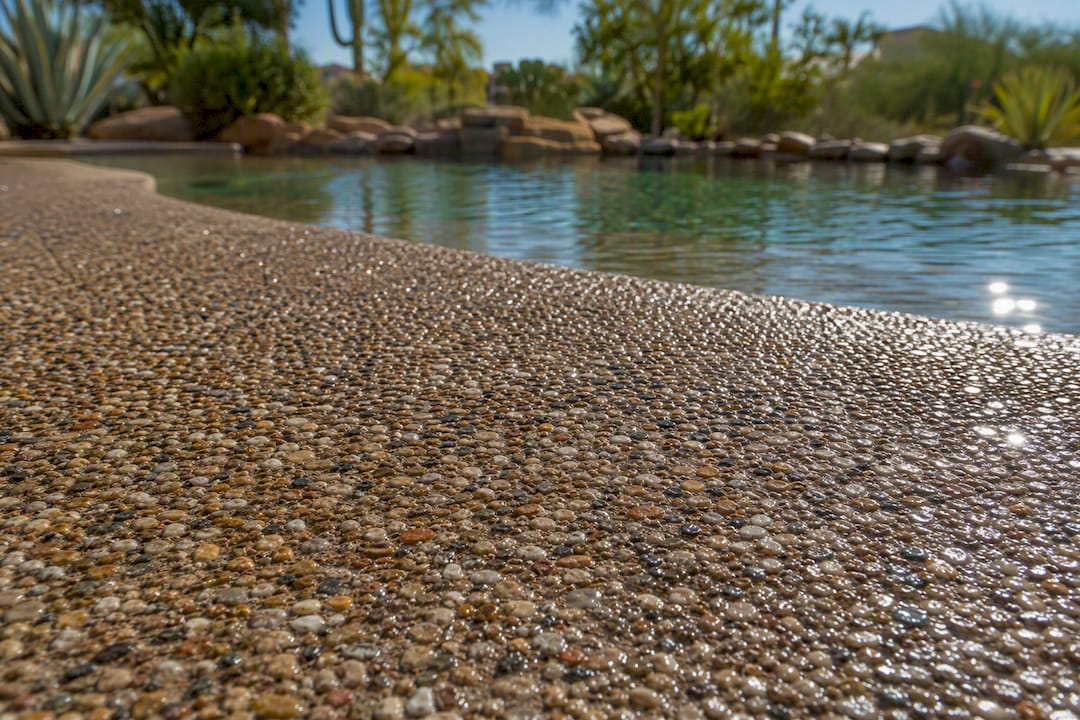
Aggregate finishes, most commonly marketed under pebble or polished aggregate branding, embed small stones into the cementitious base instead of relying on a smooth troweled surface. That structural difference is why they outlast plaster by a wide margin, often running 10 to 15 dollars per square foot installed with a 15 to 25-plus year service life.
- Textured surface resists staining and chemical etching better than plaster
- Underfoot feel is grippier, which some swimmers love and others find abrasive on bare feet
- Higher upfront cost offsets against fewer resurfacing cycles over 20 years
- Ideal for pools that see daily use, kids, pets, or minimal chemical monitoring
Because aggregate resists wear so well, it’s often the cheaper option per year of ownership even though the initial invoice is bigger than plaster’s. For homeowners who plan to stay put for over a decade, that math tends to favor pebble over repeated replastering.
Quartz-Plaster Blends: The Middle Ground Upgrade
Quartz finishes mix ground quartz aggregate into a plaster base, landing between standard plaster and full pebble in both cost and performance. Pricing generally runs $7 to $10 per square foot, with lifespan improvements over plaster but usually short of pebble’s top end.
- Smoother underfoot than pebble, rougher and more durable than plain plaster
- Wider color range than standard white plaster, since quartz holds pigment well
- Better resistance to staining and chemical wear than plaster alone
- A sensible pick when pebble’s texture feels too aggressive but plaster’s lifespan feels too short
Quartz works well for homeowners upgrading from a failed plaster surface who want better durability without jumping straight to pebble’s price tag or texture.
Tile: The Permanent, Premium Choice
Tile is the longest-lived interior finish available, and it’s also the most expensive. Full-shell glass or porcelain tile installations run $20 to $30-plus per square foot, which puts a full tile job on a mid-size pool well into luxury remodel territory.
- Full-tile installs can last 20 to 50 years with proper grout maintenance
- Waterline accent tile, a narrower band rather than full coverage, is a frequent compromise that captures the design impact at a fraction of the cost
- Grout lines need periodic resealing and occasional individual tile replacement, which is straightforward compared to a full cementitious redo
- Design flexibility is unmatched: mosaic patterns, color gradients, and glass tile all become options
Pro Tip: If full tile is out of budget, pair a plaster or pebble body with a waterline tile accent. You get the visual upgrade at the pool’s most-viewed strip without pricing out the whole project.
Fiberglass, Vinyl, and Paint: Niche and Short-Term Options
Not every pool is a candidate for cementitious resurfacing, and not every homeowner wants to pay for one. Fiberglass gelcoat overlays, vinyl liners, and epoxy paint occupy their own lane.
- Epoxy/paint costs roughly $1 to $2 per square foot installed but only lasts 3 to 7 years before it needs recoating
- Vinyl liners apply to liner pools specifically. They’re not optional once the existing liner fails; there’s no cementitious alternative for that pool type
- Fiberglass gelcoat retrofits are nonporous and low-maintenance but limited in color and difficult to repair if damaged
- Paint suits sellers prepping a house for market or owners bridging a gap before a full remodel
None of these compete with plaster or aggregate on lifespan, and that’s fine. They solve a different problem: minimizing cash outlay right now.
What Resurfacing Really Costs Once You Add It All Up
A full resurfacing project for a standard 1,000-square-foot pool typically lands between $6,000 and $15,000, averaging around $11,000, though concrete and gunite jobs specifically often fall in the $5,000 to $12,000 range depending on regional labor rates.
- Dividing total cost by expected lifespan reveals real value: an $11,000 plaster job lasting 10 years runs about $1,100 a year, while a $15,000 pebble job lasting 22 years runs closer to $680 a year
- Structural repairs discovered once the old surface comes off, corroded rebar, hollow spots, small voids, are the single most common budget surprise
- Tile removal, difficult equipment access, permit fees, and full drain-and-refill costs (water alone can run several hundred dollars depending on your utility) add up fast and rarely appear in a bare-bones estimate
Budget a contingency of 10 to 15% above your quoted price. It’s the difference between a manageable surprise and a stalled project.
How the Resurfacing Job Actually Unfolds
- Assessment and quote (1 to 2 weeks): the contractor inspects the shell, identifies problem areas, and scopes the project
- Drain (1 day): water comes out completely before any surface work starts
- Prep (2 to 4 days): shotblasting or chipping removes the old surface down to sound substrate
- Structural repairs (variable, often 2 to 7 extra days): cracks, hollow spots, or rebar issues get addressed before anything new goes on
- Bond coat and finish application (2 to 3 days): the new material goes on in a continuous, carefully timed pour
- Fill and 28-day startup (about 4 weeks): water goes back in and a strict brushing and chemistry schedule begins
That structural repair step is where timelines stretch. Skipping it to save a few days is the most common reason a new finish fails early.
Pro Tip: During the 28-day startup, brush the entire surface daily, not just the visible spots. Undissolved plaster dust settling in corners is what causes uneven, blotchy finishes later.
Choosing a Contractor Who Won’t Cut Corners
Ask any contractor bidding on your project for their history with your specific finish, photos of completed jobs at similar ages (not just fresh installs), and their written approach to substrate repair and the 28-day cure. Ask for references you can actually call, and confirm insurance coverage in writing.
- Red flag: no written scope of work
- Red flag: no documented cure or startup plan
- Red flag: a bid dramatically lower than three other quotes with no explanation
- Red flag: cash-only payment requests or no formal contract
Experienced crews cost more for a reason: they know which shortcuts cause five-year failures, and they don’t take them.
Pro Tip: A contractor who can’t answer specific prep questions on the spot probably isn’t doing the prep themselves. Ask who’s actually on the crew, not just who’s signing the contract.
Why Experience and In-House Coordination Matter
Unique Companies has spent over 24 years building and remodeling pools across the Phoenix area, with design, permitting, and construction handled under one roof. That coordination cuts down on the scope changes and scheduling gaps that turn a four-week resurfacing job into a two-month ordeal, particularly when structural repairs surface mid-project.
The Real Trade-Off Nobody States Plainly
If you’re chasing the lowest bid, plaster or paint will get you swimming fastest. If you’re staying in the house for 15 years or more, pebble or quartz almost always wins on cost per year, even though the invoice stings more upfront. If the pool is the backyard’s centerpiece, waterline tile buys most of the visual payoff without the full-tile price tag. Whichever route you pick, the material matters less than whether your contractor treats the 28-day cure as non-negotiable rather than optional paperwork.
Get a Resurfacing Plan Built Around Your Pool, Not a Generic Bid
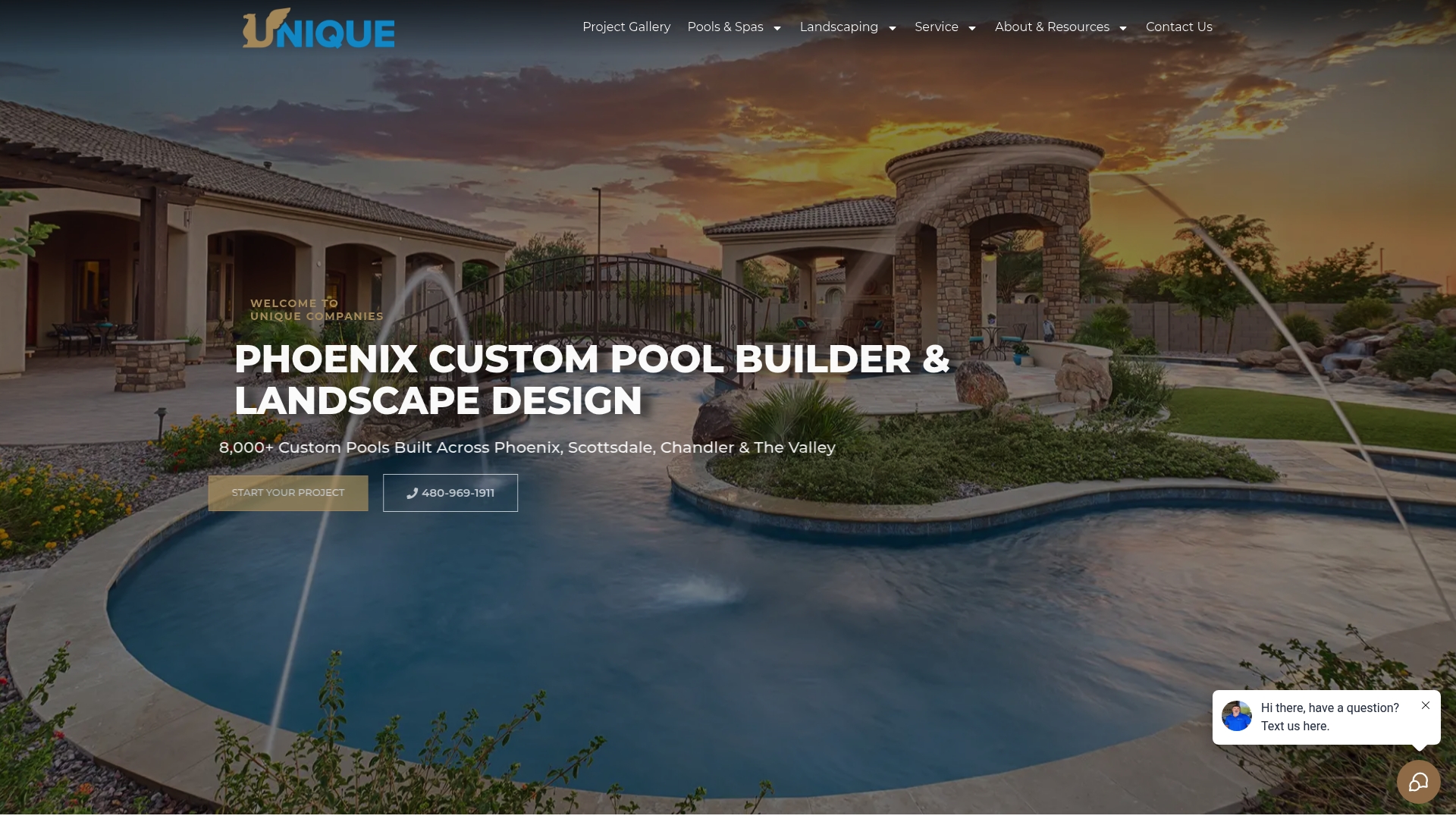
Choosing between plaster, pebble, quartz, and tile is easier when you can actually see each finish in your own backyard before committing. Unique Companies handles pool remodeling and resurfacing as an in-house, design-build process, meaning the same team that assesses your shell, recommends a finish, and prices structural repairs also builds it, with 3D visualization to preview how a pebble or tile finish will actually look against your deck and landscaping.
A consultation starts with an on-site assessment of your existing shell, a discussion of your budget priorities, and a walk-through of finish options suited to Arizona’s climate and water chemistry demands. If your pool shows rough texture, staining, or chronic leaks, request a consultation through Unique Pool Remodeling and get a scoped plan instead of a rough guess.
Sources
- How Much Does Pool Resurfacing Cost? 2026 Data | Angi
- HomeAdvisor — Pool resurfacing cost and process
- Pool Resurfacing Guide: Cost, Process, and How Often You Need It | Larry’s Pool
- Pool Resurfacing Cost Guide: What It Really Costs to Resurface a Pool – Current Cost
- How Often Should A Pool Be Resurfaced? – Near Me Pools