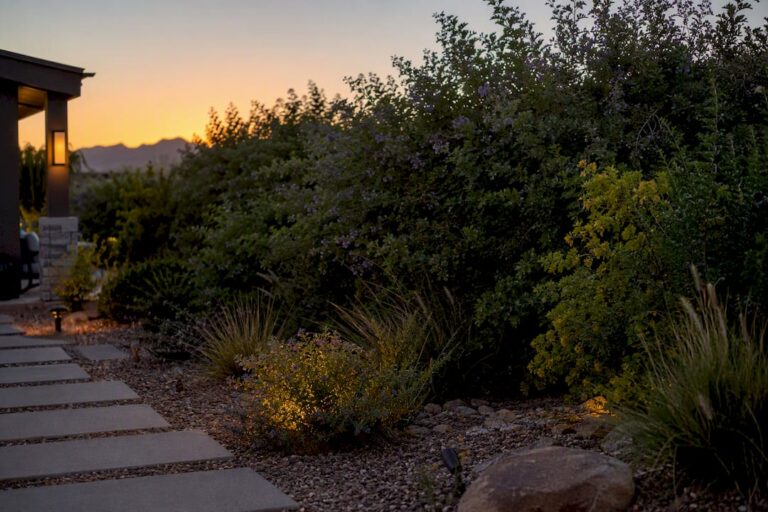
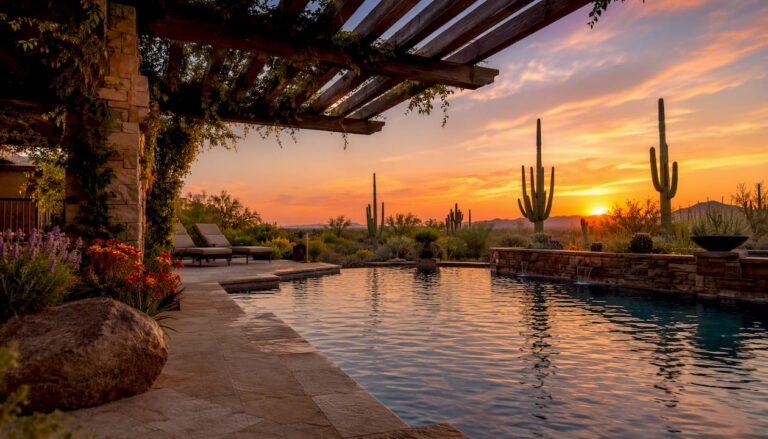
The most reliable desert privacy plants share three traits: evergreen or near-evergreen foliage, genuine drought tolerance, and the ability to grow in alkaline, caliche-heavy soil without amendment. Texas mountain laurel, Arizona rosewood, hopseed bush, Texas sage, oleander, Arizona cypress, Mexican fencepost cactus, and lantana cover nearly every yard scenario, from narrow side lots to wide-open backyard borders.
- Fastest reliable screens: oleander and hopseed bush fill in quickly, often within a single growing season.
- Lowest-maintenance choices: Texas mountain laurel and Arizona rosewood need little pruning once established, according to University of Arizona Cooperative Extension guidance.
Pro Tip: Stagger two rows of a fast grower and a slow evergreen backbone instead of planting a single straight line. You get opacity sooner without overcrowding the bed once everything matures.
Xeriscape principles guide most of these picks, and a design perspective from a builder like Uniquecompanies helps translate a plant list into a working screen that fits your yard’s grading, irrigation, and sightlines.
Key Takeaways
Desert privacy plants succeed when species selection matches mature size, soil tolerance, and water budget to the specific site rather than a generic plant list.
| Point | Details |
|---|---|
| Shortlist the right species | Texas mountain laurel, Arizona rosewood, hopseed bush, Texas sage, Arizona cypress, oleander, lantana, and Mexican fencepost cactus cover most yard needs. |
| Match speed to patience | Fast growers like oleander and hopseed bush fill screens in one to two seasons; slow evergreens need years but less upkeep. |
| Plant in fall | Cooler air and warm soil in fall give roots a head start before summer heat arrives. |
| Water deep, not often | Deep, infrequent irrigation over 2 to 3 years builds stronger roots than daily shallow watering. |
| Get professional coordination | Uniquecompanies integrates privacy planting with irrigation, grading, and hardscape design across Phoenix-area backyard projects. |
Table of Contents
- Which Desert Privacy Plants Work Best?
- How Do You Choose the Right Privacy Plant?
- Planting and Establishing a Desert Privacy Screen
- Fast Growth or Low Maintenance: What Should You Prioritize?
- What a Landscape Designer Adds to a Privacy Screen
- Ready for a Screen That’s Built Right the First Time?
- Frequently Asked Questions
- Sources
Which Desert Privacy Plants Work Best?
Not every drought-tolerant shrub makes a good privacy screen. Some grow too slowly, some drop enough seed pods to annoy anyone who parks a car nearby, and a few carry safety issues worth knowing before you plant near a play area. Here’s how the mandatory shortlist stacks up.
| Species | Mature Height/Spread | Growth Rate | Water Needs (Establish/Long-Term) | Pruning Frequency | Safety Notes | Best Use |
|---|---|---|---|---|---|---|
| Texas mountain laurel | 15 ft / — | Slow | Regular first 2 years / occasional deep soak | Rare, shape only | Seeds mildly toxic if eaten | Line hedge, accent |
| Arizona rosewood | 15 ft / 6–7 ft | Slow to moderate | Regular first 2 years / minimal after | Rare | None significant | Screen backbone |
| Hopseed bush | Medium height and spread | Fast | Requires moderate watering initially, then infrequent deep watering | Moderate pruning, tolerates shearing | None significant | Staggered screen, sheared hedge |
| Texas sage (Texas ranger) | Medium height and spread | Moderate | Low water needs once established | Light pruning, avoid over-shearing | None significant | Line hedge, mixed border |
| Arizona cypress | — / — | Fast | Moderate first 2 years / low after | Occasional shaping | None significant | Tall screen, windbreak |
| Mexican fencepost cactus | — / — | Slow | Very low, minimal supplemental water | None | Sharp spines | Cactus fence, narrow beds |
| Upright lantana | 3–6 ft / 3–5 ft | Fast | Moderate first year / low after | Moderate, cut back hard yearly | Berries toxic if ingested | Filler, low border |
| Oleander | — / — | Fast | Moderate first year / low after | Moderate, annual thinning | All plant parts toxic | Fast privacy screen |
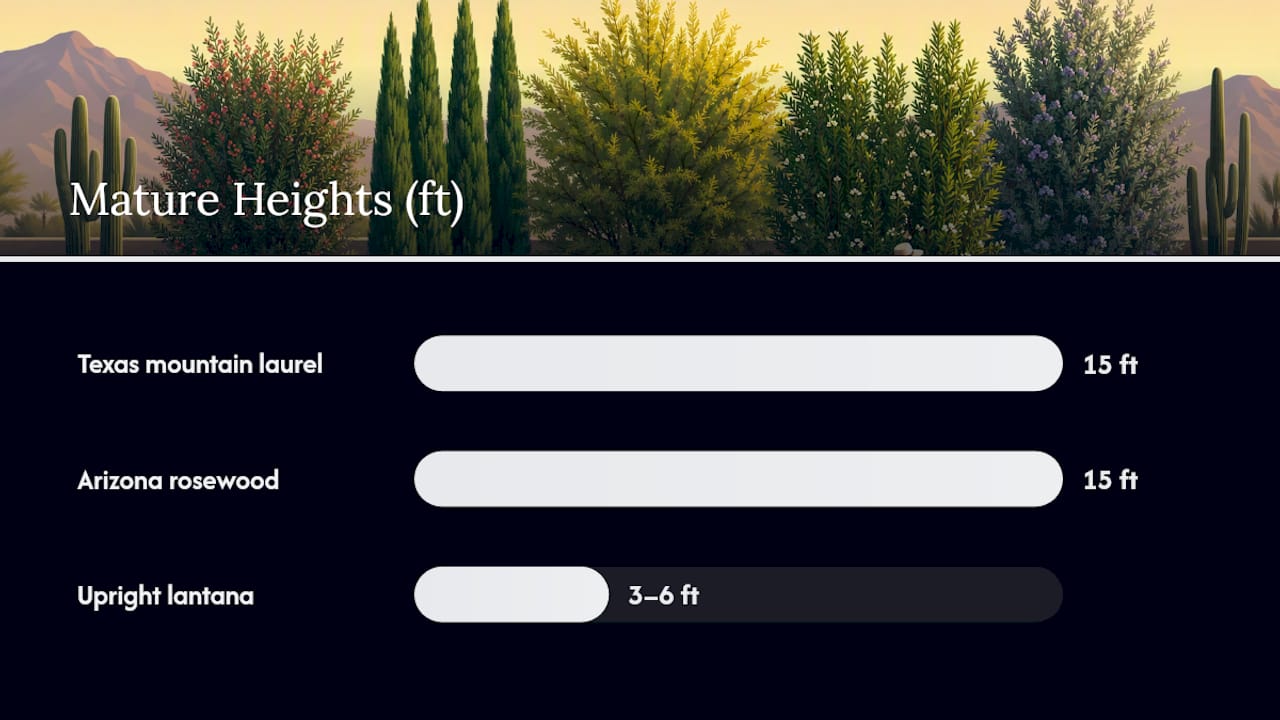
A few quick picks for common situations: hopseed bush and oleander fill gaps fastest, Texas mountain laurel and Arizona rosewood ask the least of you over the long haul, and Mexican fencepost cactus solves narrow side yards where a spreading shrub simply won’t fit.
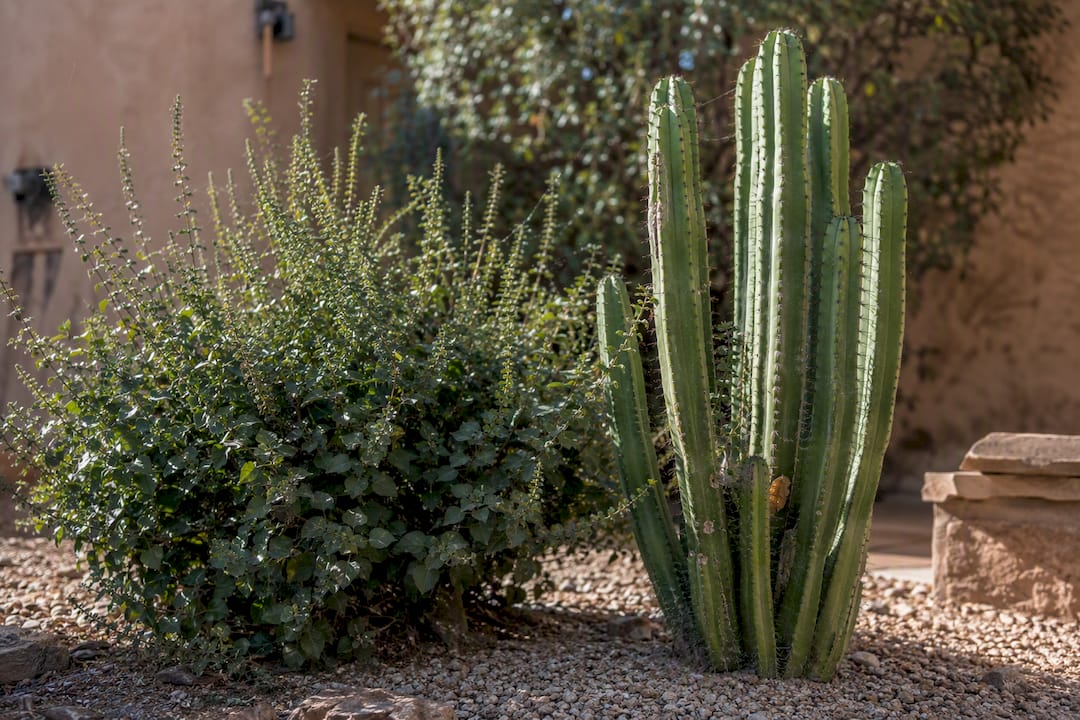
Pro Tip: Match mature size to the actual space before falling for a plant’s looks in a nursery photo. An Arizona cypress planted 4 feet from a fence line will outgrow that space in under a decade and need constant correction.
How Do You Choose the Right Privacy Plant?
Start with mature size and root habit, not the plant’s appearance at the nursery. A 5-gallon hopseed bush looks modest today, but it wants 5 to 6 feet of width at maturity, and roots from fast growers like oleander can crowd shallow irrigation lines if planted too close to a wall.
Soil matters more in desert yards than almost anywhere else. Species that evolved in caliche-dominant ground, including Texas sage, hopseed bush, and desert willow, perform without amendment, while non-native ornamentals often need a wider planting hole and looser backfill to avoid drainage problems.
- Confirm mature width against fence lines, utility boxes, and roof overhangs before digging.
- Skip compost for native, caliche-adapted species; reserve amendment for non-natives that struggle in dense clay.
- Budget deep, infrequent irrigation for the first two to three years, tapering off as roots establish.
- Rule out oleander near play areas or where pets chew on landscaping, since every part of the plant is toxic.
- Favor species with low annual pruning needs if you don’t want a standing hedge-trimming chore.
Pro Tip: When mixing species along a fence line, keep at least one evergreen backbone plant every few feet. Deciduous or seasonal fillers leave gaps in winter that undo the whole point of a privacy screen.
Planting and Establishing a Desert Privacy Screen
Fall is the best planting window in most desert climates. Warm soil and cooler air push root growth before summer heat arrives, which gives shrubs a real head start compared to spring planting.
- Dig a hole twice the width of the root ball but no deeper, so the crown sits slightly above grade.
- Loosen circling roots gently before backfilling with native soil, skipping heavy amendment for caliche-adapted species.
- Water deeply at planting, then set up a drip schedule for the first growing season.
- Apply 2 to 3 inches of mulch, keeping it a few inches clear of the trunk.
- Stake only top-heavy specimens, and remove stakes within a year.
Plant size at purchase changes your timeline considerably. A 5-gallon shrub planted in October often reaches 6 feet of coverage by the following spring, while a 15-gallon specimen can hit that same height in roughly a year, according to Phoenix-area planting data. Most desert-adapted screens fully establish in about 2 to 3 years with regular initial irrigation, after which watering can drop to occasional deep soaks during dry stretches.
Pro Tip: Once a plant is established, water deeply but infrequently rather than giving it a light daily sprinkle. Deep watering pushes roots downward, where they find cooler, more stable moisture instead of staying near the surface where heat stress hits hardest.
Fast Growth or Low Maintenance: What Should You Prioritize?
Oleander and hopseed bush deliver opacity fast, often within a single growing season, but that speed comes with a tradeoff: both need more frequent shaping to stay dense rather than leggy.
Texas mountain laurel and Arizona rosewood take longer to fill a gap but reward patience with years of minimal pruning and low water demand once rooted, since many native desert shrubs need little regular shaping.
- Fast growers: quicker privacy, more frequent pruning and water during establishment.
- Slow, low-maintenance options: longer wait, but far less upkeep for decades afterward.
- Best combo: plant a fast-growing front row for immediate coverage, backed by a slower evergreen row that takes over as the long-term screen.
What a Landscape Designer Adds to a Privacy Screen
A professional brings more to a privacy planting than a plant list, as shown by All Landscaping Services in Tucson, AZ | Jackpot Landscaping. Irrigation zoning has to account for each species’ water curve, drainage needs checking so roots don’t sit in runoff after monsoon storms, and sightlines from patios and pools matter as much as the property line itself. Utility clearance and companion plant selection round out the details that keep a screen looking intentional rather than accidental.
A well-planned privacy hedge in the low desert is a functional problem solved with the right plant in the right spot, not a single species forced across an entire property line.
Uniquecompanies handles this kind of integrated planning as part of its design-build landscape work across the Phoenix area, coordinating irrigation, hardscape, and planting under one roof.
A Desert Landscape Builder’s Quick Lessons
Spacing mistakes show up most often. People plant too close to a wall, then fight the plant’s natural width for years. Ignoring root spread near irrigation lines is the second most common error I see, followed by overwatering non-native ornamentals out of habit. Planting stock size drives both budget and timeline: a 5-gallon shrub costs less but takes longer to fill; a 15-gallon or boxed specimen costs more but delivers near-instant screening.
Ready for a Screen That’s Built Right the First Time?
Reading a plant list gets you halfway there. Grading, irrigation zoning, and matching mature plant sizes to your actual property lines is where most DIY privacy screens run into trouble, whether that means a hopseed bush planted too close to a pool deck or an oleander row that clashes with existing drip lines.
Uniquecompanies brings design, permitting, irrigation, and planting under one process, so your privacy screen gets coordinated with existing hardscape, drought-tolerant landscaping choices, and any pool or patio work already on the property. Every project includes a maintenance handoff once planting is complete, so you know exactly what watering schedule to follow going forward. If you’re planning a backyard project that includes a privacy screen alongside a custom pool or outdoor living space, request a design consult with Uniquecompanies to see how the pieces fit together before you break ground.
Frequently Asked Questions
Which plants provide desert privacy the fastest?
Oleander and hopseed bush typically reach usable screen height within one to two growing seasons when planted from 15-gallon stock, faster than slower evergreens like Texas mountain laurel.
Are desert privacy hedges safe around kids and pets?
Most species on this list carry no significant risk, but oleander is toxic in every part of the plant and lantana berries are toxic if eaten, so avoid both near play areas or homes with chewing pets.
Do desert privacy plants need irrigation once established?
Most need regular watering for the first two to three years, then shift to occasional deep soaks during dry periods rather than ongoing daily irrigation.
Can I mix fast-growing and slow-growing privacy plants in the same screen?
Yes, pairing a fast grower in front with a slow evergreen backbone behind it is a common approach that delivers quick coverage now and a lower-maintenance screen later.
Do I need to amend desert soil before planting privacy shrubs?
Native, caliche-adapted species like Texas sage and hopseed bush generally don’t need amendment, while non-native ornamentals often benefit from a looser backfill mix.
Sources
- Pruning shrubs in the low and mid-elevation deserts in Arizona (UA Cooperative Extension)
- Arizona Arboretum taxon: Dermatophyllum secundiflorum
- Privacy Landscaping Phoenix AZ (Zone 9b Desert Screen) | Hadaa Blog