Durable, climate-appropriate outdoor materials lower your lifetime cost, reduce construction waste, and improve safety and comfort across every outdoor surface you install. The core logic is straightforward: a material that lasts 30 years instead of 10 eliminates two full replacement cycles, along with the labor, disposal, and disruption each cycle carries. For homeowners planning pools, patios, outdoor kitchens, or landscaping in demanding climates like Phoenix, that math shifts the decision firmly toward premium durable options.
Immediate benefits at a glance:
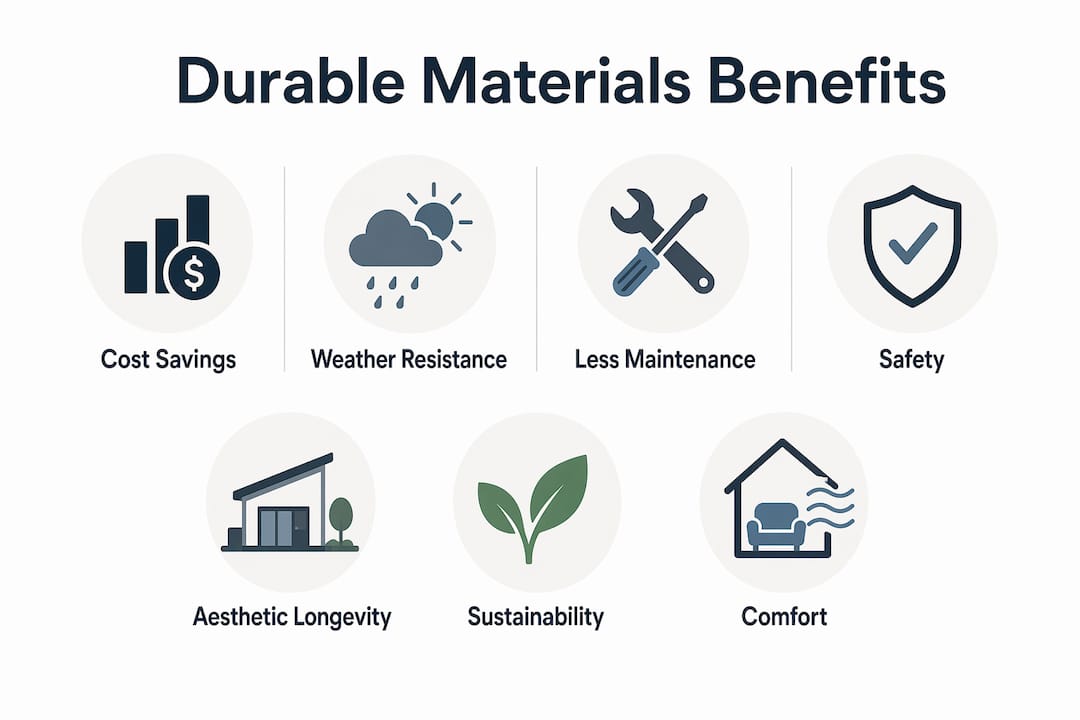
- Lower lifetime cost — fewer replacements and less recurring maintenance over a 20-year horizon
- Weather and UV resistance — materials rated for thermal cycling, intense sun, and monsoon-style runoff hold their finish and structure longer
- Reduced maintenance burden — durable surfaces require less frequent sealing, cleaning, and repair
- Sustainability — longer lifespans mean less material consumed and less construction waste generated
- Property value — quality hardscape and outdoor structures are visible, tangible signals of a well-maintained home
The practical decision rule: choose materials matched to your specific climate exposure and traffic load, then plan installation details carefully. Material quality alone does not determine outcome — assembly and drainage do.
Table of Contents
- Why durable materials save you money, reduce waste, and improve safety
- 1. Long-term cost savings and ROI
- 2. Weather and UV resistance
- 3. Reduced maintenance time and cost
- 4. Improved safety and health
- 5. Aesthetic longevity and resale impact
- 6. Environmental and sustainability benefits
- 7. Consistent comfort and usability
- Which material families hold up best outdoors?
- How to choose the right materials for your project
- Matching materials to your climate and microclimate
- Maintenance practices that protect your investment
- Durability as a sustainability strategy: the evidence base
- Key Takeaways
- Why material choice is only half the equation
- Uniquecompanies builds outdoor spaces that hold up in Phoenix’s climate
- Useful sources and further reading
Why durable materials save you money, reduce waste, and improve safety
The financial case for durable outdoor materials rests on lifecycle cost, not purchase price. A lower-grade concrete paver installed for less upfront may need resetting, resealing, or full replacement within 8–12 years. A properly installed natural stone paver in the same location can last 25–50+ years in Arizona conditions, spreading the original investment across a much longer service period. When you build a 20-year cost model that includes maintenance labor, sealants, and mid-life replacement for the cheaper option, premium durable materials often cost less in total.
The environmental argument follows the same logic. Every replacement cycle consumes new raw materials, generates demolition waste, and produces emissions from transport and installation. Designing for durability directly supports circular-economy goals by reducing resource consumption across a product’s full life. Fewer replacements mean lower lifetime embodied carbon — durability is, in practice, a sustainability strategy.
Safety is the third driver. Corroded metal fasteners, UV-degraded composite decking, and frost-heaved stone all create trip and fall hazards. Materials that resist these failure modes maintain their structural integrity and surface texture over time, keeping outdoor spaces safe for everyday use.
Key failure modes that durable materials prevent:
- UV degradation of surface coatings and polymer-based products
- Moisture absorption leading to rot, freeze/thaw cracking, or mold growth
- Corrosion of fasteners and structural connectors
- Thermal cycling stress that opens joints and cracks brittle materials
- Erosion of base materials under improperly drained surfaces
Pro Tip: Integrate material selection into the design phase, not the bidding phase. Specifying the right material for each assembly and exposure condition at the start prevents costly substitutions mid-project and protects long-term performance.
1. Long-term cost savings and ROI
Premium durable materials carry a higher upfront price, but a 20-year cost model almost always favors them. Factor in maintenance labor, sealant applications, and the full cost of mid-life replacement for lower-grade options — including disposal and reinstallation — and the gap closes quickly. Natural stone pavers, for example, can justify their higher upfront cost through lower replacement frequency and higher perceived property value in Arizona climates.
2. Weather and UV resistance
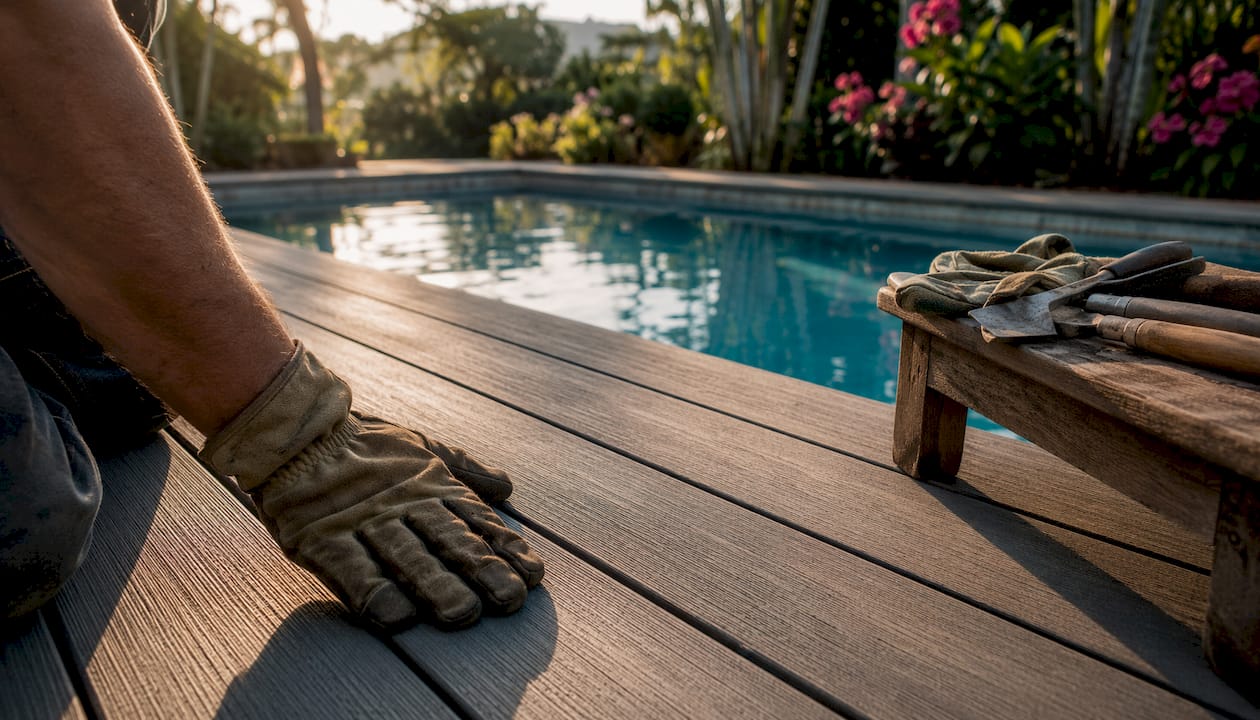
Three factors determine how exterior materials perform under summer conditions: moisture absorption, UV exposure tolerance, and response to daily thermal cycling. Materials that score well on all three — dense natural stone, powder-coated aluminum, engineered composites — hold their finish and structural integrity through years of intense sun and temperature swings. Materials that fail on even one factor tend to degrade faster than their rated lifespan suggests.
3. Reduced maintenance time and cost
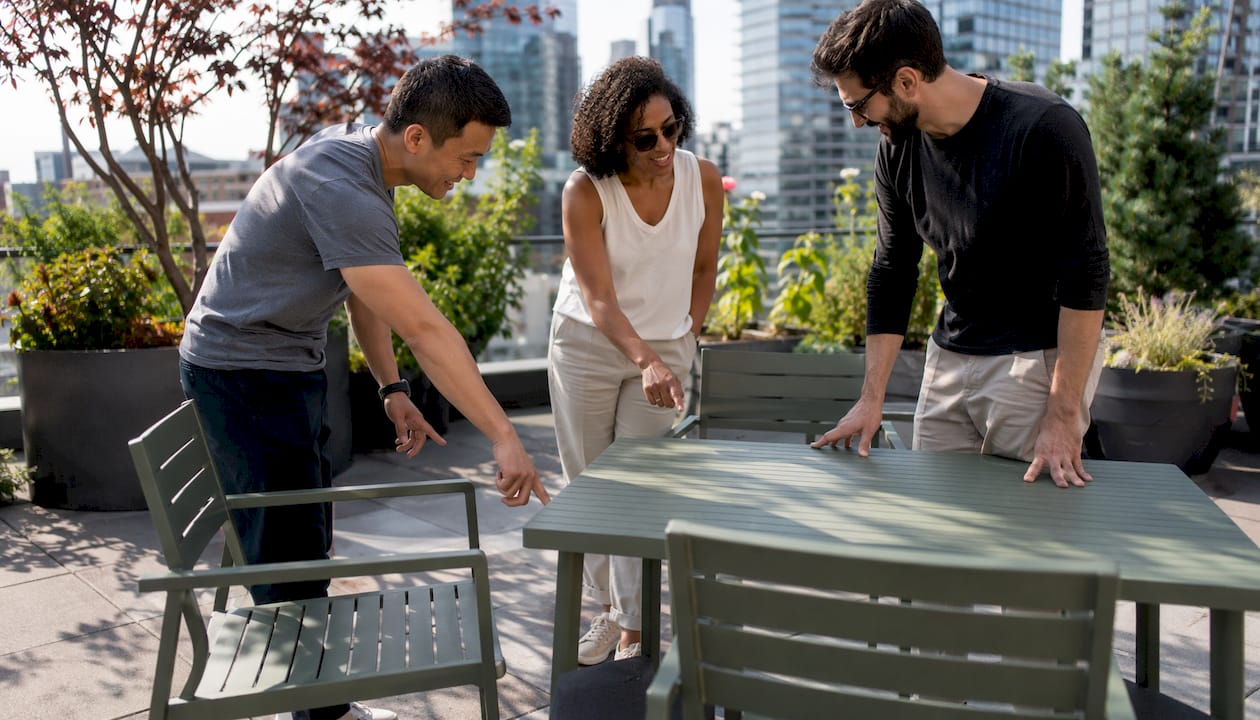
Durable materials typically require less frequent intervention. Powder-coated aluminum furniture needs little more than an occasional rinse. Dense stone pavers may need resealing every few years rather than annually. Engineered composites remove moisture absorption as a primary failure driver, which cuts the maintenance tasks associated with swelling, rot, and surface checking. Less maintenance time also means fewer chemical treatments applied to surfaces near pools, gardens, and children’s play areas.
4. Improved safety and health
Durable materials that resist rot, mold, and UV degradation maintain safer surface conditions. Non-toxic powder-coat finishes on aluminum furniture eliminate the off-gassing concerns associated with some painted or treated wood products. Stone and composite surfaces that retain their texture do not become slick the way UV-bleached or moisture-damaged surfaces can. For pool decks and outdoor kitchen areas — high-traffic, wet-exposure zones — this matters considerably.
5. Aesthetic longevity and resale impact
A patio or pool deck that looks as good in year 15 as it did in year 2 adds visible value to a property. Faded, cracked, or stained surfaces signal deferred maintenance to buyers and appraisers. Quality hardscape and durable outdoor structures are among the most visible indicators of how a home has been maintained, and they tend to hold their appeal longer than soft landscaping, which changes seasonally.
6. Environmental and sustainability benefits
Longer material lifespans reduce the total volume of raw materials consumed and the construction waste generated over a property’s life. Specifying durable materials to avoid early finish failure and recurring replacement-driven projects is a recognized industry practice for reducing environmental impact. For homeowners interested in sustainable landscaping, choosing materials with long service lives is one of the most direct levers available.
7. Consistent comfort and usability
Materials with low thermal storage — light-colored stone, certain composites — stay cooler underfoot in direct sun, making outdoor spaces genuinely usable during peak summer hours. Dark, dense materials absorb and radiate heat, which can make a patio uncomfortable from midday through early evening in Phoenix. Choosing materials for thermal comfort, not just appearance, extends the hours and months a space gets used.
Which material families hold up best outdoors?
Understanding the trade-offs across material categories helps you match the right choice to each surface, exposure level, and use case.
Powder-coated aluminum and stainless metals
- Resists: rust, UV-induced coating failure, moisture
- Common failure mode: scratches that expose bare metal to corrosion; poor-quality coatings that chip
- Best use: furniture frames, pergola structures, gate hardware, outdoor kitchen components
Powder-coated aluminum resists rust and dries quickly after rain, making it one of the most practical choices for furniture in wet-exposure or poolside settings. Stainless steel (grade 316 for coastal or high-humidity applications) suits structural connectors and fasteners where corrosion failure would be a safety issue.
HDPE and wood-plastic composites
- Resists: moisture absorption, UV fading, rot, insect damage
- Common failure mode: surface scratching; heat retention in dark colors; lower-quality products that warp under sustained high heat
- Best use: decking, pergola cladding, raised planters, fencing
Top-tier engineered composites remove moisture absorption as a primary failure driver and show measurable durability gains in humid and high-heat environments. In Phoenix, choose light-colored composite products and verify the manufacturer’s temperature rating before specifying.
Dense natural stone and engineered stone
- Resists: UV, abrasion, thermal cycling when properly installed
- Common failure mode: porous stones (travertine, some limestone) staining or spalling; improper base prep causing settling and cracking
- Best use: pool decks, patios, pathways, retaining walls, edging
Natural stone kerb blocks and quality pavers deliver lower long-term maintenance and higher resilience to monsoon-style runoff compared with precast concrete edging in Arizona climates. Dense basalt and granite hold up well; lighter travertine requires sealing and periodic maintenance.
Durable hardwoods: teak and ipe
- Resists: moisture (due to natural oils in teak), rot, insects
- Common failure mode: surface graying without oiling; ipe requires pre-drilling to avoid splitting; both are heavy and expensive
- Best use: furniture, pergola beams, accent decking, outdoor dining surfaces
Teak is naturally moisture-resistant because of its natural oils, making it a reliable choice for wet-exposed applications. Ipe offers comparable hardness and rot resistance but demands more precise installation. Both woods gray attractively without treatment or can be maintained with periodic oiling for a richer tone.
All-weather fabrics and coated textiles
- Resists: UV fading, mildew, moisture absorption (solution-dyed acrylic and PVC-coated fabrics)
- Common failure mode: seam failure; abrasion on high-use surfaces; cheaper fabrics that fade within one season
- Best use: shade sails, pergola covers, cushion fabric, outdoor upholstery
Solution-dyed acrylic fabrics (Sunbrella being the most widely recognized standard) hold color significantly longer than surface-dyed alternatives because the pigment runs through the fiber rather than sitting on top. For Phoenix applications, UV stability is the primary specification criterion.
Material comparison overview:
| Material | Typical lifespan | Maintenance frequency | Primary upkeep task |
|---|---|---|---|
| Powder-coated aluminum | 20–40+ years | Low (annual) | Rinse, inspect coating |
| Engineered composite | 25–30 years | Low (annual) | Clean, inspect fasteners |
| Dense natural stone | 25–50+ years | Low to moderate | Reseal every 2–5 years |
| Teak / ipe hardwood | 20–30+ years | Moderate | Oil or allow to gray |
| All-weather fabric | 8–15 years | Low to moderate | Clean, store or cover |
Pro Tip: Fasteners and connectors determine long-term performance as much as the primary material. Use stainless steel or hot-dipped galvanized hardware throughout, and design joints with drainage clearance so water does not pool at connection points.
How to choose the right materials for your project
A clear decision framework prevents the most common mistake: choosing a material based on appearance alone without accounting for exposure, traffic, and realistic maintenance capacity.
Planning checklist:
- How long do you plan to keep the home? A 5-year horizon favors different choices than a 20-year one.
- What is the traffic load? A pool deck used daily by a family needs higher abrasion resistance than a rarely used side path.
- What is the sun and moisture exposure? South- and west-facing surfaces in Phoenix receive the most intense UV and thermal stress.
- What maintenance cadence are you willing to commit to? Some materials perform well only with consistent care.
- What is your total budget, including installation, base prep, and a realistic maintenance reserve?
Questions to ask your contractor or designer:
- What base depth and compaction specification are you using, and why?
- How are expansion joints sized and spaced for this material in this climate?
- What is the warranty on materials and installation, and what voids it?
- What sealing or finishing schedule do you recommend, and what products?
- How does this material perform after a monsoon event — does it shift, stain, or require post-storm maintenance?
Decision flow for common surface choices:
- If the surface is a pool deck with daily wet exposure → prioritize slip resistance and low thermal storage (light-colored stone or composite).
- If the surface is a patio with full sun exposure → prioritize UV stability and thermal comfort (light stone, composite, or concrete with light aggregate finish).
- If the surface is a pathway with moderate traffic → natural stone or stabilized decomposed granite with proper edging and base.
- If the surface is a retaining wall or edging → dense natural stone or powder-coated metal for monsoon resilience.
For durable outdoor construction in Arizona, proper base depth, geotextile placement, and compaction are as important as the surface material itself. Skipping base prep to reduce cost is the single most common cause of premature failure in desert hardscapes.
Matching materials to your climate and microclimate
Climate stressors in Phoenix and the broader Sonoran Desert region are specific and demanding. UV intensity is among the highest in the continental United States. Daily thermal cycling can swing 30–40°F between night and day. Monsoon season delivers short, high-intensity rainfall events that test drainage design. Any material specification that ignores these conditions will underperform, regardless of its quality rating.
Climate checklist for Phoenix and desert environments:
- UV stability: specify materials with UV-stable finishes or inherent UV resistance; avoid surface-dyed fabrics and low-grade polymer products
- Thermal cycling: use expansion joints sized for local temperature ranges; avoid large, unjointed concrete slabs on exposed surfaces
- Heat absorption: choose light-colored materials for large horizontal surfaces; dark materials on south- or west-facing patios can reach temperatures that make them unusable and accelerate finish degradation
- Monsoon drainage: design all hardscape with positive drainage away from structures; specify permeable base systems where site conditions allow
- Sealing intervals: porous stone in desert climates may need resealing more frequently than manufacturer guidelines suggest due to UV and thermal stress
Drought-resistant hardscape methods and proper installation details — correct base depth, geotextile, and compaction — are fundamental to lasting desert hardscapes. A well-specified base prevents the settling and cracking that monsoon saturation causes in undersized or poorly compacted subgrades.
A practical Phoenix example: a west-facing pool deck specified with dark-colored concrete pavers and no expansion joints will develop surface cracking within a few years from thermal stress alone. The same deck built with light-colored natural stone on a properly compacted aggregate base, with joints filled with stabilized sand, will handle the same thermal cycling and monsoon events with minimal intervention for decades. The material selection and detailing together determine the outcome — neither alone is sufficient.
Pro Tip: In desert climates, test material samples in place during the hottest part of the day before finalizing your specification. Surface temperature and glare vary significantly between materials with similar appearance, and comfort drives how much you actually use the space.
Maintenance practices that protect your investment
Even the most durable materials need periodic attention. The goal is a simple, calendar-based schedule that prevents small issues from becoming costly repairs.
Annual tasks (all material types):
- Inspect all joints, edges, and transitions for movement, cracking, or weed intrusion
- Clean surfaces with appropriate methods (avoid pressure washing composite decking at high pressure; use manufacturer-recommended cleaners for stone)
- Check fasteners and connectors on furniture and structures for corrosion or loosening
- Inspect fabric covers and cushions for seam failure or UV damage
Every 2–3 years:
- Reseal porous stone surfaces (travertine, limestone, some sandstone) with a penetrating sealer rated for exterior use
- Re-oil teak or ipe furniture if maintaining a natural tone rather than allowing gray patina
- Inspect composite decking for surface wear and fastener integrity
- Top-dress decomposed granite paths and replenish gravel areas that have migrated
Every 5+ years:
- Evaluate powder-coat finish on aluminum structures; touch up chips before corrosion starts
- Inspect retaining wall drainage and backfill for signs of hydrostatic pressure or settlement
- Review all-weather fabric for UV degradation; replacement at this interval is normal for most fabrics
Do and don’t checklist:
- Do use penetrating sealers on porous stone; surface sealers trap moisture and can cause spalling
- Do use stainless steel or coated fasteners when making repairs; never mix metals
- Don’t pressure-wash composite decking at high pressure or with a zero-degree nozzle
- Don’t use bleach-based cleaners on natural stone; they degrade the surface over time
- Don’t skip post-monsoon inspections; early detection of joint movement or drainage issues prevents larger failures
Consistent maintenance also protects warranty coverage. Most manufacturer warranties for composite decking, stone sealers, and powder-coat finishes include a maintenance requirement. Documenting your maintenance schedule supports warranty claims and adds a verifiable record for resale.
Durability as a sustainability strategy: the evidence base
The connection between material durability and environmental performance is direct. Durability reduces resource consumption and waste across a product’s life, and the industry recommends designing for durability to support circular-economy goals. Every replacement cycle avoided is a cycle of raw material extraction, manufacturing, transport, and demolition waste that does not occur.
Engineered composites that eliminate moisture absorption as a failure driver extend service life in humid and high-heat environments, reducing the replacement frequency that drives lifetime material consumption. For outdoor structures in Phoenix, this means fewer full-deck replacements over a 30-year ownership period.
Durable design decisions that account for moisture movement and drainage create outdoor spaces that age better than those built with premium materials but poor detailing. The implication for project planning is clear: material quality and installation quality must be specified together.
Uniquecompanies brings over 24 years of Phoenix-area experience to material specification, integrating material selection into the design phase rather than treating it as a procurement afterthought. The in-house design-build process covers permitting, base engineering, and finish schedules in a single coordinated workflow, which is how installation details get executed correctly rather than value-engineered away during bidding. For homeowners planning durable outdoor living in Arizona, that integration is what separates a 30-year installation from one that needs attention in year 5.
Key Takeaways
Durable, climate-matched outdoor materials lower lifetime cost, reduce waste, and improve safety — and the outcome depends as much on installation quality as on material choice.
| Point | Details |
|---|---|
| Model 20-year cost, not purchase price | Include maintenance labor, sealants, and mid-life replacement to compare true costs accurately. |
| Stone pavers justify their price in Arizona | Properly installed natural stone can last 25–50+ years, reducing replacement frequency and improving resale value. |
| Detailing determines performance | Expansion joints, drainage design, and base compaction matter as much as the material itself. |
| Durability is a sustainability strategy | Longer lifespans reduce replacement cycles, embodied carbon, and construction waste over a property’s life. |
| Uniquecompanies integrates material selection | With 24+ years of Phoenix experience, Uniquecompanies specifies and installs durable materials as part of a coordinated design-build process. |
Why material choice is only half the equation
The conventional wisdom in outdoor design treats material selection as the primary decision — pick the right stone, the right composite, the right metal, and the project will last. That framing is incomplete. The evidence consistently points to assembly and detailing as the variables that separate long-performing installations from early failures. A premium teak deck installed without proper drainage clearance at the ledger will rot from the inside out. A high-grade natural stone patio on an undersized, poorly compacted base will shift and crack after the first monsoon season.
What this means practically is that the contractor’s installation specification matters as much as the material specification. Homeowners evaluating bids should ask specifically about base depth, expansion joint spacing, fastener specification, and drainage design — not just material brand and grade. A lower bid that skips proper base prep will cost more over 10 years than a higher bid that gets the detailing right.
The other underappreciated point: microclimate within a single backyard can vary enough to warrant different material choices on different surfaces. A shaded north-facing patio and a west-facing pool deck 20 feet apart face genuinely different UV, thermal, and moisture conditions. Treating them as identical surfaces and specifying the same material for both is a common planning mistake that shows up as uneven aging and inconsistent maintenance demands.
Uniquecompanies builds outdoor spaces that hold up in Phoenix’s climate
Phoenix homeowners who invest in premium outdoor spaces deserve materials and installation that perform for decades, not just for the first few seasons. Uniquecompanies designs and builds custom hardscape, pools, and outdoor kitchens with material specifications developed specifically for Arizona’s UV intensity, thermal cycling, and monsoon drainage demands. The in-house process covers design, permitting, base engineering, and construction under one roof, which means the material choices made in the design phase are actually executed in the field.
For homeowners planning a pool deck, patio, or hardscape installation in Phoenix, the starting point is a design consultation that accounts for your specific site, exposure, and long-term goals. Contact Uniquecompanies to schedule a consultation and see how 24 years of local experience translates into outdoor spaces built to last.
Useful sources and further reading
- Are stone pavers worth it in Arizona? — Citadel Stone — lifecycle observations and ROI analysis for natural stone pavers in Arizona conditions
- Kerb block cost comparison Arizona — Citadel Stone — performance and cost comparisons for stone vs. precast edging in monsoon climates
- Choosing eco-friendly materials for long-lasting garden structures — Forestar Outdoor — durability and UV performance data for engineered composites
- Outdoor living space design: Choosing materials for summer — Modern Mill — practical framework for evaluating moisture absorption, UV tolerance, and thermal cycling
- Steps to build a drought-resistant Arizona hardscape — Cultivating Flora — installation best practices for desert hardscape including base prep and drainage
- Optimize product durability to transcend take, make and waste — Dassault Systèmes — circular-economy framework connecting durability to reduced resource consumption
- 8 materials for outdoor furniture and when to pick each — Castlery — material strengths and recommended use cases for metals and hardwoods
- The role of material selection in outdoor spaces — Uniquecompanies — publisher guidance on integrating durable materials into Arizona outdoor living design