TL;DR:
- Personalized outdoor spaces in Phoenix prioritize shade, cooling, and native, drought-tolerant landscaping.
- Properly designed features can yield a 65% to 80% ROI, with outdoor kitchens reaching up to 200%.
- Strategic planning focusing on site assessment, shade, materials, and infrastructure ensures functional, year-round usability.
Phoenix’s desert climate is often seen as a barrier to luxury outdoor living, but the opposite is true. With the right design strategy, 300+ sunny days a year become a genuine asset. Personalized outdoor living in the Phoenix metropolitan area means integrating custom pools, outdoor kitchens, shade structures, and climate-adapted landscaping into a cohesive space that works as hard as it looks good. This guide covers the core principles of Phoenix-specific design, what real ROI numbers look like, which materials and features perform best in desert conditions, and a clear planning process to move your project forward with confidence.
Table of Contents
- What personalized outdoor living means in Phoenix
- The value and ROI of custom outdoor spaces
- Design essentials: Features, materials, and sustainability
- Planning your personalized outdoor living space: Steps for success
- Our perspective: Luxury is personal and practical in Phoenix
- Transform your Phoenix backyard with custom outdoor living solutions
- Frequently asked questions
Key Takeaways
| Point | Details |
|---|---|
| Phoenix-specific design is key | Custom outdoor living spaces require climate-adapted features for comfort and durability in the desert. |
| High ROI possible | Luxury projects can yield up to 80% ROI with the right mix of amenities. |
| Shade and sustainability first | Prioritize shade, native plants, and efficient design for year-round usability and water savings. |
| Stepwise planning reduces headaches | A stage-by-stage approach ensures every detail—shade, drainage, materials—is well integrated. |
What personalized outdoor living means in Phoenix
Personalized outdoor living is not simply adding a patio or a pool. It means designing a space that reflects how you actually live, accounts for your specific lot and microclimate, and aligns with your home’s architecture. In Phoenix, that definition carries additional weight because the environment demands deliberate choices at every layer of the design.
Generic outdoor spaces treat climate as a backdrop. Personalized spaces treat it as a design parameter. A backyard in Scottsdale facing west has a fundamentally different shade and heat load than a north-facing lot in Chandler. The materials, shade placement, cooling features, and plant selection must respond to those specific conditions, not a one-size-fits-all template.
When you explore outdoor living spaces in Phoenix, you’ll see that effective personalization layers three things together: your functional goals (entertaining, relaxing, swimming), your aesthetic preferences, and the physical realities of your site. This integration is what separates a space that gets used year-round from one that sits empty from June through September.
Key elements that define personalized outdoor living in Phoenix include:
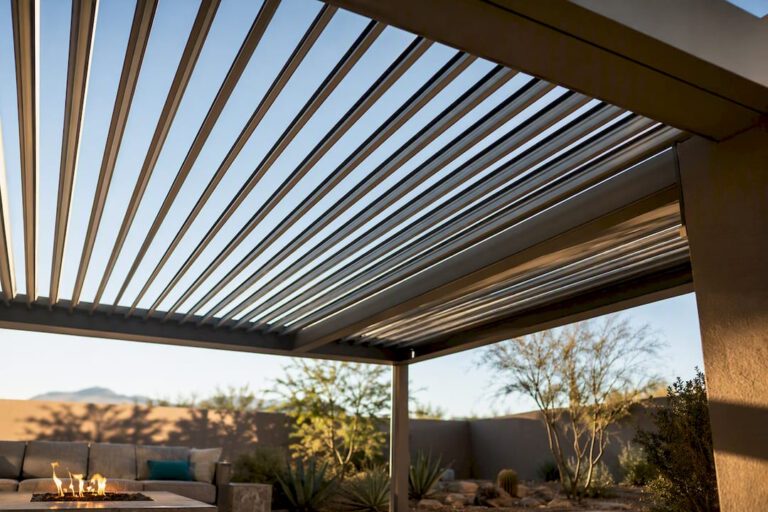
- Shade structures: Pergolas, ramadas, and cantilever umbrellas positioned to block afternoon sun and reduce surface temperatures
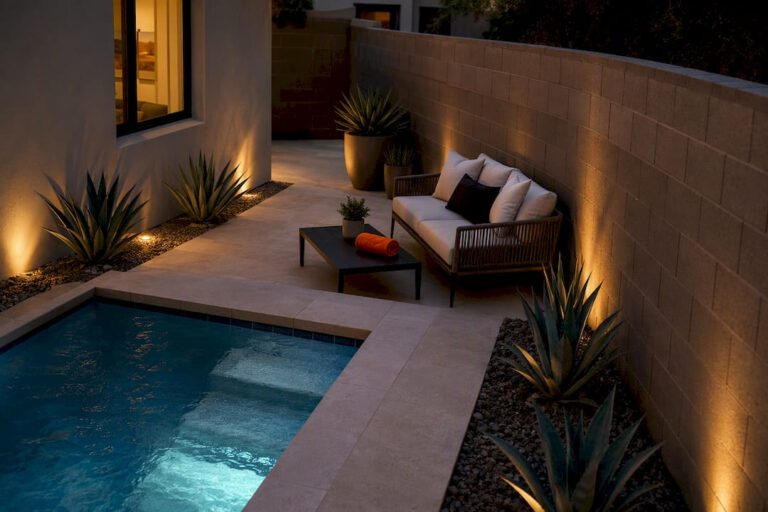
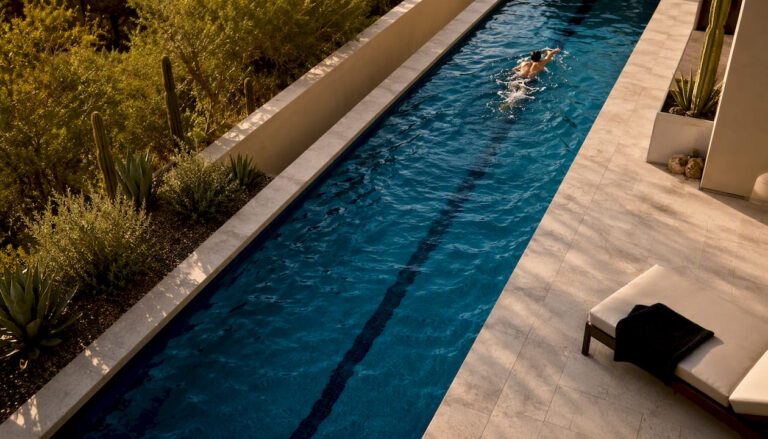
- Custom pools and spas: Sized, shaped, and equipped for both aesthetics and thermal comfort
- Outdoor kitchens: Designed for the cooking style and entertaining frequency of your household
- Xeriscaping and native planting: Drought-tolerant landscaping that reduces irrigation demand while maintaining visual richness
- Misting systems and cooling patios: Engineered to extend usable hours during peak summer months
- Drainage planning: Critical on sloped lots and during Arizona’s monsoon season
“Phoenix-specific adaptations like heat-resistant materials and shade structures are vital to creating outdoor spaces that perform and endure in desert conditions.”
The result is a space calibrated to your life, not a catalog selection dropped into your backyard. That calibration is where real value is created.
The value and ROI of custom outdoor spaces
Having defined the core concept and local essentials, let’s explore whether these customizations really pay off. The short answer is yes, and the numbers are specific enough to inform your budget decisions.
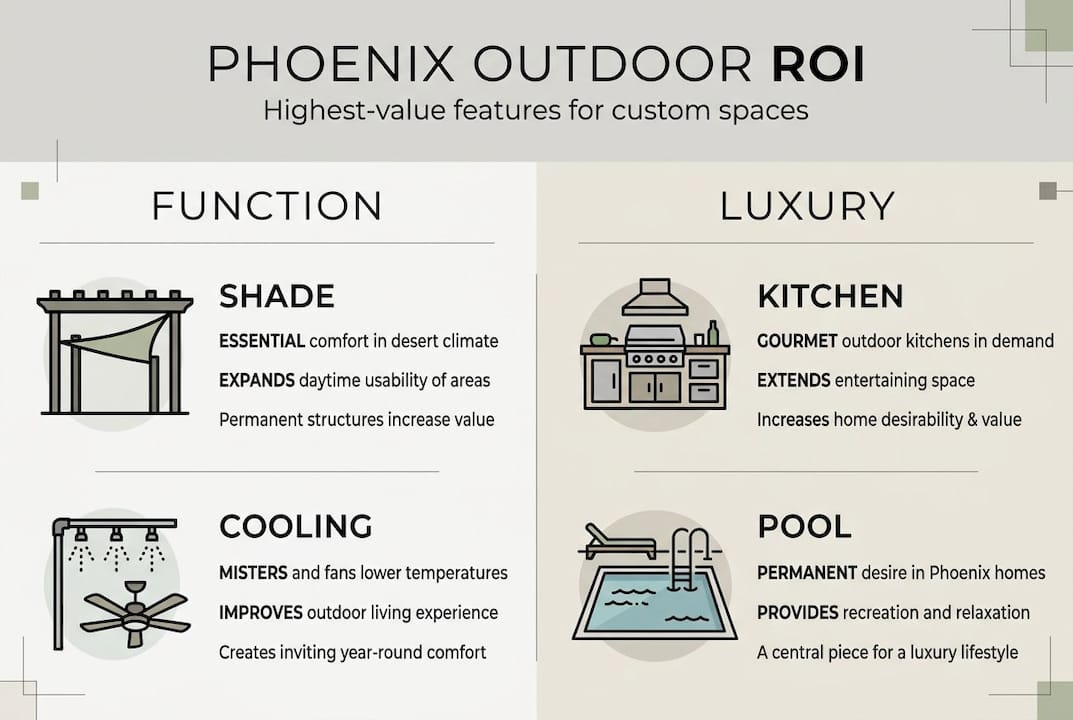
Return on investment for outdoor living projects varies by feature type, quality level, and how well the design fits the local market. In Phoenix, climate-adapted features consistently outperform generic installs because buyers in this market understand and value them. Empirical ROI ranges across feature categories show a clear pattern:
| Feature | Typical ROI range | Notes |
|---|---|---|
| Outdoor kitchen | 60% to 200% | Higher end for fully integrated, high-spec builds |
| Custom pool | 50% to 80% | Boosted by Phoenix’s year-round swim season |
| Complete outdoor space | 65% to 80% | Cohesive design outperforms piecemeal additions |
| Luxury full build | Variable | Projects from $300k to $750k target premium buyers |
These figures reflect more than resale value. Usability, curb appeal, and lifestyle quality all contribute to the return. A well-designed outdoor kitchen that your household uses three nights a week delivers value that doesn’t show up on a home appraisal but absolutely factors into quality of life and long-term satisfaction with the investment.
Phoenix-specific features tied to luxury custom patio features tend to perform better in this market because local buyers recognize their practical value. A misting system or a properly shaded outdoor dining area isn’t a luxury add-on here. It’s a functional necessity that makes the space usable.
Key value drivers for Phoenix outdoor projects:
- Year-round usability: Properly designed spaces extend the outdoor season well into summer and winter
- Curb appeal and first impressions: Cohesive landscaping and hardscape elevate perceived home value
- Resale positioning: Homes with custom outdoor spaces attract buyers willing to pay a premium
- Energy offsets: Shade structures and strategic planting can reduce indoor cooling loads
Working with best pool builders in Phoenix who understand local resale dynamics ensures that your investment is positioned for the strongest possible return, both in daily use and eventual sale.
Stat to know: Complete custom outdoor spaces in the Phoenix area yield 65% to 80% ROI on average, with outdoor kitchens reaching as high as 200% when fully integrated into a cohesive design.
Design essentials: Features, materials, and sustainability
With clear ROI benefits, you’ll want to make each layer of your space work for Phoenix living. Here’s how to design it right.
The most effective Phoenix outdoor spaces share a common structure: shade first, then cooling, then features, then finishes. Skipping ahead to the aesthetic layer before solving the thermal environment is one of the most common and costly mistakes homeowners make.
Shade is the #1 feature, and xeriscaping saves up to 70% water compared to traditional turf-based landscaping. These two facts should anchor every design conversation you have.
Top design steps for a functional Phoenix outdoor space:
- Map your sun exposure by time of day and season before placing any structure
- Locate shade structures to intercept afternoon west and southwest sun
- Select hardscape materials rated for sustained heat above 110°F
- Integrate water features and pools to create natural cooling zones
- Plan xeriscaping with native species to reduce irrigation by up to 70%
- Design electrical and lighting plans before concrete is poured
For homeowners considering fireplace and patio ideas, it’s worth noting that a fireplace or fire feature is most effective when positioned in a covered zone that also serves as a winter gathering area. This dual-season thinking maximizes the usable footprint of your space.
Edge cases matter too. Sloped lots require engineered drainage to handle monsoon runoff without eroding hardscape or flooding lower areas. Wind corridors, particularly in open desert lots, affect both comfort and structural requirements for shade structures.
Pro Tip: Use interactive pool and landscape design tools to visualize shade patterns and material combinations before committing to a layout. Seeing how afternoon shadows fall across your specific lot prevents expensive repositioning later.
Planning your personalized outdoor living space: Steps for success
Once you know the possibilities and pitfalls, here’s how to bring your vision from dream to reality.
Planning a custom outdoor space in Phoenix is a staged process. Rushing any phase creates problems that are expensive to fix after construction begins. The following sequence is based on what consistently produces the best outcomes for homeowners in this market.
- Assess your lot and sun exposure: Walk your yard at different times of day and note where shade falls, where heat accumulates, and where drainage flows during rain
- Define your goals clearly: Separate must-haves (shade, pool, kitchen) from nice-to-haves (fire feature, water wall, putting green)
- Set a realistic budget: Design fees typically run 10% to 15% of the total project budget, and this investment in planning pays back in reduced change orders and better outcomes
- Select experienced local professionals: Choose a firm with verifiable Phoenix-area projects and in-house permitting capability
- Use 3D visualization tools: Review your design in three dimensions before approving construction drawings
- Detail shade, electrical, and drainage early: These are infrastructure decisions that affect everything built on top of them
- Choose materials for the long term: Prioritize heat resistance, fade resistance, and low maintenance over initial cost savings
Budgeting for outdoor kitchen design specifically requires accounting for appliance-grade equipment, gas or electric infrastructure, and weather-resistant cabinetry. These are not areas where cost-cutting serves you well.
Common planning mistakes to avoid:
- Undersizing shade coverage relative to the entertaining area
- Ignoring prevailing wind direction when placing kitchen and dining zones
- Skipping engineered drainage on lots with any slope
- Prioritizing decorative finishes before solving thermal comfort
Pro Tip: Invest in infrastructure before aesthetics. A well-drained, well-shaded, properly wired outdoor space with basic finishes outperforms a visually impressive space that’s too hot to use or floods during monsoon season.
Phoenix-specific milestones include securing city or county permits before breaking ground, coordinating utility locates for gas and electrical runs, and scheduling concrete work outside peak summer heat to ensure proper curing.
Our perspective: Luxury is personal and practical in Phoenix
Most outdoor living guides treat Phoenix’s climate as a problem to manage. We see it differently. The sun, the warmth, and the long outdoor season are genuine advantages when a design is built around them rather than against them.
What we observe consistently is that generic feature lists, the kind pulled from national design trends, miss the mark in this market. A space designed for a Chicago suburb does not translate to Scottsdale. Microclimate, lot orientation, and how a household actually lives outdoors are the real design inputs.
Experienced designers integrate technology, local material knowledge, and behavioral understanding to create spaces that get used daily, not just photographed once. That daily use is the real measure of a successful project.
Our outdoor living design approach starts with your specific site and goals, not a catalog. Personalized outdoor living is not an extravagance for Phoenix homeowners. Given the climate, the resale market, and the lifestyle opportunity, it is one of the most practical investments you can make in your home.
Transform your Phoenix backyard with custom outdoor living solutions
Ready to elevate your Phoenix outdoor living experience? Turning a concept into a finished, functional space requires local expertise, integrated planning, and a design process that accounts for every layer of the environment.
At Unique Companies, we bring over 24 years of Phoenix-area experience to every project, from initial site assessment through permitting, construction, and final walkthrough. Our in-house team handles custom outdoor kitchens, unique pool features, landscaping, and hardscape as a single integrated process. That means fewer delays, cleaner coordination, and results that reflect your vision. Contact us to schedule a design consultation and see what a personalized outdoor space looks like for your specific lot and lifestyle.
Frequently asked questions
What are the most important elements in a personalized Phoenix backyard?
The most important include ample shade, climate-adapted materials, and sustainable landscaping priorities designed for 300+ sunny days. Misting systems and engineered drainage round out a fully functional space.
Does customizing my outdoor space really increase home value?
Yes. Custom kitchens, pools, and cohesive outdoor spaces consistently yield 60% to 80% ROI in the Phoenix area, with outdoor kitchens reaching higher when fully integrated.
How does personalized outdoor living help with water savings?
Using drought-tolerant plants and efficient irrigation designs can cut water use by 70% compared to traditional turf-heavy landscaping approaches.
What’s the first step in planning a customized backyard?
Assess your lot, sun exposure, and lifestyle goals before meeting with a design expert. This step-by-step planning approach prevents costly design revisions later in the process.
Are shade and cooling features really that important?
Absolutely. Properly designed shade structures can lower temperatures by 15 to 20°F, making the space genuinely usable during Phoenix’s peak summer months rather than avoided.
Recommended
- High-end outdoor spaces: luxury features, costs & design
- Why customize your Phoenix backyard? 70% water savings + luxury
- Unique Outdoor Living: Design Ideas from Unique Companies
- Luxury custom patio features for Phoenix outdoor living
- Transform Your Outdoors with True Roots: Premier Landscaping and Gardening Services in Sydney – True Roots
- Expert Home & Garden Services in Waterloo, Belgium: Transform Your Space Today