TL;DR:
- Desert landscaping uses drought-tolerant plants and hardscape materials to create sustainable, low-water outdoor spaces in arid climates. It incorporates site-specific design, layered planting, and efficient irrigation to enhance visual appeal and reduce maintenance compared to traditional lawns. Proper planning and understanding of local conditions are essential to avoid common mistakes and achieve long-term success.
Desert landscaping is defined as the practice of designing outdoor spaces with drought-tolerant plants, native species, and natural hardscape materials to thrive in arid climates while minimizing water consumption. In Arizona, this approach replaces water-intensive turf with gravel foundations, cacti, and succulents that perform reliably under intense heat and low rainfall. The industry standard term for the water-conservation side of this practice is xeriscaping, though desert landscaping is the broader design discipline that includes hardscape, shade structures, and layered planting. Understanding both terms helps Arizona homeowners make informed decisions when planning a yard that looks good year-round without straining the water supply.
What is desert landscaping and how does it work?
Desert landscaping is a climate-responsive design approach that accounts for sun exposure, drainage patterns, soil composition, and wind to create outdoor spaces suited to arid conditions. It is not simply replacing grass with gravel. A well-executed desert yard includes layered planting at multiple heights, functional hardscape zones, and irrigation systems calibrated to each plant’s actual water needs.
The core materials are gravel, decomposed granite, boulders, flagstone, and native plants such as saguaro cactus, palo verde, mesquite, and desert willow. These elements work together to reduce surface heat, limit evaporation, and create visual structure without requiring constant maintenance. The result is a yard that performs better in Phoenix’s climate than a traditional lawn ever could.
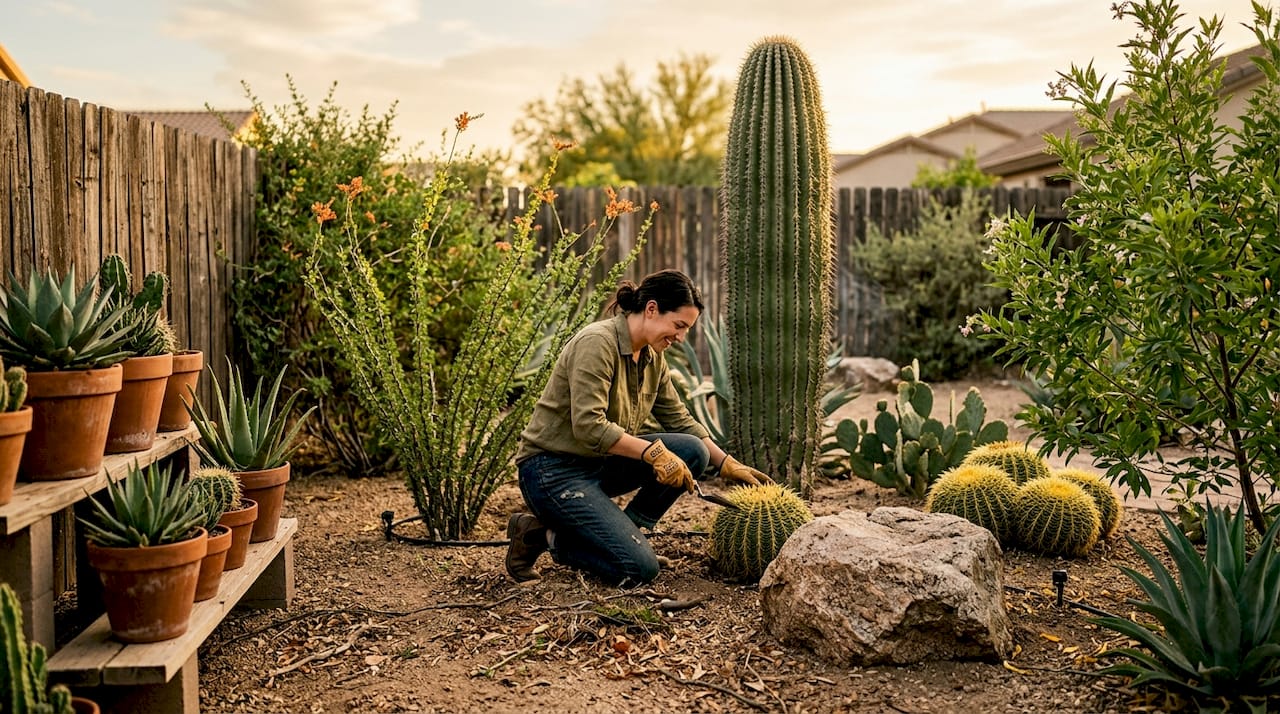
What surprises most homeowners is that desert landscapes offer intentional visual structure with layered planting, shade trees, and functional hardscape for year-round beauty. This is not a minimalist or barren aesthetic by default. Thoughtful plant selection and hardscape placement produce spaces that are genuinely inviting and seasonally dynamic.
What is xeriscaping and how does it relate to desert landscaping?
Xeriscaping is defined as a systems approach to water conservation that reduces or eliminates supplemental irrigation by selecting plants matched to local climate conditions and minimizing water loss through evaporation and runoff. The term was coined in Denver in 1981 and has since become the standard framework for low-water landscaping across the American Southwest.
Desert landscaping and xeriscaping overlap significantly, but they are not identical. Xeriscaping is a methodology focused on water efficiency. Desert landscaping is a design style that draws on xeriscaping principles while also addressing aesthetics, hardscape integration, and outdoor living functionality. You can xeriscape a yard in Seattle with ferns and rain gardens. Desert landscaping specifically references the plant palettes, materials, and design logic native to arid and semi-arid regions like the Sonoran Desert.
Common misconceptions about xeriscaping include the belief that it produces dull, monochromatic yards. In practice, a properly designed xeriscape in Arizona incorporates:
- Flowering natives such as desert marigold, globe mallow, and brittlebush that bloom in spring and fall
- Structural plants like agave, ocotillo, and barrel cactus that provide year-round form
- Shade trees including palo verde and mesquite that create canopy and reduce ground temperature
- Groundcovers such as decomposed granite and creeping thyme that suppress weeds and retain soil moisture
- Hardscape accents including boulders, dry creek beds, and flagstone paths that add texture and visual depth
Pro Tip: When planning a xeriscape, group plants by water need rather than by appearance. This practice, called hydrozoning, prevents overwatering drought-tolerant species and underwatering those that need slightly more moisture.
Turf remains the most irrigated nonfood crop in the US, covering nearly 128,000 square kilometers nationwide. Replacing even a portion of a turf lawn with xeriscape planting produces measurable water savings from the first billing cycle.
What are the essential design principles for desert landscaping?
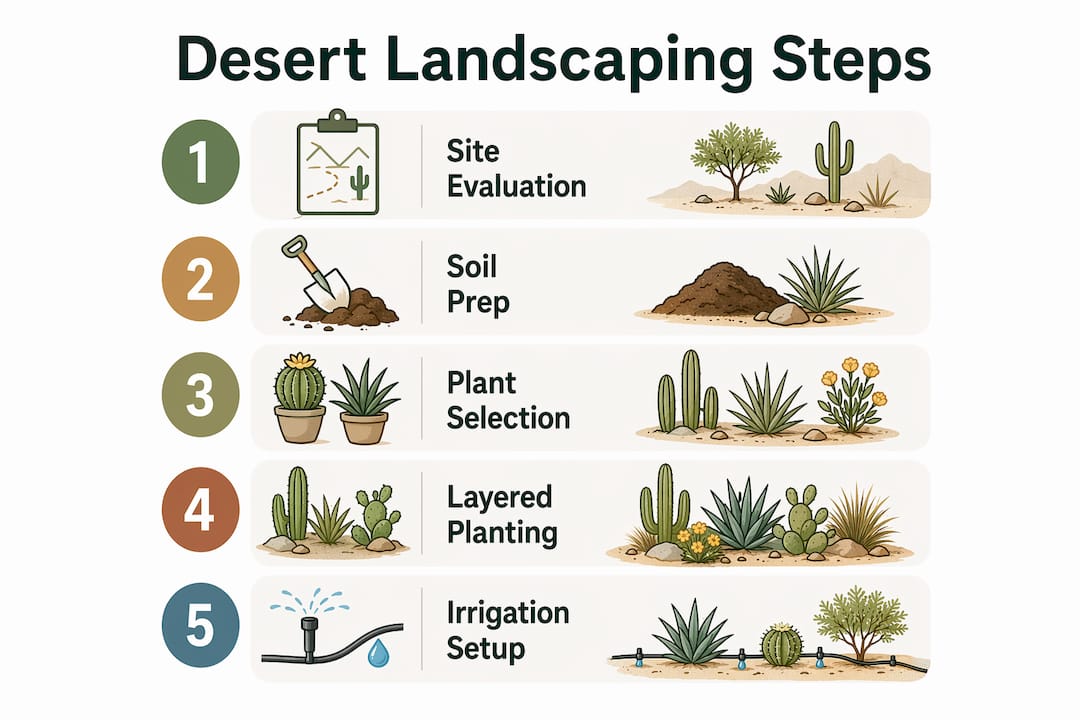
Successful desert garden design begins with a site evaluation before a single plant is purchased. The four variables that determine plant placement and hardscape layout are sun exposure, soil type, drainage flow, and prevailing wind direction. Skipping this step is the primary reason desert landscapes fail within the first two years.
Site evaluation and soil preparation
Arizona soils frequently contain caliche, a hardened calcium carbonate layer that blocks root penetration and traps water above it. Soil preparation tailored to desert conditions dramatically improves plant drought tolerance and longevity. Breaking through caliche layers, amending with compost, and adding organic mulch around plant bases creates the conditions plants need to establish deep root systems that access moisture independently.
Plant selection and layered planting
A structured plant palette for Arizona desert landscaping typically follows this sequence:
- Canopy layer: Palo verde, mesquite, and desert willow for shade and vertical interest
- Mid-story layer: Agave, ocotillo, and Texas sage for structure and seasonal color
- Ground layer: Cacti, succulents, and low-growing natives like blackfoot daisy
- Surface layer: Decomposed granite, river rock, or organic mulch to retain moisture and suppress weeds
This layered approach mirrors the natural structure of the Sonoran Desert and creates a yard that reads as intentional rather than sparse. You can explore Arizona landscaping ideas for specific plant combinations that work well in Scottsdale, Chandler, and Queen Creek.
Hardscape and irrigation integration
| Design Element | Function | Common Materials |
|---|---|---|
| Gravel groundcover | Reduces evaporation, controls weeds | Decomposed granite, pea gravel |
| Boulders and rock features | Adds structure, retains heat | Arizona flagstone, river rock |
| Shade structures | Lowers ambient temperature | Pergolas, shade sails, ramadas |
| Drip irrigation | Delivers water directly to roots | Emitter lines, pressure regulators |
| Dry creek beds | Manages stormwater runoff | Cobblestone, boulders, gravel |
Drip irrigation paired with hydrozoning delivers water directly to root zones, reducing waste from evaporation and overspray. Seasonal schedule adjustments matter as well. Summer months require more frequent checks, while watering frequency drops significantly during cooler months to avoid waste and root rot.
Pro Tip: Install a smart irrigation controller with a weather sensor. These devices automatically adjust watering schedules based on rainfall and temperature, which prevents the single most common cause of plant loss in new desert landscapes: overwatering during monsoon season.
How does desert landscaping compare to traditional turf in Arizona?
The water savings from switching to desert landscaping are concrete and well-documented. Modern xeriscape landscapes use 40 to 60% less water than conventional irrigated yards, a figure driven by advances in plant palettes and drip irrigation technology. For a Phoenix homeowner with a 5,000-square-foot yard, that reduction translates to thousands of gallons saved per month during summer.
Beyond water, the maintenance comparison favors desert landscaping on nearly every metric. Turf requires weekly mowing, monthly fertilization, seasonal overseeding, and regular pest management. A mature desert yard requires seasonal pruning, occasional weed removal from gravel areas, and irrigation system checks twice a year. The labor and cost difference is significant over a five-year period.
Desert landscaping also delivers ecological benefits that turf cannot. Xeriscaping promotes native plants and water conservation, improving urban biodiversity and reducing the heat island effect in residential neighborhoods. Native plants support pollinators including native bees, hummingbirds, and butterflies that are absent from turf-dominated yards.
The most persistent misconception is that desert yards look barren or unfinished. This perception comes from poorly executed projects that use gravel and a few cacti without any design logic. A professionally designed desert yard in Scottsdale or Queen Creek incorporates rock features, shade structures, and layered planting that create an outdoor space with genuine visual appeal across all four seasons.
What are the most common pitfalls when implementing desert landscaping?
Planning errors account for the majority of failed desert landscape projects in Arizona. The most frequent mistakes are preventable with proper preparation.
- Ignoring drainage: Arizona monsoon storms deliver intense rainfall in short periods. Without graded drainage paths and dry creek beds, water pools against foundations and drowns drought-tolerant plants not designed for standing water.
- Improper plant placement: Full-sun cacti planted in afternoon shade, or shade-preferring plants placed in west-facing exposures, decline within one growing season. Match each plant’s sun requirement to its actual placement on your site.
- Skipping soil amendment: Planting directly into unamended caliche-heavy soil without breaking the hardpan layer produces shallow root systems that cannot access deep moisture reserves during dry periods.
- Overwatering new plants: New desert plants need supplemental irrigation to establish, but many homeowners continue watering at establishment rates indefinitely. Most native plants become self-sufficient after one to two full growing seasons.
- Neglecting mulch: A 3-inch layer of organic mulch or decomposed granite around plant bases reduces soil temperature and slows evaporation. Skipping this step increases water demand by a measurable margin.
For guidance on realistic plant selection and what to expect from desert species in Arizona conditions, it helps to consult with professionals who work in the local climate daily.
Pro Tip: Before finalizing your plant list, walk your yard at 10 a.m., 1 p.m., and 4 p.m. on a summer day and note where shade falls at each time. This three-point observation reveals microclimates that no site plan can capture and prevents costly placement errors.
Key takeaways
Desert landscaping succeeds in Arizona when site-specific conditions drive every design decision, from soil preparation and plant placement to irrigation scheduling and hardscape selection.
| Point | Details |
|---|---|
| Core definition | Desert landscaping uses drought-tolerant plants and natural hardscape to suit arid climates. |
| Xeriscaping distinction | Xeriscaping is the water-conservation methodology; desert landscaping is the broader design discipline. |
| Water savings | Modern desert landscapes use 40 to 60% less water than traditional irrigated turf yards. |
| Design priority | Site evaluation covering sun, soil, drainage, and wind must precede any planting or hardscape work. |
| Common pitfall | Overwatering and poor drainage are the leading causes of plant failure in new desert landscapes. |
Why desert landscaping is the right direction for Arizona yards
I have worked alongside homeowners across the Phoenix metro area for years, and the pattern I see most often is this: people delay converting their yards because they assume desert landscaping means settling for less. They picture gravel and a lone saguaro. What they actually get, when the design is done correctly, is a yard that performs better, costs less to maintain, and looks more interesting than the turf it replaced.
The shift in public perception over the past decade is real. Advances in landscape engineering and soil preparation have produced desert yards with genuine visual variety, seasonal color, and outdoor living functionality that rivals anything you would see in a water-rich climate. The difference is that these yards work with Arizona’s conditions rather than against them.
What I find most encouraging is that homeowners who commit to a well-designed desert yard rarely look back. The reduction in weekly maintenance alone changes how people relate to their outdoor space. Instead of managing a lawn, they are actually using their yard. That shift in experience is what sustainable desert gardening ultimately delivers.
If you are evaluating whether to make the transition, the honest answer is that the sooner you start, the sooner your plants establish and your water bills reflect the change. The design work upfront pays dividends for decades.
— Philipp
Transform your Arizona yard with Uniquecompanies
Uniquecompanies has spent over 24 years designing and building luxury outdoor environments across Scottsdale, Chandler, Queen Creek, and the broader Phoenix metro area. Their team handles every phase of a desert landscaping project in-house, from initial site evaluation and 3D design visualization through permitting, installation, and final walkthrough.
If you are ready to replace water-intensive turf with a yard that performs in Arizona’s climate and looks exceptional year-round, Uniquecompanies offers luxury landscaping design and installation tailored specifically to desert conditions. Their services extend beyond planting to include custom pools, outdoor kitchens, hardscape features, and hardscape design and installation that integrate naturally with desert plant palettes. Contact Uniquecompanies to schedule a consultation and see what a professionally designed desert yard looks like for your property.
FAQ
What is the difference between desert landscaping and xeriscaping?
Desert landscaping is a design style using drought-tolerant plants and natural hardscape suited to arid climates. Xeriscaping is the water-conservation methodology that often underpins desert landscaping but can be applied in any climate.
How much water does desert landscaping save compared to a turf lawn?
Modern desert landscapes use 40 to 60% less water than conventional irrigated yards, based on advances in plant selection and drip irrigation technology.
What plants work best in an Arizona desert landscape?
Palo verde, mesquite, saguaro, agave, desert willow, and globe mallow are reliable performers in Arizona. These species tolerate extreme heat, low rainfall, and the alkaline soils common across the Phoenix metro area.
How long does it take for a new desert landscape to establish?
Most native and drought-tolerant plants become self-sufficient after one to two full growing seasons in Arizona. Supplemental irrigation is necessary during establishment but can be reduced significantly once root systems are developed.
Is desert landscaping expensive to install?
Initial installation costs vary by project scope, but the reduction in water bills, fertilizer, and maintenance labor typically offsets the upfront investment within three to five years for most Arizona homeowners.