TL;DR:
- Creating durable outdoor spaces in Arizona requires selecting weather-resistant materials like travertine and flagstone, and properly designing shade structures for peak sun exposure. Proper construction practices, such as moist curing of masonry and correct structural anchoring, are essential for longevity. Regular maintenance, including reapplying sealers and inspecting connections, helps prevent deterioration caused by the desert climate.
Durable outdoor living is defined as a purpose-built exterior space that withstands Arizona’s extreme UV exposure, summer heat above 110°F, and seasonal monsoon moisture without structural or finish failure. Achieving this requires three coordinated decisions: material selection suited to desert conditions, shade design calibrated to peak sun hours, and construction techniques that account for thermal expansion and moisture movement. Arizona homeowners who skip any one of these factors typically face cracked masonry, warped wood, or faded finishes within two to three seasons. This guide covers each factor with the specificity the Phoenix climate demands.
How to create durable outdoor living: material selection for Arizona
Material choice is the single most consequential decision in designing resilient outdoor spaces for the desert. The wrong surface can become a safety hazard before it becomes a maintenance problem. Dark concrete and pavers can reach surface temperatures exceeding 165°F, making them unsafe for barefoot use during Arizona summers. That fact alone eliminates many popular paving options that perform well in cooler climates.
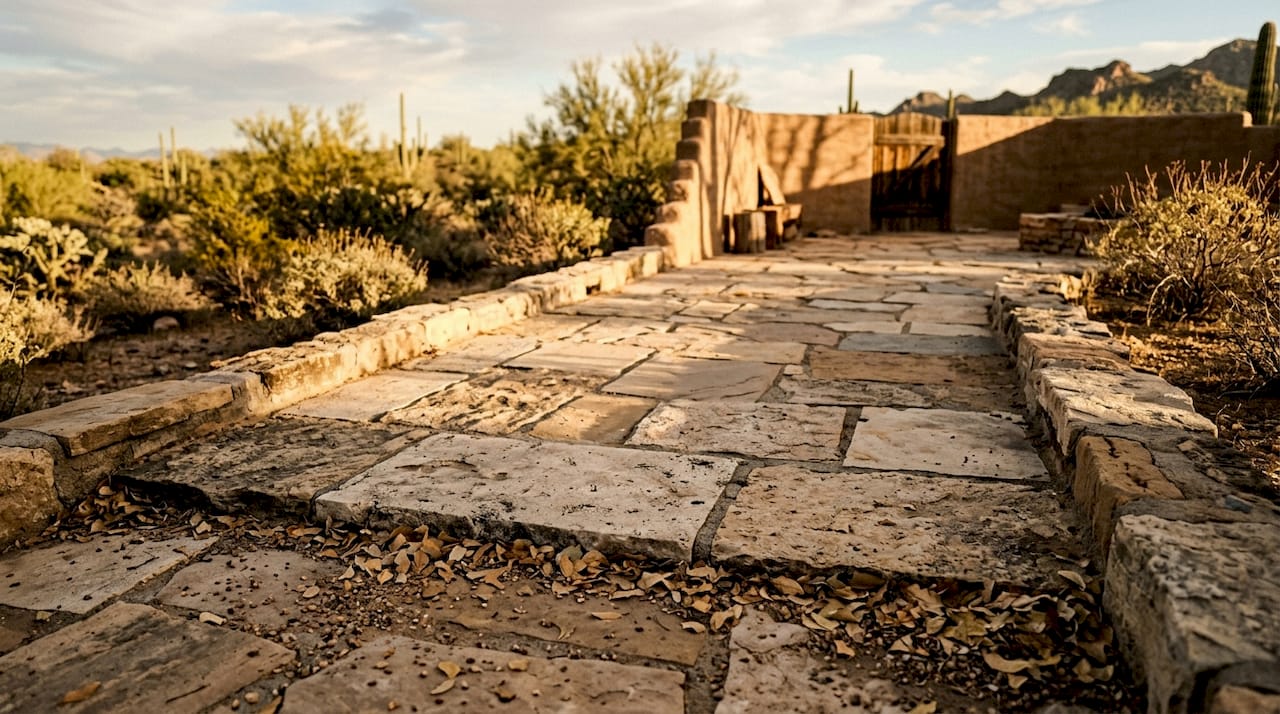
Natural stones like limestone, travertine, sandstone, and Arizona flagstone perform well in UV exposure and desert heat for outdoor surfaces. Travertine and light-colored flagstone stay measurably cooler than dark concrete and resist UV fading because their color runs through the full thickness of the stone. CMU (concrete masonry unit) block is the preferred structural material for outdoor kitchen frames and retaining walls because it handles thermal cycling without cracking. Powder-coated steel and aluminum are the right metal choices for pergola frames and hardware, as they resist UV degradation and do not corrode in monsoon humidity.
Wood requires the most careful management. UV exposure, dry heat, and seasonal moisture movement cause most wood structure failures in desert climates, not heat alone. This distinction matters because many homeowners apply only heat-resistant stains and ignore the expansion and contraction that comes with monsoon humidity swings. Properly treated hardwoods like ipe or teak, combined with UV-blocking finishes, can perform well. Untreated pine or cedar will not last more than a few seasons in the Phoenix metro area.
| Material | UV Resistance | Heat Safety | Moisture Tolerance | Best Use |
|---|---|---|---|---|
| Travertine | High | High (stays cool) | Moderate | Patio paving, pool decks |
| Arizona flagstone | High | High | Moderate | Walkways, patios |
| CMU block | High | High | High | Kitchen frames, walls |
| Dark concrete | Moderate | Low (165°F+) | High | Avoid for barefoot areas |
| Powder-coated steel | High | Moderate | High | Frames, hardware, railings |
| Treated hardwood | Moderate | Moderate | Low to moderate | Pergola beams, decking |
Pro Tip: Apply a penetrating UV-blocking sealer to all natural stone surfaces every 12–18 months. In Arizona’s climate, surface sealers that sit on top of the stone peel faster than penetrating formulas and require more frequent reapplication.
How should you design shade structures for desert comfort and durability?
Shade orientation and material suitability are the most critical factors for longevity in Arizona outdoor spaces, yet most homeowners prioritize aesthetics first. The practical consequence is a beautiful space that is unusable from may through september and deteriorates faster because surfaces bake without protection. Effective shade design starts with the sun’s path, not the homeowner’s preference for a particular structure style.
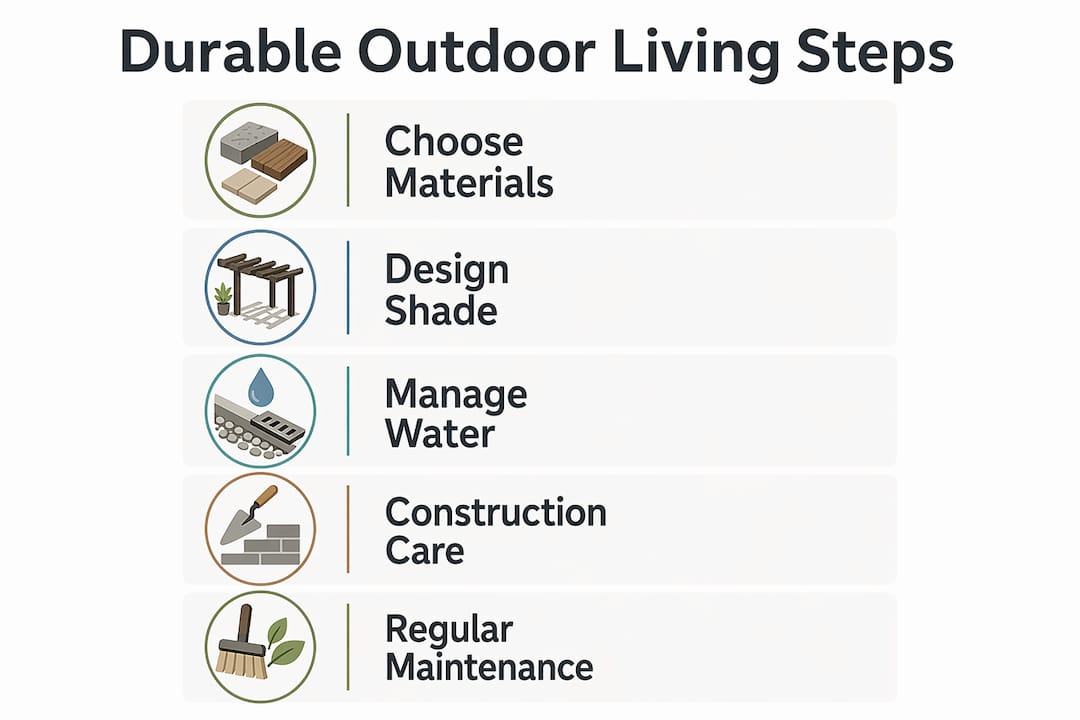
The west and southwest exposures receive the most intense afternoon heat in the Phoenix area. Structures on those sides need solid or near-solid roof coverage, not open lattice. Pergolas create filtered shade and airflow, while pavilions offer covered outdoor rooms with more usable comfort during peak heat hours. A pergola works well on a north-facing patio where afternoon sun is less direct. A pavilion or solid-roof cabana is the correct choice for west and southwest exposures.
Structural anchoring is equally important. Monsoon winds in Maricopa County regularly exceed 60 mph during haboobs and storm cells. Key structural requirements for lasting shade installations include:
- Post bases: Use galvanized or stainless steel post base connectors anchored into concrete footings at least 18 inches deep.
- Beam connections: Metal connector plates at every beam-to-post joint prevent racking under wind load.
- Roof panel fasteners: Stainless steel screws with neoprene washers prevent corrosion and seal penetrations against monsoon rain.
- Clearance from grade: Keep wood posts at least 6 inches above finished grade to prevent wicking moisture from soil.
- Oversize footings: In expansive desert soils, footings should extend below the active zone, typically 24 inches or deeper.
Water management belongs in the design phase, not as an afterthought. Grading with 18-inch-deep basins and 6-inch berms harvests monsoon runoff and allows infiltration over 24 hours, reducing irrigation demand and preventing water from pooling against structural footings. This technique, called rainwater harvesting or passive irrigation, is standard practice in climate-adapted Arizona landscaping and protects both the landscape and the hardscape.
Pro Tip: The most common shade placement mistake is centering a pergola over a patio without checking the afternoon sun angle. Use a sun-path app for your specific zip code and trace the 3:00 PM to 6:00 PM shadow line before you finalize any structure location.
What construction practices ensure lasting outdoor kitchens and fire features?
Expert construction for materials for lasting outdoor living in Arizona goes well beyond choosing the right stone or block. The installation details determine whether a structure holds up for 20 years or starts showing problems in year three. Outdoor kitchens and fire features carry the highest construction complexity because they combine masonry, gas lines, electrical, and finish work in a single assembly.
Concrete and mortar curing in desert conditions requires active moisture management. Fresh masonry must be misted or covered to retain moisture during drying. Rapid drying in Arizona’s low-humidity heat creates brittle bonds that crack under thermal cycling. This is not optional in summer construction. It is a code-level quality standard that separates durable work from work that fails prematurely.
Gas fire pits in Phoenix require masonry with code-compliant gas lines, vented bases, and safe clearances to meet Maricopa County air quality and safety rules. LP gas installations specifically require vented bases to prevent gas accumulation. Any fire feature project in the Phoenix metro area requires permits, and inspections are not a formality. Skipping the permit process creates liability and can void homeowner’s insurance coverage for fire-related damage.
Key construction steps for a durable outdoor kitchen or fire feature:
- Site survey and permit filing: Confirm setbacks, gas line routing, and electrical load requirements with Maricopa County before breaking ground.
- Isolated slab pour: Pour a dedicated reinforced slab with rebar on 12-inch centers for the kitchen frame, separate from the main patio slab, to allow independent movement.
- CMU block framing: Build the kitchen frame with CMU block, filling cores with grout and rebar for structural rigidity.
- Moisture curing: Mist or cover all fresh masonry for a minimum of 72 hours to prevent brittle bonds.
- Thermal break installation: Place a thermal break layer between the countertop substrate and the stone finish to reduce heat transfer and prevent cracking.
- Gas line rough-in and inspection: Have a licensed plumber install and pressure-test gas lines before any finish work covers them.
- Countertop sealing: Apply a penetrating sealer rated for outdoor use to granite or quartzite countertops before first use, and reseal annually.
A standard custom BBQ island takes 2–3 weeks to complete; full outdoor kitchens take 4–7 weeks, with monsoon-related delays possible from july through september. Planning construction for october through april avoids the worst scheduling conflicts and gives masonry the best curing conditions.
What maintenance mistakes shorten the life of Arizona outdoor spaces?
Ongoing maintenance is what separates a 5-year outdoor space from a 25-year one. The desert climate accelerates finish degradation faster than most homeowners expect, and small neglected details compound into expensive repairs. Applying UV-blocking coatings twice yearly and using metal connectors at post bases and beam seats greatly extends patio cover durability against monsoon wind and sun damage. That maintenance interval is more frequent than most product labels suggest, because Arizona’s UV index is among the highest in the continental United States.
Common homeowner mistakes that reduce outdoor space longevity:
- Skipping annual sealer reapplication on stone, grout, and countertops, allowing moisture and UV to penetrate and degrade the substrate.
- Planting shrubs or turf directly against wood posts, which traps moisture and accelerates rot and termite activity.
- Ignoring joint movement in patio slabs. Expansion joints that fill with debris stop functioning and allow cracking.
- Directing irrigation spray onto masonry walls or wood structures, which causes efflorescence, staining, and accelerated wood decay.
- Grading flat or toward the structure, which allows monsoon runoff to pool against footings and undermine the slab.
- Deferring hardware inspection. Stainless steel and galvanized connectors should be checked every spring for corrosion, especially after a heavy monsoon season.
Seasonal preparation matters as much as routine maintenance. Before the monsoon season begins in late june, inspect all structural connections, clear drainage basins, and check that grading still directs water away from the structure. Before winter temperature swings in december and january, inspect sealers on stone surfaces and reapply where needed. Arizona winters are mild, but temperature swings between day and night can still stress unsealed surfaces.
Key Takeaways
Durable outdoor living in Arizona requires climate-specific materials, shade structures designed for peak sun angles, expert construction with proper curing and permitting, and consistent seasonal maintenance.
| Point | Details |
|---|---|
| Material surface temperature | Choose travertine or flagstone over dark concrete to keep surfaces safe and cool in summer. |
| Shade structure placement | Match structure type to sun exposure: pavilions for west-facing areas, pergolas for north-facing patios. |
| Masonry curing discipline | Mist or cover fresh masonry for at least 72 hours to prevent brittle bonds in desert heat. |
| Fire feature permitting | Gas fire pits require Maricopa County permits, vented bases, and licensed gas line installation. |
| Maintenance frequency | Apply UV-blocking coatings and stone sealers twice yearly, not once, given Arizona’s UV intensity. |
What I’ve learned building outdoor spaces in Arizona’s climate
After years of working on outdoor projects across the Phoenix metro area, the pattern I see most often is this: homeowners invest heavily in aesthetics and underinvest in the details that determine how long those aesthetics last. A beautifully designed outdoor kitchen with the wrong countertop sealer or inadequate gas line venting will cost far more to repair than it would have cost to build correctly the first time.
The factor most people underestimate is moisture movement. Arizona is not a dry climate year-round. The monsoon season brings rapid humidity swings that cause wood to expand and contract, grout joints to open, and sealers to delaminate. I have seen well-built pergolas fail at the beam connections simply because the builder used wood screws instead of metal connector plates. The UV damage gets the attention, but it is the moisture cycling that does the structural work.
My honest recommendation is to treat the first year after construction as an active monitoring period. Walk the space after every significant monsoon storm. Check for pooling water, joint movement, and any finish changes on wood or stone. Catching a grading problem or a loose connector in year one costs almost nothing to fix. Catching it in year five, after water has been working against the foundation, is a different conversation entirely.
The homeowners who get the most from their outdoor spaces are the ones who planned for Arizona’s climate from the first design meeting, not the ones who tried to adapt a generic outdoor living plan to the desert after the fact.
— Philipp
How Uniquecompanies builds outdoor spaces that last in Arizona
Arizona’s climate does not forgive shortcuts in outdoor construction. Uniquecompanies has spent over 24 years building custom outdoor kitchens and patios across Scottsdale, Chandler, Queen Creek, and the greater Phoenix area, with every project designed specifically for desert conditions.
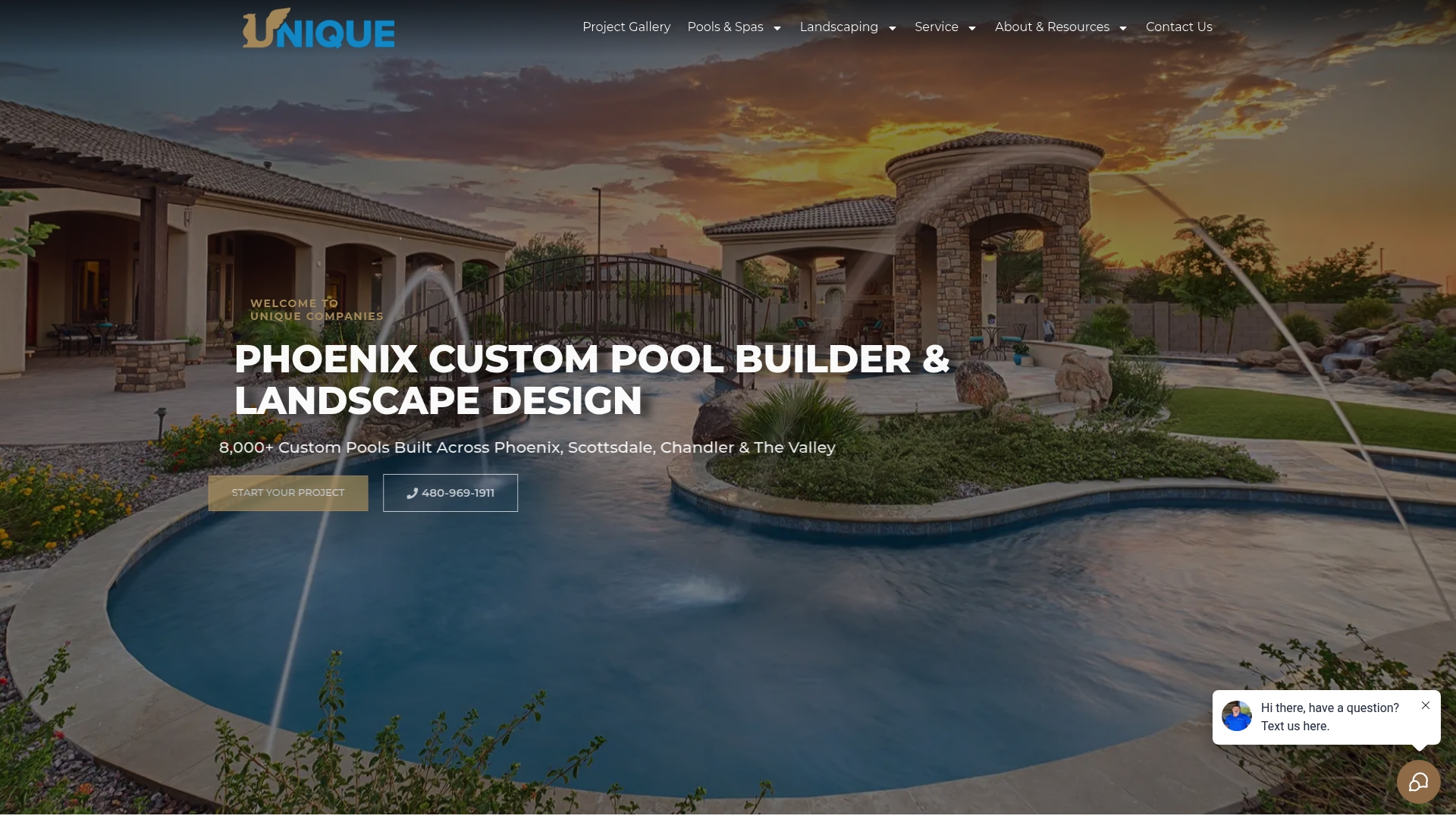
Their in-house team handles design, permitting, and construction as a single coordinated process, which means material choices, structural details, and finish specifications are aligned from the start. Homeowners working with Uniquecompanies get 3D design previews before construction begins, so shade placement and material selections are confirmed against the actual site conditions. For homeowners ready to build a space that performs as well as it looks, explore outdoor kitchen options or review luxury patio design features to start the planning process.
FAQ
What materials work best for Arizona outdoor patios?
Travertine, Arizona flagstone, and CMU block are the top choices for Arizona patios. They resist UV fading, stay cooler than dark concrete, and handle thermal cycling without cracking.
How long does an outdoor kitchen take to build in Phoenix?
A custom BBQ island typically takes 2–3 weeks; a full outdoor kitchen takes 4–7 weeks. Monsoon season from july through september can extend timelines due to weather delays.
Do I need a permit for a fire pit in Phoenix?
Gas fire pits in Phoenix require permits and must meet Maricopa County codes for gas line installation, vented bases, and clearance distances. Unpermitted fire features create safety and insurance risks.
How often should I seal outdoor stone surfaces in Arizona?
Reseal outdoor stone and grout surfaces every 12–18 months using a penetrating formula. Arizona’s UV intensity degrades surface sealers faster than in cooler climates, so annual inspection is the minimum.
What is the biggest design mistake for Arizona outdoor spaces?
Placing a shade structure without checking the afternoon sun angle is the most common error. West and southwest exposures require solid-roof pavilions, not open pergolas, to provide usable shade during peak heat hours.