TL;DR:
- Weather-resistant landscaping, also known as xeriscaping, combines drought-tolerant plants, efficient irrigation, and durable materials to create sustainable outdoor spaces. Proper plant selection, zoning, and structural features like rain gardens and windbreaks are essential for maximizing climate resilience, especially in arid conditions like Phoenix. Consistent maintenance, soil amendments, and phased lawn conversions support long-term success and water conservation.
Weather-resistant landscaping is defined as the practice of designing and planting outdoor spaces to remain healthy, functional, and attractive despite extreme heat, drought, and storm events. In the industry, this approach is most commonly called xeriscaping, a term that encompasses drought-tolerant plant selection, water-efficient irrigation, and hardscape integration. For homeowners in Phoenix, Scottsdale, and the broader Sonoran Desert region, this is not a trend. It is the most practical way to maintain a yard that performs year after year without excessive water bills or constant replanting. This guide covers the plants, irrigation methods, design features, and maintenance practices that define a truly durable outdoor space in an arid climate.
What is weather-resistant landscaping, and how does it work?
Weather-resistant landscaping, also called xeriscaping, is a waterwise design approach that combines drought-tolerant plants, efficient irrigation, and hardscape materials to reduce water consumption while maintaining an attractive yard. The core principle is simple: match every plant, material, and irrigation method to the specific conditions of your site. In arid climates, that means prioritizing plants that evolved in low-water environments, using mulch and hardscape to limit evaporation, and designing irrigation systems that deliver water precisely where roots need it.
The result is a yard that requires far less intervention during summer heat spikes or dry spells. Rather than fighting the climate, a weather-resistant design works with it. For homeowners in Queen Creek or Chandler, where summer temperatures regularly exceed 110°F, this distinction matters enormously for both plant survival and long-term maintenance costs.
What plants and materials define a resilient landscape?
Drought-tolerant plant categories
The foundation of any resilient arid-climate yard is plant selection. Native plants thrive with minimal supplemental water once established, because they evolved in the same soil chemistry, rainfall patterns, and temperature extremes you are working with. In the Phoenix metro area, strong choices include desert willow (Chilopsis linearis), brittlebush (Encelia farinosa), and black-foot daisy (Melampodium leucanthum). Succulents such as agave, aloe, and various cacti species add structural interest while requiring almost no irrigation after establishment.
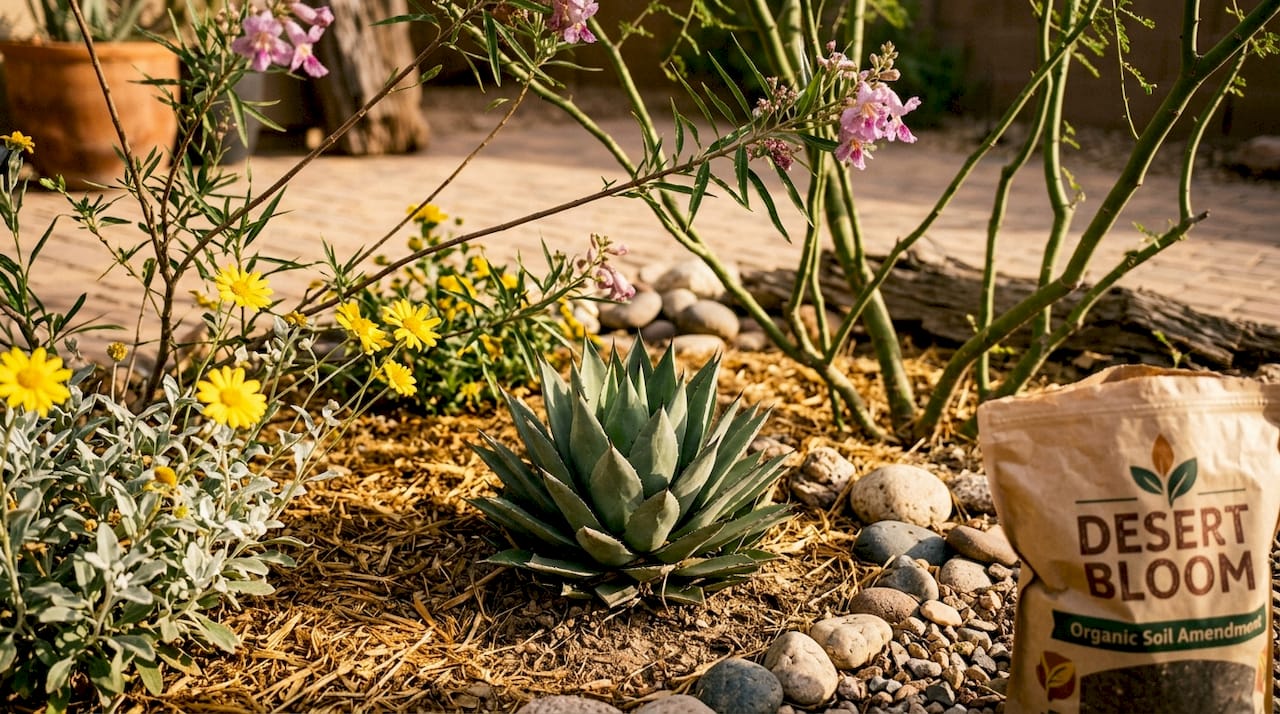
Groundcovers are an underused tool in drought-resistant garden design. Low-growing groundcovers like creeping thyme and native sedges act as living mulch, shading the soil surface to reduce evaporation and suppress weeds. This reduces both water demand and maintenance time. Grouping plants by water need, a practice called hydrozoning, allows you to run irrigation zones efficiently rather than applying the same water volume to plants with very different requirements.
Key plant and material choices for arid landscapes include:
- Native and adapted plants: Desert willow, palo verde, agave, and brittlebush all perform well in Phoenix-area soils with minimal supplemental water.
- Succulents and cacti: Structurally bold and nearly self-sufficient once established; ideal for focal points or borders.
- Groundcovers: Creeping thyme, trailing lantana, and native sedges shade soil and reduce evaporation.
- Organic mulch: A 3- to 4-inch layer of wood chip or shredded bark mulch reduces soil moisture loss and moderates root zone temperature.
- Decomposed granite and gravel: Common in Arizona hardscaping; reduces runoff, requires no irrigation, and complements native plantings visually.
- Permeable pavers: Allow rainwater to infiltrate rather than run off, supporting soil moisture and reducing erosion.
Pro Tip: Place mulch in a donut shape around plant bases rather than piling it against the stem. Direct contact with bark or trunk tissue traps moisture and promotes rot, which defeats the purpose of a drought-adapted planting.
How does efficient irrigation enhance landscaping weather resistance?
Landscape irrigation accounts for roughly 60% of household water use in many arid regions, making it the single largest opportunity for conservation. Drip irrigation can reach up to 90% efficiency, but only when it is correctly designed and calibrated. Many homeowners install drip systems and then overwater anyway, negating the efficiency advantage entirely. The system is only as good as its programming and zoning.
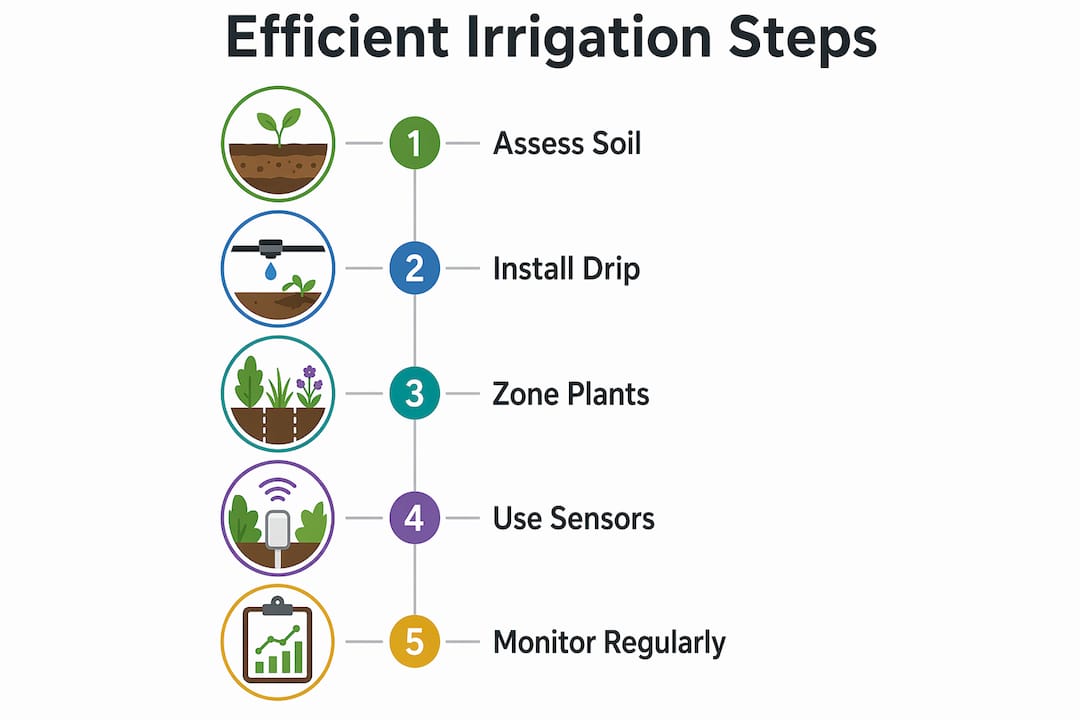
Steps to build an efficient irrigation system
Follow this sequence when setting up or upgrading irrigation for a weather-resistant yard:
- Map your plant zones by water need. Group high-water plants together and low-water natives separately. Irrigation zoning by plant type reduces waste significantly and prevents overwatering drought-adapted species.
- Select the right emitter type for each zone. Drip emitters work well for shrubs and trees. Micro-spray heads suit groundcovers and densely planted areas. Matching the delivery method to the plant type prevents both under- and overwatering.
- Program for deep, infrequent cycles. Watering deeply and infrequently encourages roots to grow downward, which improves drought tolerance and plant stability during heat events.
- Schedule watering for early morning. Morning irrigation reduces evaporation loss and allows foliage to dry before nightfall, limiting fungal issues.
- Audit the system seasonally. Check emitters for clogging, inspect lines for leaks, and adjust run times as temperatures change through the year.
Pro Tip: Install a soil moisture sensor or a smart irrigation controller like those compatible with the Rachio platform. These devices prevent irrigation cycles from running after rainfall, which is one of the most common sources of unnecessary water use in residential landscapes.
What design features support weather resistance beyond plants and irrigation?
Plant selection and irrigation are the core of a resilient yard, but several structural and design features significantly improve performance under extreme weather conditions. The table below compares the most effective complementary features by function, benefit, and application context.
| Design feature | Primary function | Best application |
|---|---|---|
| Rain gardens and infiltration swales | Capture and slowly infiltrate stormwater runoff | Low-lying areas prone to pooling after monsoon rain |
| Windbreak walls and fences | Reduce wind speed and protect plants from desiccation | Exposed western or southern yard edges |
| Shade structures and tree canopy | Lower ambient temperature and reduce soil evaporation | Seating areas, pool surrounds, and west-facing beds |
| Soil amendments (compost, biochar) | Improve water retention and root zone health | Sandy or compacted native soils before planting |
| Microclimates via plant arrangement | Create sheltered zones with modified temperature and humidity | Tender plants placed on north or east sides of larger shrubs |
Rain gardens and infiltration swales are particularly relevant for Arizona homeowners who experience intense monsoon events. A well-designed swale channels runoff from hardscape surfaces into planted areas, reducing erosion and delivering free water to plant root zones. The Moab rain garden project demonstrated that community-designed swales using locally sourced seeds and native plant patterns can meaningfully improve both water capture and soil biology. The same principle scales directly to a residential backyard.
Soil preparation is often the most overlooked factor in arid-climate landscaping. Arizona’s native soils are frequently alkaline, compacted, and low in organic matter. Incorporating compost or biochar before planting improves water-holding capacity and supports the microbial activity that healthy root systems depend on. This single step can determine whether a newly planted native survives its first summer or struggles through it.
How do you care for and maintain a weather-resistant landscape year-round?
Establishing a resilient landscape takes more active management in the first one to two years than most homeowners expect. Once plants are established, maintenance drops significantly. The critical period is the transition from nursery conditions to your specific soil and microclimate.
Core maintenance practices for a durable arid-climate yard include:
- Establishment watering: Water new plantings more frequently for the first 90 days, then taper off as roots develop. Deep, slow infiltration during this phase builds the root architecture that supports long-term drought tolerance.
- Monitor for stress signals: Yellowing leaves, wilting in the morning (not just afternoon heat), and leaf drop are signs of either underwatering or overwatering. Overwatering drought-adapted plants causes root rot and reduces weather resistance just as surely as drought stress does.
- Refresh mulch annually: Organic mulch breaks down over time. Replenishing it each spring maintains the insulating and moisture-retention benefits. You can learn more about mulch application techniques to get the most from each application.
- Seasonal irrigation adjustments: Reduce run times in October and increase them again in May. Many homeowners leave summer programming in place year-round, which leads to overwatering during cooler months.
- Gradual lawn conversion: If you are replacing turf with drought-tolerant plantings, do it in phases rather than all at once. Converting one section per season allows you to refine your plant choices and irrigation setup before committing to the full yard.
For homeowners considering a broader Arizona landscape design approach, integrating these maintenance habits from the start produces far better long-term results than retrofitting them later.
Key takeaways
Weather-resistant landscaping succeeds when drought-tolerant plant selection, precision irrigation zoning, and structural design features are planned and implemented together from the start.
| Point | Details |
|---|---|
| Define the approach correctly | Xeriscaping combines native plants, mulch, hardscape, and drip irrigation to reduce water use and improve durability. |
| Zone irrigation by plant need | Separating plants by water requirement and matching emitter types prevents both overwatering and underwatering. |
| Add structural design features | Rain gardens, windbreaks, and soil amendments improve performance beyond what plants and irrigation alone can achieve. |
| Prioritize establishment care | The first 90 days of watering determine whether plants develop the root depth needed for long-term drought tolerance. |
| Convert turf gradually | Phased lawn replacement reduces risk and allows irrigation and plant selection to be refined before full commitment. |
What I’ve learned from years of arid-climate landscape work
Most homeowners who invest in drought-tolerant plants are surprised when those plants still struggle. The reason is almost always irrigation calibration, not plant quality. A native palo verde planted in the right soil with the wrong watering schedule will underperform a well-irrigated non-native every time during the establishment phase. The plant’s long-term drought tolerance only activates after the root system has had time to develop, and that development depends entirely on how you water in the first season.
The second thing homeowners consistently underestimate is soil. Arizona’s caliche layers and alkaline pH are not minor inconveniences. They are structural barriers to root growth and water infiltration. Skipping soil amendment to save money at the start of a project is the most expensive decision you can make, because you will spend years compensating for it with extra irrigation and plant replacements.
What I find genuinely encouraging is the growing interest in rain gardens and stormwater features among Phoenix-area homeowners. These features do real work during monsoon season, and they shift the mindset from “managing a yard” to “managing a water system.” That shift in perspective is what separates a landscape that survives from one that actually thrives.
If you are considering a gradual lawn conversion, start with the west-facing section of your yard. It receives the most heat stress, it is the hardest area to keep green with turf, and replacing it first delivers the most immediate reduction in water use and maintenance. The confidence you build from that first successful conversion makes the rest of the project far easier to execute.
— Philipp
How Uniquecompanies can help you build a resilient outdoor space

Uniquecompanies has spent over 24 years designing and building custom outdoor environments specifically for Arizona’s climate conditions. Their team integrates drought-tolerant plant selection, hardscape design, and custom water features into cohesive backyard plans that perform through Phoenix summers and monsoon seasons alike. Whether you are planning a custom outdoor kitchen to complement your landscape or exploring hardscape solutions that reduce runoff and improve durability, Uniquecompanies handles design, permitting, and construction in-house. Contact their team to discuss how a fully integrated outdoor living design can work with your site conditions rather than against them.
FAQ
What is the difference between xeriscaping and weather-resistant landscaping?
Xeriscaping is the industry term for the same practice most people describe as weather-resistant landscaping. Both refer to designing outdoor spaces with drought-tolerant plants, efficient irrigation, and water-conserving materials to reduce maintenance and water use in arid climates.
What are the best plants for harsh climates in the Phoenix area?
Desert willow, palo verde, agave, brittlebush, and black-foot daisy are among the most reliable choices for Phoenix-area yards. Native plants adapted to local soil and temperature conditions require minimal supplemental water once established.
How efficient is drip irrigation compared to traditional sprinklers?
Drip irrigation can reach up to 90% efficiency compared to roughly 50 to 70% for conventional sprinkler systems. That efficiency depends on correct design, proper zoning, and regular system audits to catch clogged emitters or leaks.
How long does it take for a weather-resistant landscape to establish?
Most drought-tolerant plants require one to two full growing seasons to develop root systems deep enough to sustain themselves with minimal irrigation. Consistent establishment watering during this period is the single most important factor in long-term plant survival.
Can I budget for a weather-resistant landscape conversion in phases?
Yes, and phasing is often the most practical approach. A budget-conscious lawn care plan allows you to convert one section at a time, refine your plant and irrigation choices, and spread costs across multiple seasons without compromising the final result.