TL;DR:
- Building a luxury pool in Phoenix follows a predictable, multi-phase process from design to startup.
- Local climate and soil conditions require specialized planning to ensure durability and scheduling accuracy.
- Integrating outdoor features like kitchens and shade structures early creates a cohesive outdoor living space.
Many Phoenix homeowners assume building a custom pool means months of confusion, surprise costs, and a backyard that looks like a construction zone indefinitely.
That assumption keeps a lot of people from starting a project they would genuinely love. The truth is that pool construction follows a defined, predictable sequence, and when you understand each phase before it begins, the entire process becomes far less stressful.
This guide walks you through every stage of building a luxury custom pool in the Phoenix metropolitan area, from the first design consultation to the day you step into the water for the first time.
Table of Contents
- Understanding the essential stages of pool construction
- Design and planning: Creating your custom pool vision
- From excavation to structure: Building your pool’s foundation
- Finishing touches and starting up your pool
- What most guides miss about building a pool in Phoenix
- Ready to build your Phoenix dream pool?
- Frequently asked questions
Key Takeaways
| Point | Details |
|---|---|
| Clear construction phases | Understanding each pool construction stage helps you avoid costly surprises and delays. |
| Design for the desert | Planning pools for Phoenix requires climate-smart choices and local code expertise. |
| Expert guidance matters | Partnering with local professionals ensures your pool and outdoor living space are built to last. |
| Integration is key | The best results come from combining pool, landscaping, and outdoor living plans from the start. |
Understanding the essential stages of pool construction
Now that you understand what makes pool construction feel daunting, let’s clarify the core stages so you know exactly what to expect. The detailed pool construction steps follow a logical sequence that balances engineering precision with creative customization. Each phase builds on the last, and skipping or rushing any one of them creates problems downstream.
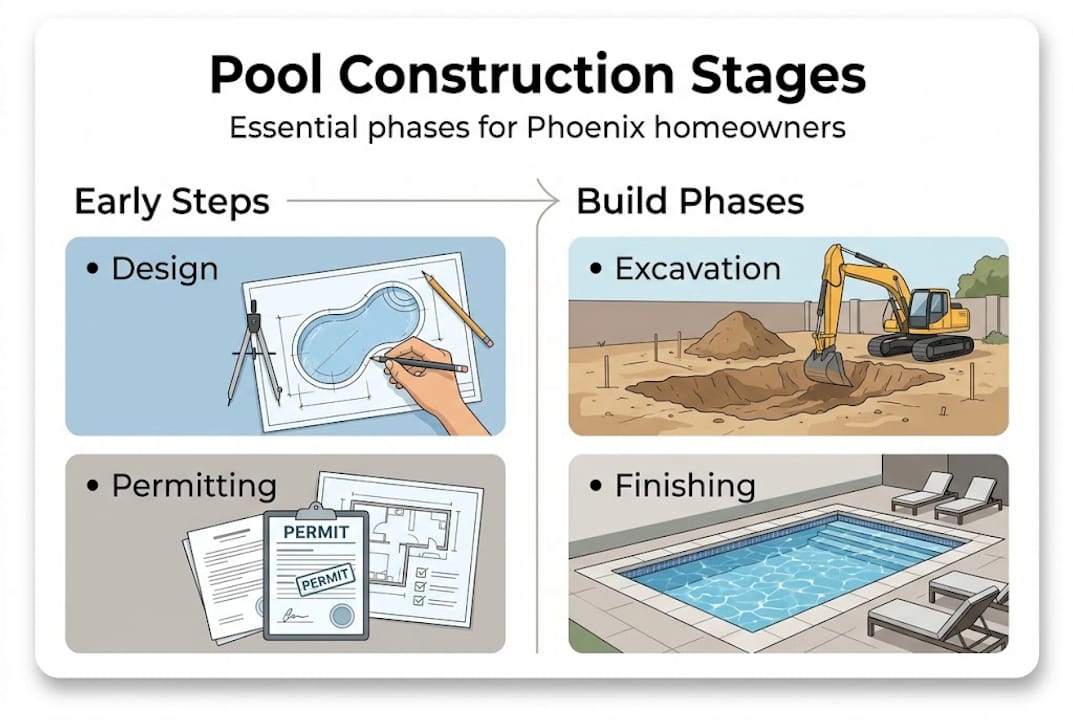
The major stages of a custom pool build include:
- Design and planning: Site evaluation, 3D layout, and homeowner consultation
- Permitting and engineering: Structural drawings, city or county submissions, and approval
- Excavation: Digging the pool shell to approved specifications
- Steel and forming: Rebar framework for structural integrity
- Plumbing and electrical: Underground rough-in before concrete is poured
- Gunite or shotcrete application: The pool’s concrete shell
- Interior finishing: Plaster, tile, and water features
- Landscaping and hardscaping: Decking, coping, and surrounding outdoor spaces
- Startup and orientation: Water chemistry, equipment testing, and homeowner training
Phoenix’s climate adds specific considerations to this process. Extreme summer heat accelerates concrete curing and affects scheduling. Caliche soil, which is a calcium-rich hardpan layer common in the desert, can complicate excavation significantly.
These are not obstacles so much as known variables that experienced local contractors plan around.
| Stage | Standard pool timeline | Luxury pool timeline |
|---|---|---|
| Design and permitting | 3–5 weeks | 5–8 weeks |
| Excavation and steel | 1–2 weeks | 2–3 weeks |
| Plumbing and electrical | 1 week | 1–2 weeks |
| Gunite and shell | 1 week | 1–2 weeks |
| Finishing and landscaping | 2–3 weeks | 3–5 weeks |
| Startup and orientation | 1 week | 1–2 weeks |
As the step-by-step Phoenix pool guide outlines, luxury builds naturally take longer because of the customization involved at each phase. That additional time is where the real value is created.
Pro Tip: Decisions made in the design phase, like adding a spa, sun shelf, or integrated outdoor kitchen connection, cost far less to incorporate early than to retrofit after construction.
Design and planning: Creating your custom pool vision
With the big picture in mind, let’s look more closely at how your dream pool begins, on paper and with the right permits in hand. The design and planning phase is arguably the most important part of the entire project. Mistakes here create ripple effects through every stage that follows.
Here is the typical sequence from initial consultation to permit approval:
- Initial consultation: Discuss your goals, lifestyle, and budget with a design specialist.
- Site assessment: Review property boundaries, utility locations, drainage, and soil conditions.
- Conceptual design: Develop a preliminary layout with 3D visualization tools so you can see your pool before a single shovel hits the ground.
- Design refinement: Adjust features, finishes, and flow based on your feedback.
- Engineering review: A licensed structural engineer signs off on the plans.
- Permit submission: Drawings are submitted to the city or county for review.
- Permit approval: Once approved, construction can officially begin.
Working with designers who understand pool layout tips specific to Arizona is a real advantage. Local experts know how sun angles affect water temperature throughout the year, how to orient shade features for the hottest months, and how to meet the specific code requirements of municipalities like Scottsdale, Chandler, and Queen Creek.
The most common delays in pool construction originate from incomplete or incorrect permit paperwork. A single missing document can push your project back by several weeks.
According to pool permitting requirements, submitting accurate, complete engineering drawings the first time is the single most effective way to protect your timeline.
Pro Tip: If you’re planning to add an outdoor kitchen, pergola, or extended hardscaping in the future, integrate those design elements now. A contractor who sees the full picture during planning can coordinate utilities and drainage so future additions go in cleanly.
From excavation to structure: Building your pool’s foundation
With plans approved, the real transformation begins. Here is what to expect as your backyard turns into a construction site.
Excavation is dramatic. In a matter of days, heavy equipment removes thousands of cubic yards of soil, leaving a large opening where your pool will sit. For Phoenix homeowners, caliche soil layers can slow this process and sometimes require specialized equipment or blasting. Your contractor should assess this risk during the site evaluation phase.
| Stage | Typical duration | Key tasks |
|---|---|---|
| Excavation | 2–5 days | Digging, soil removal, grade verification |
| Steel and forming | 3–5 days | Rebar placement, form setting, inspector review |
| Plumbing rough-in | 2–4 days | Pipe runs, equipment pad, drain placement |
| Electrical rough-in | 2–3 days | Conduit runs, bonding grid, panel connections |
| Gunite or shotcrete | 1–2 days | Shell application, curing begins |
| Inspections | Variable | City inspector sign-offs at multiple stages |
Proper pool electrical stages are particularly important in Arizona. Bonding requirements, which electrically connect all metal components to prevent shock hazards, are strictly enforced. All electrical work must be inspected before the pool shell is poured.
Common pitfalls during this phase, and how to avoid them:
- Utility conflicts: Always verify underground utility locations before excavation begins.
- Improper drainage planning: Arizona monsoon rains can overwhelm poorly planned drainage. Design for both dry season and storm conditions.
- Ignoring adjacent landscaping: Heavy equipment can damage root systems of mature trees. Establish clear boundaries and protective barriers before work starts.
- Skipping interim inspections: Each inspection is a checkpoint that protects you legally and structurally. Never skip them to save time.
Coordinating pool landscaping and masonry early in this phase means your deck and coping materials are ordered and staged before finishing work begins, which prevents delays at the end of the project.
Finishing touches and starting up your pool
Once the pool’s foundation and systems are complete, it’s all about finishing strong, inside the pool and throughout your yard.
Interior finishing is what makes your pool look distinctly yours. After the gunite shell cures, typically over a few weeks, the interior surface is applied. Options range from standard white plaster to aggregate finishes that incorporate colored quartz or glass beads. Your choice of pool interior finishes affects both appearance and long-term durability. Darker finishes absorb more heat, which can be a real advantage in keeping pool water warmer during cooler desert nights.
Tile work, coping installation, and water features like sheer descents or fire bowls are completed during this phase as well. Each element should coordinate visually and functionally. A well-designed finish plan pulls the entire outdoor space together.
Essentials for the final phase:
- Final structural inspection: City inspector verifies all work meets code before water is added.
- Safety barrier check: Fence, gate, and alarm systems must be in place and compliant with Arizona pool safety laws.
- Equipment startup: Pumps, heaters, automation systems, and lighting are tested and calibrated.
- Water chemistry orientation: Your contractor walks you through balancing chemicals for the first 28-day startup period.
- Homeowner training: You receive hands-on instruction on operating all equipment and maintaining your pool.
The pool startup and orientation phase is especially important in Phoenix because the intense summer sun accelerates chemical consumption. Understanding your system from day one prevents water quality issues that are far harder to correct after the fact.
Pro Tip: Schedule your orientation walk-through on the same day startup begins. Watching everything activate in real time makes the operational instructions much easier to retain and apply.
If you want to explore options before the final decision, reviewing resources on choosing pool finishes can help you weigh aesthetics against maintenance requirements with confidence.
What most guides miss about building a pool in Phoenix
Most national pool construction guides treat every project as if climate and geography are afterthoughts. They provide generic timelines and universal checklists that apply equally to a backyard in Ohio and a backyard in Scottsdale. That approach misses the point entirely.
Phoenix is not a typical market. The soil composition, the sun intensity, the monsoon season, the year-round outdoor living culture, and the specific code environments of individual cities all shape how a pool should be designed and built. A contractor who has built pools in the Midwest, no matter how skilled, is learning on your project.
The deeper insight most homeowners miss is this: the best pool projects in Phoenix are not just pool projects. They are luxury outdoor features strategies that integrate the pool into a complete outdoor living environment. The pool informs the kitchen placement. The kitchen informs the shade structure. The shade structure informs the landscaping. Each decision connects to the others, and only a contractor with local experience can see and manage those connections effectively.
Settling for a team that treats your pool as an isolated structure almost always means returning to fix what was missed.
Ready to build your Phoenix dream pool?
If you’re ready to transform your backyard vision into reality, here’s how to take the next step with expert support.
Unique Companies has spent over 24 years designing and building luxury custom pools across the Phoenix metropolitan area, including Scottsdale, Chandler, and Queen Creek. Our in-house team manages every phase, from design through startup, so nothing falls through the cracks.
Explore our full range of custom pool features to find the options that match your lifestyle. Use our Genesis Pool Designer to visualize your space before construction begins. And if outdoor cooking is part of your vision, browse our Phoenix outdoor kitchens to see how we integrate cooking and pool spaces seamlessly. Contact our team today to schedule your initial design consultation.
Frequently asked questions
How long does pool construction usually take in Phoenix?
Most luxury pool builds in the Phoenix area take 8 to 14 weeks depending on the complexity of the design and current weather conditions. Custom features and permitting timelines are the most common factors that extend the schedule.
What permits are required for a residential pool in Arizona?
You will typically need a building permit, compliance with local city or county codes, and in many cases a fence or gate permit to meet Arizona pool safety requirements. Requirements vary by municipality, so working with a contractor familiar with your specific city matters.
What features maximize pool value in Phoenix’s climate?
Sun shelves, energy-efficient variable-speed pumps, and integrated outdoor kitchens consistently rank as high-value additions in the desert climate. These features extend usability across more months of the year and appeal strongly to future buyers.
How do I maintain landscaping around my new pool?
Desert-adapted, low-water plants paired with decomposed granite or concrete borders reduce ongoing maintenance significantly. Coordinating pool landscaping choices with your pool contractor during construction ensures irrigation and plant placement complement the pool structure rather than compete with it.