Building a luxury custom pool in Phoenix presents unique challenges that demand careful planning and expert execution. Arizona’s extreme heat, hard water, and specific permitting requirements make the process more complex than in other regions. This comprehensive guide walks you through every critical step, from initial site preparation and budgeting to final startup and maintenance. Whether you’re envisioning an infinity edge masterpiece or a family-friendly resort-style oasis, understanding the complete construction process ensures your investment delivers lasting value and enjoyment in the desert climate.
Table of Contents
- Step 1: Preparing For Your Pool Build
- Step 2: Executing The Pool Construction
- Step 3: Finishing Touches And Outdoor Living Integrations
- Step 4: Pool Startup, Inspection, And Maintenance Tips
- Explore Custom Luxury Pool Designs And Outdoor Living Solutions
- Frequently Asked Questions
Key takeaways
| Point | Details |
|---|---|
| Four major phases | Preparation, construction execution, finishing touches, and startup each require specific attention to Phoenix conditions. |
| Permits are critical | Obtaining proper permits and engineering approvals prevents costly delays and ensures code compliance. |
| Climate adaptations | Material choices and design features must account for extreme heat, UV exposure, and mineral-rich water. |
| Timeline expectations | Most luxury custom pools take 8 to 16 weeks from excavation to completion depending on complexity. |
| Maintenance planning | Proactive water chemistry management and equipment care extend pool lifespan in harsh desert conditions. |
Step 1: preparing for your pool build
Successful pool projects begin long before excavation equipment arrives. Your preparation phase sets the foundation for smooth construction and determines whether your finished pool meets expectations or falls short.
Establish a realistic budget that accounts for luxury features and Arizona-specific requirements. Phoenix pool construction costs typically run higher than national averages due to specialized materials needed for heat resistance and water conservation. Factor in premium finishes, energy-efficient equipment, shade structures, and landscaping designed for desert conditions. Many homeowners underestimate ongoing costs like higher summer water bills and specialized maintenance.
Securing permits ranks among the most critical early steps. Pool permitting and engineering requirements in Phoenix include city building permits, structural engineering approvals, electrical inspections, and barrier compliance for safety fencing. The permitting process typically takes 2 to 4 weeks, though complex designs or HOA restrictions can extend timelines. Submit applications early and maintain communication with city inspectors to avoid construction delays.
Your yard’s site conditions significantly impact design possibilities and construction complexity. Phoenix terrain often includes caliche, a cement-like hardpan layer that requires specialized excavation equipment and adds costs. Evaluate drainage patterns, existing utilities, access points for equipment, and sun exposure throughout the day. Properties with significant slopes or limited access may need creative solutions that affect your budget and timeline.
Choosing your pool style involves balancing aesthetic preferences with practical climate considerations. Geometric designs with clean lines suit modern desert architecture, while freeform shapes create natural oasis feels. Select finishes and features that handle intense UV exposure and thermal expansion. Water conservation elements like variable speed pumps, covers, and efficient filtration systems reduce operating costs and environmental impact.
Pro Tip: Consult experienced local designers during initial planning to identify site challenges and permitting issues before finalizing your budget, avoiding expensive mid-project surprises.
Essential preparation checklist
- Property survey showing exact lot dimensions and easements
- Soil analysis report identifying caliche layers and drainage characteristics
- HOA architectural approval if applicable
- Utility location markings for gas, electric, water, and sewer lines
- Preliminary design sketches with dimensions and feature placements
- Contractor licenses, insurance certificates, and references verified
- Financing arrangements confirmed with contingency funds allocated
Phoenix pool permitting timeline comparison
| Phase | Phoenix Average | Other Major Cities | Key Differences |
|---|---|---|---|
| Initial permit application | 2-3 weeks | 1-2 weeks | Additional engineering requirements for seismic and soil conditions |
| Plan review and approval | 3-4 weeks | 2-3 weeks | Stricter water conservation and barrier safety standards |
| Inspection scheduling | 1-2 weeks | 3-5 days | Higher volume during peak building season (October through April) |
| Total permit timeline | 6-9 weeks | 3-6 weeks | Desert-specific structural and safety requirements add complexity |
Step 2: executing the pool construction
With permits approved and site prepared, construction transforms your backyard into a luxury retreat. Following a precise construction process ensures durability in harsh Phoenix climate conditions.
The construction sequence follows a carefully orchestrated timeline where each phase builds on previous work. Understanding this progression helps you coordinate with contractors, schedule inspections, and recognize quality workmanship versus shortcuts that compromise longevity.
Core construction phases
-
Excavation and layout: Crews mark exact pool dimensions using laser levels and GPS technology, then excavate to specified depths. Phoenix’s caliche layer often requires jackhammers or specialized rock saws, extending this phase by several days. Proper excavation creates stable walls and prevents future settling or cracking.
-
Steel framework installation: Rebar cages form the pool’s structural skeleton, engineered to withstand ground movement and thermal stress. In Phoenix, contractors use epoxy-coated or stainless steel rebar to prevent corrosion from chlorinated water and high mineral content. Inspectors verify steel placement, spacing, and tie patterns before approving the next phase.
-
Plumbing and electrical rough-in: Technicians install main drains, return lines, skimmers, and equipment connections following approved plans. Electrical conduits for lighting, pumps, heaters, and automation systems get embedded before concrete application. This phase requires careful coordination since corrections after gunite application become extremely expensive.
-
Gunite or shotcrete application: Specialized crews spray concrete mixture under high pressure, creating the pool shell in a single day. Phoenix contractors adjust mix designs for extreme heat, adding plasticizers and controlling curing to prevent cracking. The shell cures for 7 to 10 days with regular water misting to achieve full strength.
-
Tile and coping installation: Craftsmen set waterline tile and coping stones that frame the pool edge. Material selection matters significantly in Phoenix, where thermal expansion from 120°F summer days can crack inferior products. Quality installations use flexible thin-set mortars and expansion joints.
-
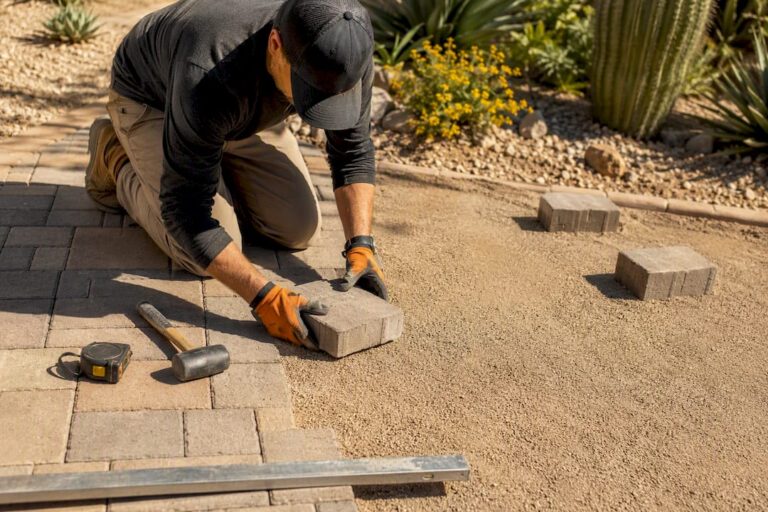
Decking and hardscape: Concrete, pavers, or natural stone create the surrounding surface. Cool deck coatings or light-colored materials reduce surface temperatures that can reach 180°F on dark concrete in summer sun. Proper drainage slopes prevent water pooling and direct runoff away from the pool.
Materials suited to desert climate durability separate pools that thrive from those requiring constant repairs. Specify UV-resistant plumbing components, corrosion-proof metal fixtures, and sealants formulated for extreme temperature swings. Quality materials cost more initially but dramatically reduce lifetime maintenance expenses.
Pro Tip: Monitor construction closely to ensure water efficiency features like variable speed pumps, LED lighting, and automated covers get integrated properly rather than value-engineered out during installation.
Coordinate with contractors to schedule mandatory inspections at each phase. Phoenix requires inspections after steel placement, plumbing rough-in, electrical work, and barrier installation. Missing inspection windows delays construction and can require expensive demolition to expose covered work for verification.
Step 3: finishing touches and outdoor living integrations
Finishing selections transform your pool from a concrete shell into a stunning centerpiece that reflects your style and enhances your lifestyle. These choices significantly impact maintenance requirements, comfort, and integration with your overall outdoor living space.
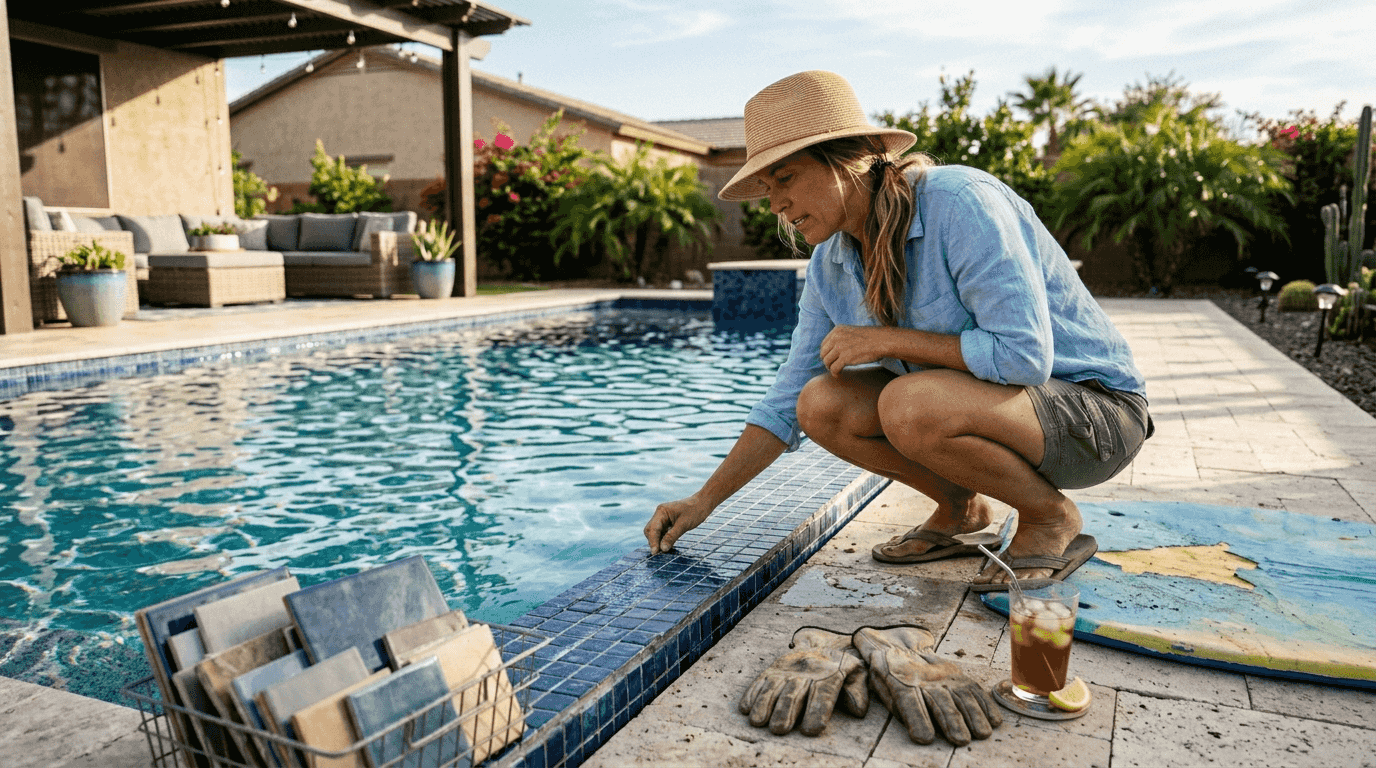
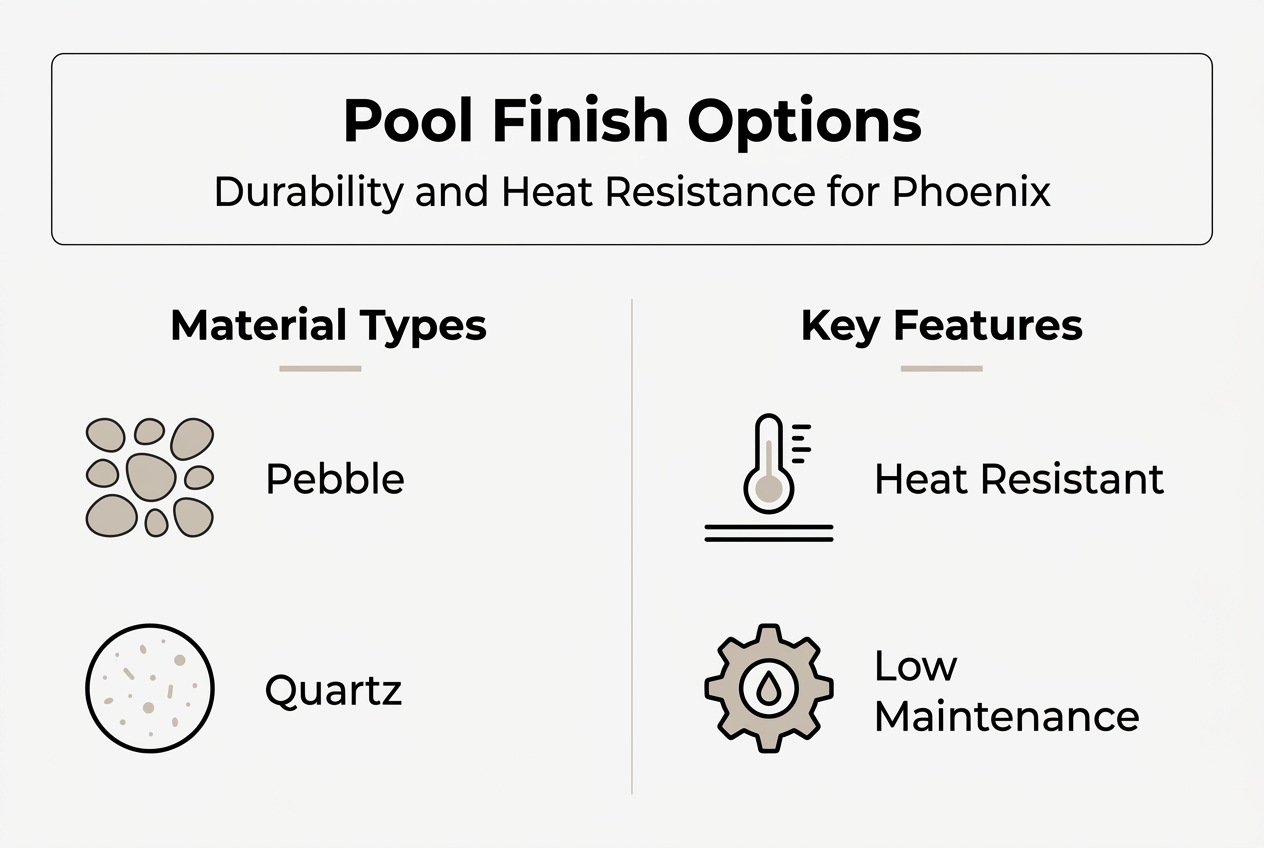
Choosing interior pool finish affects both aesthetics and long-term durability in Arizona’s challenging conditions. Your finish selection influences water chemistry, maintenance frequency, surface texture, and heat retention characteristics.
Pool finish comparison for Phoenix climate
| Finish Type | Durability | Heat Resistance | Maintenance Level | Typical Lifespan | Best For |
|---|---|---|---|---|---|
| Standard plaster | Moderate | Low | High | 5-10 years | Budget-conscious projects, frequent renovators |
| Pebble aggregate | Excellent | High | Low | 15-20 years | High-use pools, families, natural aesthetics |
| Quartz aggregate | Excellent | Very high | Very low | 12-18 years | Luxury pools, minimal maintenance preference |
| Glass bead | Good | High | Moderate | 10-15 years | Contemporary designs, smooth texture priority |
Pebble and quartz finishes excel in Phoenix because they resist etching from hard water, maintain color despite intense UV exposure, and provide slip-resistant texture. Their higher upfront cost gets offset by extended lifespan and reduced maintenance. Standard plaster requires more frequent acid washing and typically needs replacement within a decade under Arizona conditions.
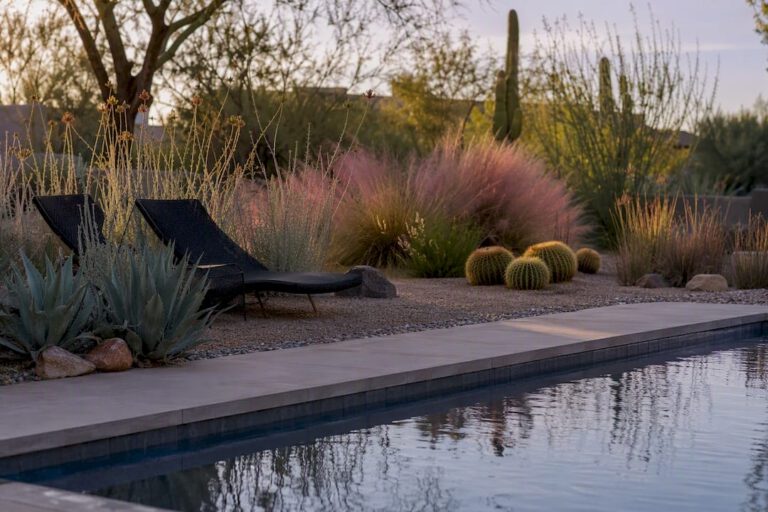
Complementary outdoor living features extend your usable space and create resort-quality environments. Pool landscaping options should prioritize drought-tolerant plants, strategic shade placement, and hardscape elements that withstand poolside moisture.
Essential outdoor living integrations
-
Shade structures: Ramadas, pergolas, or sail shades make pools usable during peak summer heat, reducing water evaporation by up to 30% while protecting furniture and finishes from UV damage.
-
Outdoor kitchens: Built-in grills, refrigerators, and prep areas eliminate trips inside, keeping gatherings flowing naturally around the pool area throughout warm evenings.
-
Fire features: Fire pits or fireplaces extend evening entertainment into cooler months, creating dramatic ambiance and comfortable gathering spots beyond the water.
-
Water features: Sheer descents, bubblers, or grottos add visual interest and soothing sounds while aerating water to improve circulation and chemical distribution.
-
Seating areas: Built-in benches, baja shelves, and swim-up bars maximize functionality for different activities from sunbathing to socializing to exercise.
-
Lighting design: LED systems with color-changing capabilities, pathway lighting, and landscape uplighting create stunning nighttime environments while improving safety and security.
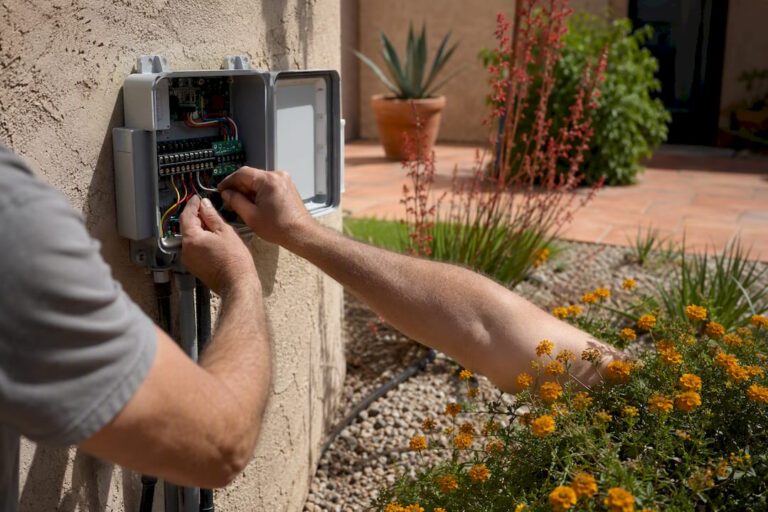
Smart automation systems integrate lighting, heating, pumps, and water features into unified control via smartphone apps. These systems optimize energy usage by running equipment during off-peak hours, adjusting temperatures based on forecasts, and alerting you to maintenance needs before problems escalate.
Pro Tip: Integrate smart automation for lighting and heating to enhance energy efficiency, potentially reducing operating costs by 40% while adding convenience through remote control and scheduling.
Color selections for finishes, tile, and coping should complement your home’s architecture while considering how intense desert sunlight affects perception. Lighter colors reflect heat and stay cooler underfoot but show staining more readily. Darker finishes absorb heat, warming water naturally but creating hotter surfaces. Test samples in your actual lighting conditions before finalizing choices.
Step 4: pool startup, inspection, and maintenance tips
The final construction phase transitions your pool from a completed project to a functioning aquatic environment ready for years of enjoyment. Proper startup and routine maintenance extends pool lifespan in Arizona’s harsh sun and mineral-rich water conditions.
Pool startup involves more than simply filling with water and adding chemicals. The process establishes proper water chemistry, tests all equipment under operating conditions, and identifies any issues before they cause damage or safety concerns.
Complete startup checklist
-
Water filling: Use a hose filter to reduce mineral content during initial fill, taking 24 to 48 hours for most pools. Monitor fill level to prevent overflow and ensure proper skimmer operation.
-
Chemical balancing: Test and adjust pH, alkalinity, calcium hardness, and sanitizer levels following manufacturer specifications for your chosen finish. New plaster requires special startup chemistry to prevent etching.
-
Equipment testing: Run pumps, heaters, lights, automation systems, and water features through complete cycles. Verify proper flow rates, check for leaks, and confirm all controls function correctly.
-
Cleaning: Brush surfaces daily for the first week to remove plaster dust or residue. Vacuum debris and balance chemistry as the finish cures and water stabilizes.
-
Safety verification: Test pool barriers, gate latches, alarms, and covers to ensure compliance with safety codes. Verify emergency equipment like life rings and shepherd hooks are accessible.
-
Documentation: Record equipment serial numbers, warranty information, operating instructions, and maintenance schedules. Photograph installations for future reference during repairs or renovations.
Schedule your final inspection with city officials to receive occupancy approval and close permits. Inspectors verify barrier compliance, electrical safety, and proper equipment installation. Address any deficiencies immediately to avoid fines or restrictions on pool use.
Pro Tip: Schedule seasonal inspections for pumps and filtration systems to avoid costly repairs, catching minor issues like worn seals or clogged filters before they cause equipment failure.
Regular water chemistry management is critical to avoid Arizona-specific issues like scale buildup from hard water, rapid chlorine depletion from intense sun, and algae growth in warm temperatures. Test water at least twice weekly during summer, adjusting chemicals to maintain balanced conditions.
“Phoenix’s mineral-rich water and extreme temperatures create unique maintenance challenges. Consistent testing and proactive chemical adjustments prevent the scale deposits, surface staining, and equipment corrosion that plague neglected pools in our climate. Investing 30 minutes weekly in proper maintenance saves thousands in repairs and premature renovations.”
Common maintenance tasks include skimming debris, brushing walls and steps, vacuuming, cleaning skimmer and pump baskets, backwashing filters, and checking equipment operation. Automate what you can through robotic cleaners and smart chemical feeders, but maintain hands-on monitoring to catch problems early.
Seasonal considerations affect maintenance intensity. Summer demands increased chemical usage, more frequent filter cleaning, and higher water replacement due to evaporation. Winter allows reduced chemical levels and less frequent service, though equipment should run periodically to prevent freezing damage during rare cold snaps. Professional quarterly inspections identify worn components, optimize equipment efficiency, and ensure your pool remains safe and beautiful year-round.
Explore custom luxury pool designs and outdoor living solutions
Now that you understand the complete pool building process, imagine bringing your vision to life with expert guidance tailored specifically to Phoenix’s unique requirements. Unique Companies specializes in custom pool features that blend luxury aesthetics with practical desert durability, from infinity edges and beach entries to integrated spas and dramatic water features.
Complement your pool with unique outdoor kitchens designed for year-round entertaining, featuring high-end appliances, weather-resistant cabinetry, and layouts that flow naturally with your pool area. The genesis pool designer tool lets you visualize your complete outdoor living space in 3D, experimenting with different configurations, finishes, and features before construction begins. With over 24 years creating luxury outdoor environments across Scottsdale, Chandler, and Queen Creek, Unique Companies handles every aspect from initial design through final startup, ensuring your investment delivers lasting value and enjoyment.
Frequently asked questions
How long does it typically take to build a custom pool in Phoenix?
Typical build times range from 8 to 16 weeks depending on design complexity, permit approval speed, and feature selections. Simple geometric pools with standard finishes complete faster, while elaborate designs with custom rock work, grottos, or extensive landscaping require additional time. Weather rarely delays construction in Phoenix except during occasional summer monsoons. Proper planning and experienced contractors minimize delays, keeping projects on schedule.
What permits are required for building a pool in Phoenix?
City building permits, structural engineering approvals, electrical inspections, and barrier safety compliance are mandatory for all pool construction. HOA architectural review adds another approval layer in many neighborhoods. Permit costs typically range from $500 to $2,000 depending on project scope. Consult local authorities early in the planning process to understand specific requirements for your property and avoid costly delays or code violations.
Which pool finishes work best in Arizona’s climate?
Pebble and quartz finishes offer superior durability and heat resistance, lasting 15 to 20 years with minimal maintenance in Phoenix conditions. They resist etching from hard water, maintain color despite intense UV exposure, and provide comfortable non-slip texture. Standard plaster costs less initially but requires more maintenance and typically needs replacement within 10 years. Glass bead finishes provide smooth texture and good durability as a middle option.
How can I maintain my pool to handle Phoenix’s hard water and heat?
Regular water chemistry testing prevents mineral buildup, surface staining, and equipment damage from Phoenix’s challenging conditions. Test pH, alkalinity, and calcium hardness twice weekly during summer, adjusting as needed to maintain balanced water. Use scale inhibitors and phosphate removers to combat mineral deposits. Maintain filtration systems through weekly basket cleaning and monthly backwashing. Schedule quarterly professional maintenance visits to inspect equipment, optimize chemical balance, and catch developing issues before they require expensive repairs.