TL;DR:
- Phoenix outdoor spas must use UV-resistant and durable materials to withstand harsh desert conditions.
- Design choices like shading, privacy, and safety fencing are essential for functionality and compliance.
- Custom spa projects offer better long-term value, automation, and low-maintenance features suited for the desert climate.
Designing an outdoor spa in Phoenix means balancing luxury with the realities of desert living. Intense UV exposure, hard water, triple-digit summer temperatures, and strict local codes all shape what works and what fails. Homeowners in Scottsdale, Chandler, and Queen Creek are increasingly investing in personalized spa spaces, but the sheer number of design options, materials, and feature combinations can make the planning process feel overwhelming. This guide walks through specific design examples, practical cost and timeline benchmarks, and a side-by-side comparison to help you move forward with confidence.
Table of Contents
- How to evaluate outdoor spa designs for Phoenix homes
- Modern plunge spa with sun shelf: Design inspiration
- Natural stone lagoon spa: Serenity in the desert
- Contemporary spa with fire and water features
- Outdoor spa design comparison table: Which style suits your Phoenix lifestyle?
- Why choosing the right spa design really matters for Phoenix homes
- Transform your Phoenix backyard with a custom outdoor spa
- Frequently asked questions
Key Takeaways
| Point | Details |
|---|---|
| Design for Phoenix climate | Use materials and layouts specially suited to resist heat, sun, and hard water for long-term beauty and function. |
| Balance luxury and ROI | Investing in spa features that boost lifestyle and property value can recover up to half of your investment. |
| Personalize to fit your space | Tailor your outdoor spa design to your yard size, style, and outdoor living needs for year-round enjoyment. |
| Plan for timelines and permitting | Most custom spa projects in Phoenix take 8–14 weeks including permitting, so plan ahead. |
How to evaluate outdoor spa designs for Phoenix homes
Before committing to any specific style, it helps to evaluate designs against a clear set of criteria tailored to Phoenix conditions. The desert environment is unforgiving, and choices made during planning will determine how much you enjoy your spa and how much it costs to maintain.
Start with materials. Phoenix’s hard water and intense sun degrade inferior finishes quickly. The spa construction process for Phoenix projects specifically calls for pebble finishes and UV-resistant materials that hold up against mineral buildup and prolonged sun exposure. These aren’t luxury upgrades here; they’re baseline requirements.
Next, factor in permitting and safety codes. Arizona law requires a 5-ft safety fence per ARS §36-1681 for any spa or pool installation. HOA approval may add additional steps. Skipping or delaying permits can stall construction and create legal liability.
On timelines, plan for an 8 to 14 week window from permit approval to project completion, with permitting itself taking 2 to 6 weeks. Rushing this phase rarely saves time overall.
For costs and ROI, spa operation costs in Phoenix typically run $50 to $200 per month, and well-designed custom spas can recover 35 to 50% of their investment in property value. That’s a meaningful return when paired with regular use.
Key personalization factors to evaluate:
- Sun and shade positioning: Orient the spa to avoid peak afternoon sun exposure on seating areas
- Privacy screening: Walls, pergolas, or dense plantings reduce visibility from neighbors
- Night lighting: LED systems extend usable hours well into the evening
- Integration with other amenities: Connecting the spa to an outdoor kitchen or pool creates a cohesive custom pool builder insights experience
- View alignment: Position for sunset or landscape views when the yard allows
Pro Tip: Lock in your permit application before finalizing any design details. Permit requirements can influence setback distances and fence placement, which directly affect your layout options.
Modern plunge spa with sun shelf: Design inspiration
Now that you have criteria, let’s look at specific design examples starting with the modern plunge spa. This style suits homeowners who want a refined, low-footprint spa that feels like a private resort amenity without requiring a large yard.
The design centers on a compact plunge pool integrated with a sun shelf, finished in a light-toned PebbleTec surface that resists hard water deposits and UV fading. The minimalistic deck, typically travertine or large-format porcelain tile, keeps the visual lines clean and the surface temperature manageable underfoot.
Core features of this design:
- Hydrotherapy jets: Positioned at shoulder and lumbar levels for targeted relief
- In-floor heating system: Maintains consistent water temperature year-round
- Automatic safety cover: Reduces evaporation and heat loss overnight
- Integrated LED lighting: Color-programmable for ambiance and safety
- UV-resistant coping: Prevents surface cracking and discoloration in direct sun
The sun shelf, typically 6 to 12 inches deep, doubles as a shallow lounge area for reading or cooling off. It’s one of the most requested features in resort-inspired staycation ideas for Phoenix backyards.
Pro Tip: Choose light-colored stone or tile for the sun shelf surface. Darker materials absorb significantly more heat in Phoenix summers, making surfaces uncomfortable to sit on during afternoon hours.
For add-ons, consider an in-water lounger, a small water feature wall for ambient sound, or a pergola positioned to provide afternoon shade. These elements enhance the experience without dramatically increasing the footprint. If you’re exploring custom spa transformations, this design is a strong starting point for both first-time spa owners and those upgrading from a portable unit.
Typical investment for this style ranges from $25,000 to $55,000 depending on size, finish selections, and add-ons, with construction running 8 to 12 weeks post-permit.
Natural stone lagoon spa: Serenity in the desert
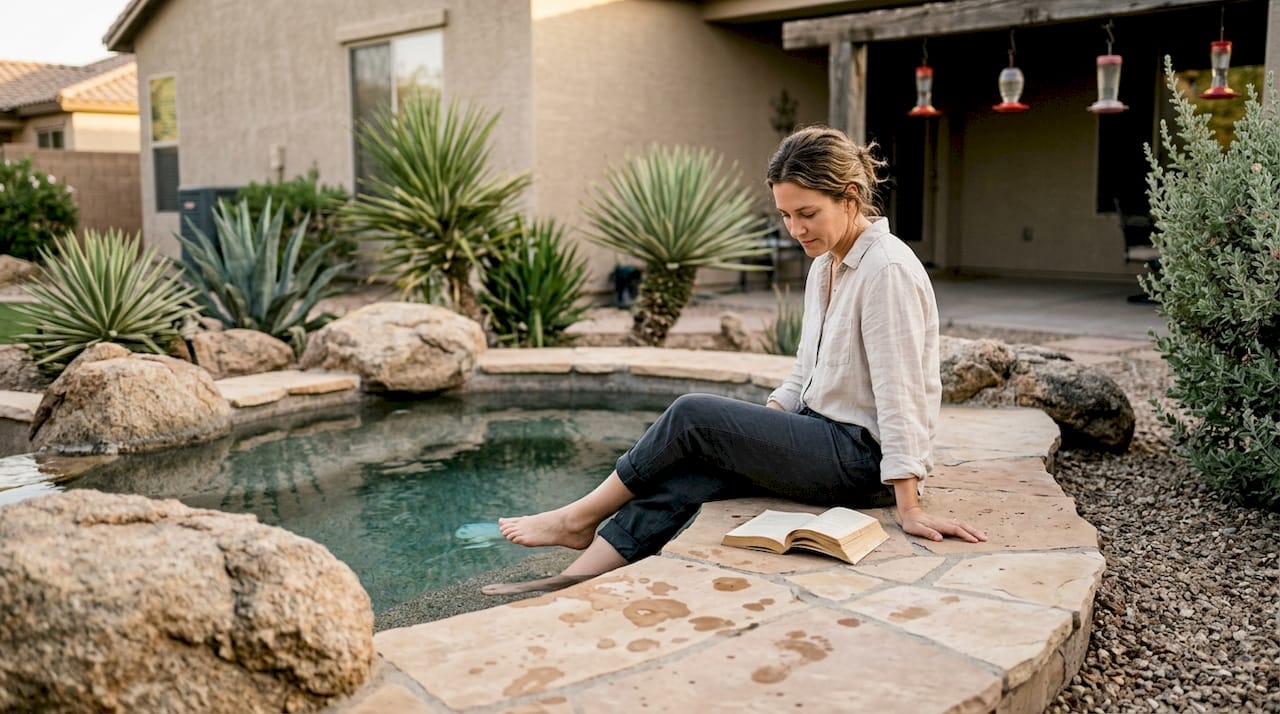
For a secluded, nature-centric retreat, consider the next style. The natural stone lagoon spa takes a fundamentally different approach, prioritizing organic shapes, textured materials, and landscape integration over geometric precision.
This design uses irregular stone coping, boulder waterfalls, and drought-resistant native plants to create a spa that feels like it belongs to the desert rather than sitting on top of it. Hidden jets are embedded within the stone structure, maintaining the natural aesthetic while delivering full hydrotherapy function. The deck surface often uses flagstone or decomposed granite, both of which handle Phoenix heat well and complement the surrounding landscape.
Pros and cons of this design:
Pros:
- Strong visual privacy through layered plantings and rock formations
- Natural cooling effect from water features and shade plants
- High eco-appeal and alignment with desert landscaping trends
- Distinctive look that photographs well and impresses visitors
Cons:
- Higher build cost due to custom stonework and landscaping
- More ongoing landscape maintenance compared to minimalist designs
- Irregular shapes can complicate automatic cover installation
“Homeowners who use their spa frequently see strong ROI in both lifestyle quality and property value, with 35 to 50% value recovery on investment. Nature-inspired designs tend to perform particularly well in markets where outdoor living is a primary selling point.”
For design placement, position this style to capture sunset views from the primary seating area. Add low-voltage pathway lighting through the surrounding plantings to make the space usable after dark. Native foliage like desert willow, agave, and palo verde trees add authenticity and require minimal irrigation once established.
If you’re working with a larger yard, large backyard spa designs that incorporate this lagoon concept alongside a full pool can create a truly resort-caliber environment. Browse custom spa projects for real Phoenix examples of this style in action.
Contemporary spa with fire and water features
If high-end modern flair and dramatic ambiance appeal to you, the following design may inspire your plans. The contemporary spa with integrated fire and water features is built for homeowners who want maximum visual impact, especially during Phoenix’s cooler evenings from October through April.
The design uses crisp geometric shapes, travertine coping, and linear fire bowls positioned along the spa’s edge or on flanking walls. A sheer descent water feature or laminar jets add movement and sound without disrupting the clean lines.
Steps to build this design from concept to completion:
- Define the geometry: Select rectangular or L-shaped spa dimensions that align with your patio layout
- Choose coping and deck materials: Travertine is popular for its heat resistance and neutral tone
- Select fire feature placement: Linear fire bowls work best when positioned on the windward side to direct flames away from seating
- Program LED color zones: Coordinate water feature lighting with fire feature placement for cohesive evening ambiance
- Confirm code compliance: Fire features near water require specific clearances; verify with your permit application
Pro Tip: Position fire features on the north or east side of the spa when possible. Phoenix’s prevailing winds typically move from the west and southwest, so this placement keeps flames stable and reduces smoke drift toward seating areas.
For safety, all gas fire features require proper shutoff valves and must meet local fire code clearances. Wind guards are a practical addition for exposed yards. On the timeline side, permit and construction for this design typically runs 10 to 14 weeks given the added complexity of gas line installation. For full outdoor living integration, this spa style pairs naturally with an outdoor kitchen or covered lounge area. View completed examples in the luxury spa portfolio.
Outdoor spa design comparison table: Which style suits your Phoenix lifestyle?
To make it easier to decide, here’s a side-by-side comparison of the featured designs.
| Style | Typical cost | Timeline | Main features | Monthly upkeep | Best for | ROI snapshot |
|---|---|---|---|---|---|---|
| Modern plunge with sun shelf | $25,000–$55,000 | 8–12 weeks | Jets, sun shelf, auto cover, LED | $50–$120 | Smaller yards, first-time spa owners | Moderate to strong |
| Natural stone lagoon | $45,000–$90,000 | 10–14 weeks | Boulder waterfall, hidden jets, native plants | $100–$200 | Large yards, privacy-focused buyers | Strong in outdoor-living markets |
| Contemporary fire and water | $50,000–$100,000+ | 10–14 weeks | Fire bowls, sheer descent, travertine, LED | $120–$200 | Entertainment-focused, high-end finishes | Strong for luxury buyers |
All three styles fall within the 8 to 14 week construction window typical for Phoenix projects, with operating costs ranging from $50 to $200 per month depending on size and features. The right choice depends on how you use your outdoor space, your maintenance tolerance, and your long-term goals for the property.
If you’re still narrowing down your preferences, reviewing custom pool design options alongside spa styles can help you see how the two elements interact in a full backyard plan.
A practical approach: identify your top two priorities, whether that’s privacy, entertainment value, low maintenance, or visual drama, and let those guide your style selection before focusing on cost.
Why choosing the right spa design really matters for Phoenix homes
Most homeowners spend the majority of their planning time focused on aesthetics and upfront price. Both matter, but they rarely determine long-term satisfaction. What actually separates a spa you use every week from one that sits idle is how well the design accounts for Phoenix’s specific conditions and your actual lifestyle.
The benefits of custom spas go beyond visual appeal. A spa designed with automation, quality filtration, and appropriate shading requires far less hands-on maintenance and remains usable year-round. One built around generic templates often fights the climate rather than working with it.
Invest in automation early. Smart controls for temperature, jets, lighting, and covers reduce daily effort and lower operating costs over time. Pair that with a shading solution tailored to your yard’s sun angles, and you’ve built a space that delivers genuine, low-effort luxury rather than a high-maintenance showpiece.
Transform your Phoenix backyard with a custom outdoor spa
Ready to apply these ideas to your yard? Here’s how to move forward with the experts.
Unique Companies designs and builds all three spa styles featured in this guide, along with fully custom variations tailored to your specific yard, lifestyle, and budget. With over 24 years of experience in the Phoenix metro area, we manage permitting, design, and construction in-house for a streamlined process from start to finish.
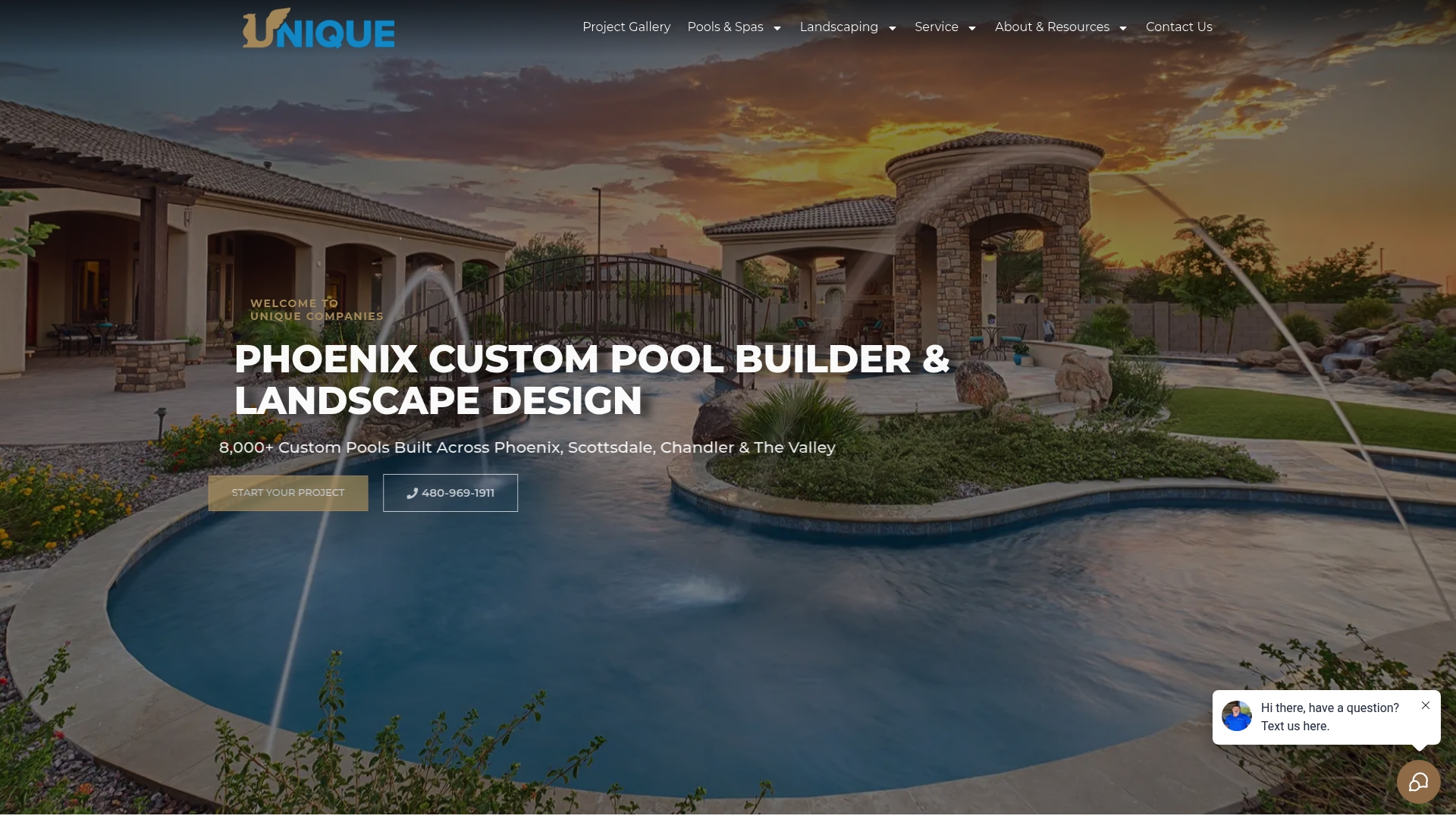
Explore custom pool features to see how spa elements integrate with full outdoor living environments. Review completed work from our Phoenix spa experts to find designs that match your vision. You can also use our Genesis pool designer tool to preview your custom design in 3D before construction begins. Schedule a consultation to get started.
Frequently asked questions
How long does it take to build an outdoor spa in Phoenix?
From permitting to completion, most outdoor spa projects in Phoenix require 8 to 14 weeks, with permitting alone accounting for 2 to 6 weeks of that window.
What materials are best for Phoenix outdoor spa designs?
Pebble finishes and UV-resistant coping materials are the most reliable choices for Phoenix, as they resist hard water mineral buildup and prolonged sun exposure without degrading quickly.
How much does it cost to install and operate an outdoor spa in Phoenix?
Portable spas typically range from $3,000 to $15,000 plus $500 to $2,000 for installation, while custom in-ground spas start significantly higher; monthly operating costs run $50 to $200 regardless of type.
Do outdoor spas add value to Phoenix homes?
Yes. Homeowners who use their spa regularly can expect 35 to 50% value recovery on their investment, particularly in markets where outdoor living is a strong selling point.
What safety codes should I consider for outdoor spas in Arizona?
Arizona requires a 5-ft safety fence per ARS §36-1681 for all spa and pool installations, along with local permit compliance before construction begins.