Building a custom backyard spa in Phoenix sounds like a dream until you realize how many moving parts stand between you and that first soak. Permits, site surveys, HOA approvals, material choices, and multi-phase inspections can turn excitement into overwhelm fast. Phoenix’s specific city codes and Arizona state regulations add layers that most homeowners don’t see coming. The good news is that with the right process and the right team, you can move from concept to finished spa without costly surprises. This guide walks you through every major step, so you know exactly what to expect.
Table of Contents
- Planning your backyard spa: Key requirements and initial decisions
- Step-by-step: The backyard spa construction process in Phoenix
- Materials, finishes, and durability in Phoenix’s climate
- In-house project management: How oversight drives a smooth build
- Final walkthrough, troubleshooting, and maintenance basics
- Bring your luxury backyard spa to life with Phoenix experts
- Frequently asked questions
Key Takeaways
| Point | Details |
|---|---|
| Permits come first | Start city and HOA permits early to avoid weeks of construction delays. |
| Right finishes matter | Choose UV-stable tile or pebble for a spa that stays beautiful with minimal upkeep. |
| In-house oversight saves time | A project manager reduces permitting hiccups and keeps your build on schedule. |
| Final checklist protects your investment | Double check finishes, safety barriers, and equipment before taking ownership. |
Planning your backyard spa: Key requirements and initial decisions
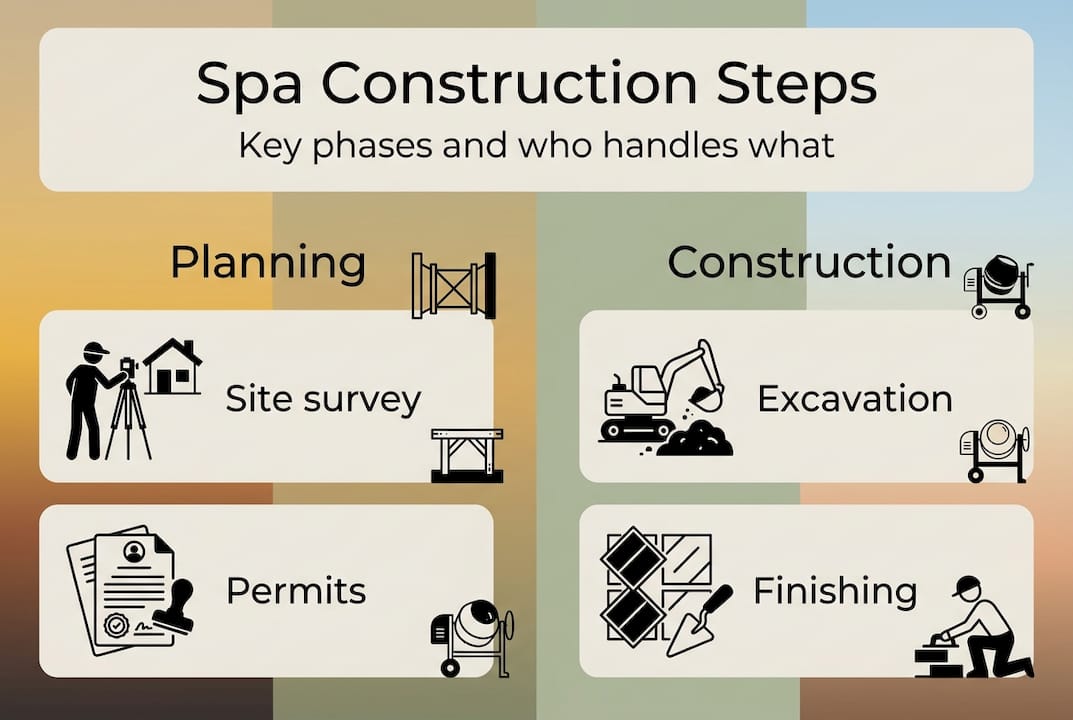
Before a single shovel hits the ground, you need to clear several administrative hurdles. Permits, surveys, HOA approvals, and fence/barrier details are all required before construction can begin in Phoenix. Skipping or delaying any one of these can stall your entire project by weeks.
Here’s what you need to line up in the planning phase:
- Plot plan and site survey: A licensed surveyor must document your property boundaries and existing structures.
- City permit application: Phoenix requires an online submittal through the city’s permitting portal, including your spa design drawings.
- HOA approval: If your neighborhood has a homeowners association, you’ll need written approval before the city will finalize your permit. This process alone can take two to six weeks.
- Safety barrier compliance: Arizona state law under ARS §36-1681 requires a minimum 5-foot perimeter fence with self-latching gates around all residential spas.
- Design material selection: Arizona’s intense UV exposure and notoriously hard water mean your finish choices matter from day one. Look at pool design ideas Arizona for inspiration on materials that hold up in this climate.
- Budget contingency: Site conditions in Phoenix, including caliche rock (a dense, calcium-rich layer common in desert soil) and underground utilities, can drive unexpected costs. Build in a 10 to 15 percent contingency on your total budget.
Use the Arizona pool cost calculator to get a realistic starting number before you commit to a design scope.
| Planning task | Who handles it | Typical timeline |
|---|---|---|
| Site survey | Licensed surveyor | 1 to 2 weeks |
| City permit application | Builder or homeowner | 5 days to 6 weeks |
| HOA approval | Homeowner or builder | 2 to 6 weeks |
| Barrier/fence plan | Builder | Concurrent with permit |
| Design finalization | Builder and homeowner | 1 to 3 weeks |
Pro Tip: Don’t wait for HOA approval before starting your permit application. Work both tracks simultaneously to avoid adding a month or more to your total timeline.
With requirements and priorities in focus, you’re ready to walk through the full construction process step by step.
Step-by-step: The backyard spa construction process in Phoenix
Knowing the sequence of a spa build helps you set realistic expectations and avoid the frustration of feeling like nothing is happening. Here’s how a typical Phoenix spa project unfolds:
- Site assessment and design confirmation: Your builder visits the property, confirms soil conditions, utility locations, and access points. Final design drawings are locked in.
- Permit submittal and HOA approval: Applications go to the city and HOA simultaneously. Phoenix permit review can take anywhere from 5 days to 6 weeks depending on the city’s current backlog.
- Excavation: Once permits are approved, digging begins. Caliche layers can slow this phase significantly.
- Steel reinforcement and plumbing: Rebar is shaped and tied to form the spa’s structural skeleton. Plumbing lines, jets, and equipment connections are roughed in.
- Shotcrete or gunite application: A pneumatically applied concrete mixture (shotcrete or gunite) is sprayed over the rebar frame and left to cure for at least 28 days. This is the structural shell of your spa.
- Tile, coping, and interior finishes: Once cured, the surface receives its finish layer, tile borders, and coping (the cap material around the spa’s edge).
- Equipment installation and water features: Heaters, pumps, automation systems, and any water features are connected and tested.
- Final city inspection: A city inspector verifies that the spa and its barriers meet all code requirements before you can fill and use it.
| Phase | Typical duration | Key milestone |
|---|---|---|
| Permitting | 1 to 6 weeks | Approved permit in hand |
| Excavation | 2 to 5 days | Hole complete |
| Steel and plumbing | 3 to 7 days | Rough-in inspection passed |
| Shotcrete and cure | 4 to 5 weeks | Shell structurally sound |
| Finishes and equipment | 1 to 3 weeks | Ready for final inspection |
Working with an experienced Arizona pool builder means each phase is scheduled with inspections built in, not bolted on as an afterthought. A custom spa builder Phoenix homeowners trust will also flag potential delays before they become problems.
Pro Tip: Never schedule the next construction phase until the city inspector has signed off on the current one. Jumping ahead can result in mandatory tear-out and redo work, which is expensive and demoralizing.
Now that you know the big-picture process, let’s look at how material choices affect your spa’s long-term performance.
Materials, finishes, and durability in Phoenix’s climate
Phoenix is one of the harshest environments in the country for outdoor surfaces. Arizona hard water and intense sun mean that selecting the right finishes isn’t just about aesthetics. It’s about how much time and money you’ll spend on upkeep over the next decade.
Here are the best surface and finish options for Phoenix spas:
- Pebble finishes: Extremely durable, slip-resistant, and available in a wide range of colors. Pebble holds up well against Phoenix’s mineral-heavy water and resists staining better than standard plaster.
- Quartz aggregate finishes: A step above standard plaster in durability. Quartz blends resist etching from hard water and maintain their color under intense UV exposure.
- Glass or porcelain tile: The most durable and visually striking option. Full tile interiors are virtually impervious to hard water damage and UV fading, though they carry a higher upfront cost.
- UV-stable coping materials: Travertine and certain porcelain pavers handle Phoenix’s heat without cracking or fading. Avoid materials that absorb heat excessively, since coping surfaces can reach dangerous temperatures in summer.
- LED lighting: Modern LED spa lighting is rated for outdoor UV exposure and uses far less energy than older incandescent systems.
- Water features: Sheer descent waterfalls and bubblers add a resort feel. Choose equipment rated for continuous outdoor use in high-heat environments.
Over 60% of expensive upkeep in Phoenix spas is caused by material wear rather than mechanical failure. That means your finish decision at the start of the project has a bigger impact on your long-term costs than almost anything else.
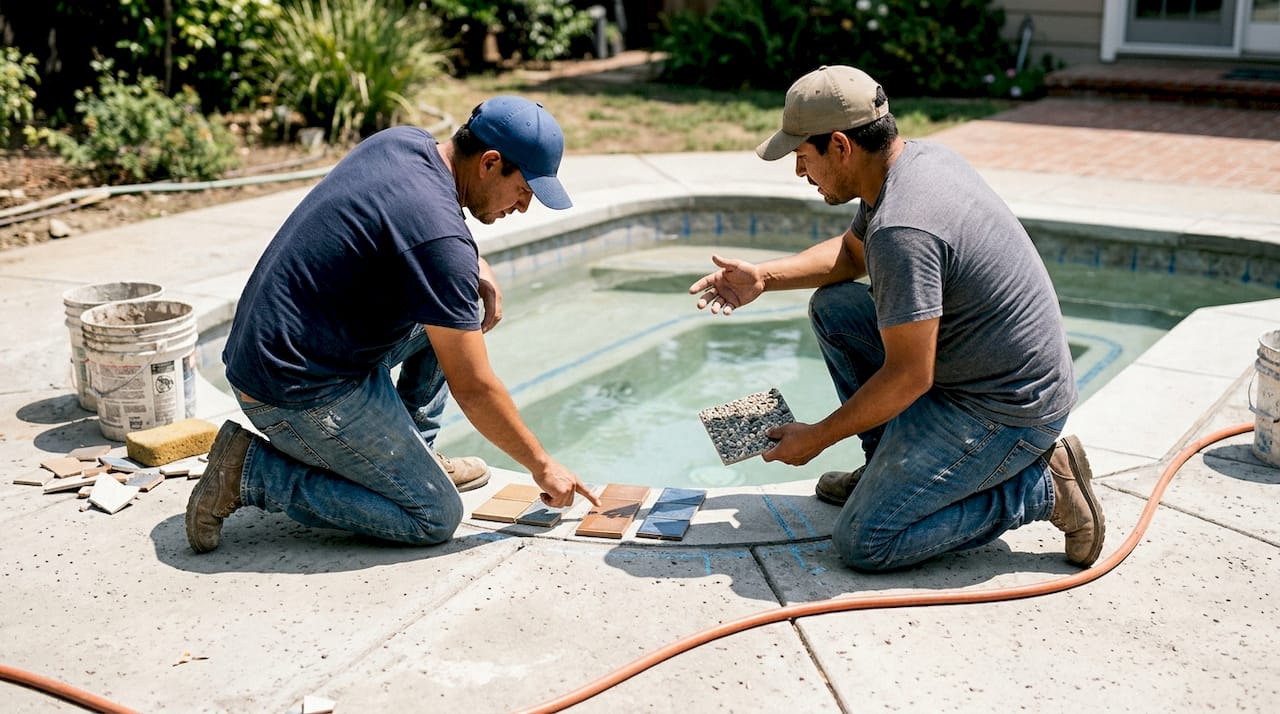
Exploring pool upgrade tips can help you identify which premium features deliver the best return, and Phoenix pool remodeling advice is a useful reference if you’re upgrading an existing structure.
Pro Tip: Invest in UV-stable finishes from the start. Saving a few thousand dollars on a cheaper interior finish often leads to a full replaster within seven years, which costs far more than the original upgrade.
Beyond the physical work, success depends on good project oversight. Let’s discuss how management and communication keep your build on track.
In-house project management: How oversight drives a smooth build
A luxury spa build involves plumbers, electricians, concrete crews, tile setters, equipment technicians, and city inspectors, all working in a specific sequence. Without tight coordination, gaps appear fast.
Here’s what a professional project manager handles on your behalf:
- Scheduling trades: Each crew is booked in the correct sequence so no phase is waiting on another unnecessarily.
- Inspection coordination: The project manager schedules city inspections at the right phase and ensures the site is ready when the inspector arrives.
- Trades supervision: On-site oversight catches errors before they’re buried under concrete or tile.
- Issue resolution: When something unexpected comes up, like hitting a utility line during excavation, a project manager resolves it without pulling you into every decision.
- Communication: You get regular updates without having to chase down answers from multiple subcontractors.
“Missing a single city inspection can push your completion back by weeks.”
That’s not an exaggeration. If an inspector arrives and the site isn’t ready, or if a phase is completed before the inspector signs off, you may be required to expose completed work for re-inspection. Most delays happen when planning, permitting, or inspections aren’t actively overseen by someone accountable.
Common management pitfalls include permitting backlogs that weren’t anticipated, weather delays in summer monsoon season, and unclear scope agreements with subcontractors. All of these are manageable when one experienced person owns the timeline.
If you’re in the Scottsdale or northwest Valley area, looking at Sun City pool contractors with in-house management teams gives you a significant advantage over hiring a general contractor who outsources everything.
Pro Tip: Insist on a single point of contact for your entire project. Self-managing a multi-phase spa build while juggling work and family is a recipe for stress and costly mistakes.
With construction and management under control, let’s review how to do a final check and set yourself up for easy ongoing maintenance.
Final walkthrough, troubleshooting, and maintenance basics
The final walkthrough is your last chance to catch anything before you sign off on the project. Don’t rush it.
Here’s a structured checklist to work through:
- Finish quality check: Inspect the interior surface for rough spots, discoloration, or uneven texture. Run your hand along tile lines to check for sharp edges or grout gaps.
- Barrier and gate inspection: Confirm that all fencing meets the 5-foot minimum height and that gates are self-latching and self-closing. Final city inspection and fence/gate compliance are required before you can legally use the spa.
- Equipment test: Run all jets, heaters, lighting, and automation systems through a full cycle. Listen for unusual sounds and check for leaks at all fittings.
- Site clean-up: Confirm that all construction debris, excess materials, and equipment staging has been removed from your property.
- Punchlist review: Any items that aren’t complete or don’t meet the agreed spec go on a written punchlist with a clear completion date from your builder.
For common post-build issues, here’s what to watch for in the first 90 days:
- Surface crazing: Hairline cracks in new plaster or pebble finishes are normal as the shell cures. Deep or widening cracks are not, and should be reported immediately.
- Minor leaks: Check equipment fittings and jet bodies weekly during the first month. Small leaks caught early are inexpensive to fix.
- Water chemistry imbalance: Phoenix’s hard water means you’ll need to test and balance your spa water weekly. Keep a test kit and a supply of pH adjusters, alkalinity increaser, and calcium hardness reducer on hand.
For ongoing maintenance, connect with Phoenix pool contractors who offer service plans, so your spa stays in peak condition year-round without you having to manage it yourself.
Bring your luxury backyard spa to life with Phoenix experts
Building a custom spa is one of the most rewarding investments you can make in your home, and the process doesn’t have to be stressful. At Unique Companies, we’ve spent over 24 years designing and building luxury outdoor environments across Scottsdale, Chandler, Queen Creek, and the greater Phoenix area.
Our in-house team handles every phase, from design and permitting to construction and final inspection, so nothing falls through the cracks. Explore our custom pool features Phoenix page to see what’s possible, or use our Genesis pool designer tool to start visualizing your space in 3D before you commit to anything. When you’re ready to talk details, our design team is here to walk you through every option.
Frequently asked questions
How long does a backyard spa project typically take in Phoenix?
Most backyard spa projects in Phoenix take 8 to 14 weeks from permit approval to final inspection. The permit review process alone can range from 5 days to 6 weeks, which is often the biggest variable in your total timeline.
What permits are required to build a backyard spa in Phoenix?
You need a plot plan, site survey, online city permit application, and a compliant safety barrier plan. Phoenix requires all of these to be submitted and approved before construction can legally begin.
How do HOAs impact backyard spa construction?
HOA approval is often required before the city will finalize your permit, and the HOA review process can add two to six weeks to your project. Start your HOA application at the same time as your city permit to avoid unnecessary delays.
What materials last best for spas in Phoenix’s climate?
Tile, pebble, and quartz finishes are the top choices for durability in Phoenix. Arizona hard water and sun degrade standard plaster quickly, making premium finishes a smarter long-term investment.
Who manages inspections and permits during spa construction?
A qualified builder with in-house project management handles both, keeping your timeline tight. Most project delays occur when permitting and inspections aren’t actively tracked by someone accountable to your schedule.