TL;DR:
- Phoenix landscapes require site assessment, proper drainage, and soil remediation for durability.
- Native plants, smart irrigation, and climate-resistant materials define luxury in Arizona yards.
- Proper plant placement, firewise zones, and ongoing maintenance are crucial for long-term success.
Phoenix backyards face a demanding set of conditions: intense summer heat, alkaline caliche soil, monsoon flooding, and wildfire risk. Yet these same conditions make a well-designed outdoor space one of the most valuable investments a homeowner can make. This guide walks you through every stage of creating a luxury custom landscape in the Phoenix metropolitan area, from initial site assessment through plant placement and long-term maintenance, so your backyard delivers both visual impact and reliable durability for years to come.
Table of Contents
- Assessing your backyard landscape: Phoenix-specific essentials
- Luxury design features for Arizona’s climate
- Planting and structural placement: Maximizing beauty and longevity
- Troubleshooting and avoiding common mistakes
- Why luxury landscapes succeed or fail in Phoenix
- Transform your Phoenix backyard with expert help
- Frequently asked questions
Key Takeaways
| Point | Details |
|---|---|
| Prepare for extreme weather | Drainage, soil prep, and firewise strategies are essential for safe, lush Phoenix backyard landscapes. |
| Choose luxury features wisely | Native plants, smart irrigation, and outdoor kitchens offer beauty and durability in Arizona’s climate. |
| Follow proper spacing rules | Allow room for root growth and comply with local HOA and fire safety requirements. |
| Stay ahead of maintenance | Annual checklists and updating trends prevent costly problems and keep your backyard pristine. |
| Partner with local experts | Phoenix landscape professionals combine design, resilience, and luxury for enduring results. |
Assessing your backyard landscape: Phoenix-specific essentials
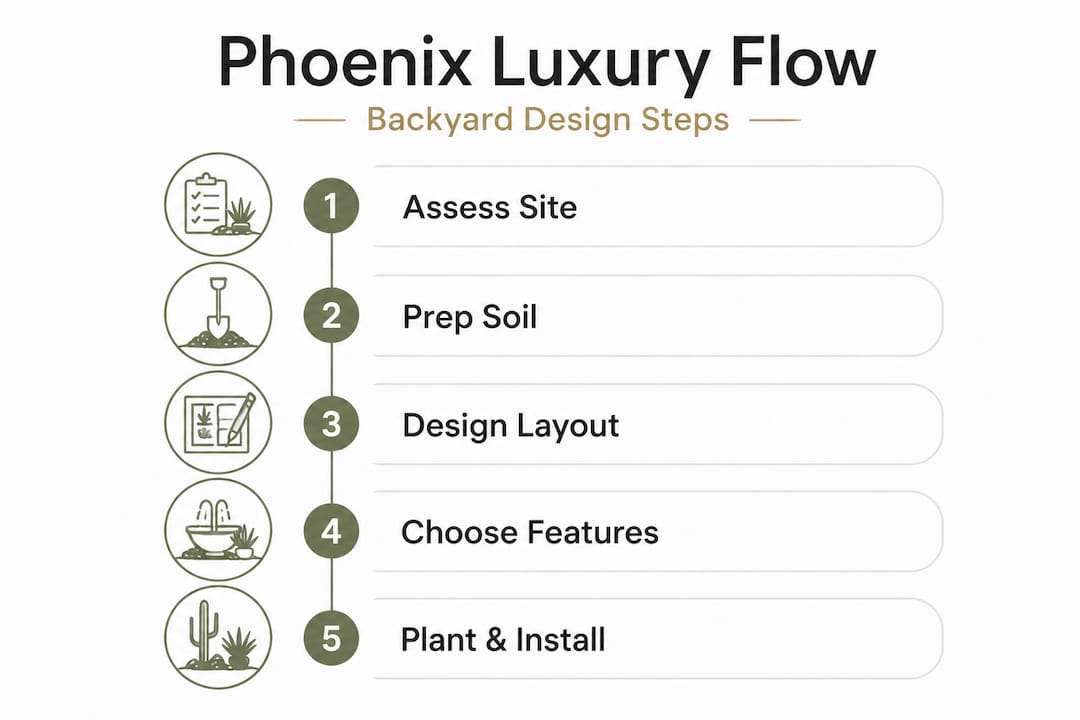
Before you start transforming your outdoor space, it’s crucial to evaluate key local factors that shape design and longevity. Skipping this step is one of the most common reasons luxury landscapes underperform in Arizona. A thorough site assessment gives you a clear picture of what your yard can realistically support and what it needs before any installation begins.
Sun exposure and drainage patterns
Phoenix receives over 300 days of sunshine annually, which means sun orientation directly affects plant survival, material durability, and outdoor comfort. Walk your yard at different times of day and note where shade falls, where heat accumulates, and how water moves across the surface after a heavy rain. Western-facing walls and hardscape surfaces absorb intense afternoon heat, which can make adjacent seating areas unusable without proper shading structures.
Drainage is equally critical. Monsoon season brings intense, short-duration rainfall that can overwhelm poorly graded yards in minutes. Proper drainage and grading for monsoon conditions, along with appropriate soil preparation to prevent compaction, are foundational requirements for any successful Phoenix landscape. Water that pools near foundations or patio edges causes long-term structural damage that no amount of beautiful plantings can fix.
Soil conditions: Caliche and compaction
Caliche is a hardened calcium carbonate layer found in many Phoenix-area soils. It blocks root penetration and traps water above it, creating drainage problems even in yards with adequate surface grading. Before planting or laying hardscape, probe your soil to identify caliche depth. In some cases, you may need to break through it mechanically or install drainage basins to manage water accumulation.
Compacted soil is a related issue. Construction activity, foot traffic, and vehicle access can compress soil to the point where roots and water cannot penetrate effectively. Proper soil preparation, including tilling, amending with organic material, and sometimes replacing soil entirely in planting zones, is essential before installation. When planning your backyard design, document your soil conditions early so your contractor can factor remediation costs into the project scope.
HOA guidelines and material requirements
Many Phoenix-area communities, particularly in Scottsdale, Chandler, and Queen Creek, have homeowners association (HOA) guidelines that restrict or mandate specific landscaping materials. Decomposed granite (DG) is a frequently required ground cover in many communities because it manages surface water and reduces weed growth. Some HOAs also regulate plant height, pool fence styles, and the percentage of turf allowed in a yard.
Before committing to any design, request your HOA’s current design guidelines and submit your plans for approval. Violations can result in costly modifications after installation. Review Arizona landscaping tips for specific material recommendations that align with both local regulations and climate performance.
Key site assessment checklist:
- Map sun exposure by compass direction and time of day
- Identify low spots where water collects after rain
- Test soil depth before hitting caliche
- Note existing utility lines and irrigation infrastructure
- Request HOA design guidelines before finalizing any plans
| Site factor | What to assess | Why it matters |
|---|---|---|
| Sun orientation | Morning vs. afternoon exposure | Affects plant selection and comfort |
| Drainage grade | Slope direction and percentage | Prevents monsoon flooding |
| Soil composition | Caliche depth, compaction level | Determines soil prep requirements |
| HOA restrictions | Material and plant guidelines | Avoids costly post-install changes |
| Utility locations | Underground lines and easements | Prevents permit and safety issues |
Pro Tip: Hire a licensed landscape contractor to conduct a formal soil probe before finalizing your design. Discovering caliche at 12 inches versus 36 inches changes both your plant palette and your drainage strategy significantly.
Luxury design features for Arizona’s climate
Once you understand your landscape’s requirements, select features that blend luxury with lasting climate resilience. The most successful Phoenix luxury landscapes in 2026 share one characteristic: they prioritize materials and systems that perform under extreme conditions without sacrificing visual appeal.
2026 design trends worth following
Current garden trends shaping Arizona landscapes in 2026 center on low-maintenance luxury, native plant integration, and smart technology. Homeowners are moving away from traditional turf-heavy designs and toward curated native plant compositions that deliver texture, color, and seasonal interest with a fraction of the water and labor. Outdated turf monotony is giving way to layered desert plantings paired with refined hardscape.
Smart irrigation systems with soil moisture sensors and weather-based controllers are now considered standard in high-end installations. These systems reduce water waste by 30 to 50 percent compared to timer-based systems and allow remote management through smartphone apps. Smart LED landscape lighting, which can be programmed for color temperature, intensity, and scheduling, is another feature that adds both ambiance and energy efficiency. Explore 2026 design trends for a detailed look at what Phoenix homeowners are prioritizing this year.
High-value features for Phoenix luxury landscapes
Pools remain the centerpiece of most luxury Phoenix backyards. Modern designs incorporate features like tanning ledges, negative edges, water walls, and integrated spa spillovers. The key is selecting pool finishes and coping materials that resist UV degradation and thermal expansion. Travertine, porcelain pavers, and certain natural stones outperform standard concrete in Phoenix’s heat cycles. For inspiration, review luxury pool trends specific to Phoenix homes.
Outdoor kitchens are another high-return investment. Built-in grills, refrigeration, pizza ovens, and covered bar areas extend the usable season and increase property value. Materials like stainless steel, concrete countertops, and natural stone veneers hold up well in the desert climate. Fire pits and fire features add warmth during cooler months and serve as focal points for evening entertaining.
Landscape lighting transforms a backyard from a daytime space into an all-hours environment. Well-placed uplighting on specimen trees, path lighting along walkways, and accent lighting on water features create depth and drama after dark. Thoughtful landscape lighting ideas can extend your outdoor living hours by several months each year.
Recommended luxury features by climate performance:
- Travertine or porcelain pavers: excellent heat resistance and slip resistance when wet
- Ramadas and pergolas with shade cloth or solid roofing: essential for afternoon comfort
- Smart drip irrigation: precise water delivery reduces waste and plant stress
- Native specimen trees (palo verde, desert willow): provide shade and visual structure
- LED landscape lighting: low energy, long lifespan, programmable for ambiance
| Feature | Durability in Phoenix climate | Maintenance level | Luxury impact |
|---|---|---|---|
| Travertine pavers | High | Low | High |
| Traditional concrete | Medium | Medium | Medium |
| Artificial turf | Medium | Low to medium | Medium |
| Native plantings | Very high | Low | High |
| Smart irrigation | Very high | Low | Medium |
| Outdoor kitchen | High (with proper materials) | Medium | Very high |
Pro Tip: Avoid dark-colored pavers in full sun areas. Surfaces like black slate or dark concrete can reach surface temperatures above 150°F in summer, making them unusable and potentially damaging to bare feet or pet paws.
Planting and structural placement: Maximizing beauty and longevity
Design decisions also hinge on how you place plants and structures, affecting both beauty and function over time. Proper placement prevents future problems ranging from cracked foundations to blocked sightlines to fire hazards.
Spacing for root growth and structural safety
One of the most overlooked aspects of landscape planning is accounting for mature plant size. Many homeowners plant trees and large shrubs too close to pools, patios, and structures because the plants look small at installation. Over time, roots extend well beyond the canopy. Tree roots extend 1.5 to 4 times the canopy width, and plants should be placed no closer than half their mature canopy width from any structure.
For example, a palo verde tree with a 20-foot mature canopy should be planted at least 10 feet from a pool wall, patio edge, or building foundation. Failing to account for this leads to root intrusion into pool shells, lifted pavers, and cracked concrete, all of which are expensive to repair. Plan for the mature landscape, not the installed one.
Numbered steps for strategic plant placement
- Research the mature size of every plant species before purchasing
- Mark structural boundaries (pool edge, patio perimeter, foundation line) on your design plan
- Calculate the minimum planting distance using the half-canopy-width rule
- Group plants by water needs to create efficient irrigation zones
- Place shade trees on the west and southwest sides of structures for maximum cooling benefit
- Allow clearance above hardscape for landscape lighting fixtures and irrigation heads
- Review placement with your contractor before any digging begins
Firewise landscaping zones
For homeowners in areas near desert open space or wildland-urban interface zones, firewise landscaping is a critical safety and insurance consideration. Arizona’s defensible space guidelines recommend three distinct zones: an immediate zone within 5 feet of the structure with no flammable materials, an intermediate zone from 5 to 30 feet where plants are thinned and pruned to reduce fuel continuity, and an extended zone from 30 to 100 feet where fuel sources are interrupted to slow fire spread.
This does not mean your landscape needs to look sparse or utilitarian. Gravel mulch, stone pathways, and succulents in the immediate zone can be visually refined while remaining fire-resistant. The intermediate zone allows for specimen trees and shrubs as long as they are properly spaced and maintained. Integrating outdoor living technology like smart lighting and irrigation also supports firewise maintenance by keeping plants properly hydrated and reducing dry, stressed vegetation.
“A well-placed tree does more than provide shade. It defines space, reduces ambient temperature, and anchors the visual composition of the entire backyard. But only if it is planted at the right distance from every structure it shares space with.”
Troubleshooting and avoiding common mistakes
Even the best designs can fail without the right preventive strategy. Here is how to keep your luxury landscape thriving through Phoenix’s demanding seasons.
Common problems and practical solutions
Soil compaction is one of the most persistent issues in Phoenix landscapes. It develops gradually from foot traffic, irrigation pressure, and vehicle access, and it silently undermines plant health and drainage. Proper soil preparation before installation, combined with annual soil aeration in high-traffic zones, prevents compaction from taking hold.
Drainage failures during monsoon season are the second most common issue. Even well-graded yards can develop drainage problems as soil settles, root systems grow, and hardscape edges shift over time. Inspect your yard’s drainage patterns at the start of each monsoon season and address any low spots or blocked channels before the rains arrive.
Common mistakes and how to avoid them:
- Planting non-native, high-water species: replace with heat-tolerant natives that deliver equal visual impact
- Using materials that fade or crack in UV exposure: specify UV-rated paints, sealers, and finishes at installation
- Ignoring HOA approval before construction: always get written approval before breaking ground
- Skipping annual maintenance: even low-maintenance landscapes need seasonal pruning, irrigation checks, and hardscape inspection
- Overcrowding plants at installation: resist the urge to fill space immediately; allow room for mature growth
Pro Tip: Schedule a landscape audit every spring before temperatures climb. A professional walkthrough can identify irrigation inefficiencies, plant stress, and hardscape wear before they become expensive repairs. Review Arizona landscaping advice for a seasonal maintenance framework that keeps luxury landscapes performing year after year.
Outdated design choices also cost homeowners in the long run. Expansive turf lawns require enormous water inputs, frequent mowing, and seasonal overseeding, all of which add up quickly. If you are designing your backyard from scratch, avoid turf as a primary ground cover and reserve it for small, functional areas where it genuinely adds value.
Why luxury landscapes succeed or fail in Phoenix
After more than two decades of designing and building outdoor spaces in the Phoenix area, the pattern is clear: landscapes that endure are not defined by their initial design. They are defined by how well the design anticipates the realities of the Arizona climate and how consistently maintenance follows through.
The most common failure mode is not a bad plant choice or a poorly built patio. It is a design that looked impressive at installation but was never built to handle monsoon drainage, soil movement, or the compounding effect of summer heat on materials. Homeowners who invest in upfront site assessment and quality materials rarely face major issues in year three or five. Those who skip those steps often do.
There is also a tendency to treat luxury landscaping as a one-time project rather than a living system. Native plants still need seasonal pruning. Smart irrigation systems still need calibration. Hardscape still needs annual sealing. The most critical factor in any successful landscape project is not the design itself. It is the commitment to maintaining what was built.
Defensible space and smart technology are not optional extras in Phoenix. They are structural components of a landscape that holds its value. Homeowners who integrate these elements from the start see better insurance outcomes, lower utility costs, and significantly less emergency maintenance over time. The luxury is not just in how the backyard looks. It is in how reliably it performs.
Transform your Phoenix backyard with expert help
If you are ready to build a backyard that delivers genuine luxury without sacrificing durability, working with a local specialist makes a measurable difference. Unique Companies brings over 24 years of Phoenix-area experience to every project, handling design, permitting, and construction in-house for a seamless process from concept to completion.
Explore our full range of luxury landscaping services to see how we approach site assessment, material selection, and plant placement for Arizona’s unique conditions. Browse our outdoor kitchen designs and custom pool features to find inspiration for your project. When you are ready to move forward, our team will walk you through a personalized consultation and 3D design preview so you can see your backyard before a single shovel hits the ground.
Frequently asked questions
What plants thrive in Phoenix luxury landscapes?
Native plants like agave, palo verde, and salvia are excellent choices because they are adapted to intense heat and low rainfall, requiring minimal irrigation once established while delivering strong visual structure.
How do I prevent drainage problems during monsoon season?
Proper grading and soil preparation are essential for managing monsoon runoff. Avoid soil compaction and ensure surface grades direct water away from structures and hardscape edges.
Are there HOA restrictions on Phoenix backyard materials?
Many Phoenix-area HOAs require specific materials like decomposed granite for ground cover. Always request and review your community’s current design guidelines before finalizing any landscaping plan.
What’s the ideal plant spacing for Phoenix backyards?
Plants should be spaced at least half their mature canopy width from any structure, since root systems can extend one and a half to four times the canopy width and cause significant damage to pools, patios, and foundations over time.
How do I create firewise landscaping in Arizona?
Follow Arizona’s defensible space zones: keep the 5-foot zone immediately around your home free of flammable materials, thin and prune plants in the 5 to 30-foot zone, and interrupt fuel continuity from 30 to 100 feet out.
Recommended
- Luxury Landscaping Design & Installation in Phoenix, AZ
- Fireplace and patio ideas for luxury outdoor living in Phoenix
- Luxury Landscaping Design & Installation in Scottsdale, AZ
- Arizona landscaping tips for luxury outdoor living success
- Hardscape/Landscape | Transform Your Outdoors Today — Myriad Lighting