Small backyards work best with purpose-built compact pools, not scaled-down versions of a full-size pool. A plunge pool, cocktail pool or spool, or narrow lap pool sized to your lot turns a tight yard into a focused outdoor room instead of a cramped feature. Placement, access for equipment, and local permitting are the three factors that determine which of these designs is actually buildable on your site.
TL;DR:
- A small backyard pool should match the shape and depth to intended use, with proper placement and site considerations to maximize space and compliance.
- Compact pool types such as plunge pools, spools, and narrow lap pools offer cost-effective, lower-maintenance options that suit limited yard space and climate conditions.
- Proper planning around site access, gate widths, equipment placement, and grading is essential to avoid costly delays and ensure successful installation.
- Permitting requirements, HOA rules, and costs vary by region and pool size, making early consultation and full permit management crucial to avoid legal or financial issues.
- Keeping water clean and safe requires more frequent testing and diligent debris removal due to smaller water volume, and safety barriers remain mandatory regardless of pool size.
Table of Contents
- Small Backyard Pool Ideas Worth Building
- Placement and Access Decisions That Make or Break the Build
- Permits, HOA Rules, and What a Small Pool Actually Costs
- When a Design-Build Contractor Earns Their Fee
- Keeping a Small Pool’s Water Clean Without Constant Work
- Safety Barriers Every Small Pool Needs
- Off-Season Care for a Compact Pool
- Why Small-Pool Design Rewards Restraint
- Ready to Design Your Small Pool the Right Way
- Sources
Small Backyard Pool Ideas Worth Building
Choosing the right pool type for a tight lot isn’t about picking the smallest option. It’s about matching the shape and depth to what you’ll actually do in the water, then letting the site dictate the rest. The five concepts below cover many small-yard situations in Scottsdale, Chandler, and Queen Creek backyards, and each one comes with a real trade-off worth knowing before you commit.
1. Plunge Pool
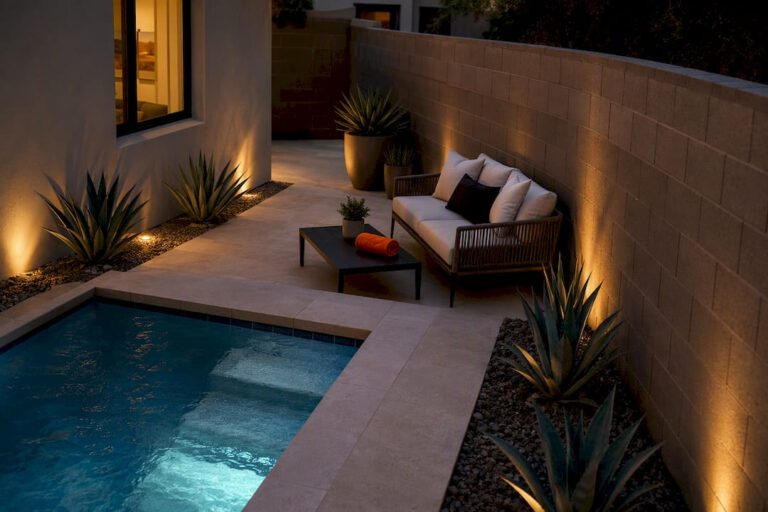
A plunge pool runs roughly 10 to 16 feet long with depths between 3.5 and 5 feet, and it’s built for cooling off and lounging rather than swimming laps. Because the footprint is small, heating costs and chemical use drop significantly compared to a full-size pool, which matters in a climate where the pool gets used nine or ten months a year. A dark plaster or pebble finish makes a plunge pool read as deeper and more dramatic than its actual dimensions suggest.
2. Cocktail Pool or Spool
Cocktail pools, often called spools, stay under roughly 400 square feet and usually pair a built-in bench with jets for a spa-like feel. They’re the easiest small-pool type to heat quickly, which makes them a strong fit for entertaining spaces where guests dip in rather than swim. The compact volume also means a spool can double as a heated spa in cooler months without running a separate system.
3. Narrow Lap Pool
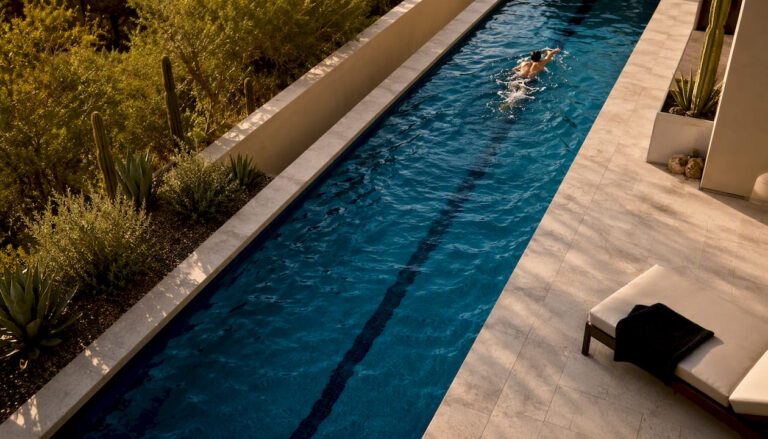
If fitness is the priority, a narrow lap pool can run as tight as 7 to 8 feet wide along a side yard or fence line. At very short lengths, a swim jet or current generator lets you swim against resistance instead of needing 40 feet of open water. This design works especially well on narrow side lots that would otherwise sit unused.
4. Compact L-Shaped or Corner Pool
An L-shaped or corner pool tucks into an awkward yard geometry and frees up a separate zone for lounging or a dining area. Rather than centering the pool and losing usable space on both sides, pushing it into a corner or against a fence line often gains more deck area than a straight rectangle would.
This shape also plays well with a tanning ledge tucked into the short leg of the L.
5. Compact Freeform Pool
When the site is irregular, sloped, or you simply prefer a softer, natural look over hard geometric lines, a compact freeform shape can follow the yard’s existing contours. Freeform shells typically carry a cost premium over a simple rectangle because the custom curves require more formwork and, in gunite construction, more labor. It’s the right call when the yard’s shape is already unconventional and fighting it with a straight-edged pool would waste space.
Across all five types, two visual moves consistently make a small pool feel larger than its dimensions. A dark interior finish, whether that’s dark plaster, pebble aggregate, or dark tile, reflects less light and reads as deeper water, which visually expands the space. Continuous decking that runs the same material from the patio straight to the pool’s edge, with no seams or material changes, extends the yard’s apparent size rather than chopping it into segments.
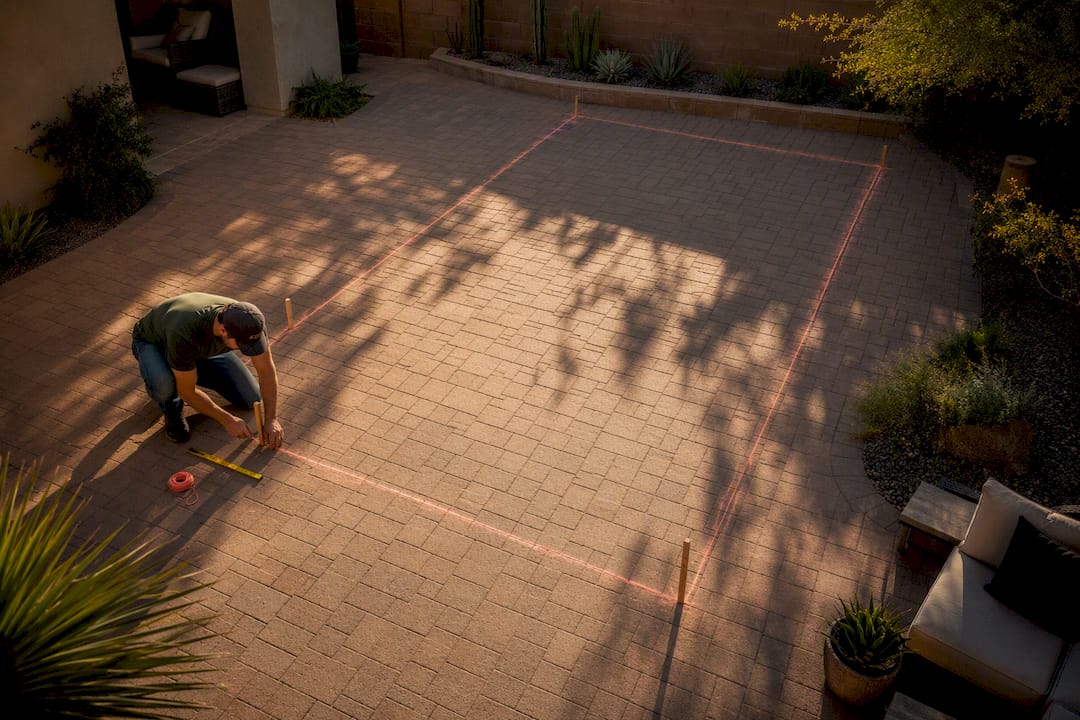
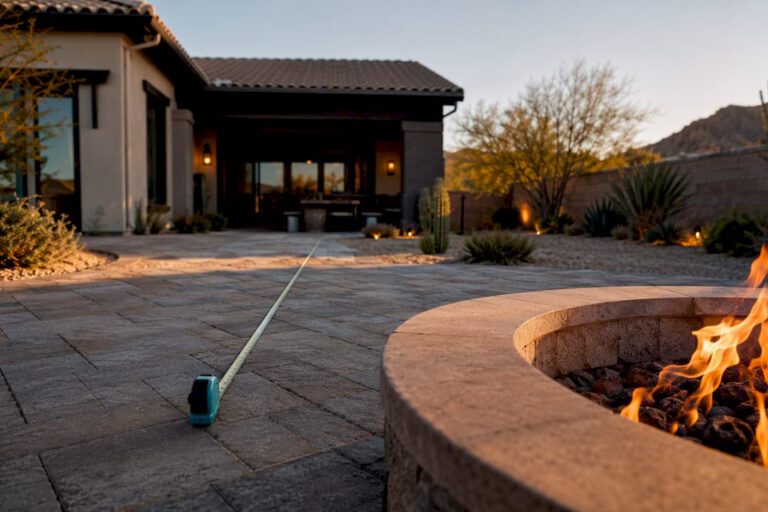
Pro Tip: Before you fall in love with a shape, walk your yard with a tape measure and mark the pool’s footprint in chalk or with stakes. Most homeowners overestimate how much of a small yard a 15 by 30 foot pool actually consumes until they see it staked out.
Placement and Access Decisions That Make or Break the Build
Getting the shape right matters less than getting the site plan right. Before finalizing any design, walk the yard and measure the actual usable area after subtracting required clearances around the pool, typically 3 to 4 feet minimum for equipment access and code-compliant walkways.
A few placement principles consistently pay off on tight lots:
- Push the pool toward a property line or fence rather than centering it, which frees up a larger, more usable strip of yard on one side.
- Align the pool’s long axis with a major sightline from your kitchen, living room, or back door. On tight urban lots, this technique alone can gain 20 to 30% more usable deck area by making the space read as continuous rather than divided.
- Check gate widths and side-yard clearances early. A standard excavator needs roughly 3 feet of clearance to maneuver; anything tighter forces a switch to a mini-excavator or hand excavation, both of which add cost and time to the project.
- Confirm where equipment (pump, filter, heater) will sit. It needs service access without crossing through a neighbor’s yard or requiring you to walk through a gate every time a filter needs cleaning.
- Plan grading and drainage before excavation starts. Water needs to move away from the house foundation, not toward it, and this is far cheaper to correct on paper than after the shell is set.
Fiberglass shells add another access wrinkle: they typically arrive on a truck and require a crane to lift into place, which means the crane needs a clear path to the excavation, not just the excavator.
Permits, HOA Rules, and What a Small Pool Actually Costs
Most in-ground pools, and above-ground pools deeper than 24 inches, require a building permit, an electrical permit under NEC 680, and often a barrier or fence permit. Full permitting packages are commonly triggered once water depth exceeds 24 inches or surface area exceeds 250 square feet.
Municipalities typically request a site plan or plot survey, pool specifications, a barrier and fence plan, and electrical and plumbing schematics before issuing approval. Budget extra time for both the municipal review and a separate HOA review, since HOAs frequently impose their own setback, fencing, and aesthetic rules on top of city code.
Skipping this step is a real financial risk. Building without proper permits can lead to fines, forced reconstruction, and complications at resale when a buyer’s inspector flags unpermitted work.
On the cost side, installed pricing for small-pool types generally runs:
- Plunge pool: costs generally range from low to moderate prices
- Cocktail pool or spool: costs generally range from moderate to somewhat higher prices
- Small L-shaped or rectangle pool: costs generally range from moderate to higher prices
- Narrow lap pool: costs generally range from higher moderate to high prices
Operating costs, mainly heating and chemical balancing, tend to run lower on all four than on a full-size pool simply because there’s less water volume to treat and heat. Call your local building department and your HOA before you finalize a design, and ask any builder you’re considering whether they handle the full permit package or expect you to manage that separately.
When a Design-Build Contractor Earns Their Fee
Small-site pools involve more coordination per square foot than large-yard builds, not less. Tight access, HOA review, and the overlap of electrical, plumbing, and drainage work in a compressed space are exactly where a design-build contractor’s coordination pays for itself. An experienced firm handles the site survey, produces a 3D visualization of the finished space, manages the permit package, and sequences construction so trades aren’t tripping over each other in a 15-foot-wide yard.
Unique Companies has run this process for over 24 years, integrating design, permitting, and construction under one roof rather than handing homeowners off between separate vendors.
Bring these to your first contractor meeting:
- Accurate yard dimensions, including fence lines and gate widths
- Photos showing access points from the street to the build site
- A copy of your HOA’s CC&Rs, if applicable
- A clear idea of how you’ll use the pool (laps, lounging, entertaining)
Pro Tip: Ask any contractor bidding your small-pool project how they’d get equipment into your yard specifically. A vague answer usually means the access issue hasn’t been priced into the quote yet.
Keeping a Small Pool’s Water Clean Without Constant Work
Less water volume in a plunge pool or spool means chemical imbalances show up faster than they would in a full-size pool. A small pH swing or chlorine drop affects a 5,000-gallon spool far more noticeably than a 20,000-gallon pool, so testing water twice a week rather than once is worth the extra five minutes.
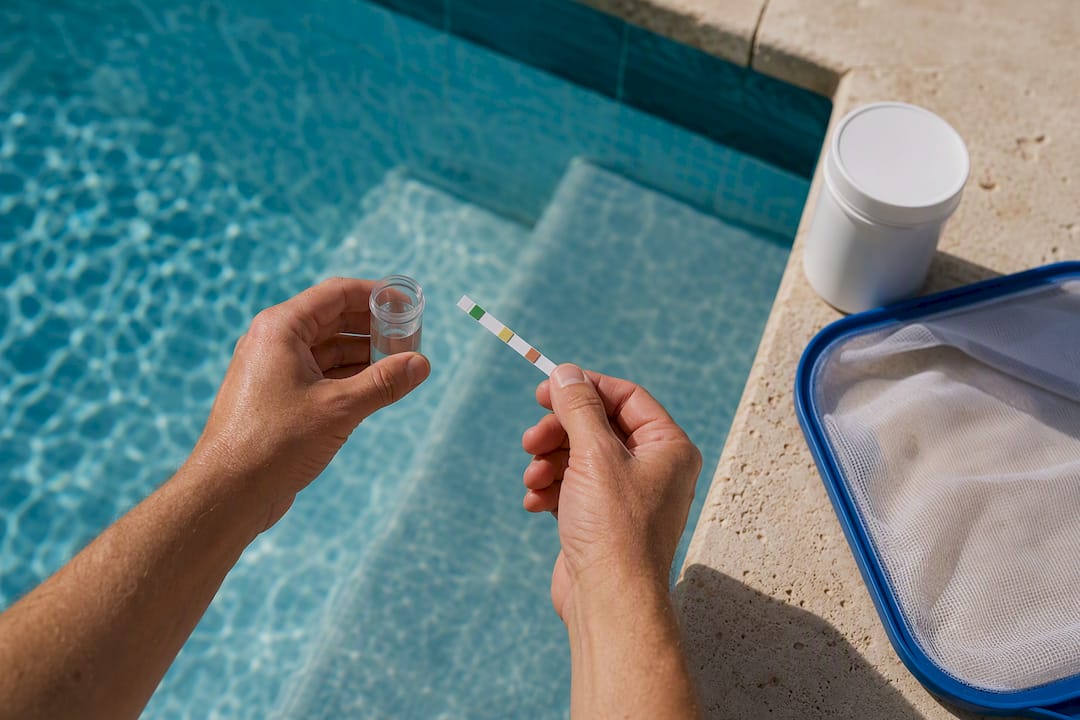
Debris removal is simpler by nature in a compact pool. A single skimmer net pass usually clears a plunge pool or spool in under a minute, and a robotic pool cleaner sized for small volumes handles the floor without needing the runtime a larger pool demands. Covering the pool when it’s not in use, even with a simple solar cover, cuts down on leaf and dust accumulation dramatically in a yard surrounded by mature landscaping.
Because small pools heat and cool faster than large ones, algae can bloom quickly if chlorine levels dip during a hot stretch. Keeping a stabilizer (cyanuric acid) in the correct range protects chlorine from breaking down in direct Arizona sun, which matters more in a shallow, compact pool that gets more direct sun exposure per gallon of water than a larger, deeper pool would.
Safety Barriers Every Small Pool Needs
A smaller pool is not a lower-risk pool. Drowning risk has nothing to do with pool size and everything to do with unsupervised access, which makes barrier compliance non-negotiable regardless of how compact your design is.
Most jurisdictions require a fence at least 48 inches tall around the pool area, with self-closing, self-latching gates that swing away from the pool. Because small yards often place the pool close to the house, door alarms or a pool alarm on doors leading directly to the pool area add a second layer of protection where a full perimeter fence isn’t practical. A mesh or solid safety cover rated for the pool’s dimensions is worth the investment on a spool or plunge pool that sits close to a patio door.
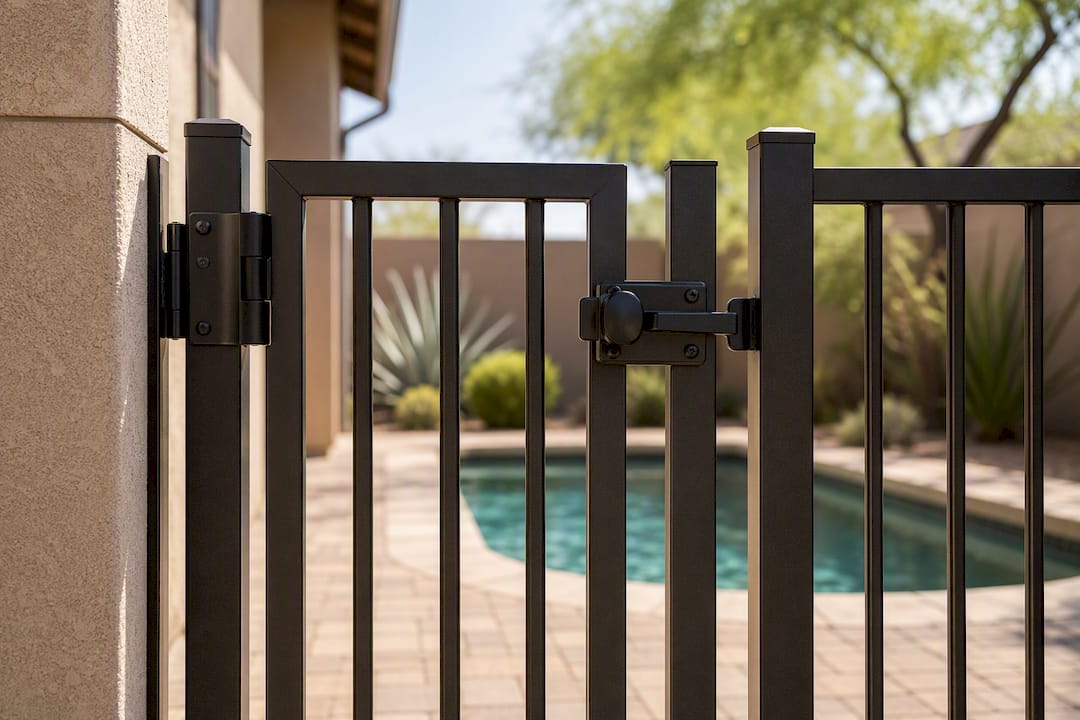
Arizona has specific barrier requirements homeowners need to confirm before finalizing a fence plan, and reviewing Arizona’s pool barrier requirements before construction avoids a failed final inspection over a fence detail that’s easy to fix on paper but costly to fix after the concrete is poured.
Off-Season Care for a Compact Pool
Small pools actually simplify winterizing in most respects, since there’s less equipment and less water to manage through the off-season. In climates that see freezing temperatures, lowering the water level below the skimmer, blowing out the plumbing lines, and adding pool antifreeze to exposed pipes protects the smaller equipment pad from freeze damage.
In warmer climates where the pool runs closer to year-round, seasonal care looks more like adjusting the heater schedule and reducing chemical dosing as usage drops in cooler months rather than a full shutdown. A spool or plunge pool that gets less winter use can run at a lower set-point temperature to cut heating costs without fully draining or covering the system.
Regardless of climate, covering the pool during extended vacancy periods, checking the equipment pad for debris buildup, and doing a full chemical rebalance before reopening for the season keeps a compact pool from developing the algae or scale issues that come from months of neglect in a smaller water volume.
Why Small-Pool Design Rewards Restraint
The biggest mistake homeowners make on tight lots is trying to cram full-size-pool features into a small-pool footprint. A tanning ledge, a built-in bench, and a single water feature almost always outperform a pool with five competing add-ons, because a small pool only has room to do one or two things well before it starts feeling cluttered rather than curated.
Conventional pool advice treats size as the only constraint worth solving for. That’s backwards. Placement and permitting decide feasibility long before shape does, and a beautifully rendered freeform design means nothing if the excavator can’t reach the yard or the HOA rejects the setback. Prioritize a site walk and a permit conversation before you fall in love with a rendering.
The pools that age well on small lots are the restrained ones: one dark finish, one bench, one sightline alignment that makes the yard feel bigger than it is. Everything else is a distraction from a decision that should be simple.
— Philipp
Ready to Design Your Small Pool the Right Way
Design-build companies can provide turnkey small pools for Phoenix-area homeowners who want the design, permitting, and construction handled by one team instead of juggling separate contractors for each phase. That coordination matters most on tight lots, where a missed clearance measurement or a permit delay can stall a project for weeks.
Unique Companies’ team can walk your yard, confirm access constraints before excavation starts, and produce a 3D preview through the Genesis Pool Designer so you see the finished space before construction begins. Explore the custom pool features available for compact designs, from tanning ledges to integrated seating, and bring three questions to your first consultation: who manages the permit package, what equipment access the site requires, and whether a 3D preview is included before you sign a contract.
Sources
- Small Pool Ideas: 12 Designs That Make the Most of a Tiny Backyard — PoolPad
- Do you need a permit to put a pool in your backyard? — LegalClarity