Pool automation is more than a convenience feature for luxury homeowners. It’s a comprehensive control system that transforms how you manage energy costs, water chemistry, and equipment performance in Phoenix’s demanding desert climate. While many assume automation simply lets you adjust settings from your phone, the real value lies in intelligent scheduling, precision chemical dosing, and adaptive equipment control that can cut your monthly pool operating costs by 30% or more. This guide walks you through the core systems, tangible benefits, local challenges, and professional considerations for integrating automation into your custom Phoenix pool.
Table of Contents
- Key takeaways
- What is pool automation and how does it work?
- Top luxury pool automation systems and costs for Phoenix homeowners
- Energy savings and efficiency benefits of pool automation in Phoenix
- Common challenges and maintenance tips for Phoenix pool automation systems
- Explore luxury custom pool automation with Unique Companies in Phoenix
- Frequently asked questions
Key Takeaways
| Point | Details |
|---|---|
| Centralized pool control | Pool automation manages pumps, heaters, lights, cleaners, and chemical feeders from a single interface. |
| Energy cost savings | Smart scheduling and precise dosing can reduce monthly operating costs by thirty percent or more. |
| Leading Phoenix systems | Pentair IntelliCenter, Jandy iAquaLink, and Hayward OmniLogic are popular choices for luxury Phoenix pools. |
| Phoenix challenges | Power outages, dust, and maintenance demands in Phoenix require robust installation and ongoing service. |
| Professional installation matters | Expert installation and ongoing maintenance maximize system performance and extend equipment life. |
What is pool automation and how does it work?
Pool automation is a centralized smart control system managing pumps, heaters, lights, cleaners, chemical dispensers, and water features via control panel, app, or voice assistants. Instead of manually adjusting multiple switches and timers scattered around your equipment pad, you control everything from a single interface. For Phoenix luxury pools, this means adjusting your spa temperature from inside your air-conditioned home during a 115-degree afternoon or activating your waterfall feature for guests without stepping outside.
The system’s core components include:
- Variable-speed pumps that adjust flow rates based on real-time needs
- Heaters and heat pumps with programmable temperature schedules
- LED lighting systems with color-changing capabilities
- Robotic or suction cleaners activated on custom schedules
- Chemical feeders delivering precise chlorine and pH adjustments
- Water features like fountains, spillways, and deck jets
You interact with these components through touchscreen control panels mounted near your pool, smartphone apps that work anywhere with internet access, or voice commands through Alexa and Google Assistant. The technology feels seamless because it’s designed for intuitive daily use.
Behind the interface, central control panels connect via low-voltage wiring and sensors for pH, temperature, and flow, supporting scheduling and smart home integration. The control panel acts as the brain, receiving data from sensors monitoring water chemistry (pH and ORP for sanitizer levels), temperature probes tracking water and air conditions, and flow meters detecting circulation rates. When pH drifts outside your target range, the system signals the chemical feeder to dose acid or base automatically. When water temperature drops below your programmed spa setting, the heater activates without manual intervention.
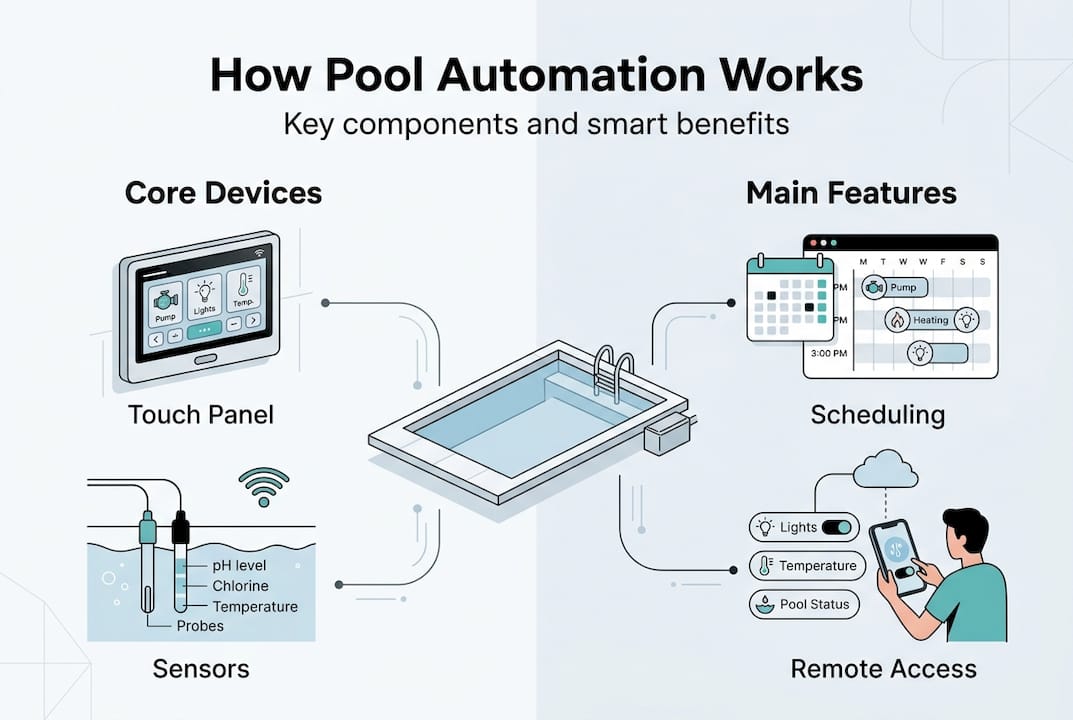
This sensor-driven approach delivers three major capabilities. First, scheduling lets you run pumps during off-peak utility hours, heat your spa an hour before evening use, and activate landscape lighting at sunset. Second, remote monitoring alerts you to equipment failures, chemical imbalances, or unusual energy consumption patterns before they become expensive problems. Third, integration with platforms like Control4 or Crestron means your pool system communicates with your home’s lighting, audio, and climate controls for a unified luxury experience.
Smart sensors make the difference between basic timers and true automation. Instead of running your pump at full speed for eight hours regardless of actual debris load, variable-speed pumps adjust RPM based on real-time conditions. During calm mornings with minimal wind-blown debris, the system might run at 1,200 RPM. After a Phoenix dust storm, it automatically ramps to 2,400 RPM for thorough filtration. This adaptive behavior, guided by smart pool engineering principles, cuts energy waste while maintaining pristine water quality.
Top luxury pool automation systems and costs for Phoenix homeowners
Leading systems for luxury custom pools include Pentair IntelliCenter, Jandy iAquaLink, and Hayward OmniLogic with installation costs ranging $1,500-$3,000+ depending on feature complexity. These platforms dominate the Phoenix market because they’re engineered for reliability in extreme heat, integrate seamlessly with variable-speed pumps required by Arizona energy codes, and offer the remote control capabilities luxury homeowners expect.
Pentair IntelliCenter represents the premium tier, controlling up to 50 circuits with intuitive color touchscreens and industry-leading app responsiveness. The system excels at managing complex installations with multiple water features, spa spillovers, and synchronized lighting scenes. IntelliConnect offers a mid-range option for simpler pools, maintaining Pentair’s reliability at a lower price point.
Jandy’s iAquaLink system balances features and value, particularly for pools with Jandy equipment like heaters and salt chlorinators. The AquaLink platform provides solid smartphone control and integrates well with Jandy’s chemical automation products. Many custom pool builders in Phoenix recommend Jandy for clients prioritizing brand ecosystem consistency.
Hayward OmniLogic targets tech-forward homeowners with advanced programming capabilities and detailed energy reporting. The system shines in applications requiring precise chemical control and sophisticated scheduling logic. OmniLogic’s backlit interface remains readable even in direct Arizona sunlight, addressing a practical concern for equipment pads facing south or west.
| System | Key Features | Typical Price Range |
|---|---|---|
| Pentair IntelliCenter | 50-circuit capacity, premium app, advanced scenes | $2,200-$3,500+ |
| Jandy iAquaLink | Solid integration, mid-tier control, reliable performance | $1,500-$2,800 |
| Hayward OmniLogic | Energy analytics, advanced programming, bright display | $1,800-$3,200 |
Installation costs vary based on your pool’s wiring infrastructure, equipment pad layout, and feature count. A basic retrofit adding automation to an existing pool with standard equipment typically runs $1,500-$2,000 for parts and labor. New construction installations with custom lighting, multiple pumps, and integrated water features can exceed $3,000. The investment pays back through energy savings and enhanced property value, particularly in luxury markets like Scottsdale and Paradise Valley.
Pro Tip: Before selecting a system, verify your equipment pad has adequate space for the control panel, proper electrical capacity for additional circuits, and drainage to handle monsoon rain. Phoenix’s intense UV exposure and temperature swings demand panels mounted in shaded locations or protective enclosures to prevent premature failure. Confirm these physical requirements during your initial consultation to avoid costly modifications later.
Energy savings and efficiency benefits of pool automation in Phoenix
Smart pool automation can cut energy use by 20-40%, achieving 30%+ savings in hot climates like Phoenix where extended swim seasons and intense evaporation drive higher operating costs. The savings stem from three core mechanisms: intelligent pump scheduling that eliminates unnecessary runtime, precision heating that avoids energy waste, and automated chemical dosing that prevents overcorrection cycles.
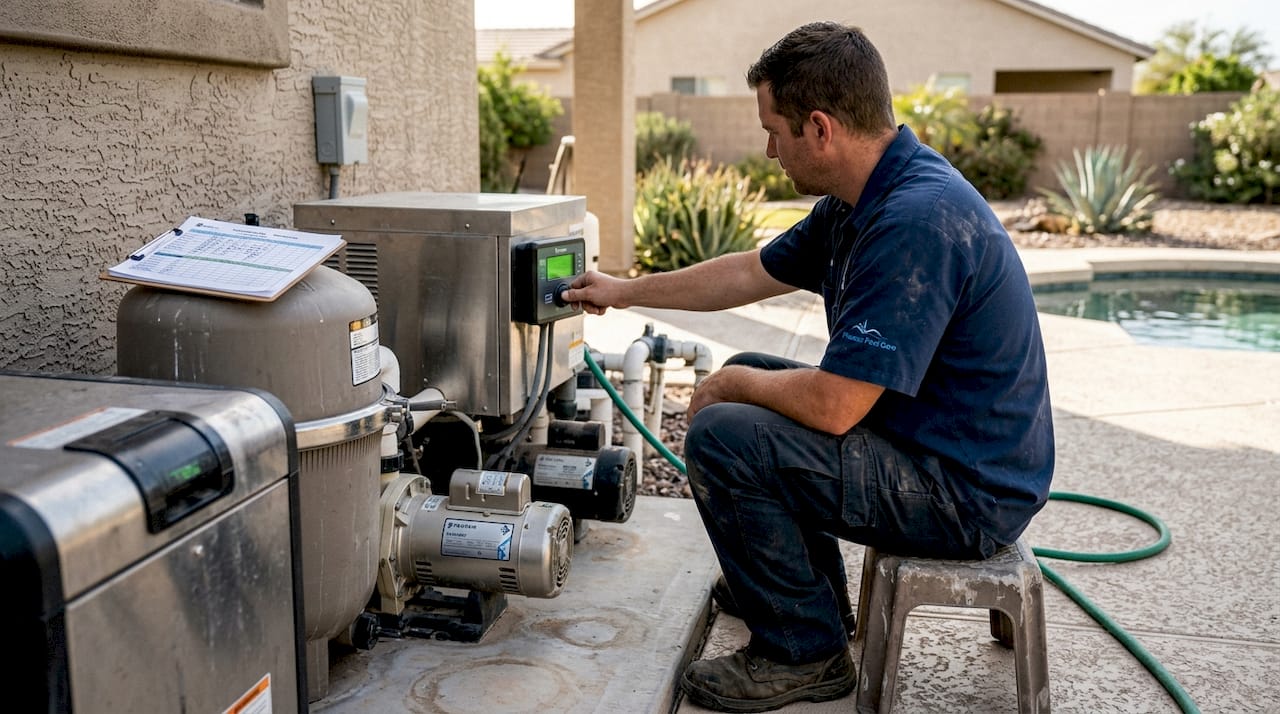
A Scottsdale homeowner with a 20,000-gallon pool and spa reported 38% monthly energy cost reduction after installing Pentair IntelliCenter, dropping from $178 to $110 per month during peak summer operation. The system achieved this by running the main circulation pump at variable speeds matched to actual filtration needs, heating the spa only during scheduled use periods rather than maintaining constant temperature, and eliminating the manual guesswork that often led to over-chlorination requiring extra pump runtime for mixing.
Pool pump energy represents 50-70% of total operating costs, making it the primary target for automation efficiency. A single-speed pump running eight hours daily at 2,850 watts consumes roughly 855 kWh monthly. Variable-speed pumps controlled by automation typically use 300-450 kWh for the same water turnover, cutting consumption by half or more. When you factor in Phoenix’s tiered electricity rates where usage above 3,000 kWh monthly jumps to premium pricing, the savings compound significantly for homes with pools.
Here’s how automation delivers measurable energy reduction:
- Smart pump control adjusts speed based on time of day, water chemistry readings, and manual overrides, running at minimum effective RPM rather than constant high speed.
- Heating optimization activates heaters only when temperature falls below setpoints and outdoor conditions support efficient heat transfer, avoiding futile heating during windy afternoons.
- Chemical dosing automation maintains stable pH and sanitizer levels, preventing the chemistry swings that trigger emergency shock treatments and extended circulation cycles.
- Load shifting schedules energy-intensive operations during off-peak utility hours when rates drop 30-50%, particularly valuable under SRP’s time-of-use plans.
| Operating Mode | Monthly kWh | Monthly Cost (avg) | Annual Cost |
|---|---|---|---|
| Manual single-speed | 855 kWh | $178 | $2,136 |
| Automated variable-speed | 530 kWh | $110 | $1,320 |
| Monthly savings | 325 kWh | $68 | $816 |
Return on investment typically occurs within 12-24 months for Phoenix pools. A $2,500 automation system installation pays for itself through $68 monthly savings in roughly 37 months, but the timeline accelerates when you account for reduced chemical costs, extended equipment lifespan from gentler operation, and avoided service calls for chemistry-related algae blooms.
Pro Tip: Schedule your main circulation pump runtime between 7 PM and noon when SRP and APS offer lower off-peak rates. Phoenix pools need adequate overnight circulation to prevent algae growth in warm water, making 10 PM to 6 AM an ideal window for primary filtration. Reserve daytime operation for minimum flow rates sufficient to support solar heating and skimmer action.
“Smart automation targeting pump efficiency and heating precision can reduce monthly pool energy costs by 38%, delivering $800+ annual savings that offset installation costs within two years while enhancing water quality and equipment longevity.”
These efficiency gains matter most during Phoenix’s extended swim season from April through October when daily temperatures exceed 90 degrees and evaporation rates demand frequent water additions and chemical adjustments. Automation maintains optimal conditions without the energy waste inherent in manual control, particularly for luxury pools with spas, water features, and extensive lighting that multiply the opportunities for inefficiency. Understanding your pool’s operating costs helps you set realistic savings targets and track automation performance over time.
Common challenges and maintenance tips for Phoenix pool automation systems
Power outages can reset timers causing green pools due to lost schedules, while dust and hard water scaling require frequent sensor cleaning in Arizona’s demanding environment. These challenges aren’t deal-breakers, but they demand proactive maintenance strategies that differ from milder climates. Phoenix homeowners face unique automation stressors that can compromise system reliability if ignored.
Summer monsoons bring sudden power interruptions that reset automation schedules, potentially leaving pumps and chemical feeders offline for 24-72 hours. During Phoenix’s hottest months when water temperatures reach 88-92 degrees, even a single day without circulation can trigger algae blooms requiring shock treatments and manual cleaning. WiFi-dependent systems face additional complications during outages, often requiring manual reconnection after power restoration even when internet service returns immediately.
Dust infiltration affects outdoor control panels and sensor probes despite sealed enclosures. Fine Arizona dust works into electrical connections, causing intermittent communication failures between the main controller and remote devices. pH and ORP probes accumulate dust and mineral deposits from hard water evaporation, producing false readings that trigger incorrect chemical dosing. A probe reading 7.8 pH when actual water chemistry sits at 7.4 will cause the system to add unnecessary acid, creating a downward spiral of overcorrection.
Retrofit installations encounter compatibility challenges when integrating modern automation with legacy equipment. A 10-year-old Hayward heater may not communicate properly with a new Pentair control system, requiring relay interfaces or manual operation. Mixed-brand installations demand careful programming to ensure proper equipment sequencing, particularly for features like spa mode that coordinate multiple devices.
Common issues Phoenix automation owners report include:
- Power surge damage to control boards during monsoon lightning strikes
- Timer resets requiring schedule reprogramming after utility interruptions
- Sensor scaling from mineral-heavy fill water reducing accuracy within 3-6 months
- WiFi connectivity drops during extreme heat when routers overheat
- Incompatible equipment requiring expensive relay modules or replacement
Pro Tip: Install whole-house surge protectors and dedicated surge protection for your pool equipment pad to prevent lightning damage during monsoon season. Position control panels on north-facing walls or under shade structures to avoid direct sun exposure that degrades electronics and makes touchscreens unreadable. These simple precautions extend system lifespan and reduce service calls significantly.
Maintenance best practices for Phoenix automation systems include monthly sensor cleaning with diluted muriatic acid to remove scale buildup, quarterly inspection of wire connections for corrosion or looseness, and annual professional calibration of chemical probes using buffer solutions. Keep backup schedules documented so you can quickly reprogram after power events. Consider battery backup systems for critical equipment if your area experiences frequent outages.
Understanding these regional challenges helps you maintain automation reliability year-round. The technology works exceptionally well in Phoenix when properly installed and maintained, but it requires attention to details that might not matter in milder climates. Working with professionals experienced in Arizona pool automation ensures your system accounts for dust, heat, power stability, and water chemistry factors specific to the Sonoran Desert. Proper monsoon season pool care extends beyond automation to include physical preparation for wind, rain, and debris.
Explore luxury custom pool automation with Unique Companies in Phoenix
Transitioning from understanding automation benefits to implementing them in your backyard requires expertise in both technology and desert construction realities. Unique Companies brings 24+ years of experience designing and installing custom pool automation systems specifically engineered for Phoenix’s climate challenges. Their in-house approach integrates automation planning from initial design through final commissioning, ensuring your control systems account for equipment pad placement, electrical capacity, and monsoon durability from day one.
The team’s local knowledge addresses the dust, heat, and power considerations that separate reliable automation from frustrating installations. They specify surge protection, proper panel shading, and sensor placement that maintains accuracy despite hard water and UV exposure. Whether you’re building a new luxury pool or retrofitting automation into an existing backyard, their comprehensive services handle permitting, equipment selection, and integration with your home’s smart systems. Explore custom pool features that pair perfectly with automation, from color-changing LED lighting to synchronized water features. Their smart pool engineering approach ensures your automation investment delivers the energy savings, convenience, and luxury experience you expect. Discover how integrated outdoor living solutions extend automation benefits beyond the pool to create seamless backyard environments perfect for Phoenix entertaining.
Frequently asked questions
What is pool automation?
Pool automation is a centralized control system that manages all your pool equipment from a single interface, including pumps, heaters, lights, cleaners, and chemical feeders. Instead of manually operating individual switches and timers, you control everything through a touchscreen panel, smartphone app, or voice commands. The system uses sensors to monitor water chemistry and temperature, automatically adjusting equipment to maintain your programmed settings without constant manual intervention.
How does automation handle chemical balance in desert conditions?
Automated systems use pH and ORP sensors to continuously monitor water chemistry, triggering chemical feeders to dose acid, base, or chlorine when readings drift outside target ranges. In Phoenix’s intense heat and high evaporation environment, this prevents the rapid chemistry swings that manual testing often misses. The system maintains stable sanitizer levels and pH balance 24/7, reducing the algae risk and eye irritation common with inconsistent manual dosing during summer.
Will automation installation disrupt my existing pool?
Professional installation typically requires one to two days for retrofit projects, with minimal pool downtime. Technicians run low-voltage wiring from your equipment pad to the desired control panel location, install sensors in your plumbing system, and program the controller to match your equipment. Most work occurs at the equipment pad rather than the pool itself, so you can usually continue swimming during installation. New construction integrates automation wiring during the build process with zero disruption.
What happens to automation during power outages?
Most systems lose their schedules during complete power failures, requiring reprogramming when electricity returns. Higher-end controllers include battery backup that preserves programming but doesn’t power equipment. WiFi-dependent systems may need manual reconnection even after power restoration. Installing uninterruptible power supplies (UPS) for your controller and critical equipment like chemical feeders prevents schedule loss and maintains basic operation during brief outages common in Phoenix monsoon season.
Can pool automation integrate with other smart home devices?
Modern automation systems integrate seamlessly with platforms like Control4, Crestron, Amazon Alexa, and Google Home, letting you control pool functions through whole-home automation interfaces or voice commands. You can create scenes that simultaneously adjust pool lighting, activate water features, and trigger outdoor audio when you say “start pool party.” Integration extends to energy management systems that coordinate pool heating with solar production or time-of-use utility rates for maximum efficiency.