TL;DR:
- Phoenix outdoor build timelines are affected by unique environmental and regulatory factors like caliche soil, permit requirements, and material lead times. The construction process involves several sequential phases, with delays often caused by permit reviews, design changes, and site surprises. Active homeowner involvement and working with experienced local contractors help ensure a more predictable and timely project completion.
Planning a custom pool or outdoor kitchen in Phoenix is exciting until the timeline starts slipping and no one can explain why. Delays are frustrating, especially when you’ve invested in a high-end design and expected a smooth process. The truth is, Phoenix outdoor builds operate under a distinct set of conditions that affect every phase of construction, from the first shovel in the ground to the final tile installation. Understanding those conditions before your project begins is what separates a stressful experience from a seamless one. This guide walks you through every factor that shapes your timeline, so you can plan with confidence.
Table of Contents
- Why Phoenix outdoor build timelines are unique
- Step-by-step: Typical timeline for pools and outdoor kitchens
- Top reasons for delays (and how to prevent them)
- Proactive project management: Your role for a seamless build
- What most project timelines miss for Phoenix luxury builds
- How Unique Companies brings your vision to life on time
- Frequently asked questions
Key Takeaways
| Point | Details |
|---|---|
| Local factors matter | Phoenix’s unique soil, permits, and sun require special planning for any outdoor build. |
| Timelines are predictable | With proper breakdowns, you can anticipate the phases and durations for custom pools and kitchens. |
| Avoid common setbacks | Proactive management and knowing key pitfalls keeps projects running smoothly. |
| Your role is crucial | Engaged homeowners help secure on-time, exceptional outdoor spaces. |
Why Phoenix outdoor build timelines are unique
To understand timelines, first recognize why Phoenix projects are unlike any other. The desert environment introduces site, climate, and regulatory variables that simply don’t exist in most other parts of the country. Each one has a measurable effect on how long your project takes.
One of the most significant local factors is caliche, a naturally occurring layer of calcium carbonate that hardens the soil into a near-concrete consistency. Caliche soil slows excavation and can require jackhammering or specialized equipment to break through, adding days or even weeks to the excavation phase alone. Seismic and soil engineering reviews are also part of the Arizona permitting process, which means your project needs engineering sign-off before construction can begin.
Phoenix’s intense UV exposure and hard water supply also influence material selection. Quartz and pebble finishes are standard recommendations because they resist fading and mineral buildup far better than basic plaster. If you’re also selecting plants for harsh Phoenix soil as part of a broader landscaping plan, those choices need to align with your construction schedule.
Phoenix-specific challenges that affect your timeline:
- Caliche excavation requiring heavy equipment or jackhammering
- Soil and seismic engineering reviews as part of permit approval
- Hard water and UV conditions requiring specific finish materials
- Heat-sensitive concrete curing windows during summer months
- Specialty trade availability in a high-demand metro market
| Project phase | Typical duration | Phoenix-specific impact |
|---|---|---|
| Design and planning | 2-4 weeks | Custom 3D review cycles add time |
| Permitting | 3-6 weeks | Engineering reviews required |
| Excavation | 1-2 weeks | Caliche can extend this phase |
| Shell/structure | 1-2 weeks | Heat affects curing schedules |
| Finishing and landscaping | 2-4 weeks | Material lead times vary |
Key project delay causes in Phoenix: Permit engineering reviews, unexpected caliche depth, specialty material lead times, and trade scheduling conflicts are the four factors most likely to push your completion date back.
Step-by-step: Typical timeline for pools and outdoor kitchens
After understanding local factors, let’s break down what the timeline actually looks like. Most homeowners are surprised to learn how many sequential steps are involved, and why compressing any single phase creates problems downstream.
Durable pool finishes are essential in Phoenix due to UV intensity and hard water, which means material selection happens early in the process, not at the end. Ordering finishes before permits are approved is one of the most effective ways to avoid lag time between phases.
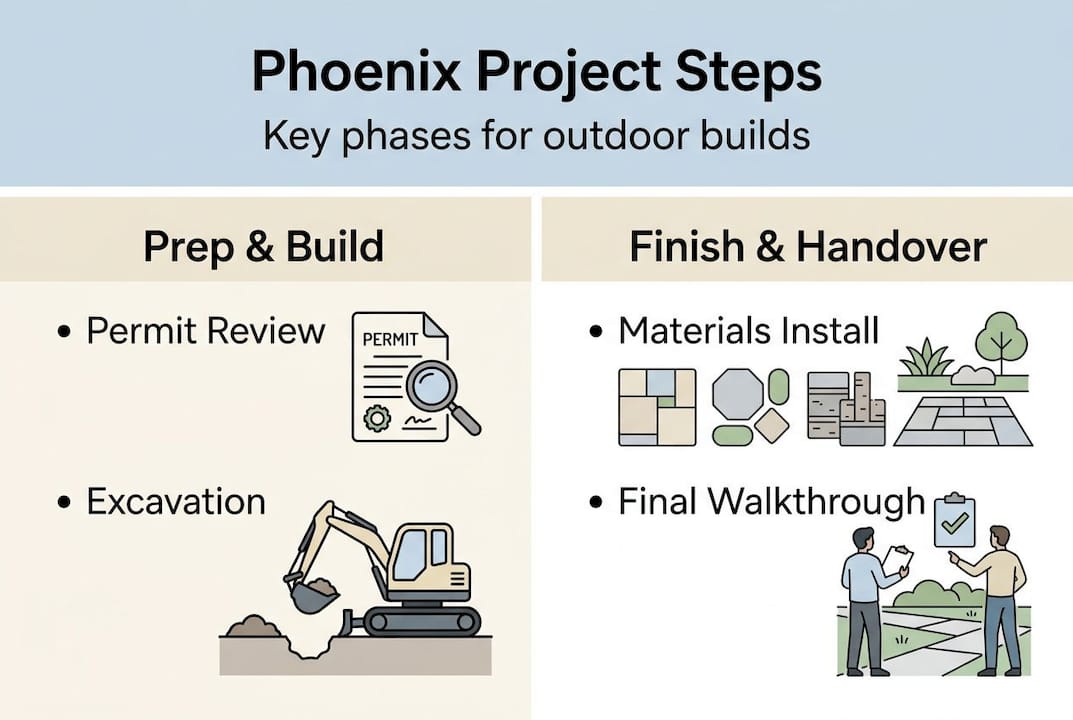
Custom pool construction phases:
- Design consultation and 3D visualization review (1-2 weeks)
- Permit application submission and engineering review (3-6 weeks)
- Site preparation and caliche excavation (1-2 weeks)
- Steel reinforcement and shotcrete shell (1 week)
- Plumbing, electrical, and equipment installation (1-2 weeks)
- Interior finish application, quartz or pebble (1 week)
- Decking, coping, and water features (1-2 weeks)
- Startup, water balancing, and owner orientation (1 week)
For detailed pool construction phases specific to the Phoenix metro, each step builds directly on the one before it. Skipping ahead or rushing approvals creates rework.
| Feature | Typical timeline | Notes |
|---|---|---|
| Custom pool | 8-14 weeks | Longer with water features or infinity edges |
| Outdoor kitchen | 4-8 weeks | Longer with gas, plumbing, or custom cabinetry |
| Combined pool and kitchen | 12-18 weeks | Phases can overlap with coordination |
Pro Tip: Order your finish materials and specialty appliances as soon as your design is finalized, even before permits are approved. Lead times on quartz finishes, custom cabinetry, and high-end grills can run 4-6 weeks, and waiting until permits clear adds that lag directly to your completion date.
Top reasons for delays (and how to prevent them)
With a clear timeline in mind, let’s address what can set you back and how to stay on track. Most delays in Phoenix outdoor builds fall into predictable categories, which means they’re largely preventable with the right preparation.

Permitting and site engineering add significant time due to local requirements, and any change to the approved design after permits are submitted restarts portions of that review. Change orders are one of the most common causes of timeline overruns, often initiated by homeowners who decide mid-build to add a feature or modify a layout.
Site surprises are the other major variable. Even when soil reports are conducted before construction, caliche depth can vary across a single lot. Hitting a deeper layer than expected mid-excavation requires equipment changes and schedule adjustments that ripple through every subsequent phase.
Common pitfalls that delay Phoenix outdoor builds:
- Submitting permit applications with incomplete engineering documentation
- Approving design changes after permits are already in review
- Delaying material orders until after permit approval
- Underestimating specialty trade scheduling windows in peak season
- Failing to account for weather-related landscaping timing, particularly summer heat
- Not confirming equipment compatibility when upgrading your Phoenix pool alongside new features
Supply chain issues remain a real factor in 2026, particularly for custom outdoor kitchen appliances and imported stone materials. Contractors who have established supplier relationships can often secure materials faster than those who don’t.
Pro Tip: Schedule a weekly 15-minute status check with your project manager throughout the build. This keeps you informed of upcoming decisions, flags potential delays early, and ensures nothing waits on your approval longer than necessary.
Proactive project management: Your role for a seamless build
Now, to ensure your project stays on track, here’s how you can take charge. The homeowner’s role in a luxury outdoor build is more active than most people expect, and that involvement directly affects how smoothly the project moves.
Successful project management can help minimize delays caused by Phoenix-specific site and permitting challenges. When you respond quickly to requests for approvals, decisions, or documentation, you remove the most common source of contractor-side waiting time.
Steps homeowners should take at each project stage:
- Confirm your design is fully finalized before permit submission, including all features and finishes
- Review and sign permit documents promptly when submitted for your signature
- Approve material samples within 48 hours of receiving them
- Attend scheduled site walkthroughs at key milestones: post-excavation, post-shell, pre-finish
- Communicate any concerns in writing so there’s a clear record for your contractor
- Confirm utility locates and HOA approvals are completed before excavation begins
For broader landscaping project leadership that integrates with your pool or kitchen build, coordination between trades is essential. Your contractor should be managing that, but you should confirm it’s happening.
Documents and questions to keep accessible throughout your build:
- Signed contract with scope of work and payment schedule
- Permit numbers and expected approval dates
- Material order confirmations and estimated delivery dates
- Contact information for your project manager and each subcontractor lead
- A written list of landscaping tips for Phoenix relevant to your post-build planting plan
Clear communication with your design and construction team from day one sets the tone for the entire project. State your priorities, ask for a milestone schedule in writing, and revisit it regularly.
What most project timelines miss for Phoenix luxury builds
Even with solid planning, one perspective brings the full picture into focus. Standard timeline estimates are built around average projects, and luxury builds in Phoenix are rarely average.
Bespoke features like infinity edges, fire-and-water combinations, and fully equipped outdoor kitchens with built-in refrigeration and custom stone countertops each add design complexity that standard timelines don’t account for. These elements require additional engineering, specialized trades, and longer material lead times. Treating them as simple add-ons is where many project schedules fall apart.
Integrating landscaping with hardscape and water features also adds time, but it’s time well spent. A backyard where the pool, kitchen, and plantings are designed as a unified environment looks and functions at a completely different level than one where each element was planned separately.
The real differentiator in Phoenix luxury builds is contractor experience with local conditions. A team that has navigated caliche, Arizona permitting, and desert-specific materials hundreds of times can anticipate problems before they become delays. That depth of experience compresses timelines in ways that no checklist can fully replicate.
Working with expert pool designers who understand Phoenix’s specific demands means fewer surprises and a more predictable path from design to completion.
How Unique Companies brings your vision to life on time
Now that you know what makes timelines work, here’s how to ensure your investment pays off. Unique Companies has spent over 24 years building luxury outdoor environments across Scottsdale, Chandler, Queen Creek, and the broader Phoenix metro, developing the local expertise that keeps projects moving.
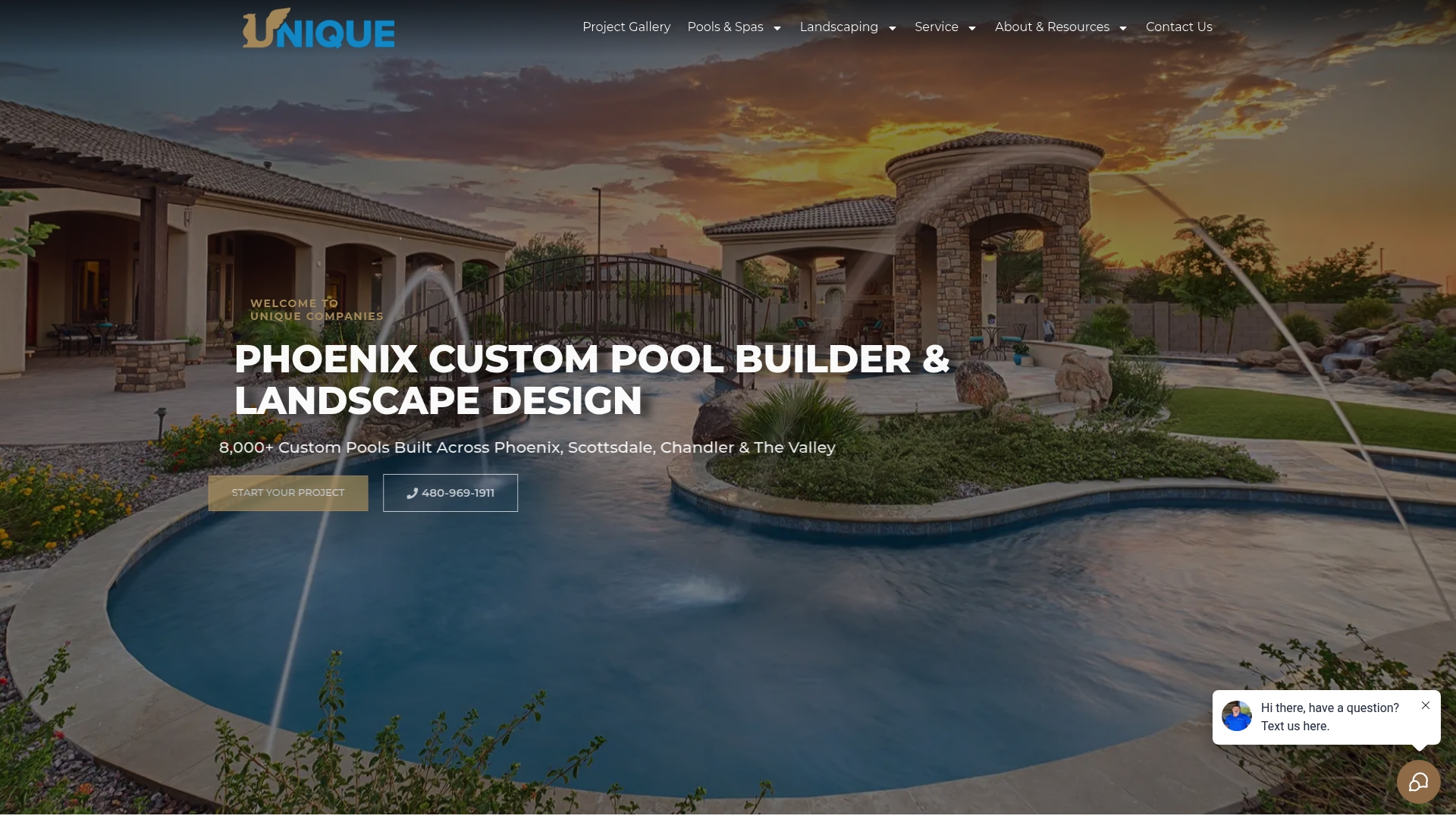
From custom pool features like infinity edges and fire elements to luxury outdoor kitchens with fully integrated appliances, every project is managed in-house from design through final walkthrough. That means no coordination gaps between trades, no permit surprises, and no material delays that weren’t anticipated. If you’re ready to plan your backyard with a team that understands Phoenix from the ground up, explore our luxury landscaping design services and schedule a consultation today.
Frequently asked questions
How long does building a custom pool in Phoenix usually take?
A high-end custom pool typically takes 8-14 weeks, depending on design complexity, caliche conditions, and permit approval timelines. More elaborate features like infinity edges or integrated spas extend that range.
What causes the most delays for Phoenix outdoor projects?
Permit delays, unexpected soil and excavation challenges like deep caliche, and long lead times on custom materials are the most common causes of timeline overruns in the Phoenix metro.
How can I make sure my project finishes on time?
Communicate regularly with your contractor, approve designs and material samples promptly, and request a written milestone schedule at the start. Owner involvement is one of the most effective tools for keeping a build on track.
Do outdoor kitchens take less time to build than pools?
Outdoor kitchens generally require 4-8 weeks, which is less than a custom pool, though complex layouts with gas lines, plumbing, and custom cabinetry can push that timeline closer to a pool build.