TL;DR:
- Effective outdoor project management involves comprehensive planning, phased construction, and contractor coordination to ensure timely, within-budget completion of luxury backyard spaces. It relies on master planning, digital tools, and formal change orders to prevent costly retrofits and schedule delays, especially in Arizona’s climate. A dedicated project manager protects homeowner interests by overseeing all phases and aligning trades for seamless execution.
Effective project management for outdoor living is the process of coordinating design, permitting, materials procurement, and phased construction to deliver a luxury backyard space on time and within budget. For Arizona homeowners in Scottsdale, Chandler, or Queen Creek, this discipline separates a smooth renovation from a costly, drawn-out ordeal. The Phoenix metro’s extreme heat, HOA regulations, and permit timelines add layers of complexity that informal planning simply cannot handle. Tools like JobTread, structured phase scheduling, and a designated project manager are not optional extras on a luxury build. They are the difference between a finished outdoor kitchen and a half-built patio sitting idle through summer.
What are the essential components of outdoor living project management?
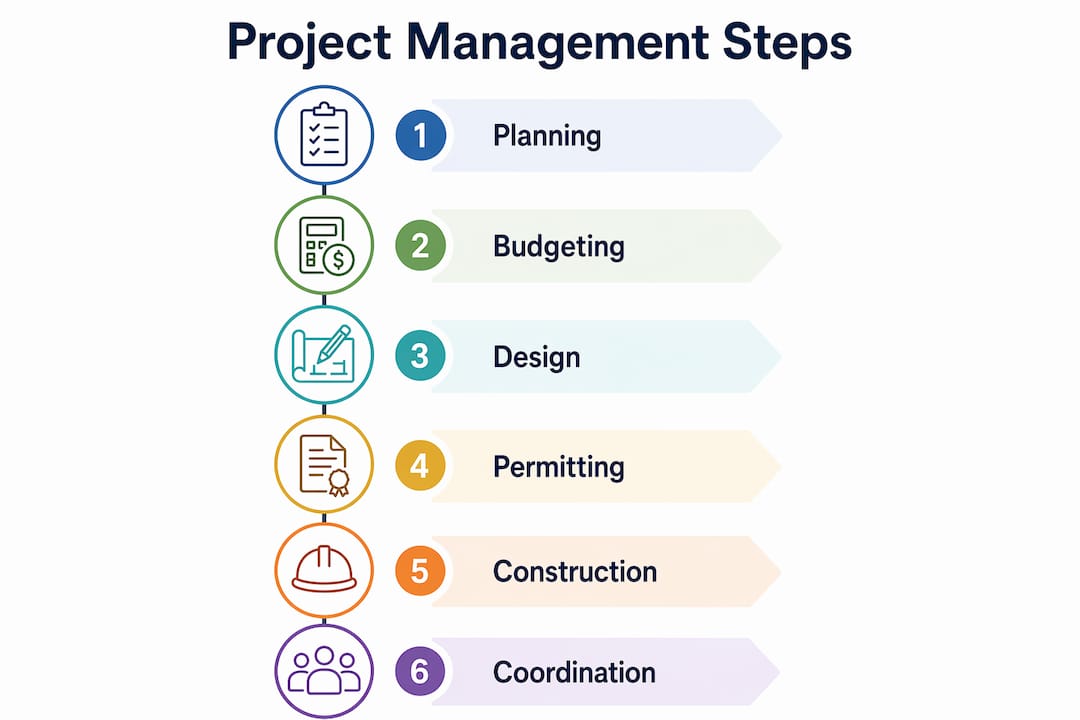
Structured outdoor space development covers six core components: planning, budgeting, design finalization, permitting, phased construction, and quality control. Each component depends on the one before it. Skipping or rushing any stage creates compounding problems downstream, particularly on integrated builds that combine pools, outdoor kitchens, fire features, and hardscape into a single cohesive environment.
Master planning the entire outdoor space from the start prevents expensive modifications and ensures utility and drainage systems are integrated correctly from day one. Homeowners who plan features individually, adding a pergola one year and a kitchen the next, routinely face costly retrofits when they discover the drainage or gas lines were never positioned to accommodate future additions. A single master plan eliminates that risk entirely.
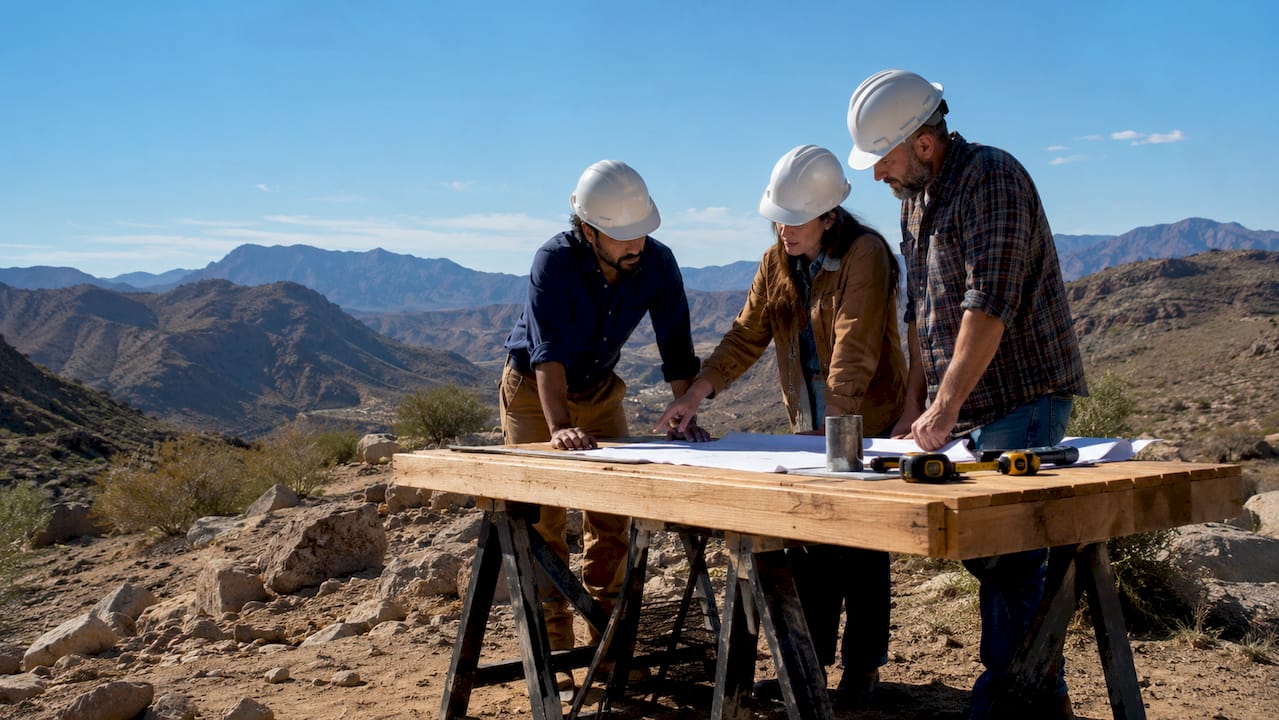
Digital tools play a direct role in keeping projects on track. A shared digital workspace for task tracking and communication reduces confusion and delays far more effectively than informal text threads or email chains. Platforms like JobTread or Buildertrend give homeowners and contractors a single source of truth for schedules, approvals, and documentation.
The consultation phase is also a technical discovery process. Property surveys and HOA guidelines must be gathered early to identify easements and setback restrictions before design work begins. Discovering an easement after design finalization can set a project back weeks and require significant redesign costs.
Pro Tip: Formalize every change order in writing before any work begins. Verbal approvals on luxury builds routinely lead to billing disputes and schedule conflicts. A signed change order protects both the homeowner and the contractor.
| Component | Why it matters |
|---|---|
| Master planning | Prevents costly retrofits by integrating all features from the start |
| Digital task tracking | Replaces informal communication with a documented, shared record |
| HOA and survey review | Identifies easements and restrictions before design is finalized |
| Formal change orders | Eliminates billing disputes and scope creep during construction |
How to set realistic timelines and budgets for Arizona outdoor projects
Timeline expectations for luxury outdoor renovations in Arizona depend heavily on project scale. Standalone features like an outdoor kitchen or pergola typically take 4 to 8 weeks, while larger integrated builds require 8 to 16 weeks. That range assumes permits are in hand before construction begins, which is rarely the case if planning starts too late in the year.
Timing your project start is as important as the build itself. Planning and contracting should begin by February or March to secure contractor availability and meet peak summer season deadlines. Phoenix-area contractors reach capacity in spring, and homeowners who begin outreach in April routinely face 6 to 10 week delays just to get on a build schedule.
Material costs vary significantly by quality tier. Deck and hardscape material costs range from $15 to $60 per square foot depending on material selection, with total project costs for deck work ranging from $6,000 to $30,000. For luxury builds in the Phoenix metro that include custom pools, outdoor kitchens, and integrated lighting, total project budgets routinely exceed these figures. You can review realistic project timelines for custom outdoor builds in Phoenix to calibrate your expectations before budgeting.
Arizona’s climate adds specific budget considerations that homeowners in other states do not face. Materials must withstand sustained temperatures above 110°F, UV exposure that degrades lower-grade finishes within two to three seasons, and monsoon drainage loads that can overwhelm poorly planned hardscape. Budget contingency of 10 to 15 percent is standard on any luxury build. On integrated projects with complex utility work, 20 percent is more realistic.
Pro Tip: Build your contingency into the original budget rather than treating it as a reserve. Homeowners who mentally separate contingency funds tend to approve scope additions more freely, which is the primary driver of budget overruns.
What are the critical project management phases and sequencing strategies?
Phase-based construction management is the single most effective method for avoiding trade conflicts and costly last-minute corrections on outdoor renovations. Sequencing trades by phase, moving from grading through hardscape, then structure, then planting and finishing, prevents one crew’s work from blocking or damaging another’s. On a luxury build with a pool, kitchen, and fire feature, the sequencing decisions made in the planning phase determine whether the project runs smoothly or requires expensive rework.
The standard phases for a luxury outdoor living renovation follow this order:
- Site evaluation and survey. Confirm property boundaries, utility locations, drainage flow, and HOA restrictions before any design work begins.
- Design finalization. Lock in all features, materials, and specifications. Changes after this phase carry significant cost and schedule penalties.
- Permitting. Submit for all required permits simultaneously where possible. In Maricopa County, pool permits, gas line permits, and structural permits are often separate submissions.
- Utility and drainage installation. Utilities and drainage must be mapped and permitted during the design phase to avoid rework costs that can add 20 to 30 percent to the total budget.
- Hardscape and structural construction. Concrete, pavers, retaining walls, and pool shell work proceed in this phase.
- Trade installations. Plumbing, gas, electrical, and outdoor kitchen rough-in work follows structural completion.
- Finishing and planting. Landscaping, lighting, appliance installation, and final surface treatments complete the build.
- Inspections and final walkthrough. All permitted work requires inspection sign-off before the project closes.
“Outdoor kitchens must comply with safety codes involving utilities, clearances, and ventilation, requiring coordinated planning across multiple trades.” — DLC Outdoor Living Services
The most common sequencing failure Uniquecompanies observes in projects that come to them for remediation is utility work that was not planned during design. A homeowner adds a gas-fired pizza oven after the patio is poured, and the gas line retrofit requires breaking through finished hardscape. That single oversight can cost $3,000 to $8,000 in rework. Planning the role of drainage and utility routing before a single shovel hits the ground is not optional on a luxury build.
How to effectively coordinate with contractors during your renovation
The project manager serves as the single point of contact for all contractors, administering contracts and ensuring adherence to design specifications throughout the build. This role protects the homeowner’s interests by maintaining accountability across every trade involved in the project. Without a designated point of contact, contractors receive conflicting instructions, schedules drift, and quality control becomes reactive rather than proactive.
Effective contractor coordination on a luxury outdoor renovation requires these practices:
- Establish a shared digital workspace from day one. All schedules, drawings, change orders, and inspection records live in one place. Every party has access, and nothing is communicated through informal text messages.
- Schedule weekly site reviews. Walk the site with your project manager every week during active construction. Issues identified on-site are resolved in hours rather than days.
- Document every decision in writing. Verbal approvals do not exist on a well-managed project. If a decision is made on-site, it gets logged in the project management platform before the end of the day.
- Manage change orders formally. Any deviation from the approved scope, whether a material substitution or an added feature, requires a written change order with a cost and schedule impact before work proceeds.
- Establish clear escalation paths. Define in advance who makes final decisions on design changes, budget approvals, and schedule adjustments. Ambiguity at the decision-making level is the primary cause of project delays.
Pro Tip: Request a two-week look-ahead schedule from your contractor every Friday. This short-interval planning tool forces contractors to identify material lead times and trade conflicts before they become delays, not after.
The value of a firm like Uniquecompanies lies precisely in this coordination function. With over 24 years of experience managing luxury outdoor builds in the Phoenix metro, their in-house approach covers design, permitting, and construction under one management structure. That eliminates the coordination gaps that arise when homeowners manage multiple independent contractors themselves.
Key takeaways
Successful project management for outdoor living renovations requires master planning, phased sequencing, and formal contractor coordination from the first consultation through final inspection.
| Point | Details |
|---|---|
| Start planning early | Begin contractor outreach by February or March to secure availability before spring capacity fills. |
| Master plan all features | Plan every outdoor feature together to avoid costly utility and drainage retrofits later. |
| Sequence phases correctly | Move from grading through hardscape, trades, and finishing to prevent rework and trade conflicts. |
| Use digital project tools | A shared platform for schedules and change orders reduces delays and billing disputes. |
| Budget a 15 to 20 percent contingency | Arizona’s climate and complex utility work make budget overruns predictable without a proper reserve. |
What I’ve learned from watching luxury outdoor projects succeed and fail
After working closely with homeowners across Scottsdale, Chandler, and Queen Creek on projects ranging from standalone patios to full backyard transformations, the pattern is consistent. The projects that finish on time and within budget are not the ones with the largest budgets. They are the ones where the homeowner committed to a master plan before breaking ground and refused to make scope changes without a formal change order.
The projects that struggle share a different pattern. A homeowner approves a design, construction begins, and then the ideas start evolving. A fire pit becomes a full outdoor fireplace. A simple kitchen layout gains a pizza oven. Each individual addition seems reasonable in isolation. Collectively, they push the schedule by weeks and the budget by tens of thousands of dollars. The problem is not the additions themselves. The problem is that they were not planned into the utility routing, the structural layout, or the permit set from the beginning.
Arizona’s climate adds a layer of urgency to upfront planning that homeowners from other states often underestimate. A project that misses its spring construction window due to poor planning may not reach completion before monsoon season, which halts certain phases of outdoor construction entirely. That delay pushes the finished space past the prime outdoor season and into the following year.
My honest advice to any Arizona homeowner planning a luxury outdoor renovation: invest as much time in the planning phase as you expect to spend in the finished space. The planning phase is where the money is either protected or lost.
— Philipp
How Uniquecompanies manages your luxury outdoor renovation from start to finish
Uniquecompanies brings over 24 years of specialized experience managing luxury outdoor living renovations across the Phoenix metropolitan area, covering Scottsdale, Chandler, and Queen Creek.
Their in-house team handles every phase of the project, from initial site evaluation and design through permitting, phased construction, and final inspection. Homeowners work with a single point of contact throughout, eliminating the coordination gaps that arise when managing multiple independent contractors. Whether you are planning custom outdoor kitchens or a fully integrated backyard with a pool, fire features, and hardscape, Uniquecompanies delivers the structured project management that luxury builds require. Contact their team to schedule a design consultation and receive a 3D preview of your finished space.
FAQ
What does project management for outdoor living actually involve?
Project management for outdoor living covers planning, budgeting, permitting, phased construction, and contractor coordination for backyard renovation projects. On luxury builds, it includes master planning all features together to prevent costly utility and drainage retrofits.
How long does a luxury outdoor living renovation take in Arizona?
Standalone features take 4 to 8 weeks, while integrated luxury builds with pools, kitchens, and hardscape typically require 8 to 16 weeks from construction start. Permit timelines in Maricopa County add additional lead time before construction begins.
When should I start planning my outdoor renovation in Arizona?
Begin contractor outreach and design consultations by February or March. Phoenix-area contractors reach capacity in spring, and late starts routinely result in 6 to 10 week scheduling delays.
Why does sequencing matter so much on outdoor renovation projects?
Incorrect sequencing forces expensive rework. Utilities and drainage planned after construction can add 20 to 30 percent to total project costs. Mapping all utility routes during the design phase eliminates this risk.
Do I need a project manager for a luxury outdoor renovation?
A project manager serves as the single point of contact for all contractors and protects the homeowner’s interests by enforcing design specifications and managing change orders formally. On integrated luxury builds, this role is the primary factor in whether the project finishes on time and within budget.