TL;DR:
- Luxury patios integrate seamless indoor-outdoor flow, bioclimatic climate control, and premium materials to create functional, resort-caliber spaces. They feature intentional zoning, wellness amenities, layered lighting, and smart technology to enhance daily living and health benefits. Proper engineering and purpose-driven design are essential for long-term durability, visual cohesion, and maximizing outdoor usability.
A luxury patio is defined by the deliberate integration of architectural continuity, bioclimatic engineering, premium materials, and wellness technology into a single outdoor environment. The features of luxury patios extend far beyond decorative furniture or a simple concrete slab. They transform an underused backyard into a functional, resort-caliber living space that adds measurable value to your home. This guide breaks down each defining element so you can plan, prioritize, and build with confidence.
1. Seamless indoor-outdoor flow
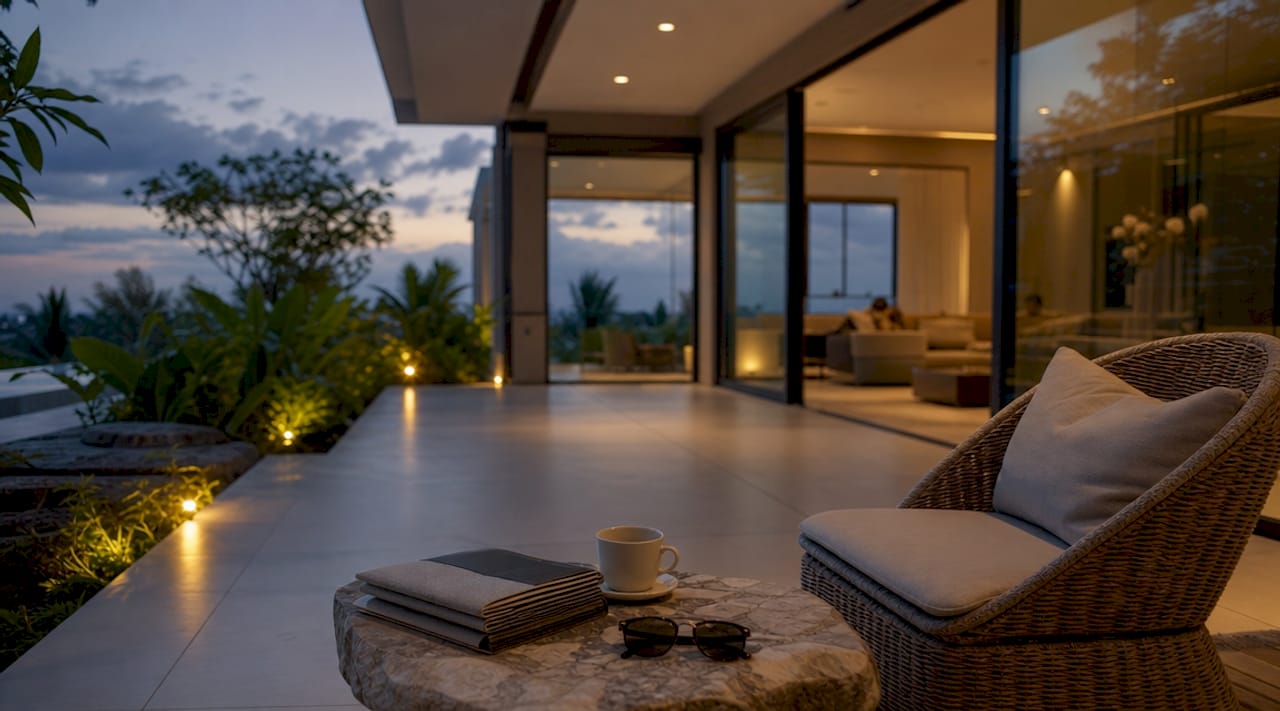
Architectural continuity between interior and exterior spaces is the foundation of high-end patio design. The goal is to eliminate the visual and physical boundary between your home’s interior and the patio, making the outdoor space feel like a natural extension of the living room.
Frameless sliding glass door systems, such as those made by NanaWall, can span up to 30 feet wide and fold completely out of sight. When open, they dissolve the wall between inside and outside entirely. This single design choice reshapes how a home feels and functions on a daily basis.
Flooring continuity reinforces that effect. Matching indoor and outdoor flooring with 12mm or 20mm slip-resistant large-format porcelain pavers can increase perceived space size by 20 to 30 percent. That is a meaningful gain in visual square footage without any structural addition.
The engineering beneath the surface matters just as much. Flush thresholds require no more than a one-inch height difference and a one to two percent slope for proper drainage. Waterproofing membranes and thermal breaks prevent moisture intrusion and structural movement over time. Skipping these details is the most common reason luxury patios fail within five to ten years.
Pro Tip: Align patio edges with your home’s rooflines and window mullions before finalizing any layout. This architecture-led approach creates visual continuity that elevates the entire design without adding cost.
2. Bioclimatic climate control systems
Bioclimatic design is the practice of using structural elements to manage sunlight, airflow, and precipitation rather than relying solely on mechanical cooling. For patios in climates like Phoenix or Scottsdale, this is not optional. It is the difference between a space you use three months a year and one you use twelve.
Motorized louvered pergolas are the centerpiece of this approach. Louvers tilt up to 150 degrees for precise sun and airflow control, and rain sensors can close the system in under 10 seconds. Bioclimatic shade structures extend patio usability by four to six months per year. That is a substantial return on a single structural investment.
Key climate control features found in luxury outdoor living spaces include:
- Motorized louvered pergolas with integrated rain and UV sensors
- Retractable shade screens that cut solar heat gain by up to 80 percent
- Misting systems with programmable timers for dry climates
- Radiant floor heating for cooler months or evening use
- Ceiling fans rated for outdoor wet or damp locations
Material selection also plays a direct role in thermal comfort. Slip-resistant porcelain pavers absorb less heat than concrete and release it more slowly, reducing the surface temperature underfoot. In Arizona’s climate, this distinction is significant enough to affect daily usability.
3. Wellness-focused amenities
Luxury patios have shifted toward being daily-use wellness environments, incorporating spa-grade amenities and biophilic features that deliver measurable health benefits. This is not a trend toward excess. It reflects a documented relationship between natural environments and physiological recovery.
Biophilic design on patios lowers homeowner cortisol levels by 15 to 20 percent, making outdoor spaces effective wellness retreats. That reduction in stress hormones is comparable to what some structured mindfulness programs achieve. Designing for that outcome requires intentional plant selection, water features, and sensory layering.
Specific wellness elements worth incorporating include:
- Spa-grade hot tubs maintained between 100°F and 104°F for hydrotherapy
- Cold plunge pools set between 50°F and 55°F for contrast therapy
- Yoga or meditation platforms with non-slip composite decking
- Aromatic plantings such as lavender, rosemary, and jasmine for passive sensory engagement
- Water features calibrated to produce ambient sound between 45 and 55 decibels
Vertical hydroponic gardens reduce ambient noise by up to 15 decibels and cool patio areas by 3 to 7 degrees Celsius through evapotranspiration. They function as biological acoustic barriers and passive cooling systems simultaneously. For patios near busy streets or in dense neighborhoods, this dual benefit is particularly practical.
Treating your patio as a wellness zone rather than a social-only space changes every design decision you make, from plant selection to lighting temperature to the placement of water features.
4. Premium materials and layered lighting
Material selection defines both the aesthetic quality and the long-term durability of a luxury patio. The best materials for luxury patios balance visual refinement with site-specific performance requirements.
| Material | Best use | Durability | Maintenance |
|---|---|---|---|
| Natural teak | Furniture, decking | High with sealing | Annual oiling required |
| Quartzite | Countertops, paving | Very high | Low |
| Sintered stone | Countertops, cladding | Withstands heat to 600°F | Very low |
| Powder-coated aluminum | Pergola frames, furniture | High, rust-resistant | Minimal |
| Large-format porcelain | Flooring, wall cladding | High, slip-resistant | Low |
Mixing two or three textures, such as smooth stone, brushed aluminum, and natural wood, adds visual depth without creating visual clutter. Minimalist architecture with oversized elements and clean lines produces a sophisticated aesthetic where every component feels purposeful.
Lighting is equally structural in its effect. Layered, low-voltage LED lighting at color temperatures between 2700K and 3000K enhances ambiance and reveals architectural textures better than a single bright overhead source. Warm light at that range mimics late-afternoon sunlight, which is the most flattering and comfortable illumination for outdoor social spaces.
Pro Tip: Layer three types of lighting in every zone: ambient (wall sconces or overhead), task (under-counter or pathway), and accent (landscape uplighting or string lights). This approach eliminates harsh shadows and makes the space usable well after sunset.
5. Smart technology and outdoor culinary suites
Smart technology integration is now a standard expectation in high-end patio features, not a premium add-on. App-controlled systems manage lighting, audio, climate, and automated shading from a single interface. This level of control makes the patio genuinely functional across different times of day and weather conditions.
Smart outdoor kitchens include built-in grills, side burners, refrigerators, and weatherproof cabinetry controlled via apps, with countertops made from quartzite or sintered stone that withstand heat up to 600°F. A well-designed outdoor kitchen extends the home’s culinary capacity rather than duplicating it. The key is specifying appliances rated for outdoor exposure and cabinetry built from marine-grade or powder-coated aluminum.
Additional smart and built-in features that define luxurious outdoor living spaces include:
- Integrated weatherproof speakers with zone-based audio control
- Hidden USB and wireless charging ports built into countertops or side tables
- Smart fire pits with app-controlled flame height and ignition
- Automated irrigation systems tied to soil moisture sensors
- Heated flooring panels beneath porcelain or stone pavers
You can explore planning tools like Backyard Buddy to visualize how these technology features fit within your specific layout before committing to construction. Digital planning reduces costly design revisions and helps you communicate your vision clearly to your contractor.
6. Defined zones and intentional spatial planning
Distinct patio zones that mimic interior rooms, such as a kitchen zone, dining zone, and lounge zone, with deliberate textures and slight elevation changes, distinguish high-end designs from generic patios. This approach requires treating the patio as a floor plan rather than an open area to fill with furniture.
Treating patios as intentional extensions designed for specific rituals and uses, not catch-all spaces, is the defining principle of achieving high-end luxury. A dining zone might use large-format stone pavers and a pergola overhead. A lounge zone might shift to composite decking with an outdoor rug and lower-profile seating. The material and elevation change signals the transition without requiring a wall.
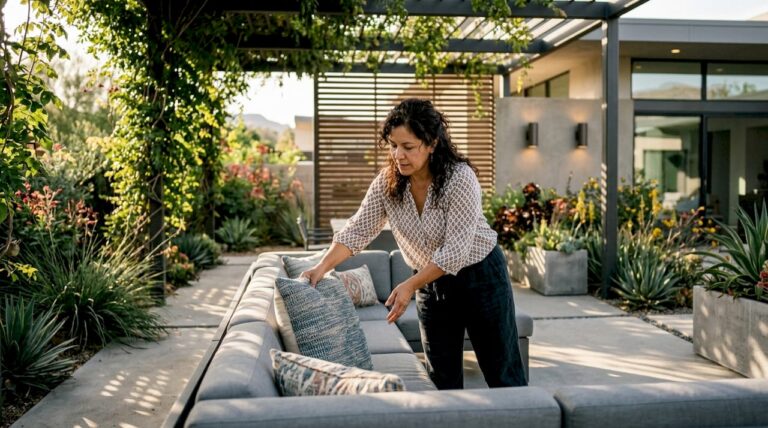
Layered seating with generous proportions and flexible surfaces improves comfort and makes luxury patios functional extensions of indoor spaces. Outdoor rugs, accent tables, and throw pillows in weather-resistant fabrics like Sunbrella replicate the comfort cues of an interior living room. The result is a space that feels inhabited rather than staged.
7. Comparing core features: what to prioritize
If you are evaluating where to invest first, this comparison helps clarify the trade-offs across the most impactful high-end patio features.
| Feature | Best for | Climate consideration | Investment level |
|---|---|---|---|
| Motorized louvered pergola | Year-round usability | Hot, sunny, or rainy climates | High |
| Seamless indoor-outdoor flow | Visual space expansion | All climates | Medium to high |
| Outdoor culinary suite | Entertainment-focused use | All climates | Medium to high |
| Wellness amenities (spa, plunge) | Daily health and recovery | Warm climates preferred | High |
| Smart lighting and audio | Ambiance and convenience | All climates | Low to medium |
| Vertical living walls | Noise reduction, cooling | Dry or urban settings | Medium |
Material durability and regional climate should drive your first decisions. Poor material choices cause heat issues or staining, making site-specific planning mandatory for luxury patios. In Phoenix and Scottsdale, for example, dark concrete absorbs heat to an uncomfortable degree, while light-toned porcelain or travertine stays cooler underfoot through the summer months.
Key takeaways
The features of luxury patios work as a system: architectural flow, climate control, premium materials, wellness amenities, and smart technology each reinforce the others to create a space that functions as a daily living environment rather than a seasonal add-on.
| Point | Details |
|---|---|
| Seamless flow requires engineering | Flush thresholds, proper grading, and matching flooring are structural requirements, not aesthetic choices. |
| Bioclimatic systems extend usability | Motorized pergolas and shade structures can add four to six months of comfortable outdoor use per year. |
| Wellness features deliver measurable returns | Biophilic design and spa elements reduce cortisol levels by 15 to 20 percent, making patios health assets. |
| Material selection is climate-specific | Choose materials based on your regional heat, UV exposure, and moisture conditions, not just appearance. |
| Zone planning defines luxury | Distinct areas with elevation changes and texture shifts create a high-end feel that furniture alone cannot achieve. |
Why intention matters more than budget in luxury patio design
From my experience working with homeowners on outdoor living projects, the single biggest mistake is treating the patio as a collection of features rather than a designed environment. A homeowner can spend significantly on a fire pit, a grill island, and a pergola and still end up with a space that feels disconnected and underused. The reason is almost always the same: no spatial intention.
The patios that genuinely function as daily retreats share one quality. Every element was selected to serve a specific use case, whether that is morning coffee, evening entertaining, or weekend recovery. That clarity of purpose drives every other decision, from where the pergola sits relative to the sun’s path to which plants go where based on fragrance and shade.
I also think wellness features are consistently undervalued in the planning phase. Homeowners often prioritize the kitchen and the fire feature, then treat the spa or plunge pool as a luxury they will add later. In practice, the wellness elements are what make the space worth returning to every day. A cold plunge pool at 50°F used three times a week delivers a physiological benefit that no grill upgrade can replicate.
Finally, professional installation is not a cost to minimize. The structural details, flush thresholds, waterproofing, thermal breaks, and proper grading, are invisible when done correctly and catastrophically obvious when they fail. Investing in a contractor with documented experience in luxury outdoor construction protects every other dollar you spend on the project.
— Philipp
Build your luxury patio with Uniquecompanies
Uniquecompanies has spent over 24 years designing and building custom outdoor living environments across Scottsdale, Chandler, Queen Creek, and the greater Phoenix metropolitan area. Their in-house team handles design, permitting, and construction as a single integrated process, which eliminates the coordination gaps that cause delays and quality issues on complex projects.
Whether you are planning a custom outdoor kitchen with weatherproof cabinetry and smart appliances, a custom pool feature with integrated spa and water elements, or a fully zoned luxury patio design with motorized pergolas and layered lighting, Uniquecompanies brings the technical depth and design precision the project requires. Their 3D visualization tools let you see the finished space before construction begins.
FAQ
What are the most important features of luxury patios?
The most important features are seamless indoor-outdoor flow, bioclimatic climate control, premium materials, wellness amenities, and smart technology integration. Together, these elements transform a patio from a seasonal space into a daily living environment.
What are the best materials for luxury patios?
Quartzite, sintered stone, large-format porcelain, natural teak, and powder-coated aluminum are the top choices. Material selection should be guided by your regional climate, since heat absorption and staining resistance vary significantly by location.
How do motorized pergolas improve patio usability?
Motorized louvered pergolas tilt up to 150 degrees for precise sun and airflow control and close automatically in rain within 10 seconds. They can extend comfortable patio use by four to six months per year in hot or variable climates.
Do wellness features like spas and plunge pools add home value?
Yes. Spa-grade amenities and biophilic design elements contribute to both daily quality of life and resale appeal. Research shows that biophilic design reduces cortisol levels by 15 to 20 percent, which positions wellness-focused patios as functional health assets, not just aesthetic upgrades.
How do I plan distinct zones on a luxury patio?
Define each zone by its primary use, such as dining, lounging, or cooking, then differentiate zones with material changes, slight elevation shifts, and overhead structure. This spatial planning approach mirrors interior room design and is the primary distinction between high-end and generic outdoor spaces.