Buckeye is growing fast, but from a construction perspective, it is not a uniform environment. The experience of building a pool in Verrado can differ meaningfully from building in Tartesso, Sundance, Festival Ranch, or other expanding areas west of the White Tank Mountains. The differences are not just aesthetic — they involve lot configuration, grading strategy, sun exposure, access logistics, and neighborhood design cohesion.
Homeowners often assume that once they choose a pool shape, the rest of the process is predictable. In reality, the lot and community conditions dictate how that pool should be engineered, placed, and integrated. If you’re evaluating what it takes to build in this area, understanding how a pool builder in Buckeye adapts to neighborhood-specific variables is critical before finalizing design decisions.
This article focuses specifically on established and master-planned Buckeye communities — not new-build timing (which is addressed separately). The goal here is to understand how neighborhood differences affect layout, engineering, usability, and long-term performance.
The “Usable Envelope” Problem Most Homeowners Overlook
In many Buckeye communities, total lot size tells only part of the story. What actually determines design flexibility is the usable buildable envelope after accounting for setbacks, easements, and grading constraints.
For example, two homes may both sit on 7,200-square-foot lots. On paper, that sounds similar. But once you account for:
Rear-yard setbacks
Side-yard setbacks
Utility easements
Drainage corridors
Perimeter wall offsets
the functional space can vary significantly.
In tighter production-home sections, rear-yard depth becomes the limiting factor. In other areas, the yard may be wider but interrupted by utility paths. Designing without confirming these boundaries often leads to mid-project revisions when excavation stakes reveal reality.
A strategic design process always begins with confirming the true buildable rectangle and aligning the pool footprint inside it — not forcing a pre-selected design into a constrained space.
Access Logistics: The Hidden Variable That Impacts Timeline and Cost
Side-yard access varies across Buckeye neighborhoods. In some communities, access is manageable with standard excavation equipment. In others, narrow side yards require modified approaches that increase labor intensity.
Access affects more than convenience. It influences:
Excavation speed
Steel and shotcrete delivery logistics
Debris removal
Surface protection requirements
Overall project sequencing
When machinery access is restricted, certain phases take longer and require more manual staging. That is not a design flaw — it is a logistical reality that should be evaluated before scheduling begins.
Larger parcels may offer easier access, but longer haul paths across the lot can introduce separate coordination considerations. Evaluating access early allows scheduling to be realistic rather than optimistic.
Grading, Elevation, and Drainage Strategy in Established Buckeye Neighborhoods
Buckeye developments often incorporate subtle grading plans designed to move stormwater toward streets or designated drainage routes. While these slopes may not be visually dramatic, they are intentional.
When pool elevation and deck pitch fail to align with existing grading, issues can develop such as:
Water collecting along hardscape edges
Runoff flowing toward patio doors
Equipment pads sitting in low points
Long-term deck settlement
Monsoon events in the West Valley are not minor rainfall events. They stress-test drainage systems.
Proper planning involves:
Establishing finished deck elevation relative to the home
Designing deck pitch to encourage controlled runoff
Coordinating drain placement before structural phases
Ensuring equipment pads sit outside primary runoff paths
Drainage should be treated as part of structural engineering, not a finishing detail.
Architectural Cohesion Within Master-Planned Communities
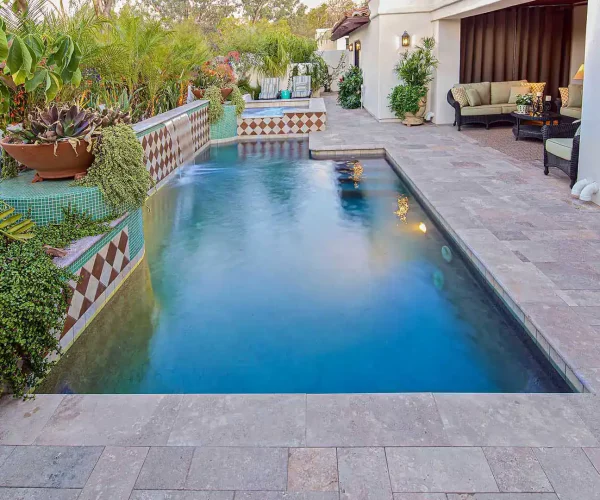
Many Buckeye neighborhoods have a defined architectural character. Whether the homes lean traditional desert, contemporary, or transitional, the pool should feel like a natural extension of the property.
That means considering:
Exterior color palette and stone tones
Roofline symmetry and massing
Patio geometry and door placement
Window sightlines from primary living areas
A pool that ignores architectural cues can feel disconnected, even if it looks impressive on its own. High-end backyard construction in Buckeye should elevate the home’s design language rather than compete with it.
This is where experienced design-build planning separates cohesive environments from isolated installations.
Sun Orientation and West Valley Heat Exposure
Buckeye’s western location means intense afternoon sun exposure, particularly during summer months. Lot orientation dramatically affects how usable the backyard feels during peak heat.
A west-facing yard may leave shallow lounging areas exposed for hours. A south-facing yard may shift heat differently across decking surfaces.
Design must account for:
Sun path relative to house orientation
Placement of Baja shelves and entry steps
Shade structure integration
Decking material heat retention
Outdoor kitchen positioning
Without intentional planning, homeowners often discover that their favorite features are unusable during the hottest parts of the day.
Heat mitigation is not an optional upgrade. It is a fundamental design responsibility in the West Valley climate.
Equipment Placement and Long-Term Service Planning
Equipment pads are frequently positioned based on available leftover space. In reality, placement affects maintenance access, noise control, plumbing efficiency, and drainage exposure.
Depending on the lot configuration, equipment may end up:
Along narrow side yards
Adjacent to property lines
Near bedroom windows
Within runoff paths
Strategic placement requires balancing aesthetics with accessibility. Long-term service access should not require dismantling fencing or navigating tight corridors.
When designing a fully integrated outdoor space — not just a standalone installation — reviewing the broader custom pool design and construction process ensures equipment planning aligns with both visual and operational goals.
Timing Considerations in Established Buckeye Neighborhoods
Unlike new construction scenarios, established neighborhood projects involve working around existing conditions. That may include:
Removing installed landscaping
Protecting finished patios
Navigating completed perimeter walls
Coordinating around active irrigation systems
Each of these factors influences scheduling and staging.
Starting the design process early allows time to confirm lot constraints, prepare engineered drawings, coordinate submissions, and align material procurement without pressure.
A deliberate process produces a smoother build than rushing excavation to meet an artificial deadline.
The most overlooked factor is comprehensive yard planning. Focusing solely on pool shape without mapping furniture zones, circulation paths, shade placement, and service access often leads to revisions during construction. A cohesive master plan protects both functionality and budget.
Drainage becomes a concern when new hardscape interrupts original grading intent. Without proper pitch and drainage planning, heavy rainfall can redirect water toward structures or low points. Integrating drainage strategy into structural planning helps prevent long-term surface and settlement issues.
Backyard direction determines how long specific areas remain exposed to afternoon heat. West-facing yards often require more deliberate shade integration, while other orientations shift heat patterns differently across decking and shallow lounging areas. Ignoring orientation can reduce day-to-day usability during summer months.