TL;DR:
- Backyard landscaping enhances home value, energy efficiency, and personal well-being through strategic design and plant placement. Proper infrastructure including grading and drainage is vital for long-term durability, while phased planning helps manage costs. Sustainable practices reduce maintenance costs and support local ecosystems, creating a functional outdoor space that truly extends the home.
Backyard landscaping is the process of designing and cultivating your outdoor space to increase home value, reduce energy costs, and create a tranquil retreat. The benefits of backyard landscaping extend well beyond aesthetics. A well-planned yard improves your property’s resale potential, supports local ecosystems, and gives you a functional outdoor living area you can use every day. Whether you are starting from scratch or upgrading an existing yard, understanding what thoughtful landscaping delivers helps you make smarter decisions about where to invest your time and budget.
1. How does backyard landscaping impact your home’s market value?
Professional landscaping increases resale value by 5% to 20%, and 92% of realtors recommend landscaping improvements to help homes sell faster. That combination of higher price and shorter time on market makes landscaping one of the most financially productive home improvements available. For a $500,000 home, a 10% value increase represents $50,000 in added equity.
Curb appeal is the first thing buyers notice. A yard with defined garden beds, healthy lawn, and clean pathways signals that the property has been well maintained. Buyers extend that impression to the rest of the home, which directly affects their offer price.
The cost of landscaping improvements varies widely. You can learn more about landscaping and home value to understand which upgrades deliver the strongest return in your specific market. Key upgrades that consistently add value include:
- Defined planting beds with native shrubs and perennials
- Clean, level lawn areas with proper edging
- Hardscape features like stone pathways or a patio
- Outdoor lighting that highlights architectural features
- Mature trees that provide shade and visual structure
Pro Tip: Focus on the view from the street first. Buyers form their initial impression before they step out of the car, so front-facing landscaping delivers the highest return per dollar spent.
2. What energy and environmental advantages come from landscaping?
Strategically placed trees and shrubs reduce home heating and cooling costs by 25% to 50%. That is a significant reduction, and it comes entirely from plant placement rather than mechanical upgrades. Deciduous trees on the south and west sides of a home shade windows in summer and allow sunlight through in winter after they drop their leaves.
The environmental benefits go beyond your energy bill. Trees absorb carbon dioxide and release oxygen, improving local air quality. Lawns capture dust, smoke particles, and pollutants from the air, acting as a natural filter at ground level. A healthy lawn on a standard residential lot processes a meaningful volume of airborne particles each year.
Water management is another measurable advantage. Well-designed landscapes reduce water runoff and soil erosion through strategic plant placement and grading. Groundcover plants, mulched beds, and permeable hardscape surfaces slow rainwater and allow it to absorb into the soil rather than washing away topsoil or flooding drainage systems.
| Environmental Benefit | How It Works |
|---|---|
| Energy cost reduction | Shade trees cut cooling loads by blocking direct sun on walls and windows |
| Air quality improvement | Grass and plants filter dust, smoke, and airborne pollutants |
| Soil erosion prevention | Root systems and groundcover hold soil in place during rain events |
| Water runoff management | Permeable surfaces and planted beds absorb rainwater before it reaches storm drains |
Pro Tip: In hot climates like Phoenix, prioritize shade trees on the west side of your home. Afternoon sun is the most intense, and a single mature tree can reduce interior temperatures noticeably without any change to your HVAC system.
3. In what ways does landscaping enhance personal well-being?
Gardening and time in green spaces reduce stress and improve mood, with measurable calming effects after just 10–20 minutes outdoors. That is a short threshold. A backyard that invites you outside regularly, rather than one you avoid because it feels neglected or uncomfortable, delivers a genuine health benefit.

Plants also emit phytoncides, natural compounds that research links to lower blood pressure and improved immune function. These are the same compounds found in forest environments. A yard with a variety of trees, shrubs, and flowering plants creates a similar effect at a residential scale.
Outdoor living areas expand your usable home space and encourage social connection. A covered patio, a seating area around a fire feature, or a well-placed dining space gives your household a reason to gather outside. That shift from indoor-only living to regular outdoor use changes how the home feels on a daily basis.
“The best outdoor spaces are the ones people actually use. Design for your daily habits first, and the occasional entertaining will take care of itself.”
Creating a tranquil garden does not require a large yard. Defined planting zones, a water feature, and comfortable seating can transform even a modest space into a place that genuinely restores your energy. The key is intentional design rather than random plant placement.
4. How does thoughtful backyard design increase functionality and longevity?
Invisible infrastructure like grading and drainage most influences the durability of landscaping projects. Poor drainage causes standing water, root rot, patio heaving, and retaining wall failure. These are expensive problems that proper grading prevents before installation begins. Drainage planning is not visible in the finished yard, but it determines whether that yard looks good in five years or requires full reconstruction.
Zoning your outdoor space into functional areas improves daily usability. A well-designed backyard separates active zones like play areas and dining from quieter zones like garden beds and seating areas. This separation makes the space feel larger and more purposeful. You can explore backyard design principles to understand how zoning and circulation work together.
Designers advise prioritizing lifestyle programming to tailor outdoor spaces for daily habits rather than occasional entertaining. That means designing around how you actually use your yard on a Tuesday evening, not just how you hope to use it for a summer party. The result is a space that gets used consistently rather than one that sits empty most of the year.
Landscaping projects can cost up to $65,000 depending on scope, but phased approaches allow budget flexibility. A phased master plan lets you complete the most critical elements first, such as grading, irrigation, and primary hardscape, then add planting and features over time. This approach reduces financial pressure without sacrificing the quality of the final result.
A practical phased approach typically follows this sequence:
- Complete all grading, drainage, and irrigation rough-in work
- Install primary hardscape surfaces, including patios and pathways
- Plant trees and large shrubs that need the most establishment time
- Add perennial beds, groundcover, and lawn areas
- Install lighting, water features, and decorative elements last
Pro Tip: Always complete your drainage and grading before any surface installation. Fixing drainage problems after pavers or concrete are in place costs significantly more than addressing them during initial construction.
5. What role does sustainable landscaping play in long-term value?
Sustainable landscaping reduces long-term maintenance costs while supporting local ecosystems. Native plants are adapted to regional climate and soil conditions, which means they require less water, fewer fertilizers, and less intervention once established. In Arizona, native species like desert willow, palo verde, and agave thrive with minimal irrigation after their first growing season.
Eco-friendly landscaping practices also include water-efficient irrigation systems, mulched planting beds that retain soil moisture, and permeable hardscape materials that reduce runoff. These choices lower your monthly water bill and reduce the environmental footprint of your yard over its lifetime.
Sustainable design does not mean sacrificing visual appeal. A well-designed xeriscape, which is a landscaping approach that minimizes water use, can be as visually rich as a traditional garden. The difference is that it performs better in dry climates and costs less to maintain year after year.
6. How does a well-designed outdoor space function as an extension of your home?
A well-planned outdoor space functions as a room without a roof, with the same attention to circulation, usage zones, and material cohesion that you would apply indoors. This framing changes how homeowners approach backyard design. Instead of treating the yard as leftover space, you treat it as a room with a specific purpose and a defined layout.
Material selection ties the outdoor space to the home’s architecture. Using the same stone, color palette, or structural lines from the home’s exterior in the backyard hardscape creates visual continuity. That continuity makes the outdoor area feel intentional rather than added on.
Outdoor kitchens are one of the most effective ways to extend daily living into the backyard. A functional outdoor kitchen setup with a grill, prep space, and seating area turns the backyard into a place where meals happen regularly, not just on special occasions. In warm climates like Phoenix, outdoor kitchens are usable for most of the year, which amplifies their practical value considerably.
Key Takeaways
The most important benefit of backyard landscaping is that it delivers financial, environmental, and personal returns simultaneously, making it one of the highest-value home improvements available to homeowners.
| Point | Details |
|---|---|
| Home value increase | Professional landscaping raises resale value by 5% to 20% and speeds up sales. |
| Energy savings | Strategically placed trees and shrubs cut heating and cooling costs by 25% to 50%. |
| Well-being benefits | Just 10–20 minutes in a green outdoor space measurably reduces stress and improves mood. |
| Infrastructure first | Grading and drainage determine long-term durability more than any visible design element. |
| Phased planning | A master plan with staged execution reduces costs and produces better long-term outcomes. |
What I’ve learned from watching backyards succeed and fail
Most homeowners focus on what their backyard will look like. The ones who end up with spaces they actually use focus on how it will function. That shift in thinking changes every decision that follows, from where the patio goes to which plants you choose.
The backyards that disappoint are almost always the ones that were designed for a fantasy version of the owner’s life. A large entertaining terrace that gets used twice a year is not a success, regardless of how beautiful it looks. The spaces that deliver real satisfaction are the ones built around daily habits: morning coffee, evening meals, a place for kids to play, or a quiet corner for reading.
Sustainable choices also matter more than most homeowners realize at the start. Native plants and water-efficient irrigation are not just environmentally responsible. They are financially responsible. A yard that requires constant intervention to survive is a liability, not an asset.
My strongest advice is to invest in the infrastructure you cannot see before you spend a dollar on the features you can. Drainage, grading, and irrigation are the foundation. Get those right, and every other investment you make on top of them will last. Skip them, and even the most beautiful planting scheme will fail within a few years.
— Philipp
How Uniquecompanies brings backyard landscaping to life in Phoenix
Uniquecompanies has spent over 24 years designing and building luxury outdoor living environments across Scottsdale, Chandler, Queen Creek, and the greater Phoenix area. Their in-house team handles design, permitting, and construction as a single integrated process, which eliminates the coordination gaps that cause delays and cost overruns on complex projects.
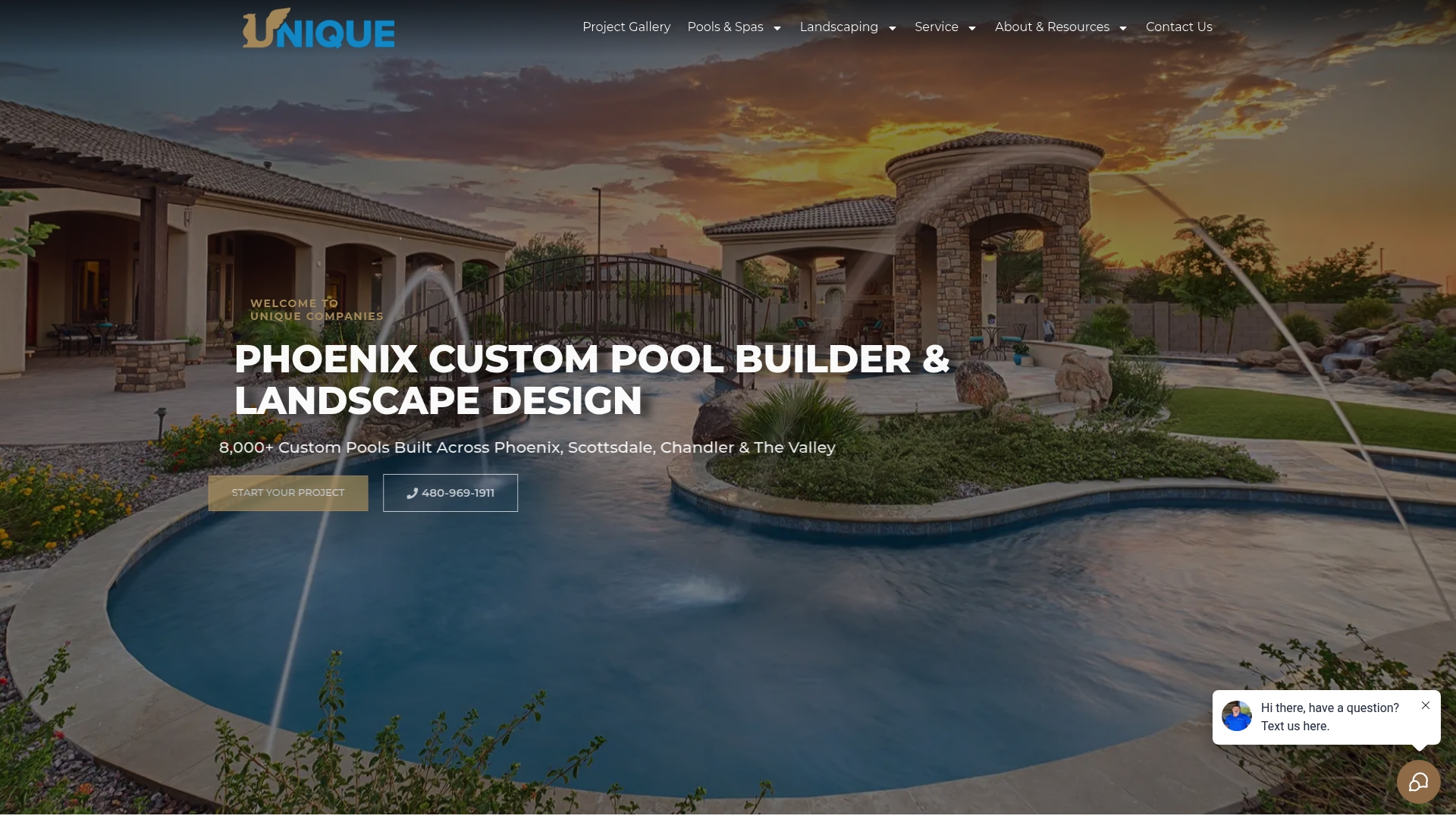
For homeowners ready to invest in their outdoor space, Uniquecompanies offers custom pool features and fully equipped outdoor kitchen design that turn backyards into year-round living spaces. Their team also applies eco-friendly landscaping practices to support long-term garden health and reduce maintenance demands. Every project begins with a detailed design consultation and 3D preview so you can see the finished result before construction starts.
FAQ
How much value does landscaping add to a home?
Professional landscaping adds 5% to 20% to a home’s resale value, with 92% of realtors recommending it to speed up sales.
Can landscaping reduce my energy bills?
Yes. Trees and shrubs placed strategically around a home reduce heating and cooling costs by 25% to 50% by blocking sun in summer and wind in winter.
How long does it take to see the benefits of backyard landscaping?
Curb appeal and usability improvements are immediate. Energy savings and plant-related benefits like shade and air filtration develop over 2–5 years as trees and shrubs reach maturity.
What is the most important factor in a lasting landscape?
Proper grading and drainage are the most critical factors. They prevent water damage, soil erosion, and structural failure in hardscape surfaces over time.
Is sustainable landscaping worth the upfront cost?
Sustainable landscaping with native plants and efficient irrigation costs more initially but reduces long-term water and maintenance expenses significantly, making it a sound financial decision over a 5-to-10-year horizon.