TL;DR:
- Material choice is crucial for outdoor spaces, impacting durability, safety, and sustainability. Selecting climate-matched, regionally sourced materials with a focus on whole-life costs prevents failure and promotes longevity. Early decision-making in material selection ensures structural integrity and aesthetic authenticity.
Material selection is the single most consequential decision in any outdoor design project. It determines whether a patio lasts 30 years or fails in five, whether a pool deck stays cool underfoot in Arizona heat, and whether a project delivers lasting value or demands constant repair. The role of material selection in outdoor spaces extends well beyond aesthetics. Standards like ASTM International testing protocols and the Sustainable Sites Initiative (SITES) now shape how landscape architects and designers specify materials, pushing the field toward climate-matched, whole-life performance rather than first-cost thinking. If you are designing or building an outdoor living space, material choice is where success or failure is decided.
How does climate affect outdoor material performance?
Climate is the primary filter for any material specification. Ignoring climatic context leads directly to premature failure through UV degradation, moisture intrusion, and salt corrosion. A material that performs perfectly in coastal Georgia will crack, fade, or corrode within a few seasons if installed in a freeze-prone northern climate or a high-UV desert environment.
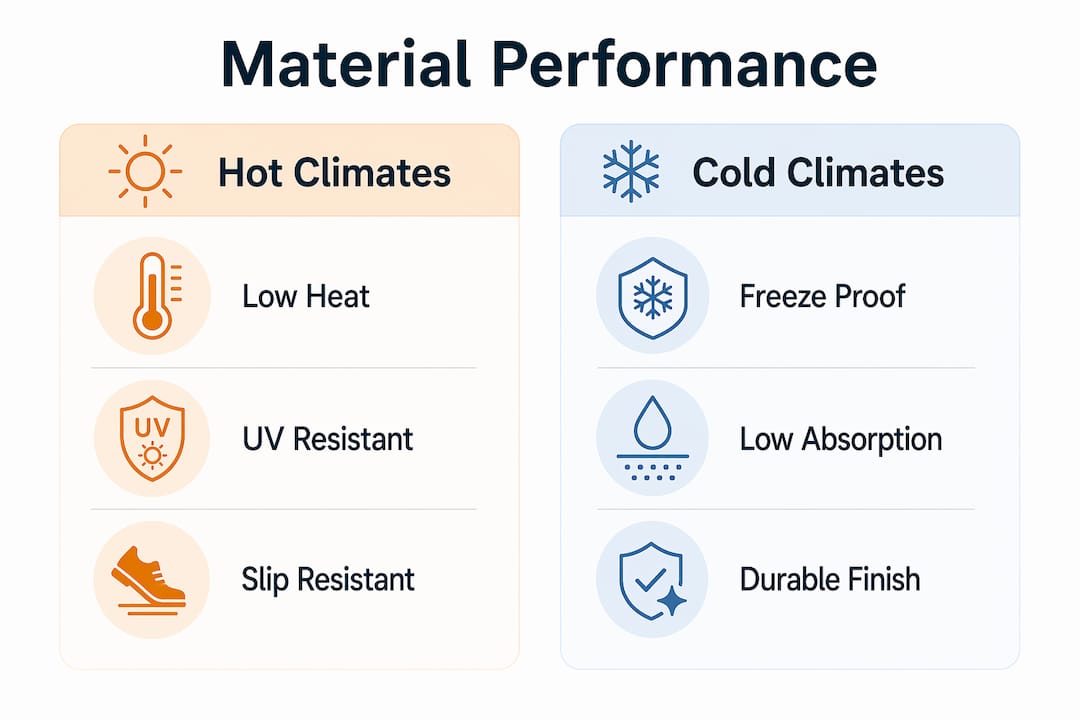
The freeze-thaw cycle is one of the most destructive forces acting on outdoor stone. Water in stone pores expands 9% in volume when it freezes, forcing the stone apart from within. This process causes surface spalling, edge chipping, and structural fractures in porous stones like limestone and certain sandstones. For cold climates, only stones with a water absorption rate below 0.5% are reliably safe. Granite and dense slate both meet that threshold. Limestone and travertine generally do not, which makes them poor candidates for freeze-prone regions.
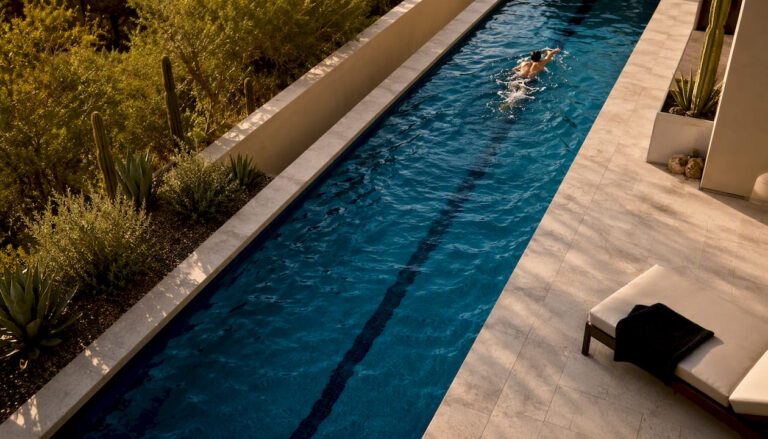
Hot, sunny climates present a different set of challenges. UV radiation breaks down polymer-based materials, fades pigments, and accelerates oxidation in metals. Salt air in coastal zones compounds this by corroding fasteners and frames. In the Phoenix metropolitan area, surface temperature is a practical concern. Travertine’s porous structure blocks rapid heat transfer, keeping the surface noticeably cooler underfoot than dense concrete or dark granite. That physical property makes travertine a logical choice for pool decks and sun-exposed patios in hot climates. You can see how this plays out in Uniquecompanies’ work with travertine paver installations across Scottsdale and Chandler.
- Freeze-thaw zones: Specify granite, dense slate, or porcelain with absorption below 0.5%
- High-UV desert climates: Choose travertine, light-colored concrete, or UV-stabilized composites
- Coastal and salt-air environments: Use marine-grade aluminum, stainless steel hardware, and solution-dyed fabrics
- High-humidity regions: Prioritize materials with low moisture retention and good drainage profiles
Pro Tip: Before specifying any natural stone, request the water absorption test result from the supplier. ASTM C97 is the standard test for stone absorption. A result above 0.5% is a red flag for any climate with freezing temperatures.
Balancing aesthetics and functionality in material choice
Aesthetics and function are not competing priorities. The best material choices satisfy both simultaneously. Surface finish, color, texture, and scale all affect how a space looks and how safely and comfortably it performs under daily use.
Slip resistance is a non-negotiable functional requirement near pools, steps, and wet pathways. A honed or brushed finish on granite or limestone provides better grip than a polished surface, without sacrificing the stone’s visual quality. The Coefficient of Friction (COF) standard, referenced in ADA accessibility guidelines, sets a minimum of 0.6 for wet surfaces. Specifying materials that meet this threshold protects both safety and liability. The features of luxury patios often hinge on getting this balance right.
Color and texture choices also affect long-term aesthetic sustainability. Light-colored materials reflect heat and maintain their visual character longer in high-UV environments. Dark materials absorb heat, fade faster, and can become uncomfortably hot underfoot. Texture variation, such as mixing smooth coping with a brushed deck surface, adds visual depth while serving a practical slip-resistance function.
Regional and locally sourced materials carry a distinct advantage for contextual cohesion. Local materials enhance design authenticity because they are already adapted to the site’s climate and humidity patterns. A Phoenix backyard built with Arizona flagstone or regional travertine reads as grounded and intentional. The same space clad in an imported tropical hardwood can look mismatched and will likely perform poorly under desert UV exposure.
- Pool decks: Brushed or tumbled travertine, textured concrete, or non-slip porcelain tile
- Pathways and steps: Granite, slate, or brushed concrete with defined edge profiles
- Retaining walls: Dry-stacked natural stone or textured concrete block for visual weight and drainage
- Accent surfaces: Smooth limestone or polished granite for low-traffic decorative applications
Sustainable material selection: lifecycle, environmental impact, and maintenance
Sustainability in outdoor material selection means thinking past the installation date. Prioritizing whole-life cost over upfront price reduces both environmental impact and long-term financial burden. A material that costs 30% more at installation but lasts twice as long and requires minimal maintenance is the more sustainable and financially sound choice.
The SITES program, developed by the American Society of Landscape Architects (ASLA) and the Lady Bird Johnson Wildflower Center, provides a framework for responsible material sourcing. SITES credits reward the use of regionally extracted materials, recycled content, and products with verified environmental product declarations (EPDs). Specifying within these guidelines also reduces transportation emissions. Regional sourcing within 50–500 miles is the preferred range depending on material type and availability.
Designing for disassembly is a principle that extends material lifespan significantly. Mortar-less retaining walls and dry-laid patios allow individual units to be removed, repaired, and reinstalled without destroying the surrounding installation. Screw-fastened assemblies in outdoor structures serve the same purpose. This approach reduces waste and makes repair economically viable rather than cost-prohibitive.
- Specify regionally sourced materials to reduce transport emissions and improve climate resilience.
- Request EPDs from suppliers to verify environmental impact data before specifying.
- Design for disassembly using dry-laid or screw-fastened assemblies wherever structural requirements allow.
- Choose recycled or engineered composites for decking and furniture frames where natural material performance is insufficient.
- Calculate whole-life cost by factoring in maintenance frequency, expected lifespan, and replacement cost before comparing material prices.
Pro Tip: Recycled composite decking products now carry 25-year warranties from several manufacturers and require no sealing or staining. For high-traffic decks in humid or coastal climates, they often outperform natural wood on a whole-life cost basis.
Choosing materials for specific outdoor elements
Practical material selection requires matching specific products to specific applications. The right choice for a patio differs from the right choice for a retaining wall, an outdoor kitchen countertop, or a furniture frame.
Pavers and hardscape surfaces
Concrete pavers are the most widely used hardscape material in residential projects. Professional installation costs $8–$15 per square foot and is strongly recommended for structural integrity and proper water management. DIY installation frequently results in uneven settling and drainage failures. Natural stone pavers, including granite and slate, cost more but offer superior longevity and a visual quality that concrete cannot replicate. Uniquecompanies’ approach to Phoenix hardscape design consistently prioritizes material performance alongside visual outcome.
Outdoor furniture and fixtures
Furniture frame material determines how long a piece survives outdoor exposure. Marine-grade aluminum with sealed hardware and solution-dyed performance fabrics are the most durable combination for outdoor furniture in harsh climates. Exposed fasteners are the most common failure point in outdoor furniture. Rust from a single corroded bolt spreads to surrounding material and accelerates structural failure. Powder-coated steel is a lower-cost alternative but requires annual inspection and touch-up to prevent corrosion at chips or scratches.
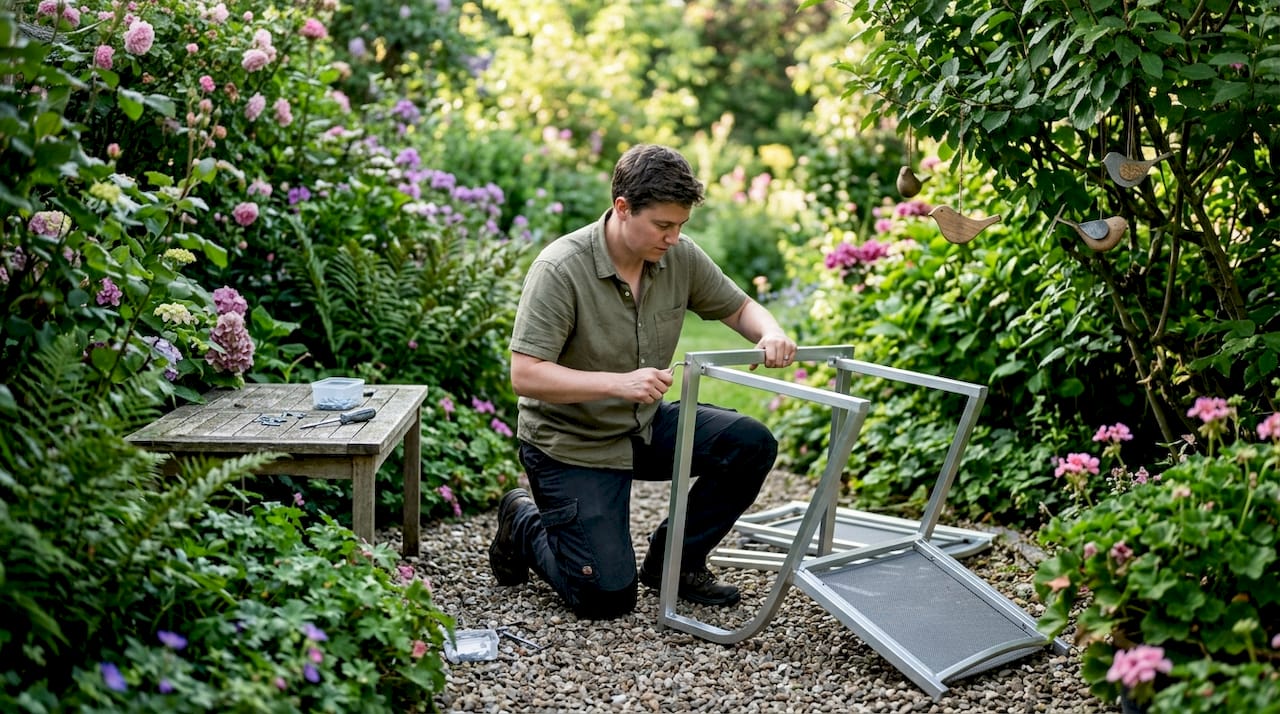
For fabric, solution-dyed acrylic outperforms piece-dyed alternatives because the color is locked into the fiber rather than applied to the surface. This makes it significantly more resistant to UV fading and moisture damage. You can find guidance on pairing durable materials with climate-specific design in this practical building materials guide.
Outdoor kitchen surfaces
Outdoor kitchen countertops require materials that resist heat, moisture, and UV exposure simultaneously. Porcelain slab, granite, and concrete are the three most reliable options. Porcelain offers the lowest maintenance profile. Granite provides superior heat resistance. Concrete allows custom forms and integrated features but requires sealing every one to two years. Stainless steel cabinetry with a brushed finish is the standard for outdoor kitchen frames in hot climates because it resists corrosion and reflects heat. Uniquecompanies’ outdoor kitchen designs integrate these material principles into every project specification.
For homeowners evaluating eco-friendly approaches across all outdoor elements, green renovation strategies provide a useful framework for prioritizing durable, low-impact material choices.
Key takeaways
Material selection determines outdoor project durability, safety, and long-term value. Specifying climate-matched, regionally sourced materials with whole-life cost in mind produces the most reliable and sustainable results.
| Point | Details |
|---|---|
| Climate drives material choice | Match water absorption rates, UV resistance, and thermal properties to your specific regional conditions. |
| Whole-life cost beats upfront price | A more expensive material that lasts longer and needs less maintenance costs less over time. |
| Design for disassembly | Dry-laid and screw-fastened assemblies allow repair and reuse, extending material lifespan significantly. |
| Slip resistance is non-negotiable | Specify surfaces meeting a COF of 0.6 or higher for wet areas near pools and pathways. |
| Regional sourcing improves performance | Locally extracted materials are already adapted to site-specific climate and humidity conditions. |
Why material selection must happen at the start, not the end
I have seen more outdoor projects fail from late-stage material decisions than from any other single cause. A client selects a beautiful imported limestone for their pool deck, the design is finalized, permits are pulled, and then someone checks the absorption rate. It is 1.2%. In a Phoenix summer, that is not a freeze-thaw problem. But in a project that later gets specified for a client in Colorado, that same stone would be cracked within three winters.
The real problem is that material selection gets treated as a finishing decision, something to resolve after the layout and structure are locked in. That is backwards. The material determines the structural requirements, the drainage design, the edge details, and the maintenance program. Choosing it last forces compromises on all of those elements.
I also think the industry undervalues regional sourcing as a design tool. Specifying local stone or regional aggregate is not just an environmental credit. It produces spaces that look like they belong where they are built. A Scottsdale backyard built with Arizona materials reads differently than one assembled from a catalog of imported products. The authenticity is visible, and clients notice it even when they cannot articulate why.
The shift toward whole-life cost thinking is the most important change I have seen in outdoor material specification over the past decade. Clients who understand that a $12-per-square-foot paver installed correctly will outperform a $6 option replaced twice make better decisions. The job of a good designer is to make that math visible early.
— Philipp
Custom outdoor living by Uniquecompanies
Uniquecompanies has spent over 24 years applying these material principles to luxury outdoor projects across Scottsdale, Chandler, Queen Creek, and the greater Phoenix area. Every project starts with a material specification process that accounts for Arizona’s climate, the client’s maintenance expectations, and long-term durability requirements.
From custom pool features built with climate-appropriate coping and deck materials to fully specified outdoor kitchen builds using heat-resistant countertops and marine-grade hardware, Uniquecompanies integrates material science into every design decision. If you are planning a high-end outdoor space and want material choices that perform as well as they look, contact Uniquecompanies for a consultation.
FAQ
What is the role of material selection in outdoor spaces?
Material selection determines the durability, safety, aesthetics, and long-term cost of any outdoor project. Choosing climate-matched materials with appropriate surface finishes prevents premature failure and reduces maintenance costs over the life of the installation.
Which materials work best for pool decks in hot climates?
Travertine is the top choice for hot, sunny climates because its porous structure slows heat transfer, keeping the surface cooler underfoot than dense concrete or dark stone. Brushed or tumbled finishes also provide the slip resistance required for wet pool deck surfaces.
How does freeze-thaw damage affect outdoor stone?
Water expands 9% in volume when it freezes inside stone pores, causing surface spalling and structural fractures. Stones with water absorption above 0.5% are at high risk in cold climates. Granite and dense slate are the safest options for freeze-prone regions.
What does whole-life cost mean in material selection?
Whole-life cost accounts for installation price, maintenance frequency, expected lifespan, and replacement cost over the full life of the material. A higher upfront cost is often justified when the material requires less maintenance and lasts significantly longer than a cheaper alternative.
Why should outdoor materials be sourced regionally?
Regionally sourced materials are already adapted to local climate conditions, which improves their long-term performance. They also create a more contextually cohesive aesthetic and reduce transportation-related environmental impact compared to imported alternatives.