TL;DR:
- Understanding construction terms helps homeowners identify potential issues early and ensure project clarity.
- Core structural elements include the pool shell, waterproofing membrane, and sloped pool deck for proper drainage.
- Familiarity with industry language leads to better communication, fewer surprises, and a more durable, high-quality pool.
Choosing the shape of your pool or picking out tile colors is the exciting part. But the decisions that actually determine whether your luxury pool lasts 30 years or starts showing cracks in five come down to construction terms most homeowners have never heard. Understanding words like pool shell, waterproofing membrane, and pool deck slope is not about becoming a contractor. It is about being the kind of informed client who catches potential issues early, asks the right questions during walkthroughs, and reads a bid without guessing what half the line items mean.
Table of Contents
- Why industry jargon matters for your pool project
- Core structural terms: What really builds your pool
- Comparing common and luxury pool features
- How to use industry terms to manage your project
- The truth about pool construction language: What pros wish you knew
- Ready to bring your dream pool and outdoor living space to life?
- Frequently asked questions
Key Takeaways
| Point | Details |
|---|---|
| Master the basics | Understanding construction terms like pool shell and membrane empowers confident decisions. |
| Ask clear questions | Using industry language helps avoid confusion and delays with your builder. |
| Know your features | Distinguishing standard versus luxury pool terms shapes design and investment choices. |
| Review contracts carefully | Look for specific terminology to ensure your pool is built to your expectations. |
Why industry jargon matters for your pool project
Pool construction involves a layered sequence of specialized trades, each with its own precise vocabulary. Structural engineers, excavation crews, shotcrete applicators, plumbing contractors, and finish teams all use specific terms to communicate accurately with one another. When homeowners are not familiar with that language, communication gaps open up quickly.
Consider a common scenario: you ask your builder whether the finish is “standard.” Without knowing that a finish can mean anything from basic plaster to quartz aggregate or pebble, you might assume you are getting something comparable to what a neighbor received, only to find at project completion that the two finishes are nothing alike in texture, durability, or cost.
Misunderstanding construction terms can also slow a project down. If you request changes without using precise terminology, your project manager has to interpret what you mean, clarify it internally, and sometimes revisit drawings or permits. Delays compound quickly on jobs that follow strict municipal inspection timelines.
Here is where terminology knowledge pays off most directly:
- During the design phase: You can give meaningful feedback on structural choices, not just aesthetics
- During contract review: You can spot vague language and ask for specifics before signing
- During inspections: You can ask informed questions when inspectors visit
- During change orders: You can evaluate whether added costs are justified and reasonable
Understanding the Phoenix pool construction process from start to finish gives you the clearest picture of when each structural term becomes relevant.
Pro Tip: Keep a running glossary document as your builder introduces new terms during meetings. Request definitions in writing when anything is unclear. This simple habit prevents costly assumptions from compounding over a multi-month project.
As the pool shell is the structural interior that holds water, often made from concrete or shotcrete/gunite, knowing exactly what material is going into your pool’s core is critical from day one. This is not a cosmetic question. It is a structural one.
Core structural terms: What really builds your pool
Now that you see why construction language matters, it is time to master the core terms you will encounter in any luxury pool build. These three terms form the structural foundation of nearly every custom pool project in the Phoenix metropolitan area.
Pool shell
The pool shell is the structural interior that holds water, often made from concrete or shotcrete/gunite. Think of it as the skeleton of your pool. It determines the shape, depth, and long-term structural integrity of the entire installation. In Arizona’s extreme heat and expansive soil conditions, the shell must be engineered to handle thermal movement and shifting ground without cracking.
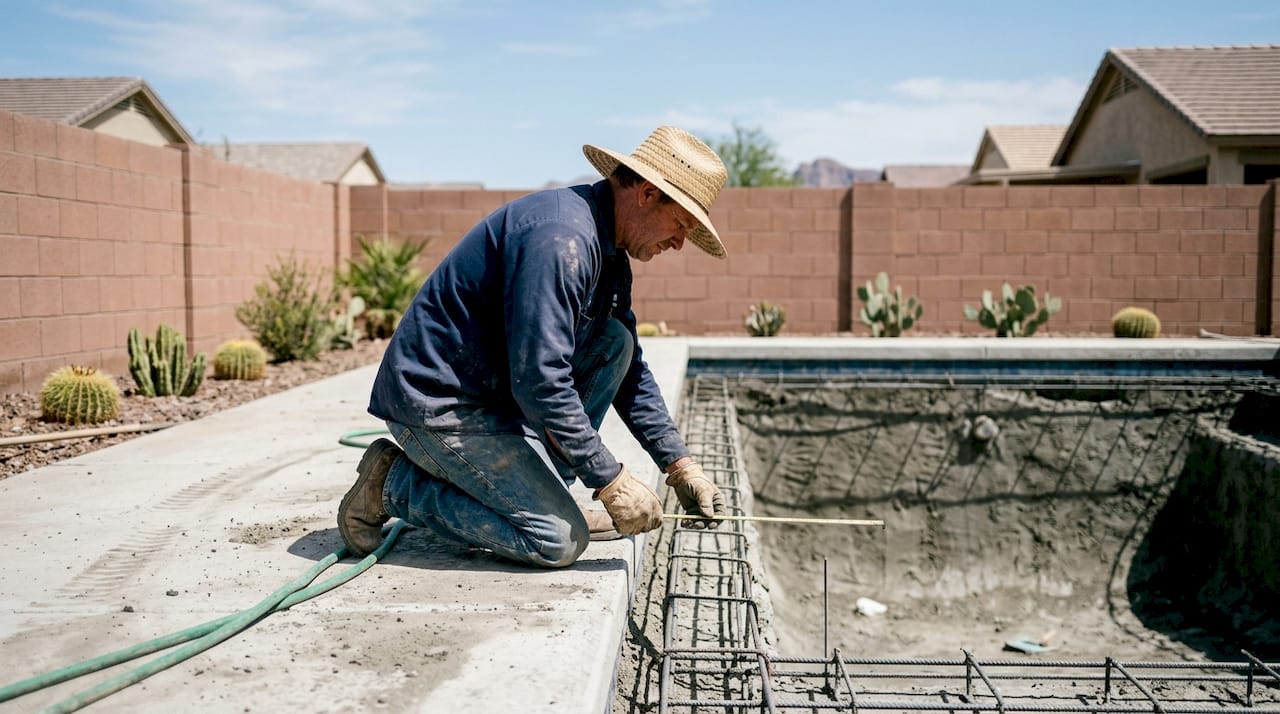
Shotcrete and gunite are both forms of sprayed concrete, but they differ in mix preparation. Gunite is mixed dry and combined with water at the nozzle. Shotcrete arrives pre-mixed and is applied wet. Both are widely used in luxury pools across Scottsdale and Chandler. Your builder’s choice between them affects curing time, labor sequencing, and ultimately cost.
Understanding the full sequence of swimming pool construction steps helps you place the shell phase in context relative to plumbing, electrical, and decking work.
Waterproofing membrane
The waterproofing membrane is a barrier applied over the pool shell to prevent seepage and leaks. Once the shell cures, this layer is applied to seal the concrete and protect the surrounding soil and structural elements from water infiltration. Without it, even a well-built shell can allow moisture to migrate outward, eventually compromising surrounding hardscape, landscaping, or even a home’s foundation.
In Phoenix, where soil is often caliche-heavy (caliche is a hardened calcium carbonate layer common in desert soils), water infiltration carries additional risks because caliche does not absorb moisture evenly, creating pressure imbalances over time.
Pool deck
The pool deck is the surrounding surface built over waterproofing, sloped for drainage. This slope is not accidental or decorative. It is engineered to direct water runoff away from the pool edge and the home’s foundation. Improper slope is one of the most common defects identified in pool inspections and one that is expensive to correct after installation.
Luxury pool decks in the Phoenix area often use materials like travertine, cool-deck coatings, or brushed concrete. Each material has different heat-retention properties, which matters significantly when outdoor temperatures regularly exceed 110 degrees Fahrenheit. Your pool layout design and deck material choices should account for both drainage engineering and surface heat management.
Here is a quick reference for these three core elements:
| Term | Definition | Primary function | Common materials |
|---|---|---|---|
| Pool shell | Structural interior holding water | Shape, depth, structural integrity | Shotcrete, gunite, concrete |
| Waterproofing membrane | Barrier over shell surface | Prevent seepage and leaks | Elastomeric coatings, sheet membrane |
| Pool deck | Surrounding surface with drainage slope | Direct runoff, provide safe walking surface | Travertine, cool-deck, brushed concrete |
Your builder should be able to explain each of these elements in detail. If they cannot, that is a signal to ask more questions before signing anything. This is also where pool permitting and engineering documentation becomes useful, because permits require structural specifications that reference these exact terms.
“The pool shell, waterproofing membrane, and deck work as an integrated system. A failure in any one layer affects the performance of the others and the long-term cost of ownership.”
Comparing common and luxury pool features
With a solid grasp of basic terms, let us explore how they differentiate standard and luxury pools. Understanding this distinction helps you evaluate bids more accurately and ensures you get what you actually want, not just what is standard practice for a mid-range project.
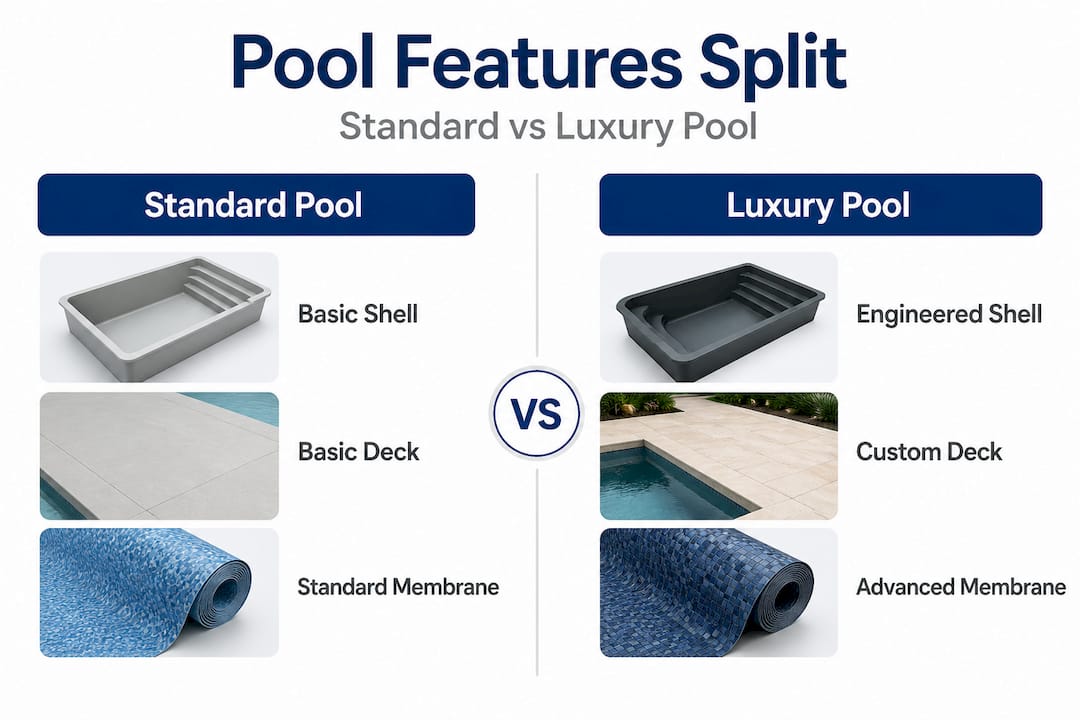
Many homeowners assume a pool is a pool. In reality, the gap between a basic residential pool and a high-end custom installation is significant in terms of materials, engineering, and the terminology that describes both.
| Feature | Standard pool | Luxury custom pool |
|---|---|---|
| Shell construction | Basic gunite, minimal engineering review | Engineered shotcrete with structural specs |
| Finish | Standard white plaster | Quartz aggregate or pebble finish |
| Deck | Poured concrete with basic slope | Travertine or specialty cool-deck with drainage planning |
| Water features | Single return jet system | Cascading waterfalls, deck jets, or laminar flows |
| Lighting | Single underwater light | Full LED color system with automation |
| Perimeter features | Simple coping | Custom tile, raised bond beam, or vanishing edge |
The pool shell term appears in both standard and luxury bids, but what goes into each shell is entirely different. A luxury shell build includes more steel reinforcement, tighter engineering tolerances, and thicker concrete application. These are not visible differences once the pool is filled, but they define how the pool performs over decades.
When reviewing your contract, follow these steps to clarify feature terminology before signing:
- Request material specifications in writing. Every major term, shell, membrane, deck, coping, and finish, should have a corresponding material spec sheet attached to the bid.
- Compare bids using identical terminology. If one builder uses “shotcrete shell” and another lists “gunite construction,” ask each to define their approach so you are comparing the same thing.
- Ask about upgrade paths. Some custom pool features can be added during construction more affordably than after the fact. Know your options at the contract stage.
- Confirm water feature definitions. A “waterfall” in one builder’s bid might mean a simple rock cascade while another means a structured sheer descent with an integrated lighting system. Pool water features vary widely in scope and cost.
- Clarify landscape and masonry scope. Where the pool ends and pool landscaping and masonry begins in a contract affects what you pay for and who is responsible for what.
Pro Tip: Ask your builder to walk you through a completed project similar to what you are planning. Seeing finished examples of shell finishes, deck materials, and water features in person closes the gap between terminology and expectation faster than any document review.
How to use industry terms to manage your project
Knowing the terms is powerful. But here is how to put that knowledge to work for a smooth pool project, starting from your first contractor meeting and carrying through to final inspection.
Informed homeowners consistently report fewer surprises during construction. That is not because they micro-manage the process. It is because they communicate precisely and catch ambiguities before they become expensive problems.
Follow this sequence when engaging with your builder throughout the project:
- Pre-design meeting: Use terms like pool shell, deck slope, and waterproofing membrane to signal that you understand the structural basics. Builders respond with more technical detail when they know a client can process it.
- Contract review: Look for specific references to shell material, membrane type, and deck drainage design. Vague language like “quality construction” without specifics is a red flag.
- Excavation phase: Ask about the soil assessment results and confirm the shell engineering accounts for local soil conditions. In Queen Creek and Chandler, caliche layers require specific excavation approaches.
- Shotcrete or gunite application: This is one of the most critical stages. Confirm that curing time will be observed before any subsequent layers are applied. Rushing curing compromises shell integrity.
- Deck installation: Verify that the drainage slope is being actively checked with a level during installation. The pool deck is built over waterproofing, sloped for drainage, and that slope must meet both engineering specs and local code requirements.
- Final walkthrough: Use the terminology you have learned to ask specific questions about each element. Request documentation that confirms materials used matched what was specified in the contract.
For a detailed breakdown of how each phase connects, the pool construction step by step guide covers the full sequence in practical terms.
Pro Tip: Take dated photos at each major construction milestone, especially shell application, membrane installation, and deck pouring. These records are useful if any warranty issues arise later and help you track whether construction is proceeding in the correct sequence.
The truth about pool construction language: What pros wish you knew
Here is a perspective you will not find in a sales brochure: construction terminology exists to protect you, not to impress you or create barriers. After more than two decades building luxury pools across the Phoenix metro area, one consistent pattern stands out. The projects that go smoothest and result in the highest client satisfaction are the ones where homeowners come in already knowing the basic terms.
This is not about homeowners becoming contractors. It is about being a competent partner in your own project. When you walk into a design meeting and ask your builder about the shotcrete mix design or the membrane’s flexibility rating, something shifts. The conversation becomes more collaborative and more precise. Builders stop translating their explanations down to what they assume you know and start giving you the real information.
There is also a common misconception that professionals use jargon to obscure information or justify higher prices. In a well-run operation, the opposite is true. Precise language reduces errors. When an engineer writes “waterproofing membrane” in a spec, every subcontractor on the job knows exactly what to install. When a homeowner requests the same term in a contract, that same precision protects their investment.
The uncomfortable truth is that vague conversations lead to vague outcomes. Clients who say “I just want it to look nice” without engaging with structural terms are the ones who end up disappointed by details that were never clearly defined. If you are investing in a high-end outdoor living environment, engaging with the language of construction is as important as engaging with the design itself.
The pool construction experience from initial design to final inspection is collaborative by nature. Professionals value clients who show up as informed partners. It leads to better projects, faster approvals, fewer change orders, and ultimately a finished pool that matches the original vision with precision.
Ready to bring your dream pool and outdoor living space to life?
Understanding construction terminology is one of the most practical steps you can take before starting your luxury pool project. Unique Companies has spent over 24 years helping Phoenix-area homeowners navigate exactly this kind of decision, from shell materials to deck drainage to custom finishes and water features.
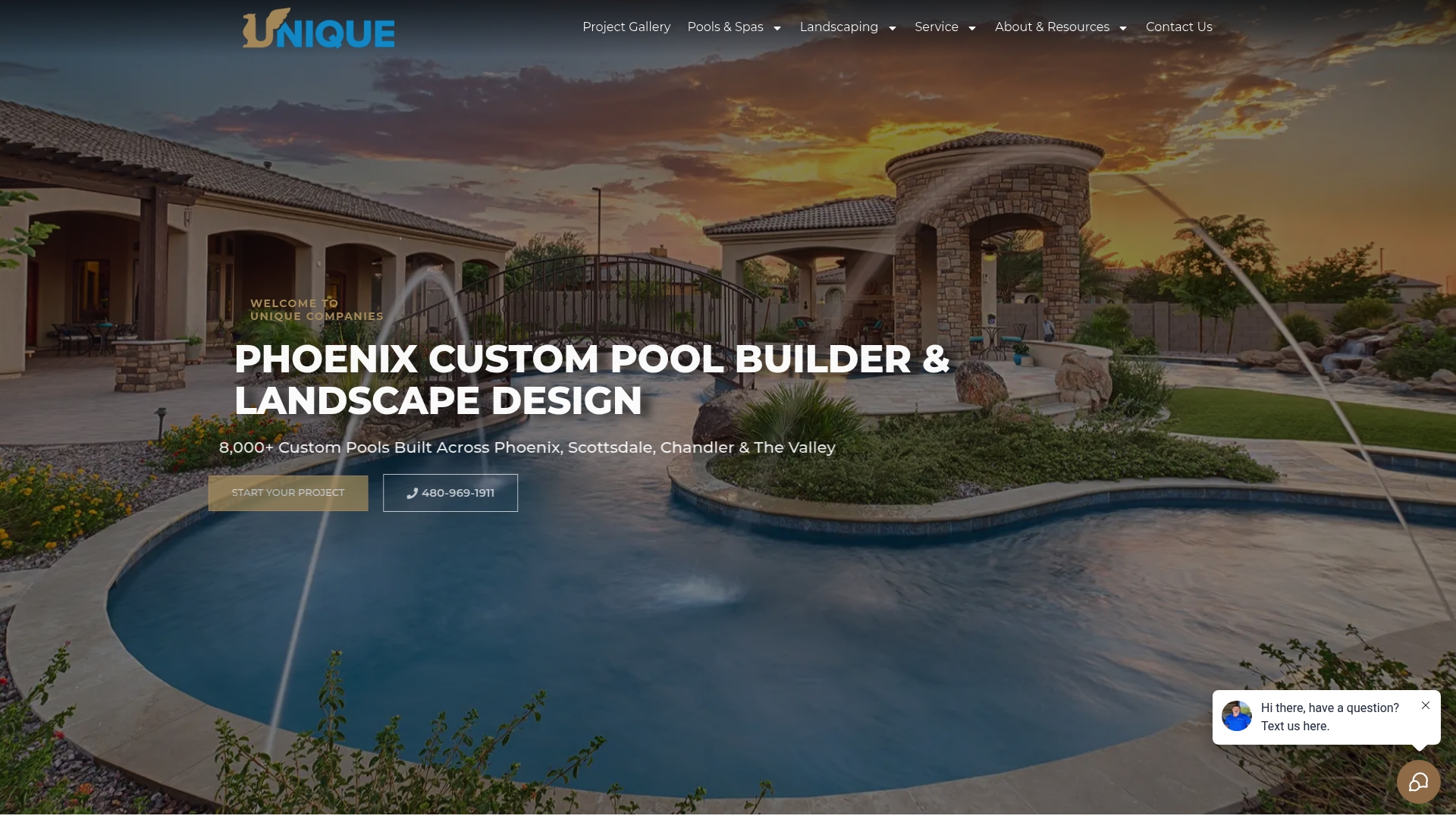
Our in-house team handles design, permitting, and construction, which means the terminology we use is consistent from the first concept meeting through final inspection. Explore our full range of custom pool features in Phoenix and see how each element is specified and built with precision. If you are ready to go deeper, browse our Unique Pool Features gallery to see how structural decisions translate into finished outdoor environments. Contact us today to schedule a consultation and put your project knowledge to work.
Frequently asked questions
What is the pool shell and why is it important?
The pool shell is the structural interior of your pool that holds water and ensures overall shape and stability. It is the foundational element that determines the pool’s long-term durability, especially in Arizona’s demanding soil and climate conditions.
How does waterproofing protect my pool?
A waterproofing membrane is a barrier applied directly over the pool shell to prevent water from seeping through the concrete into the surrounding soil. Without this layer, even a properly built shell can allow moisture migration that compromises hardscape and landscaping over time.
Why is the pool deck sloped?
The pool deck is sloped over waterproofing to direct water runoff away from the pool edge and home foundation. This slope is engineered to specific drainage requirements and must be verified during installation to meet local building codes.
How do I avoid miscommunication with my builder?
Familiarize yourself with core construction terms before your first meeting and ask your builder to define any term that appears in the contract without a clear material specification. Early alignment on language prevents costly assumptions from developing into disputes.
What terms should I look for in my pool contract?
Focus specifically on shell material type, membrane product and application method, deck slope specification, and any feature terminology like water features or coping details. These elements directly impact structural quality, durability, and total project cost.