Buckeye is not just another Phoenix suburb when it comes to backyard construction. Its western location, exposure patterns, and rapid development across open desert terrain create environmental conditions that directly influence how a pool should be designed, engineered, and finished. Homeowners who approach pool construction in Buckeye the same way they would in Chandler or Central Phoenix often discover that heat intensity, wind movement, and evaporation behave differently here.
If you’re planning a project and researching what to expect from a pool builder in Buckeye, understanding how microclimate conditions affect layout, materials, equipment, and long-term maintenance is essential. A well-designed pool in this area is not just about aesthetics — it’s about performance under environmental stress.
This guide focuses specifically on designing pools that function well in Buckeye’s heat, wind exposure, and dust conditions — without repeating new construction timing or neighborhood layout topics covered elsewhere.
Understanding Buckeye’s Microclimate: Why It Matters for Pool Design
Buckeye’s position on the western edge of the Valley means:
Longer, more intense afternoon sun exposure
Higher sustained summer temperatures
Increased wind movement in certain corridors
Greater dust transfer from undeveloped areas
While all of metro Phoenix is hot, the West Valley often experiences prolonged late-day heat that directly affects water temperature, deck comfort, and usability of shallow lounging areas. Open land and new development zones can also increase wind flow and airborne dust compared to more densely built urban areas.
Designing without accounting for these conditions often results in:
Overheated Baja shelves
Deck surfaces too hot for bare feet
Water features losing visual impact due to wind disruption
Faster water evaporation
Increased chemical demand
Environmental performance should be considered as early as structural layout planning.
Sun Orientation and Functional Shade Strategy
One of the most overlooked elements in Buckeye pool design is backyard orientation. A west-facing backyard, common in many master-planned communities, can receive direct afternoon sun for hours during peak summer months.
Without mitigation, this can create:
Entry steps that become uncomfortable mid-day
Baja shelves that remain in full sun for extended periods
Deck surfaces retaining heat well into evening
Limited shaded seating for guests
Rather than treating shade as an add-on feature, it should be integrated into the core layout strategy. This may involve:
Positioning shallow lounging areas closer to structural shade
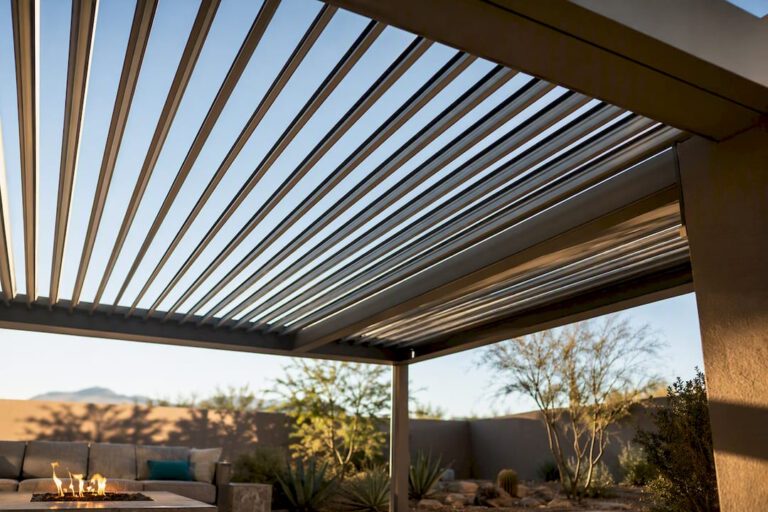
Coordinating pergolas or patio extensions during initial design
Allowing space for future canopy tree placement
Selecting deck materials with lower heat absorption
Strategic orientation planning can significantly improve year-round usability. A visually striking pool that is uncomfortable during peak heat ultimately underperforms.
Deck Material Performance in West Valley Heat
Decking in Buckeye must be selected with thermal performance in mind. Surface temperature varies dramatically between materials, especially during summer afternoons.
Factors that influence deck comfort include:
Material density
Color tone
Surface finish
Exposure duration
Darker materials retain more heat. Dense pavers or stone can absorb and hold surface temperature longer than lighter-toned, textured options. While aesthetics matter, performance in extreme heat should guide the decision-making process.
In high-exposure yards, balancing visual appeal with usability is critical. A well-chosen decking system contributes directly to how often the space is used during peak season.
Wind Exposure and Water Feature Planning
Certain areas of Buckeye experience stronger seasonal wind patterns, particularly in open corridors or near developing zones where natural windbreaks have not matured.
Wind affects more than comfort — it influences water movement and feature functionality. Poorly positioned water features can:
Overspray beyond the pool boundary
Increase evaporation
Reduce visual clarity of sheer descents
Disrupt spillway consistency
When wind direction is considered during design, features can be positioned or scaled appropriately to maintain performance. Raised walls and vertical elements may require strategic placement to prevent water drift during higher wind periods.
Ignoring wind direction during planning often results in aesthetic compromises after installation.
Evaporation Rates and Water Chemistry Stability
High sustained temperatures combined with wind movement increase evaporation rates. Evaporation affects more than water level — it directly impacts chemical balance.
In Buckeye’s climate, evaporation can lead to:
More frequent water level adjustments
Fluctuations in chemical concentration
Increased calcium hardness over time
Higher long-term water maintenance costs
Design decisions that influence evaporation include:
Surface area exposure
Presence of wind-disrupting structures
Integration of shade elements
Water feature scale
Planning for environmental exposure helps reduce unnecessary chemical demand and long-term operational costs.
Equipment Protection in Dust-Prone Environments
Rapid development in Buckeye means certain areas remain exposed to dust, especially during construction cycles in surrounding neighborhoods. Dust accumulation can affect equipment longevity if placement and protection are not carefully considered.
Equipment planning should account for:
Airflow and ventilation
Proximity to property lines
Drainage runoff patterns
Service accessibility
Protection from direct debris exposure
Strategic placement can reduce long-term maintenance complications and preserve system efficiency.
When designing a comprehensive outdoor project rather than a standalone installation, reviewing the broader custom pool design and construction process ensures environmental protection measures are integrated from the beginning rather than retrofitted later.
Wind can disrupt water feature performance and increase evaporation. Raised walls, spillways, and sheer descents may require directional consideration during layout planning. Proper placement ensures visual consistency and reduces overspray beyond pool boundaries.
Yes. Sustained afternoon heat exposure can affect water temperature, deck usability, and shallow lounging comfort. Designing without accounting for orientation and shade integration often reduces how frequently homeowners use certain areas during peak season. Strategic layout planning improves long-term functionality.
Backyard orientation is often the most influential factor. Sun path affects deck temperature, lounging comfort, and overall usability. Addressing orientation early in the design phase typically has the greatest impact on performance.