TL;DR:
- Water features enhance outdoor comfort, aesthetics, and biodiversity while providing psychological calming effects. Proper placement near seating areas and simple designs promote easier maintenance and greater user engagement. Well-integrated water elements can significantly increase property value and outdoor living enjoyment.
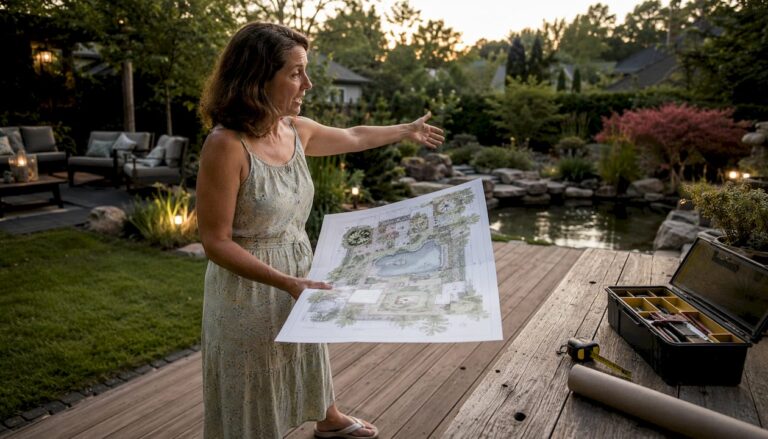
Water features are defined as intentional water elements integrated into outdoor environments to enhance aesthetic appeal, environmental quality, and human wellbeing. The role of water features in design extends well beyond decoration. A well-placed fountain, pond, or waterfall functions as a spatial tool, an acoustic buffer, a biodiversity hub, and a psychological anchor. Landscape architects and residential designers increasingly treat water as a structural material, not an accessory. For homeowners in the Phoenix area, where heat and noise are constant factors, water elements in landscaping deliver measurable comfort alongside lasting visual impact.
What are the key environmental and aesthetic benefits of water features?
Water features improve outdoor environments in ways that go far beyond appearance. Their environmental and sensory contributions make them one of the most versatile tools in residential landscape design.
Cooling and microclimate effects
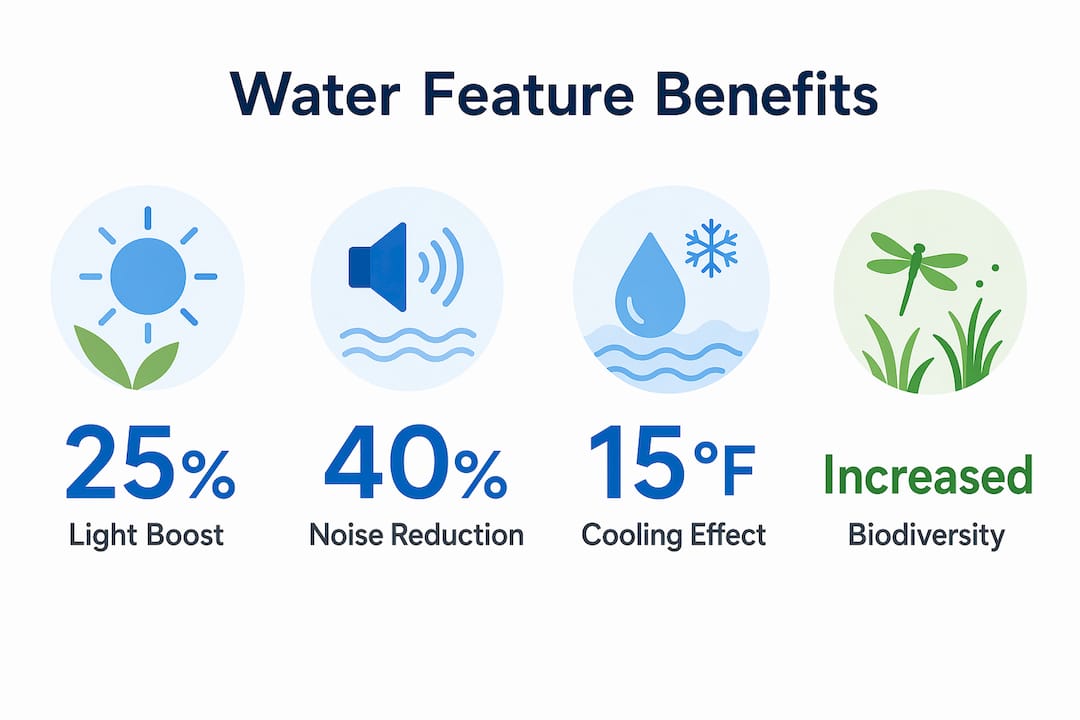
Evaporative cooling near seating areas is one of the most practical benefits of water features in hot climates. When water moves through a fountain or waterfall, it releases moisture into the surrounding air. That localized temperature drop makes outdoor seating and dining zones significantly more comfortable during summer months, particularly in arid regions like the Sonoran Desert.
Acoustic benefits
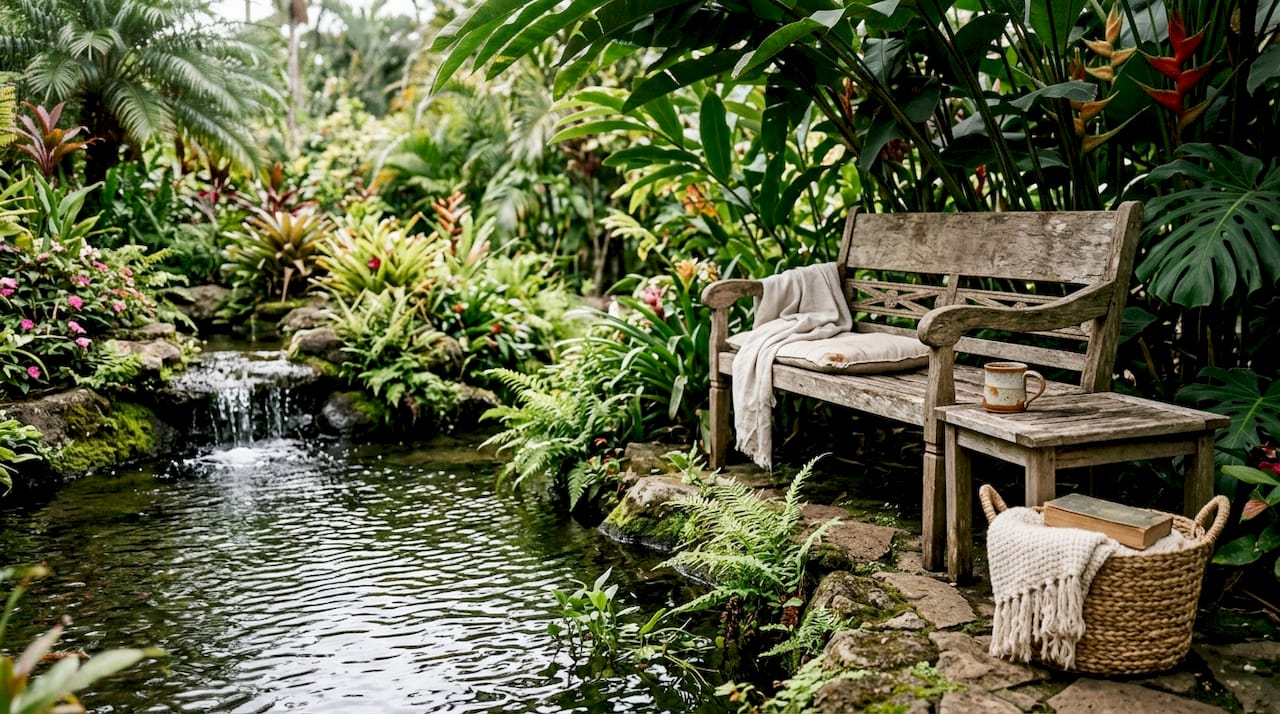
A small, well-placed feature acts as an acoustic mask, replacing traffic noise and neighborhood sounds with rhythmic, biological white noise. This effect is not just pleasant. It actively reduces the perception of stress-inducing noise pollution. Homeowners near busy streets or shared property lines benefit most from this application.
Light and visual interest
Moving water reflects natural light, increasing perceived luminosity by up to 25% in adjacent spaces. That dynamic quality changes throughout the day as sunlight shifts, giving a static garden a sense of movement and life. Reflective ponds and glass-finish water walls amplify this effect further.
Biodiversity and ecological value
The importance of water features extends to local ecosystems. Small water installations attract birds, pollinators, and amphibians, turning a residential yard into a functioning ecological hub. This matters for homeowners who want their landscapes to support native wildlife without requiring a large natural area.
Key environmental and aesthetic benefits include:
- Localized cooling near primary seating and entertainment zones
- Acoustic masking of traffic and environmental noise
- Increased ambient light through water reflection
- Attraction of birds, pollinators, and beneficial insects
- Visual movement that changes with time of day and season
How do water features affect human wellbeing and emotional experience?
The psychological impact of water in outdoor design is well documented in environmental psychology research. Water does not just look good. It changes how people feel.
The parasympathetic response
Exposure to water sounds triggers the parasympathetic nervous system, reducing heart rate and cortisol levels. Cortisol is the body’s primary stress hormone. Lower cortisol means reduced anxiety, better sleep quality, and improved mood. This physiological response happens automatically, which is why sitting near a fountain feels calming even without conscious effort.
Emotional architecture
High-end designers now treat water as “emotional architecture,” a term used to describe how physical elements regulate visitor experience. Water features lower anxiety, increase the time people spend in a space, and create memory anchors that make environments more meaningful. A backyard with a waterfall becomes a place people return to, not just pass through.
Dwell time and social engagement
When water is visible and audible from a seating area, people stay longer. Longer dwell time translates directly into more use of outdoor kitchens, dining areas, and lounge spaces. For homeowners who invest in full outdoor living environments, water features multiply the return on every other element in the yard.
Key psychological benefits include:
- Reduced cortisol and lower physiological stress markers
- Increased time spent in outdoor spaces
- Stronger emotional connection to the environment
- Improved mood and perceived relaxation
- Creation of memorable, place-specific experiences
Pro Tip: Position a water feature within direct sightline of your primary outdoor seating area. Visibility and proximity are the two factors that determine whether a feature delivers its full psychological benefit or becomes background noise.
What practical design considerations must homeowners and designers know?
Designing with water features requires more than selecting a style. Placement, scale, maintenance access, and integration with existing infrastructure all determine whether a feature thrives or becomes a burden.
Placement strategy
Accessible features near frequented pathways maximize therapeutic benefits and ease of maintenance. A feature tucked into a far corner of the yard gets ignored. One placed near the patio, pool deck, or main garden path becomes part of daily life. Placement near existing water infrastructure, such as an outdoor faucet or irrigation line, also reduces installation complexity and ongoing upkeep.
Scale and complexity
- Start with a single, simple feature. A birdbath, small fountain, or container water garden requires minimal maintenance and delivers immediate results.
- Add complexity gradually. Once you understand the maintenance rhythm, expand to recirculating pond systems or waterfall features.
- Match scale to the space. A large waterfall in a small courtyard overwhelms the senses. A small fountain in a large open yard disappears visually.
- Consider sound projection. Taller, faster-moving water produces more sound. Choose the volume level that suits your space and neighbors.
- Plan for seasonal maintenance. In Phoenix, algae growth and evaporation are the primary maintenance concerns. Factor both into your feature selection.
Spatial and circulation functions
Water features guide pedestrian traffic and define outdoor zones without physical barriers. A linear water channel along a garden path directs movement naturally. A central fountain anchors a seating area and signals its purpose. This spatial function is one of the most underused benefits of water elements in landscaping, particularly in larger residential properties.
Pro Tip: Locate your water feature within 20 feet of an outdoor faucet. That single decision reduces maintenance complexity significantly and makes routine top-offs and cleaning far less time-consuming.
Sustainability in arid climates
In desert environments, water conservation is a real concern. Recirculating systems use the same water repeatedly, minimizing consumption. Shaded placement reduces evaporation. Selecting native aquatic plants reduces chemical inputs. For homeowners in Scottsdale or Queen Creek, desert-adapted water features can deliver full sensory and ecological benefits without excessive water use.
What types of water features can be incorporated in home landscapes?
Water features range from small decorative elements to large architectural installations. The right choice depends on available space, budget, maintenance capacity, and the overall design language of the property.
| Feature type | Scale | Primary benefit | Maintenance level |
|---|---|---|---|
| Birdbath | Small | Biodiversity, visual accent | Low |
| Container fountain | Small to medium | Sound, portability | Low |
| In-ground fountain | Medium | Focal point, sound, cooling | Medium |
| Pond | Medium to large | Biodiversity, reflection | Medium to high |
| Waterfall | Medium to large | Sound, visual drama, cooling | Medium |
| Pool water feature | Large | Aesthetic, cooling, recreation | Integrated with pool |
| Rain curtain | Medium | Modern aesthetic, sound | Medium |
Each type serves a distinct purpose. Birdbaths and container fountains work well in small courtyards or as accent elements within a larger garden. In-ground fountains anchor formal or symmetrical designs. Ponds support the most biodiversity and create the strongest reflective effects. Waterfall and pool features deliver the highest visual and acoustic impact in larger residential settings.
Selecting a feature that matches the architectural style of the home matters as much as the feature itself. A sleek, geometric water wall suits a modern desert home. A naturalistic pond with boulders and native plantings fits a Southwestern or organic design. Mismatched styles create visual tension that undermines the feature’s impact.
For homeowners adding water to an existing pool, pool water features such as deck jets, scuppers, and spillways integrate directly with the pool structure. These options add movement and sound without requiring a separate water system. They also align well with architecture master planning principles that prioritize cohesive spatial flow across an entire outdoor environment.
Well-maintained water features also contribute positively to property value. The combination of enhanced aesthetics, improved ambiance, and functional outdoor living space makes water a sound long-term investment for residential properties.
Key Takeaways
Water features are functional design tools that improve comfort, reduce stress, support biodiversity, and increase property value when placed and maintained correctly.
| Point | Details |
|---|---|
| Placement determines impact | Position features near seating areas and existing water lines for maximum benefit and easier upkeep. |
| Water reduces stress physiologically | Exposure to water sounds lowers cortisol and activates the parasympathetic nervous system. |
| Start small, expand later | Begin with a simple fountain or birdbath before committing to ponds or waterfall systems. |
| Match feature to design style | Geometric water walls suit modern homes; naturalistic ponds fit organic or Southwestern designs. |
| Water features add property value | Well-maintained features improve ambiance and aesthetics, contributing positively to home resale value. |
What I’ve learned from watching water features succeed and fail
After seeing dozens of residential water installations across the Phoenix area, the pattern is consistent. Features that get used daily share two traits: they are visible from the main living area, and they are easy to maintain. Features that get neglected share the opposite traits. They were placed for visual drama during the design phase, then forgotten once the reality of algae, evaporation, and pump maintenance set in.
The most common mistake I see is oversizing. A homeowner sees a dramatic waterfall in a showroom and wants that exact experience at home. But a feature that requires weekly professional service becomes a source of stress, not relaxation. The therapeutic benefit disappears the moment maintenance becomes a chore.
Water also works best when it connects to other elements in the yard. A waterfall that feeds into a pool, a fountain positioned between a seating area and an outdoor kitchen, a pond edged with native plants. These integrated arrangements feel intentional. Isolated features, no matter how well built, feel like afterthoughts.
My honest recommendation is to treat water as a spatial anchor, not a decoration. Decide first where you want people to gather, then place the water feature to draw them there. That sequence produces better results than selecting a feature and then finding a place for it. Thoughtful water feature design starts with function and lets aesthetics follow. The yards that get the most use are always the ones where that order was respected.
— Philipp
How Uniquecompanies approaches custom water feature design
Uniquecompanies has spent over 24 years designing and building outdoor environments across Scottsdale, Chandler, Queen Creek, and the broader Phoenix metropolitan area. Water features are a core part of that work, not an add-on.
Every project starts with a site assessment that accounts for placement, sun exposure, existing infrastructure, and the homeowner’s maintenance preferences. Uniquecompanies integrates water features directly into pool systems, hardscape layouts, and planting plans so every element works together. The team handles design, permitting, and construction in-house, which eliminates the coordination gaps that cause delays and cost overruns. If you are ready to add a water feature that performs as well as it looks, explore custom pool features or contact Uniquecompanies directly to schedule a consultation.
FAQ
What is the primary role of water features in landscape design?
Water features serve as multifunctional design elements that improve aesthetics, reduce noise, cool localized areas, support biodiversity, and enhance the psychological wellbeing of people who use the space.
Do water features actually reduce stress?
Yes. Exposure to water sounds triggers the parasympathetic nervous system, lowering heart rate and cortisol levels. This physiological response is documented in environmental psychology research.
How close should a water feature be to a seating area?
Accessible features near primary seating and pathways deliver the strongest therapeutic and practical benefits. Visibility and proximity are the two factors that determine daily use and enjoyment.
What is the easiest water feature to maintain for beginners?
A container fountain or birdbath requires the least maintenance and works well as a starting point. Both can be located near an existing water source, which simplifies refilling and cleaning significantly.
Do water features increase home value?
Well-maintained water features contribute positively to property value by improving outdoor ambiance and aesthetic appeal. The increase depends on the quality of installation and how well the feature integrates with the overall landscape design.