TL;DR:
- Backyard zoning laws in Arizona regulate structure placement, setbacks, height, and lot coverage on private property.
- Homeowners must verify local zoning districts and rules before designing or building to avoid costly violations.
Backyard zoning laws are local regulations that define how property owners can legally use their outdoor space, including limits on structure placement, size, and type. For Arizona homeowners and property investors, explaining backyard zoning laws is the first step toward any successful renovation. These rules govern everything from pool setbacks in Scottsdale to shed height limits in Chandler and Queen Creek. Getting them wrong costs money, delays projects, and can trigger enforcement actions that force you to tear down completed work.
What are backyard zoning laws and how do they work?
Zoning ordinances assign every parcel to a specific district that controls what can be built and where, including height and setback limits. That district classification is the foundation of every backyard project decision you make. A property zoned R1 in Phoenix carries different rules than one zoned R2 or R3, even if the lots look identical from the street.
Zoning functions as the enforcement channel for the municipal land-use plan. Zoning officials evaluate requests based on community planning goals, not individual preference. That means your neighbor’s approval of your project carries no legal weight. The city’s ordinance text is the only document that matters.
Arizona municipalities each maintain their own ordinance codes. Scottsdale, Chandler, Mesa, and Gilbert all publish their zoning codes online, but the specific rules vary significantly between jurisdictions. Checking your city’s official planning portal before finalizing any design is not optional. It is the starting point.
How do setbacks, height limits, and lot coverage affect your backyard?
Setbacks, height restrictions, and lot coverage rules are the three primary controls that shape what you can build and where you can place it.
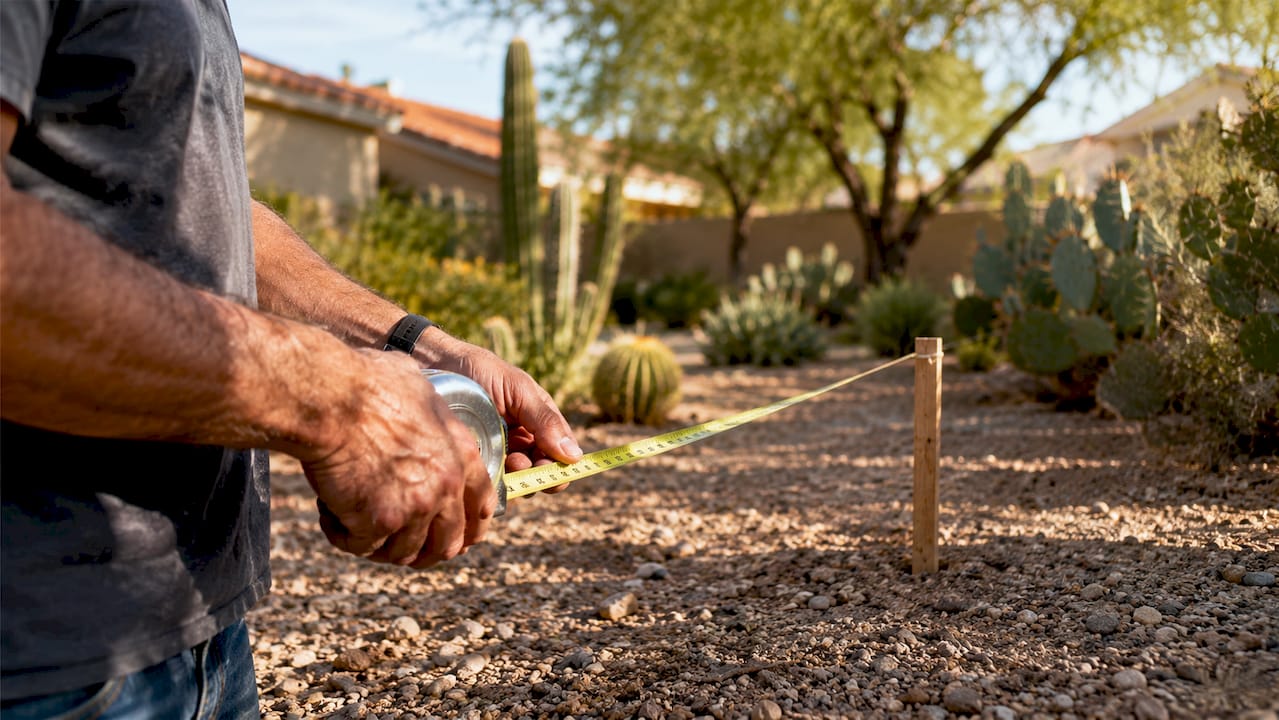
Setbacks are minimum distances your structure must maintain from each property line. Setbacks vary by zoning district and apply separately to front, side, and rear boundaries, with accessory structures often carrying different minimums than the primary home. A detached outdoor kitchen in Chandler may require a five-foot rear setback, while a pool equipment pad may need only three feet.
Height limits prevent structures from overshadowing neighbors and disrupting the visual character of a neighborhood. Most Arizona residential zones cap accessory structures at 10 to 14 feet, though pergolas and shade structures sometimes fall under separate rules. Exceeding the limit by even a few inches triggers a zoning violation.
Lot coverage caps the total percentage of your lot that structures can occupy. Accessory structures count toward that total alongside your home. A 6,000-square-foot lot with a 40% coverage limit allows only 2,400 square feet of combined structure footprint. Adding a pool deck, outdoor kitchen, and shade structure can push you close to that ceiling faster than most homeowners expect.
Key rules to verify before finalizing your design:
- Your zoning district classification and the specific ordinance text that applies
- Rear, side, and front setback minimums for both primary and accessory structures
- Maximum structure height for detached buildings, shade structures, and fences
- Lot coverage percentage and whether hardscape counts toward the total
- Any overlay districts or special area plans that add restrictions beyond the base zone
Pro Tip: Setback calculations must include walls, roof lines, and overhangs, not just the footprint. Label every measured point on your site plan before submitting to the city. Missing this detail is one of the most common reasons permit applications get rejected.
Building permits vs. zoning compliance: what is the difference?
Many Arizona homeowners assume that getting a building permit means they are fully compliant. That assumption is incorrect and expensive.
Building codes focus on structural and safety standards. Zoning ordinances control placement and size. A backyard structure can pass every safety inspection and still fail zoning review, resulting in denial or a mandatory redesign. These are two separate approval processes with separate standards.
The distinction matters most when a project qualifies for a permit exemption. Many small structures, including sheds under 200 square feet in some Arizona jurisdictions, do not require a building permit. Homeowners often interpret that exemption as blanket approval to build anywhere on the lot. It is not. Permit exemptions do not excuse compliance with zoning setbacks, placement rules, or height limits. Violations still carry enforcement risk, including fines and mandatory removal.
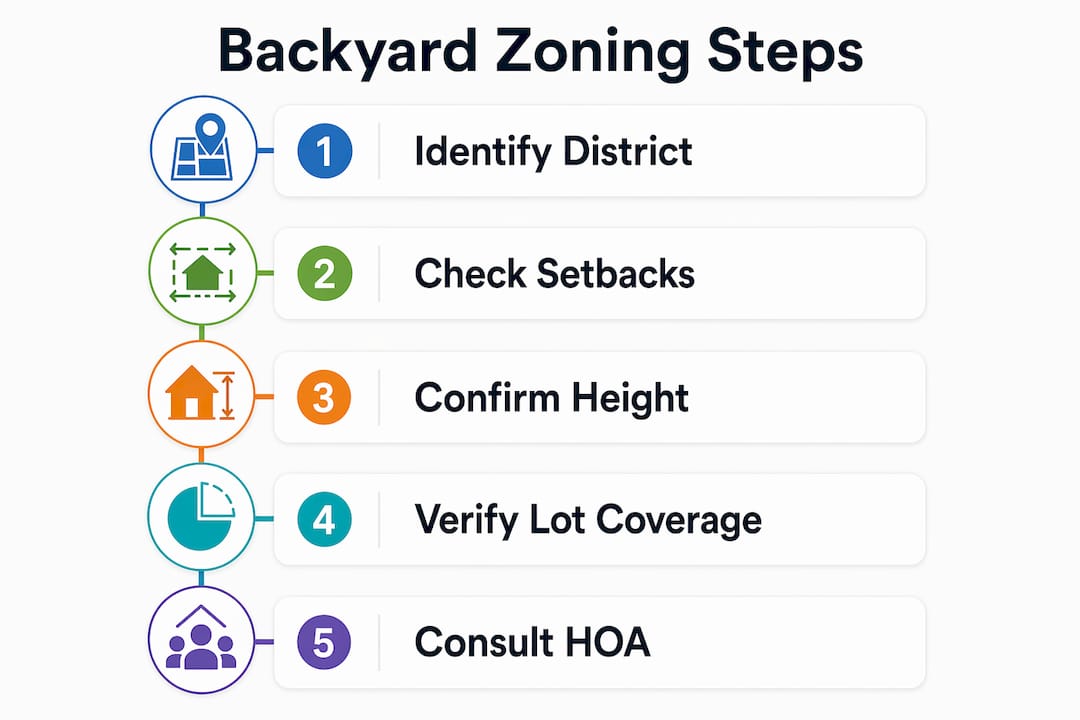
The compliance sequence for any Arizona backyard project follows this order:
- Identify your zoning district and pull the relevant ordinance text from your city’s planning portal.
- Confirm setback, height, and lot coverage requirements for the specific structure type you plan to build.
- Determine whether a building permit is required based on structure size, type, and local thresholds.
- Submit a site plan that accurately reflects all measurements, including overhangs and roof lines.
- Obtain zoning approval before scheduling any construction work.
Accurate measurement techniques and a clear understanding of ordinance definitions are the two factors most responsible for avoiding permit application rejections. Hiring a licensed surveyor to confirm your property lines before you draft a site plan eliminates the most common source of measurement error.
How do HOA rules interact with city zoning laws?
Homeowners Associations add a second layer of restrictions that operate entirely independently of city zoning. HOAs can enforce additional rules on backyard features like fences, sheds, and pools through their Covenants, Conditions, and Restrictions, commonly called CC&Rs. City permit approval does not protect you from HOA enforcement if your project violates those CC&Rs.
Common HOA restrictions in Arizona neighborhoods include:
- Fence material, color, and maximum height, often stricter than city limits
- Prohibition on visible storage sheds or requirements for specific screening
- Pool and spa placement rules, including equipment enclosure standards
- Restrictions on outdoor kitchen materials, colors, or visibility from the street
- Approval requirements for any structure that changes the exterior appearance of the property
The legal relationship between HOA rules and zoning laws is straightforward. Both apply simultaneously, and the stricter rule governs. If your city allows a six-foot fence but your HOA caps it at five feet, five feet is your limit. Neither authority overrides the other.
HOA and zoning approvals operate on separate timelines. Submitting to one body does not start the clock on the other. Arizona homeowners who plan for simultaneous HOA and city review avoid the most common scheduling conflict that delays construction starts by weeks or months.
Pro Tip: Request your HOA’s architectural review committee guidelines in writing before you finalize any design. Many HOAs in Scottsdale and Gilbert have specific approval forms that require renderings or material samples. Getting those requirements early prevents redesigns after city approval is already in hand.
Practical steps to verify zoning compliance before you build
A solid compliance strategy starts by identifying your zoning district and district-specific standards before making any design decisions. Every step after that builds on that foundation.
Start with your city’s GIS or zoning map. Most Arizona municipalities, including Phoenix, Scottsdale, and Mesa, provide interactive zoning maps on their planning department websites. Enter your address to confirm your district classification. Print or save the result before your first design meeting.
Pull the ordinance text for your district. The zoning map tells you your district. The ordinance text tells you the rules. Look specifically for the section covering accessory structures, which governs detached buildings, pools, outdoor kitchens, and shade structures separately from the primary residence.
Hire a licensed surveyor if property lines are unclear. Setback measurements start from the actual property line, not the fence, the sidewalk, or the curb. In established Arizona neighborhoods, fences are frequently not on the property line. A survey eliminates guesswork and protects you if a neighbor disputes placement later.
Consider a pre-application meeting with your city’s planning department. Many Arizona cities offer free or low-cost pre-application consultations. Planners will review your concept and flag potential issues before you invest in detailed drawings. This step alone can save thousands of dollars in redesign costs.
If your project cannot meet standard zoning requirements, a variance is the formal mechanism for requesting an exception. Variances are granted based on hardship or unique property conditions, not personal preference. The approval rate for variances varies by jurisdiction, and the process adds time and cost to any project. Designing within the existing rules is always the faster path.
When planning your backyard budget, factor in zoning compliance costs from the start. Survey fees, permit application fees, and HOA review fees are real line items that affect your total project cost. Treating them as afterthoughts creates budget surprises late in the process.
Before finalizing dimensions, review this comparison of the two most common compliance mistakes and their consequences:
| Common mistake | Consequence |
|---|---|
| Measuring setback from fence instead of property line | Structure placed in violation; may require relocation or removal |
| Assuming permit exemption means full compliance | Zoning enforcement action; fines and potential demolition order |
| Ignoring HOA CC&Rs after city approval | HOA legal action; forced modification or removal of completed work |
| Omitting roof overhangs from site plan measurements | Permit application rejected; redesign and resubmission required |
Pro Tip: Review your backyard design checklist before your first contractor meeting. Knowing your zoning constraints upfront lets your designer work within the rules from day one, not around them after the fact.
Key Takeaways
Backyard zoning compliance in Arizona requires verifying your zoning district, setbacks, lot coverage, and HOA rules before any design work begins.
| Point | Details |
|---|---|
| Zoning district first | Identify your district classification before making any design or dimension decisions. |
| Setbacks include overhangs | Measure from the property line and include walls, roof lines, and overhangs in every site plan. |
| Permits and zoning are separate | A building permit exemption does not excuse compliance with zoning setback and placement rules. |
| HOA rules apply independently | City permit approval does not protect against HOA enforcement; pursue both approvals simultaneously. |
| Variances add time and cost | Designing within existing zoning rules is always faster and less expensive than seeking a variance. |
What I have learned from watching backyard projects go sideways
After years of working alongside Arizona homeowners on outdoor renovation projects, the pattern is consistent. The projects that run into trouble almost never fail because of bad design. They fail because the compliance groundwork was skipped or rushed.
The most expensive mistake I see is homeowners who finalize a full design, get contractor bids, and then discover a setback or lot coverage issue that requires a complete redesign. That sequence wastes months and thousands of dollars. Starting with zoning district research takes a few hours. Fixing a non-compliant design after permits are submitted takes weeks.
The second most common issue is underestimating HOA authority. Homeowners in Scottsdale and Queen Creek communities frequently assume that city approval is the finish line. When the HOA architectural review committee rejects the same project two weeks later, the frustration is real and avoidable. Dual review from the start is not extra work. It is the correct process.
The homeowners who get the best results treat zoning compliance as a design input, not a final checklist. They bring their district’s ordinance text to the first design meeting. They know their rear setback before they pick a pool shape. That approach produces designs that move through permitting without delays and get built as intended.
— Philipp
How Uniquecompanies approaches zoning-compliant backyard design
Uniquecompanies has spent over 24 years designing and building luxury outdoor environments across Scottsdale, Chandler, Queen Creek, and the broader Phoenix metro. Every project integrates zoning review, HOA coordination, and permit management from the first design conversation.

The in-house team handles site plan preparation, setback verification, and permit submissions so homeowners do not have to navigate those processes alone. Whether the project involves custom pool features designed around specific setback constraints or an outdoor kitchen positioned to meet HOA visibility rules, Uniquecompanies builds compliance into the design from day one. The result is a project that moves from concept to construction without the delays that derail most backyard renovations.
FAQ
What are backyard zoning laws?
Backyard zoning laws are local ordinances that regulate how property owners can use their outdoor space, including rules on structure placement, setbacks, height limits, and lot coverage. They vary by municipality and zoning district.
Do I need a permit for my backyard project in Arizona?
Permit requirements depend on the structure type, size, and your specific Arizona municipality. Small structures may be exempt from building permits, but zoning setback and placement rules still apply regardless of permit status.
Can my HOA override city zoning approval?
City zoning approval and HOA approval are independent processes. If your project violates HOA CC&Rs, the HOA can take enforcement action even after the city has issued a permit.
What is a setback and how is it measured?
A setback is the minimum required distance between a structure and a property line. Measurements must include walls, roof overhangs, and other building elements, not just the structure’s footprint.
What happens if I build without checking zoning rules?
Building without verifying zoning compliance risks enforcement actions including fines, stop-work orders, and mandatory removal of the completed structure. Permit exemptions do not protect against zoning violations.