TL;DR:
- Xeriscaping is a water-efficient landscaping practice that uses drought-tolerant plants and regionally appropriate design to reduce outdoor water use.
- It involves integrated principles like soil management, efficient irrigation, plant selection, and proper maintenance to achieve maximum water savings and environmental benefits.
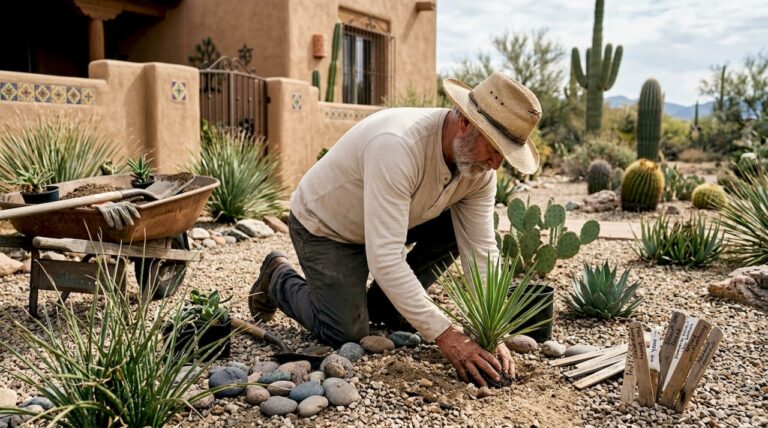
Xeriscaping is defined as a climate-adapted landscaping practice that reduces or eliminates the need for supplemental irrigation by using drought-tolerant plants, efficient water management, and regionally appropriate design. The term was coined in the early 1980s by Denver Water and Colorado State University Extension as a direct response to recurring drought cycles across the American West. A properly designed xeriscape reduces outdoor water use by 50% to 75% compared to traditional turf-heavy landscapes. For a typical quarter-acre lot, that translates to 50,000–80,000 gallons of water saved each year. Understanding what is xeriscaping means recognizing it as a full design system, not simply a collection of cacti and gravel.
What is xeriscaping and how does it work?
Xeriscaping is fundamentally a design philosophy that balances regional ecology with human use and efficient irrigation. It is not a single technique or a fixed aesthetic. The practice integrates soil management, plant selection, irrigation design, and ongoing maintenance into one coordinated system. Each element supports the others, which is why pulling out just one piece, such as planting drought-tolerant species without adjusting irrigation, rarely delivers the full benefit.
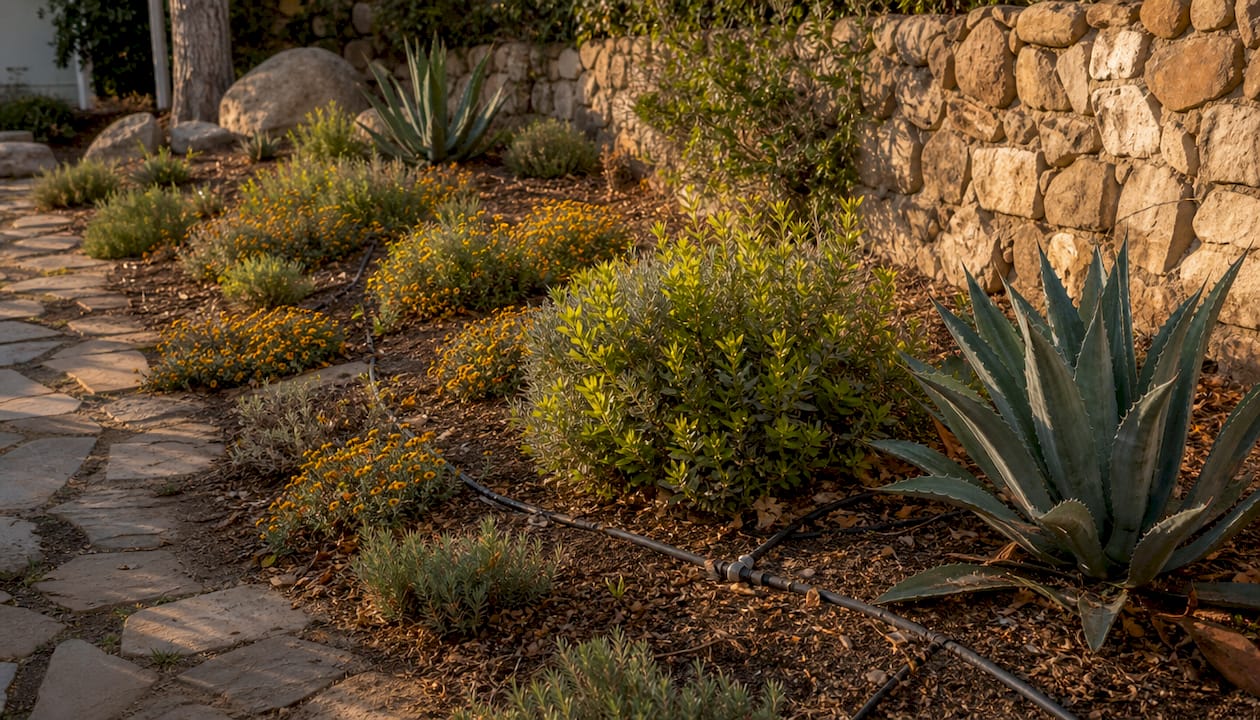
Xeriscaping gained recognition in the 1980s as a practical response to water scarcity, not as a style movement. That origin matters because it explains why the approach is grounded in function first. The goal is a yard that thrives on natural rainfall patterns with minimal supplemental watering once plants are established. For homeowners in Phoenix, Scottsdale, and the broader Sonoran Desert region, that goal is both achievable and financially worthwhile.
What are the key principles of xeriscaping?
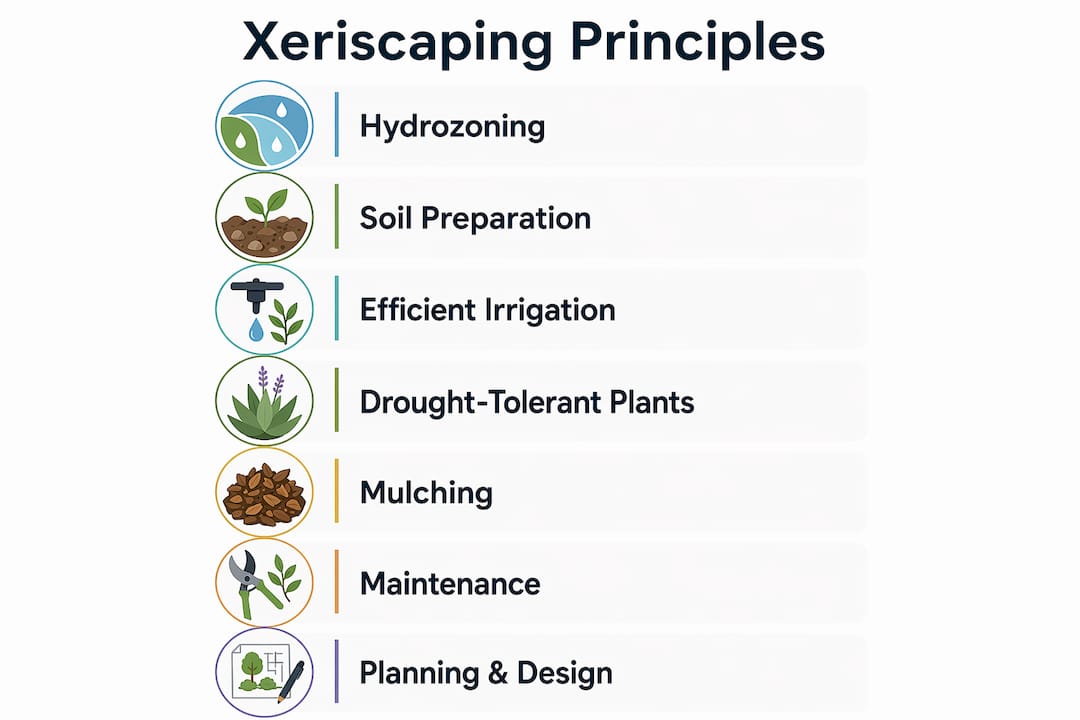
Colorado State University Extension identifies seven core principles that guide every successful xeriscape. These principles work as an integrated system, and skipping any one of them weakens the overall result.
- Planning and design. Map your yard’s sun exposure, slope, soil type, and existing water sources before selecting a single plant. A site-specific plan prevents costly mistakes later.
- Soil amendment. Improve soil structure to support water infiltration and root development. For drought-tolerant species, lean soils with moderate organic matter are often better than heavily amended beds, since excess moisture can trigger root disease.
- Efficient irrigation. Drip systems, targeted run times, and watering depth all matter. The goal is to encourage deep root growth, not surface-level moisture that evaporates quickly.
- Plant selection. Choose species native to your region or proven to thrive in your climate. Native plants are already adapted to local rainfall patterns and soil conditions.
- Mulch use. A 3–4 inch layer of organic or inorganic mulch suppresses weeds, retains soil moisture, and moderates soil temperature.
- Appropriate turf areas. Limit lawn grass to spaces where it serves a clear functional purpose, such as a play area. Replace ornamental turf with ground covers, gravel, or native plantings.
- Maintenance. A xeriscape still requires attention. Seasonal irrigation adjustments, weed control, and mulch replenishment keep the system performing as designed.
Pro Tip: Hydrozoning is the single most critical design decision in any xeriscape. Group plants by water need so each irrigation zone delivers exactly what those plants require. Mixing high-water and low-water plants in the same zone leads to plant stress or root rot, according to Colorado State University Extension.
What are the benefits of xeriscaping for homeowners in arid climates?
The xeriscaping benefits extend well beyond water conservation, though the water savings alone justify the investment for most homeowners in dry climates.
- Water savings. A well-designed xeriscape cuts outdoor water use by 50% to 75%, saving a typical quarter-acre lot 50,000–80,000 gallons annually. In markets where water rates continue to rise, that reduction has a direct impact on monthly utility costs.
- Reduced maintenance. Drought-tolerant, water-wise landscaping saves an estimated 40–50 hours of labor per year over a 10-year period compared to traditional lawns. Less mowing, less fertilizing, and fewer pest problems all contribute to that reduction.
- Higher property value. Water-wise landscaping increases residential property values by 5% to 15% in water-conscious markets. Buyers in arid regions increasingly view low-water yards as a practical asset, not just an aesthetic preference.
- Environmental impact. Xeriscaped yards reduce stormwater runoff, support native pollinators, and lower the urban heat island effect. Replacing turf with native ground covers also eliminates the need for synthetic fertilizers and pesticides.
- Return on investment. Professional xeriscape installations typically recoup their cost through water and maintenance savings within 3–5 years. That timeline makes xeriscaping one of the stronger financial decisions available to homeowners in arid regions.
For a deeper look at how drought-tolerant landscaping delivers long-term value in the Phoenix area, the regional context matters as much as the general principles.
How do you design and implement a xeriscape at home?
Successful implementation follows a clear sequence. Rushing any phase, particularly soil preparation or plant selection, creates problems that are expensive to correct later.
- Assess your site first. Walk your yard at different times of day and note where sun and shade fall, where water pools after rain, and where soil is compacted. This information drives every decision that follows.
- Select the right xeriscaping plants. Native species are the most reliable choice for arid climates. In Arizona, plants like desert marigold, penstemon, brittlebush, and agave are proven performers. For a detailed regional plant guide, the Arizona homeowner’s guide to desert landscaping covers species selection in practical terms.
- Prepare soil carefully. Avoid over-amending. Many drought-tolerant species evolved in lean, fast-draining soils. Heavy organic amendments can retain too much moisture and cause root diseases in xeric species.
- Install efficient irrigation. Drip systems deliver water directly to root zones and reduce evaporation. Set run times to water deeply and infrequently, which encourages roots to grow downward rather than staying near the surface.
- Apply mulch immediately. Mulch goes down right after planting. It holds soil moisture during the establishment period and suppresses the weeds that compete with new plants for water.
- Plan for phased implementation. You do not need to convert your entire yard at once. Starting with the highest-water zones, such as front lawn areas, delivers the fastest savings and lets you refine your approach before tackling the full property.
Pro Tip: New xeriscape plants need consistent watering during establishment, which can last from several months to a couple of years. Most homeowners underestimate this phase and reduce water too early, causing plant stress or loss. Treat establishment watering as a temporary investment, not a contradiction of the xeriscape goal.
The most effective xeriscape integrates soil preparation, irrigation design, plant selection, mulch use, and ongoing maintenance as an interdependent system. Treating any one of these as optional produces a yard that underperforms and requires more intervention over time.
What ongoing maintenance does a xeriscape require?
A xeriscape is not a zero-maintenance yard. It is a lower-maintenance yard that still requires deliberate seasonal management to stay healthy and water-efficient.
- Adjust irrigation seasonally. Xeriscape maintenance requires seasonal irrigation adjustments based on weather patterns. A timer set for july should not run the same schedule in december. Overwatering in cooler months is one of the most common causes of plant loss in xeriscaped yards.
- Monitor plant establishment. During the first one to two years, check plants weekly for signs of stress. Gradually reduce supplemental watering as root systems deepen and plants demonstrate they can sustain themselves between rain events.
- Control weeds without synthetic barriers. Landscape fabric can inhibit soil health and decompose into debris over time. Hand-pulling weeds and maintaining a thick mulch layer is more effective and better for soil biology.
- Replenish mulch annually. Organic mulch breaks down and needs to be topped up each year. Inorganic mulch, such as decomposed granite, lasts longer but still shifts and thins over time.
- Prepare for seasonal extremes. In arid climates, both summer heat and winter frost can stress plants. Adjust irrigation timing to water in the early morning during summer to reduce evaporation. For winter landscape care, protecting irrigation lines and monitoring soil moisture during dry winter periods prevents damage to both plants and infrastructure.
Proper xeriscape coordination also means avoiding mixing incompatible plants in the same irrigation zone and allowing plants to gradually transition away from supplemental watering as they mature. That transition is the point where the water savings become most significant.
Key Takeaways
Xeriscaping delivers its full benefits only when all seven core principles, from hydrozoning and soil preparation to seasonal irrigation management, are applied as a coordinated system rather than as isolated techniques.
| Point | Details |
|---|---|
| Water savings are substantial | A properly designed xeriscape cuts outdoor water use by 50%–75%, saving up to 80,000 gallons per year. |
| Hydrozoning is non-negotiable | Group plants by water need in each irrigation zone to prevent plant stress and root disease. |
| Establishment watering is required | New xeriscape plants need consistent water for months to years before they can thrive with minimal irrigation. |
| Maintenance is seasonal, not optional | Irrigation schedules must be adjusted by season; a static timer undermines the entire system. |
| Financial return is real | Most xeriscape projects recoup installation costs through water and labor savings within 3–5 years. |
Xeriscaping is not what most people picture
The biggest misconception I encounter is that xeriscaping means a yard full of rocks, a few cacti, and nothing else. That image comes from poorly executed projects, not from the practice itself. A well-designed xeriscape can include flowering perennials, ornamental grasses, shade trees, and structured hardscape areas that look nothing like a gravel lot.
The second misconception is that it requires zero water. The establishment phase alone can take two years, and during that time you are watering regularly. The payoff comes after establishment, when your irrigation needs drop dramatically. Skipping that phase or mismanaging it is the primary reason homeowners give up on xeriscaping and conclude it does not work.
Soil management is the piece most guides underplay. I have seen homeowners load up their beds with compost and bark mulch, then wonder why their desert plants are dying. Many xeric species evolved in lean, fast-draining soils. Amending too heavily creates conditions those plants cannot tolerate. The fix is counterintuitive: do less to the soil, not more.
Xeriscaping is a flexible design philosophy. It adapts to your yard’s specific conditions, your aesthetic preferences, and your budget. The seven principles give you a framework, not a fixed outcome. The homeowners who get the best results treat it as an ongoing practice, not a one-time installation.
— Philipp
How Uniquecompanies can complement your xeriscape design
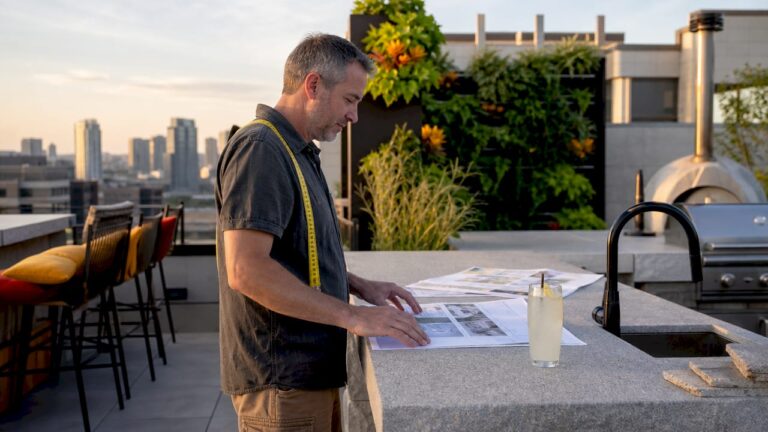
A xeriscaped yard creates the ideal foundation for a fully realized outdoor living space. Water-wise planting and efficient irrigation free up budget and space for features that make your backyard genuinely functional year-round.
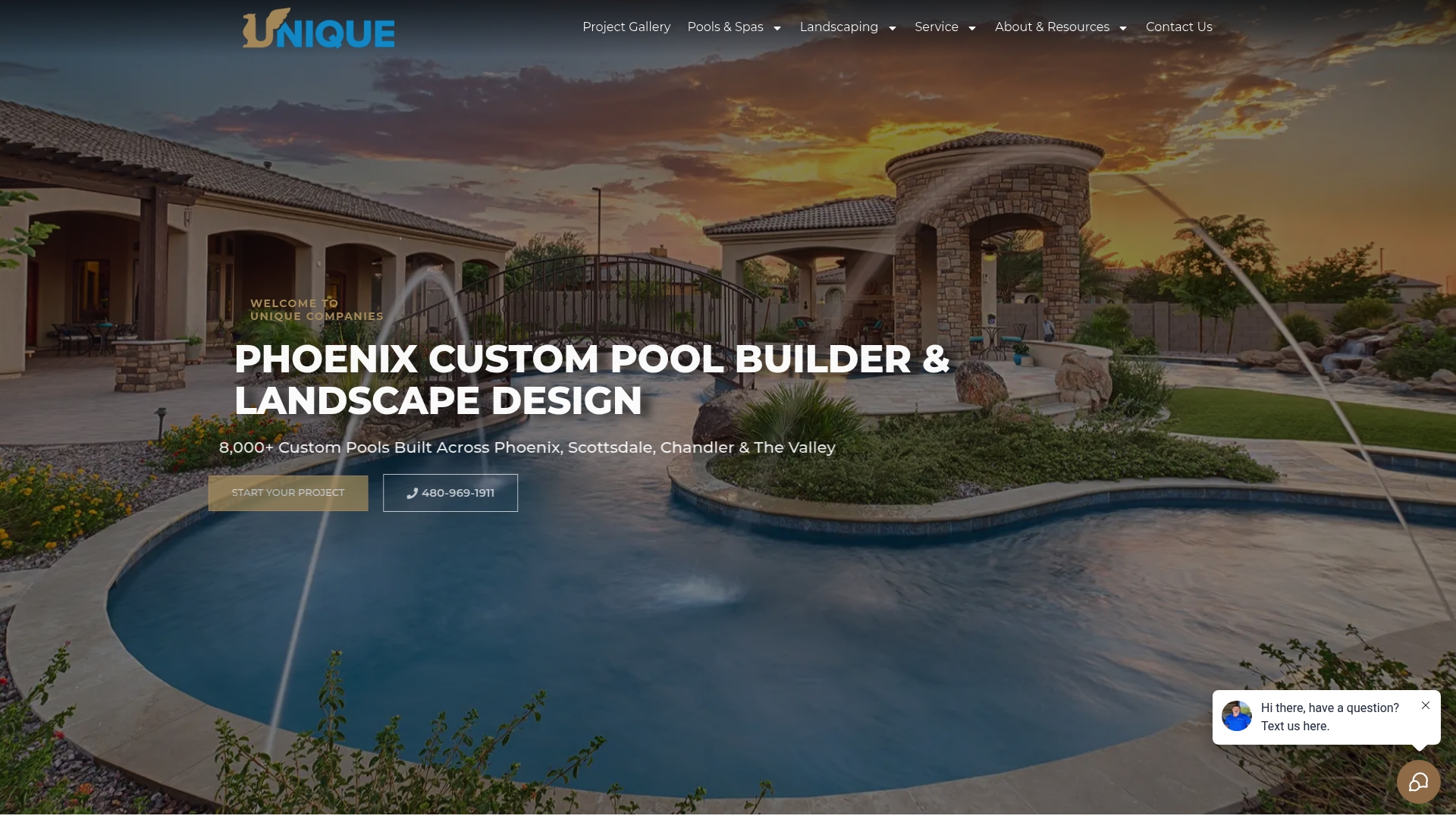
Uniquecompanies has over 24 years of experience designing and building custom outdoor environments in the Phoenix metropolitan area, including Scottsdale, Chandler, and Queen Creek. Their team integrates custom pool features and outdoor kitchens directly into drought-tolerant landscape plans, creating spaces that are both water-conscious and built for Arizona living. If you are planning a xeriscape conversion and want to incorporate a pool, spa, or outdoor kitchen into the design from the start, Uniquecompanies handles every phase from concept through construction.
FAQ
What does xeriscaping mean?
Xeriscaping is a landscaping practice designed to reduce or eliminate supplemental irrigation by using drought-tolerant plants, efficient water management, and climate-adapted design. The term was developed by Denver Water and Colorado State University Extension in the early 1980s.
How much water does xeriscaping save?
A properly designed xeriscape reduces outdoor residential water use by 50% to 75%, which translates to 50,000–80,000 gallons saved per year for a typical quarter-acre lot.
What plants work best for xeriscaping in Arizona?
Native and regionally adapted species perform best, including desert marigold, brittlebush, agave, penstemon, and ornamental grasses suited to the Sonoran Desert climate. These plants are adapted to local rainfall patterns and require minimal supplemental irrigation once established.
Is xeriscaping the same as zero-scaping?
No. Xeriscaping is a design system focused on water efficiency and plant health. Zero-scaping, which typically means replacing all vegetation with gravel or hardscape, provides no ecological benefit and can increase heat around a home.
How long does it take for a xeriscape to establish?
Most xeriscape plants require consistent supplemental watering for several months to two years before they can sustain themselves on natural rainfall. Reducing water too early during this phase is the most common cause of plant loss in new xeriscapes.