TL;DR:
- Climate-adapted landscaping in Arizona uses native plants and efficient irrigation to conserve water and reduce maintenance. It offers significant water and energy savings while supporting local ecosystems and improving outdoor comfort. Proper soil preparation, smart watering, and patience during establishment are essential for long-term success and property value enhancement.
Climate-adapted landscaping is the practice of designing outdoor spaces to align with local climate conditions, using native plants, efficient irrigation, and soil management to conserve water and reduce maintenance. In Arizona, where summer temperatures regularly exceed 110°F and annual rainfall averages under 8 inches in the Phoenix metro area, this approach is not optional. It is the most practical way to maintain a healthy, attractive yard without excessive water bills or constant upkeep. Tools like drip irrigation, organic mulch, and drought-tolerant native species such as desert willow, saguaro, and palo verde are the foundation of any well-designed climate-resilient garden in the Southwest.
Why climate-adapted landscaping is the right choice for Arizona homeowners
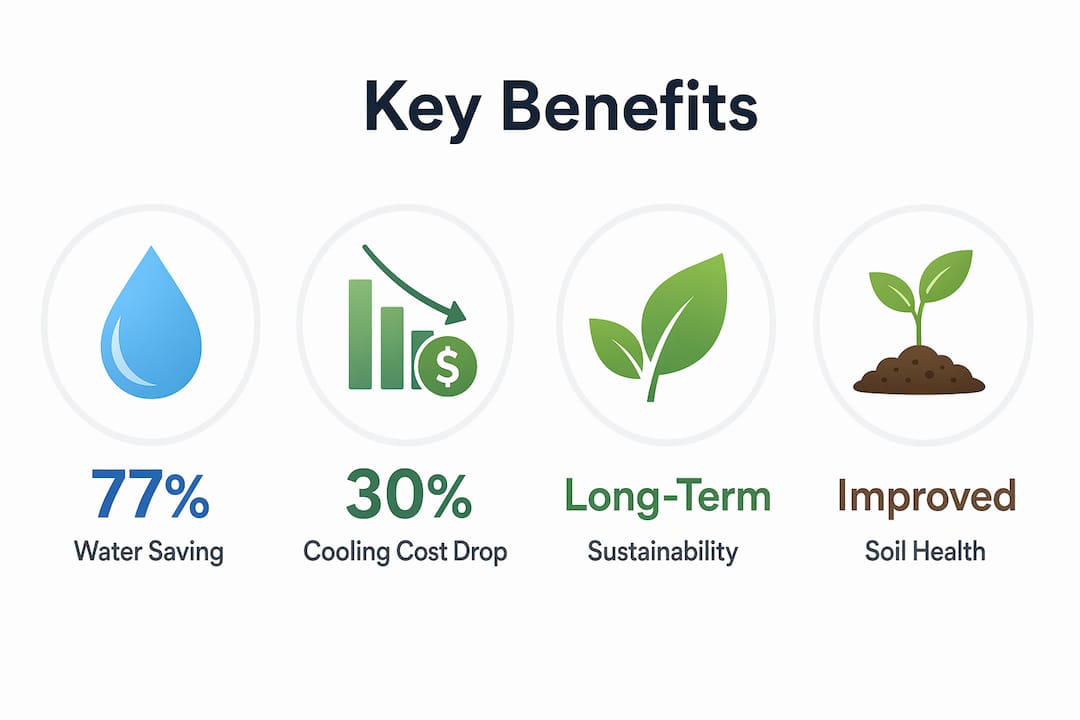
The benefits of climate-adapted landscaping extend well beyond water savings, though the water numbers alone are compelling. Switching to native, water-saving designs reduces outdoor water consumption by approximately 77% compared to traditional lawns. For a Phoenix homeowner running a conventional sprinkler system, that figure translates directly into hundreds of dollars saved annually on utility bills.
Energy savings follow closely behind. Well-placed shade trees with dense canopies can reduce a home’s air conditioning needs by up to 30% and lower nearby street temperatures by about 10°F. In a climate where cooling costs dominate summer budgets, planting native trees like velvet mesquite or blue palo verde in strategic positions around a home delivers measurable financial returns year after year.
The ecological benefits are equally significant:
- Reduced chemical inputs. Native plants are adapted to local soils and pest pressures, which means fewer herbicides, pesticides, and synthetic fertilizers.
- Biodiversity support. Native plants support local pollinators and wildlife, strengthening local ecosystems in ways that non-native turf grass cannot.
- Stormwater management. Rain gardens with native plants filter 30% more stormwater runoff than conventional lawns, reducing erosion and pollution risks. This matters in Arizona during monsoon season, when intense rainfall events can cause significant runoff damage.
- Carbon sequestration. Climate-adapted landscapes contribute to broader climate goals by sequestering carbon and improving air and water quality over time.
- Lower long-term maintenance costs. Sustainable landscapes reduce maintenance expenses due to less need for water, fertilizers, and mowing once plants are established.
The combination of these benefits makes the importance of sustainable landscaping clear for any homeowner evaluating long-term property costs in Arizona.
How climate-adapted landscaping differs from traditional lawn approaches
Traditional lawns built around Kentucky bluegrass or Bermuda turf require consistent irrigation, regular fertilization, and frequent mowing to survive Arizona’s heat. Climate-adapted landscapes operate on a fundamentally different design philosophy: work with the local environment rather than against it.
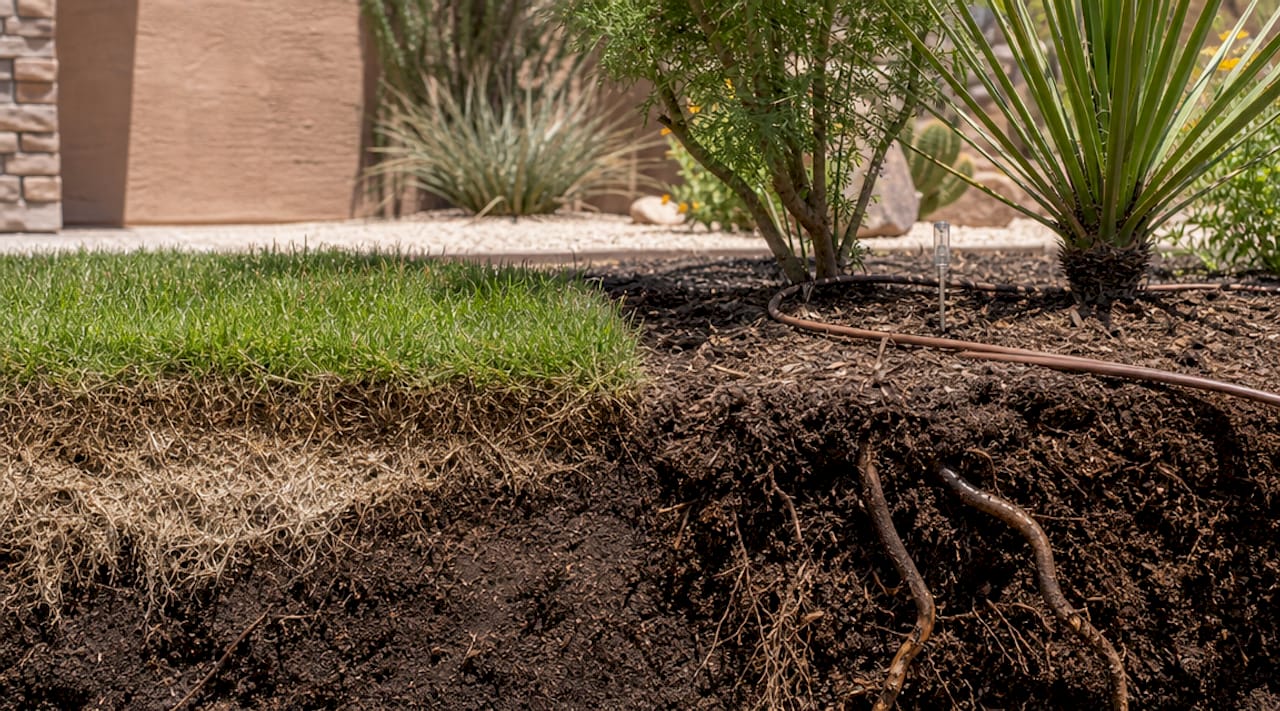
The contrast is most visible in root structure. Conventional turf grass develops shallow roots that depend on frequent surface watering. Native and drought-tolerant plants develop deep root systems that access soil moisture far below the surface, making them far more resilient during dry periods. This difference in root architecture is why a well-established desert willow can survive weeks without supplemental irrigation while a Bermuda lawn requires watering multiple times per week in summer.
| Feature | Traditional lawn | Climate-adapted landscape |
|---|---|---|
| Water demand | High, frequent irrigation required | Low, deep infrequent watering |
| Root depth | Shallow, surface-dependent | Deep, drought-resilient |
| Maintenance frequency | Weekly mowing, regular fertilizing | Seasonal pruning, minimal inputs |
| Chemical use | Herbicides, pesticides, fertilizers | Minimal to none after establishment |
| Local wildlife value | Low | High, supports pollinators and birds |
| Irrigation technology | Overhead sprinklers | Drip systems, smart controllers |
Soil health is another point of separation. Climate-adapted design incorporates organic compost and mulch to improve water retention and microbial activity. Traditional lawns often compact soil over time through heavy foot traffic and chemical use, reducing drainage capacity. Mulch applied around native plantings also moderates soil temperature, which is critical in Arizona where surface soil temperatures can exceed 150°F in direct sun.
Pro Tip: When transitioning from turf to a climate-adapted design, remove existing lawn in sections rather than all at once. This allows you to monitor soil conditions and adjust your plant placement before committing to a full installation.
Smart irrigation technology is the third major differentiator. Drip irrigation systems save 50% to 90% water compared to traditional sprinklers. Paired with soil moisture sensors and weather-based controllers, drip systems deliver water directly to root zones and eliminate the evaporation losses that make overhead sprinklers so inefficient in Arizona’s dry heat. You can learn more about eco-friendly water conservation strategies that support this approach.
Best practices for establishing a climate-adapted landscape in Arizona
Getting a climate-resilient garden established correctly in the first one to three years determines whether it thrives long-term or struggles. The following steps reflect what works in Arizona’s specific soil and climate conditions.
- Conduct a site analysis. Identify sun exposure, drainage patterns, and existing soil composition before selecting any plants. Arizona soils vary significantly between caliche-heavy clay in some areas and sandy loam in others, and each requires a different preparation approach.
- Prepare the soil properly. Aerating soil and adding 2 to 3 inches of organic compost improves water absorption and drainage, which is critical for native plant health. Skipping this step is one of the most common reasons newly planted natives fail in the first season.
- Select regionally appropriate plants. Choose species native to the Sonoran Desert or proven drought-tolerant performers for the Phoenix area. Good examples include brittlebush, desert marigold, ocotillo, agave, and native grasses like sideoats grama. Avoid plants labeled “drought-tolerant” that are native to other arid regions, as they may not handle Arizona’s monsoon humidity or extreme summer heat.
- Install drip irrigation from day one. Set emitters at the drip line of each plant rather than at the base of the trunk. Adjust output seasonally, reducing frequency as plants establish deeper roots.
- Apply mulch at 3 to 4 inches depth. Decomposed granite or organic wood chip mulch around plantings reduces soil temperature, retains moisture, and suppresses weeds. Uniquecompanies provides detailed guidance on how to apply mulch effectively for Arizona conditions.
- Follow an adaptive maintenance schedule. During years one through three, monitor soil moisture weekly and adjust irrigation based on seasonal rainfall. Prune in late winter before spring growth, not in fall, to avoid stimulating tender new growth before frost risk passes.
- Avoid overwatering. Overwatering newly planted natives inhibits deep root development and reduces drought tolerance over time. The goal is to encourage roots to grow downward in search of moisture, not to keep surface soil consistently wet.
Pro Tip: Install a soil moisture sensor at 12 inches depth near your most water-sensitive plants. Readings at that depth give you a far more accurate picture of root zone conditions than surface soil checks alone.
How climate-adapted landscaping enhances outdoor comfort and property value
Beyond resource efficiency, adaptive landscaping techniques directly improve how you experience your outdoor space. A well-designed yard with native shade trees, decomposed granite pathways, and drought-tolerant plantings creates a cooler, more comfortable environment for outdoor living throughout most of the year in Arizona.
The property value case is equally strong:
- Energy cost reduction. Homeowners who plant shade trees strategically around south and west-facing walls see measurable reductions in cooling costs, which is a selling point that resonates with buyers in the Phoenix market.
- Curb appeal and differentiation. A mature, well-maintained native landscape stands out in neighborhoods dominated by gravel and sparse plantings. Buyers increasingly recognize the value of established, low-maintenance yards.
- Reduced buyer liability. A yard that requires minimal irrigation and no chemical maintenance is an asset, not a liability, for prospective buyers evaluating ongoing costs.
- Integration with outdoor living features. Climate-adapted plantings work naturally alongside patios, pools, and outdoor kitchens. Native shade trees provide natural cooling for seating areas, and drought-tolerant groundcovers reduce the maintenance burden around hardscape edges.
Uniquecompanies has documented how Phoenix backyard upgrades that incorporate climate-adapted landscaping alongside custom outdoor living features deliver both lifestyle and financial returns. The combination of a well-designed pool or outdoor kitchen with a surrounding native plant palette creates a cohesive, low-maintenance outdoor environment that performs well in Arizona’s climate year-round.
What challenges do homeowners face with climate-adapted landscaping?
The most persistent misconception about climate-adapted or native landscapes is that they look neglected or require no attention. This is inaccurate. Climate-adapted landscaping is a deliberate, managed approach that reduces chemical inputs and water use while still requiring consistent monitoring and care, particularly in the first few years.
Common challenges and how to address them:
- Plant mortality during establishment. The first summer is the highest-risk period. Water newly planted natives more frequently during this phase, then taper off as roots develop. Expect some loss and plan for replacement.
- Weed pressure. Bare soil between plants invites weed germination. Dense mulch coverage and close plant spacing reduce this significantly.
- Overwatering habits. Homeowners accustomed to traditional lawns often apply too much water too frequently. Landscapes with native species and smart irrigation maintain compliance with tightening drought-related regulations while reducing costs, but only when irrigation schedules are calibrated correctly.
- Pruning at the wrong time. Pruning desert shrubs in fall can stimulate growth that gets damaged by winter cold. Late winter pruning, just before spring growth, is the correct timing for most Arizona native species.
- Expecting instant results. Native landscapes take two to three years to look their best. Patience during establishment is not a flaw in the design. It is part of the process.
“The plant-and-forget approach does not work with climate-adapted landscapes. Active care during the first three years determines whether the investment pays off long-term.”
Professional guidance from a firm with deep Arizona experience, such as reviewing professional landscaping advantages in Phoenix, can prevent the most costly mistakes during this critical establishment window.
Key takeaways
Climate-adapted landscaping reduces outdoor water use by up to 77%, lowers cooling costs by up to 30%, and builds long-term resilience through native plants, drip irrigation, and proper soil preparation.
| Point | Details |
|---|---|
| Water savings are substantial | Native designs reduce outdoor water consumption by approximately 77% versus traditional lawns. |
| Shade trees cut energy costs | Strategically placed native trees reduce home air conditioning needs by up to 30%. |
| Soil preparation is non-negotiable | Compost and aeration before planting directly determine long-term plant health and drought tolerance. |
| Overwatering is the top mistake | Excess irrigation during establishment prevents deep root growth and reduces drought resilience. |
| Maintenance decreases over time | Years one through three require active monitoring; after establishment, inputs drop significantly. |
What I’ve learned from watching Arizona homeowners make this transition
Having worked alongside Phoenix-area homeowners through dozens of landscape transformations, the pattern I see most often is this: the homeowners who commit fully to climate-adapted design in year one are the ones who stop thinking about their yard by year three. That is not an accident. It is the design working as intended.
What surprises most people is how much the lifestyle benefit outpaces the water savings in terms of day-to-day satisfaction. Yes, the utility bill drops. But the bigger shift is that the yard stops being a source of stress. No more emergency irrigation repairs in August. No more dead patches after a vacation. No more guilt about water use during drought restrictions.
The homeowners who struggle are almost always the ones who compromise on plant selection, choosing something “almost native” because it looks more familiar, or who keep their old irrigation schedule out of habit. The deep root development that makes these landscapes genuinely drought-resilient only happens when you let the plants work for it.
My consistent advice: invest in proper soil preparation, install a quality drip system with a smart controller from day one, and resist the urge to water on a fixed schedule. Monitor the soil, not the calendar. The landscape will tell you what it needs, and in most cases, it needs far less than you expect.
— Philipp
Build a climate-resilient yard with Uniquecompanies
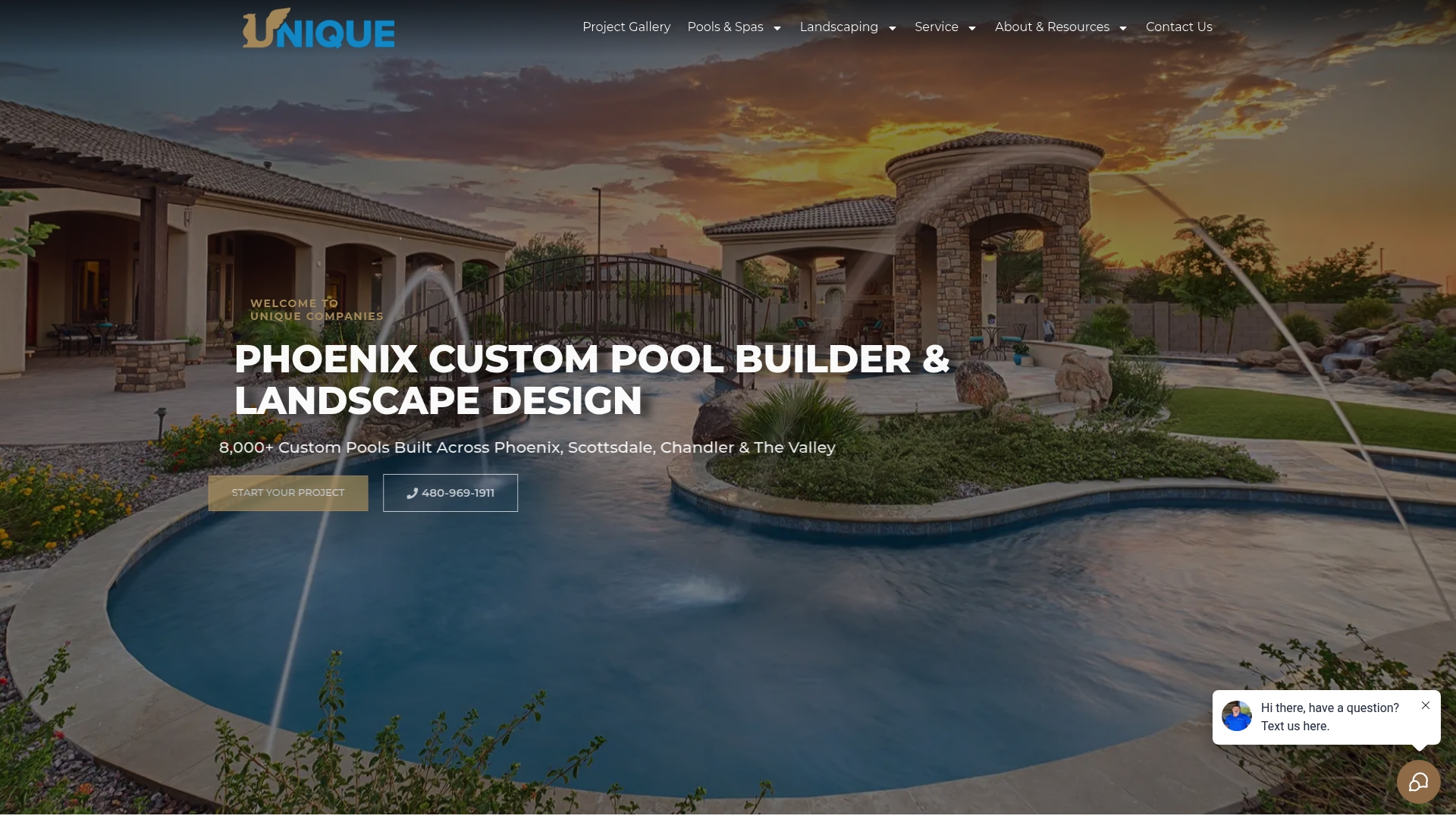
Uniquecompanies brings over 24 years of Phoenix-area experience to every landscape project, designing outdoor spaces that perform in Arizona’s demanding climate without demanding constant attention from you. Their team integrates eco-friendly landscaping practices with custom outdoor living features, including native plant installation, water-efficient drip irrigation, and hardscape design that complements drought-tolerant plantings. Whether you are starting from bare soil or converting an existing lawn, Uniquecompanies handles site analysis, plant selection, irrigation design, and installation as a single coordinated process. Contact their team to schedule a consultation and see what a professionally designed, climate-adapted outdoor space looks like for your specific property in Scottsdale, Chandler, Queen Creek, or the surrounding Phoenix metro area.
FAQ
What is climate-adapted landscaping?
Climate-adapted landscaping is the practice of designing outdoor spaces using plants, irrigation systems, and soil management techniques that align with local climate conditions. In Arizona, this means prioritizing native and drought-tolerant species, drip irrigation, and organic mulch to reduce water use and maintenance.
How much water can climate-adapted landscaping save?
Switching from a traditional lawn to a native, water-efficient design reduces outdoor water use by approximately 77%. Drip irrigation systems alone save 50% to 90% compared to conventional overhead sprinklers.
How long does it take for a climate-adapted landscape to establish?
Most native and drought-tolerant plants require one to three years to develop the deep root systems that make them genuinely drought-resilient. Active irrigation management and soil monitoring during this period are critical to long-term success.
Do native landscapes require any maintenance?
Yes. Climate-adapted landscapes are a managed approach, not a hands-off one. Maintenance needs decrease significantly after establishment, but seasonal pruning, weed control, and irrigation adjustments remain part of an ongoing care schedule.
Can climate-adapted landscaping increase my home’s value?
A well-established native landscape reduces ongoing utility and maintenance costs, which translates into measurable value for prospective buyers. Strategic placement of shade trees can also reduce cooling costs by up to 30%, a concrete financial benefit that supports property value in the Phoenix market.