TL;DR:
- Outdoor fire features can extend usability in warm climates by up to 68%, creating inviting social and functional focal points.
- Their shape, fuel type, and placement influence how often they are used and their safety, durability, and cost, making early planning essential.
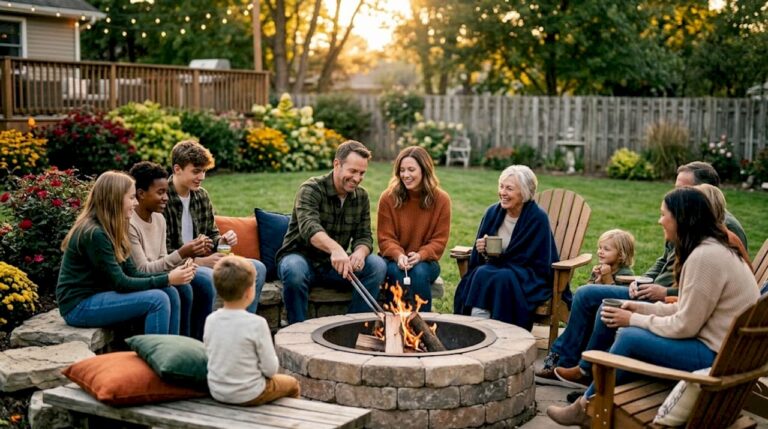
If you’re wondering why outdoor fire features belong in a warm-climate backyard, you’re not alone in questioning the logic. Most homeowners assume fire features are strictly for cold winters, but that framing misses the real value entirely. Fire feature sales increased 156% from 2023 to 2025, and the growth is being driven heavily by Sun Belt states. The reasons go far beyond warmth. They include social dynamics, psychological comfort, property value, and how you actually use your outdoor space throughout the year.
Table of Contents
- Key Takeaways
- Why outdoor fire features deliver year-round value
- Design choices: shapes, fuels, and materials
- The psychology behind gathering around fire
- Planning, installation, and maintenance
- My perspective on what actually matters
- Design your outdoor fire feature with Uniquecompanies
- FAQ
Key Takeaways
| Point | Details |
|---|---|
| Extends outdoor usability | Fire features can extend your outdoor living season by up to 68%, even in warm climates. |
| Shapes affect conversation | Circular fire pits generate 38% more conversation than rectangular designs. |
| Fuel type matters | Natural gas accounts for 52% of installations and offers the cleanest, most convenient operation. |
| Safety requires planning | Children under 5 represent 30% of fire-related burn visits, making placement and clearances non-negotiable. |
| Design integration is critical | Coordinating gas lines and electrical conduits early in the design process prevents costly mistakes later. |
Why outdoor fire features deliver year-round value
The practical case for outdoor fire features starts with one number: outdoor season usability increases up to 68% when a fire feature is present. Even in Phoenix, where summer temperatures require a different relationship with the outdoors, the spring, fall, and evening hours in between represent hundreds of usable hours that homeowners routinely leave on the table.
Fire features do something that patio furniture and outdoor kitchens alone cannot. They create a natural focal point that organizes the space around them. Seating arrangements, lighting placement, and traffic flow all resolve themselves when there is a defined center. Without that anchor, even beautifully designed outdoor spaces often feel disconnected and underused.
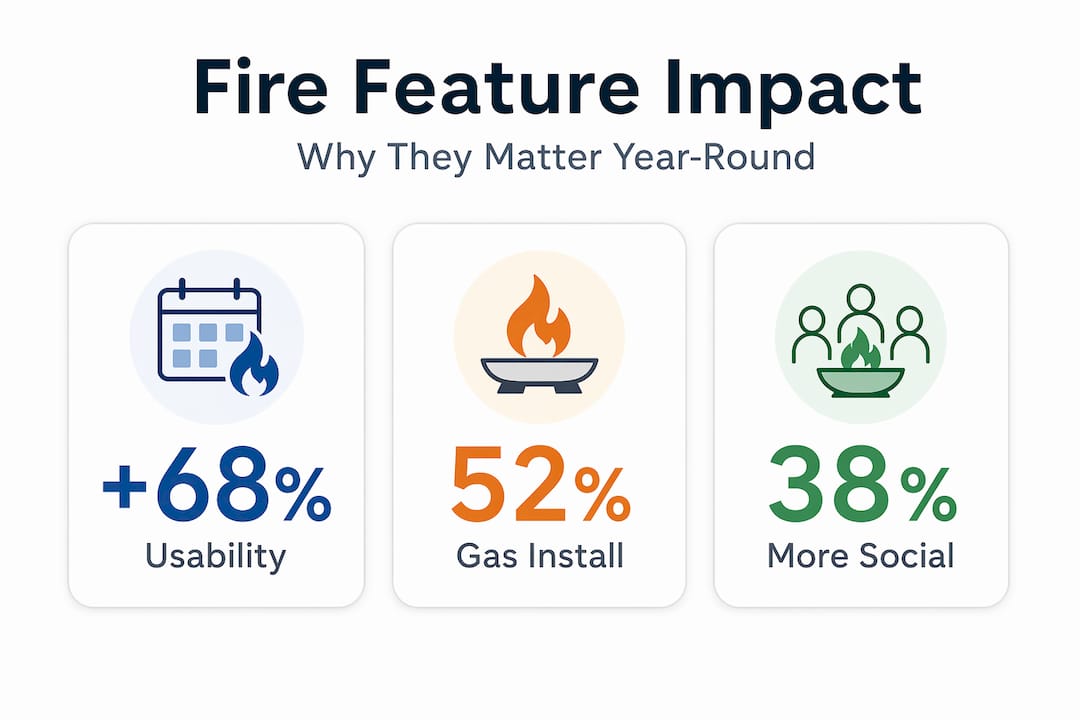
The social argument is equally compelling. Research shows that circular fire pits promote 38% more conversation among guests compared to rectangular alternatives. That is not a minor difference. It speaks to how the geometry of a gathering space shapes behavior, drawing people closer and keeping them there longer.
Consider the difference between a backyard with a linear fire table along one wall versus a round fire pit centered in a seating area. The first configuration encourages side-by-side viewing. The second places people in a circle, facing each other, which is exactly the setup that produces longer, more connected conversations.
- Creates a defined social zone that organizes seating and circulation
- Extends usable hours into cooler evenings and shoulder seasons
- Adds ambient lighting that reduces dependence on harsh overhead fixtures
- Supports multiple zones: a fire pit for conversation, a fire table near the outdoor kitchen for dining, and a fireplace anchoring a covered lounge
Pro Tip: If you’re planning multiple fire features in one space, treat them like separate rooms. Each one should serve a specific purpose and have its own seating arrangement rather than competing for the same area.
Design choices: shapes, fuels, and materials
Choosing a fire feature is not simply an aesthetic decision. The shape, fuel type, and materials you select each carry functional consequences that affect how often you use the feature and how much it costs to maintain.
Shape and seating dynamics
Round designs provide 360-degree heat distribution and naturally encourage a circular seating arrangement. Square and linear shapes work well in modern or minimalist spaces where seating runs along defined edges, such as built-in benches flanking a rectangular pool. The right choice depends on how the feature relates to the rest of the hardscape layout rather than personal preference alone.
Fuel type comparison
| Fuel Type | Key Advantage | Key Limitation |
|---|---|---|
| Natural gas | Cleanest emissions, always-on convenience | Requires permanent gas line installation |
| Propane | Portable, no gas line needed | Tank refills add ongoing cost and planning |
| Wood burning | Authentic experience, crackling ambiance | Restricted in 23 states; produces smoke and ash |
| Electric | Zero emissions, simple controls | Lower visual impact; no real flame in most models |
Natural gas accounts for 52% of fire feature installations nationally, largely because it eliminates the logistics of fuel storage and produces far fewer emissions. For homeowners in the Phoenix metro area, where air quality regulations are enforced and aesthetics drive decision-making, natural gas or propane are the practical standard.
Materials and long-term durability
Concrete composites have emerged as the dominant material for high-end fire features because they resist the thermal cycling that cracks traditional cast concrete over time. Steel fire rings and copper fire bowls add visual texture but require seasonal maintenance to prevent corrosion in humid conditions. Powder-coated steel and glass fire media complement modern design styles while requiring minimal upkeep.
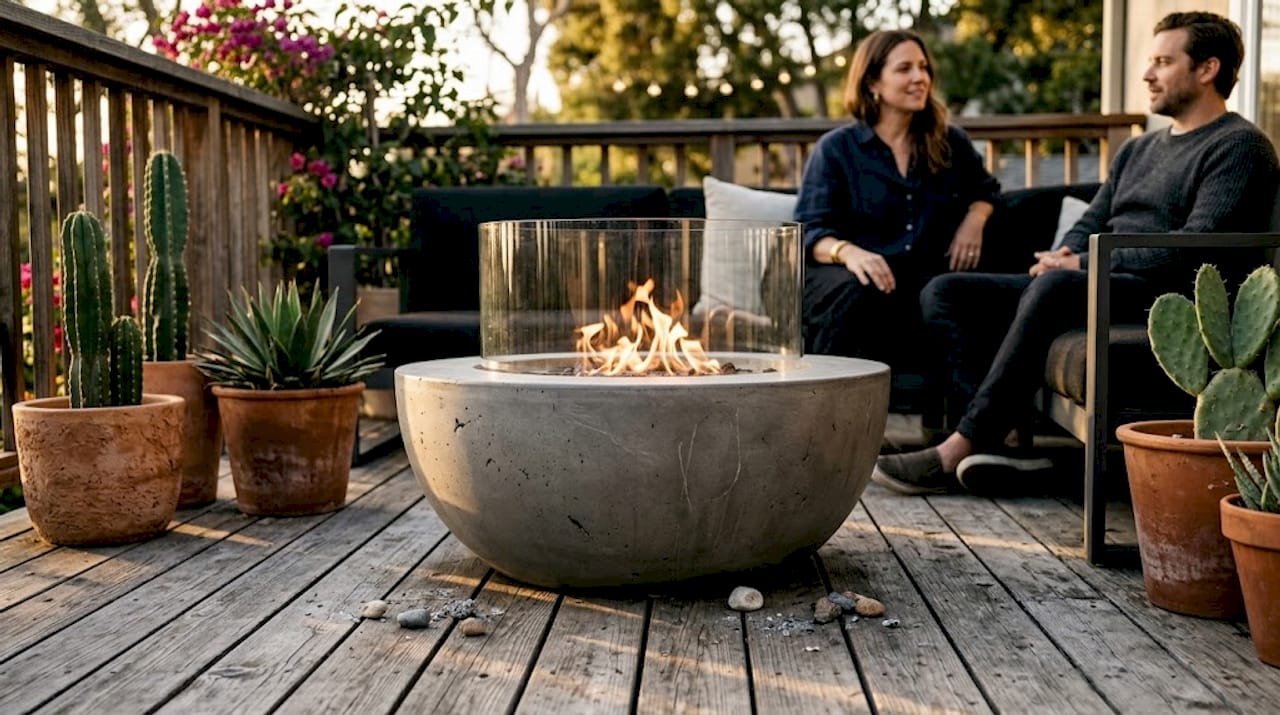
Pro Tip: When evaluating materials, ask your contractor how the finish will hold up to direct flame exposure at operating temperature. Decorative finishes applied to surfaces that face the burner directly will degrade faster than those applied to the exterior or surround only.
Wind protection is another consideration that most homeowners overlook until after installation. Placing fire features out of prevailing wind paths, or including glass wind guards, significantly improves burner performance and extends the life of the burner assembly. In Arizona, afternoon winds are predictable by season, which makes site orientation a design decision worth making deliberately.
The psychology behind gathering around fire
Understanding why outdoor fire features work so well in social settings requires stepping back from the purely functional view. Fire features tap into what researchers call the “hearth effect”, an instinctive human draw toward fire as a signal of warmth, safety, and community. That response is not dependent on climate. It operates regardless of the ambient temperature outside.
In practical terms, this means that a fire feature in a 65-degree Phoenix evening in November does the same social work as one on a 40-degree night in the Northeast. The flame itself communicates something to the people gathered around it, and that communication shifts the mood of the space.
“Fire features remain effective social anchors even in warm climates, driving natural gathering and comfort through the hearth effect.” (Garden Fireplaces: Creating a Cozy Outdoor Living Space)
There is also a less-discussed benefit: fire pulls attention away from phones. In a setting where a flame is present and audible, people naturally shift their focus outward. That distraction from screens is genuinely useful for homeowners who want their outdoor space to function as a place for real connection rather than parallel device use.
The financial case rounds out the argument. Fire features with smart controls and premium materials can increase property value by 12 to 15%. That figure reflects buyer perception as much as functional utility. A well-designed fire feature signals a cared-for, fully developed outdoor living space, which is precisely what buyers in the luxury market respond to.
You can explore how fire features fit into a broader outdoor living design by reviewing fire feature design options that incorporate the full range of styles available for Arizona backyards.
Planning, installation, and maintenance
Getting the most from a fire feature depends heavily on decisions made before construction begins. Treating it as an afterthought, something to be dropped into a finished patio, leads to compromises in placement, function, and safety.
- Plan gas and electrical infrastructure early. Specifying gas lines and ignition systems during the schematic design phase prevents the expensive retrofitting that happens when those systems are added after hardscape is poured. Trenching through finished concrete costs significantly more than routing conduit during the initial construction phase.
- Account for wind direction during site placement. Identify the prevailing wind direction for your yard at the time of year you plan to use the feature most. Position the burner accordingly or plan for a glass windscreen as part of the original design.
- Establish a maintenance schedule. Clean burner ports and check gas connections at the start of each season. Inspect the fire media (glass beads, lava rock, or ceramic logs) for debris accumulation, which can obstruct flame distribution.
- Create physical barriers in family spaces. Nearly 40% of U.S. households own outdoor heating devices, and fire features contribute to approximately 5,300 emergency visits annually. Children under 5 account for 30% of those cases. A low decorative surround wall or built-in seating perimeter creates a natural barrier that reduces accidental contact without making the space feel restricted.
- Match the burner size to the gas supply available. A properly sized burner matched to the available BTU output outperforms an oversized burner in an exposed location in both reliability and visual quality. Bigger is not always better when the supply pressure cannot support peak demand.
For ongoing care, reviewing fire pit maintenance guidance specific to the Southwest climate helps homeowners extend the life of their investment and avoid the most common service calls.
Pro Tip: Before finalizing your fire feature location, observe your patio on a windy afternoon and note where debris collects. Wind deposits consistently in the same corners and low zones, and those spots make poor locations for open flame features.
My perspective on what actually matters
I’ve seen homeowners invest in beautiful fire features and then barely use them, and I’ve seen simpler installations that become the center of every gathering. The difference is almost never about the product. It’s about whether the feature was integrated thoughtfully into the space from the start or treated as a decorative add-on after the fact.
The most common mistake I encounter is treating fire features as purely decorative rather than as infrastructure. When gas lines, electrical conduits, and drainage all have to work around a fire feature that was placed last, you end up with compromises that show. The burner ends up in the wrong position. The seating doesn’t flow. The feature gets used twice a year instead of twice a week.
In warm climates, the case for a fire feature has almost nothing to do with keeping people warm. It’s about giving the space a reason to be used. A fire creates an atmosphere that lighting alone cannot replicate. That’s not a marketing claim. It’s what homeowners who use these spaces regularly report consistently.
My advice is to resist the impulse to minimize the budget on the fire feature while maximizing it on everything around it. The fire is the most visible element in the space after dark, which is exactly when your outdoor area gets used the most.
— Philipp
Design your outdoor fire feature with Uniquecompanies
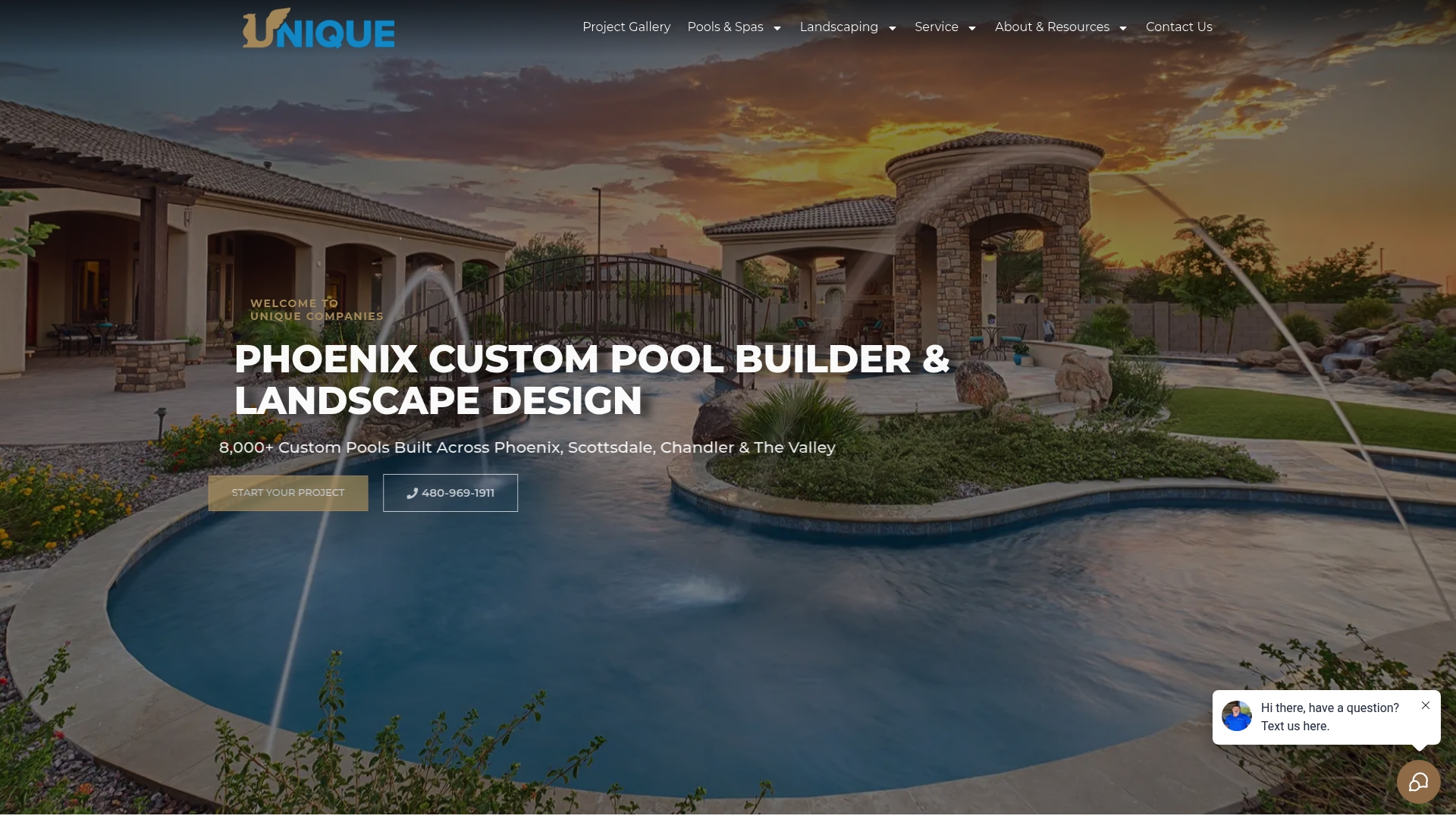
Uniquecompanies has spent over 24 years designing and building luxury outdoor environments across Scottsdale, Chandler, Queen Creek, and the broader Phoenix metro area. Their team handles gas line coordination, hardscape integration, permitting, and construction in-house, which means fire features are planned as part of the overall outdoor design from day one rather than added as an afterthought. Whether you’re considering a single fire pit anchoring a seating area or a full outdoor living space with a custom pool and fire feature combination, their design-to-build process eliminates the gaps that lead to costly retrofits. Explore fire feature installation options to see what’s possible for your specific space and lifestyle.
FAQ
Why are outdoor fire features popular in warm climates?
Fire features extend outdoor usability into cooler evenings and shoulder seasons while creating social focal points that work regardless of ambient temperature. The psychological draw of fire as a gathering anchor operates independently of the need for warmth.
What is the most common fuel type for outdoor fire features?
Natural gas accounts for 52% of fire feature installations because it offers clean emissions and continuous fuel supply without the logistics of propane tanks or wood storage.
How do I choose between a round and rectangular fire pit?
Round fire pits promote 360-degree interaction and generate 38% more conversation among guests, making them better suited for social-focused spaces. Rectangular and linear designs align with modern aesthetics and work well alongside structured seating arrangements.
What safety precautions are most important for backyard fire features?
Maintain the manufacturer’s recommended clearance from structures and seating, install glass wind guards if the site is exposed, and create physical barriers in spaces used by young children. Annual burner inspection and gas connection checks are also standard practice.
Does a fire feature add value to a home?
Fire features with smart controls and premium materials can increase property value by 12 to 15%, reflecting the broader appeal of a fully developed outdoor living space to prospective buyers.