TL;DR:
- Professionally installed stamped concrete offers genuine design flexibility and long-term durability.
- Proper maintenance extends lifespan and prevents issues like cracking and fading in Arizona’s climate.
- Stamped concrete provides cost-effective, seamless surfaces ideal for large outdoor areas.
Stamped concrete has a reputation problem. Many Phoenix homeowners assume it’s a budget shortcut, a way to fake the look of stone or wood without the quality to back it up. The reality is quite different. When professionally installed and properly maintained, stamped concrete delivers genuine design flexibility, long-term durability, and measurable cost savings that even high-end luxury projects can benefit from. This guide breaks down the real pros and cons, what you’ll pay, how it compares to pavers and natural stone, and what it takes to keep it looking sharp in Arizona’s demanding climate.
Table of Contents
- What is stamped concrete? Design, process, and customization
- Pros of stamped concrete for Phoenix outdoor spaces
- Cons of stamped concrete: Realistic drawbacks and Phoenix challenges
- Stamped concrete vs. pavers and natural stone: Cost, performance, and design comparison
- Caring for stamped concrete in Phoenix: Maintenance tips for desert durability
- The overlooked opportunity in Phoenix luxury renovations
- Ready to upgrade your Phoenix outdoor space?
- Frequently asked questions
Key Takeaways
| Point | Details |
|---|---|
| Affordable luxury | Stamped concrete provides high-end looks at significantly lower cost than natural stone or pavers. |
| Strong Phoenix durability | With proper maintenance, stamped concrete patios can last 20-30 years or more in the Arizona climate. |
| Custom design options | Homeowners can replicate a wide range of materials like stone, wood, or brick with virtually any color palette. |
| Maintenance matters | Regular sealing and cleaning prevent cracks, fading, and keep your outdoor space looking fresh. |
| Know the trade-offs | While durable, stamped concrete repairs are more visible than with pavers and surfaces can be hot in summer sun. |
What is stamped concrete? Design, process, and customization
Stamped concrete is standard poured concrete that gets textured and colored during installation to replicate the appearance of more expensive materials. Pattern molds and coloration allow it to closely mimic stone, wood, brick, slate, and flagstone. The result is a surface that reads as premium without carrying the premium price tag of the original material.
The installation process typically unfolds over three to five days:
- Pour: Fresh concrete is placed and leveled across the designated area.
- Color: Integral pigments or surface-applied color hardeners are worked into the slab.
- Stamp: Rubber or polyurethane molds are pressed into the concrete while it’s still workable, creating the texture and pattern.
- Seal: Once cured, a protective sealer is applied to lock in color and protect against moisture and UV damage.
Design options are broad. You can choose from dozens of patterns, including ashlar slate, random flagstone, herringbone brick, and wood plank. Color combinations range from earth tones to bold contrasts. Decorative inlays, colored borders, and your choice of gloss or matte sealers add another layer of personalization.
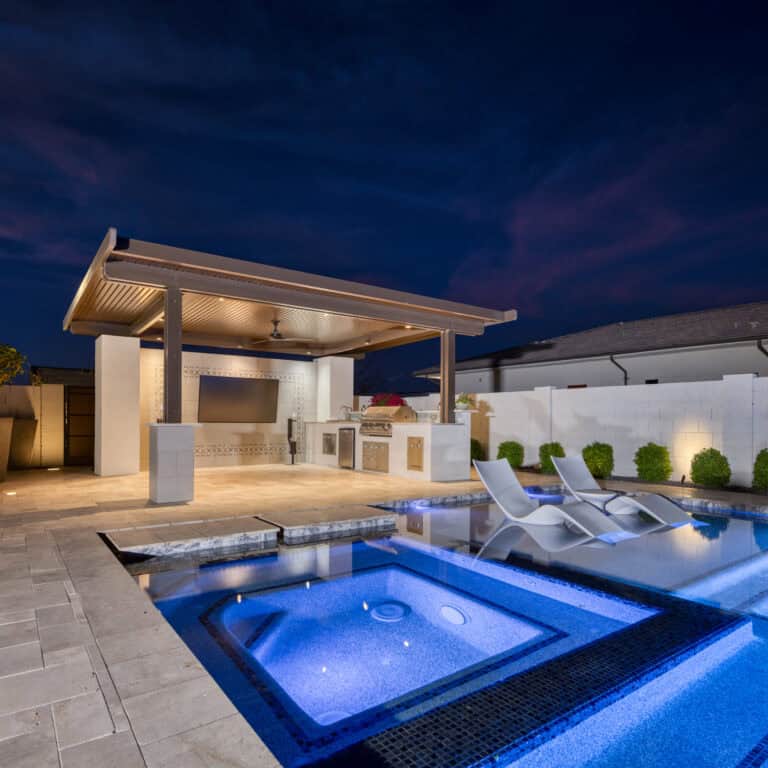
For Phoenix outdoor projects, stamped concrete performs particularly well on large patios, pool decks, and outdoor kitchen surrounds where a seamless, continuous surface is both practical and visually striking. If you’re exploring custom patio solutions for your backyard, stamped concrete should be on your shortlist.
Pros of stamped concrete for Phoenix outdoor spaces
With a clear idea of what stamped concrete is, let’s look at why it’s so popular among Phoenix luxury homeowners.
Key benefits at a glance:
- Aesthetic versatility: Achieves the look of natural stone, wood, or brick without the material cost.
- Cost savings: Saves 40-60% versus natural stone and delivers 60-80% ROI at resale.
- No weeds or shifting: Unlike pavers, a monolithic slab has no joints for weeds to invade or pieces to settle unevenly over time.
- Long lifespan: With proper care, stamped concrete lasts 20 to 30 years or more in Arizona’s climate.
- Fast installation: Most projects are complete within a week, which suits tight renovation timelines.
- Resale value: Outdoor improvements consistently boost home value, and stamped concrete is no exception.
Stat to know: Stamped concrete can save homeowners 40-60% compared to natural stone while still delivering 60-80% ROI at resale, making it one of the stronger value plays in outdoor renovation.
The absence of joints is a practical advantage that often gets overlooked. Pavers can shift, settle, and create tripping hazards over time, especially in areas with clay-heavy soil or tree roots nearby. Stamped concrete eliminates that concern entirely.
Pro Tip: In Phoenix’s intense sun, choosing a lighter color palette for your stamped concrete will reflect more heat and keep the surface cooler underfoot during summer months.
If you’re weighing the ROI for outdoor upgrades more broadly, stamped concrete ranks well alongside pools and outdoor kitchens as a high-return investment for Arizona properties.
Cons of stamped concrete: Realistic drawbacks and Phoenix challenges
Every material has trade-offs. Here’s an honest look at the limitations Phoenix homeowners should plan for.
Common drawbacks:
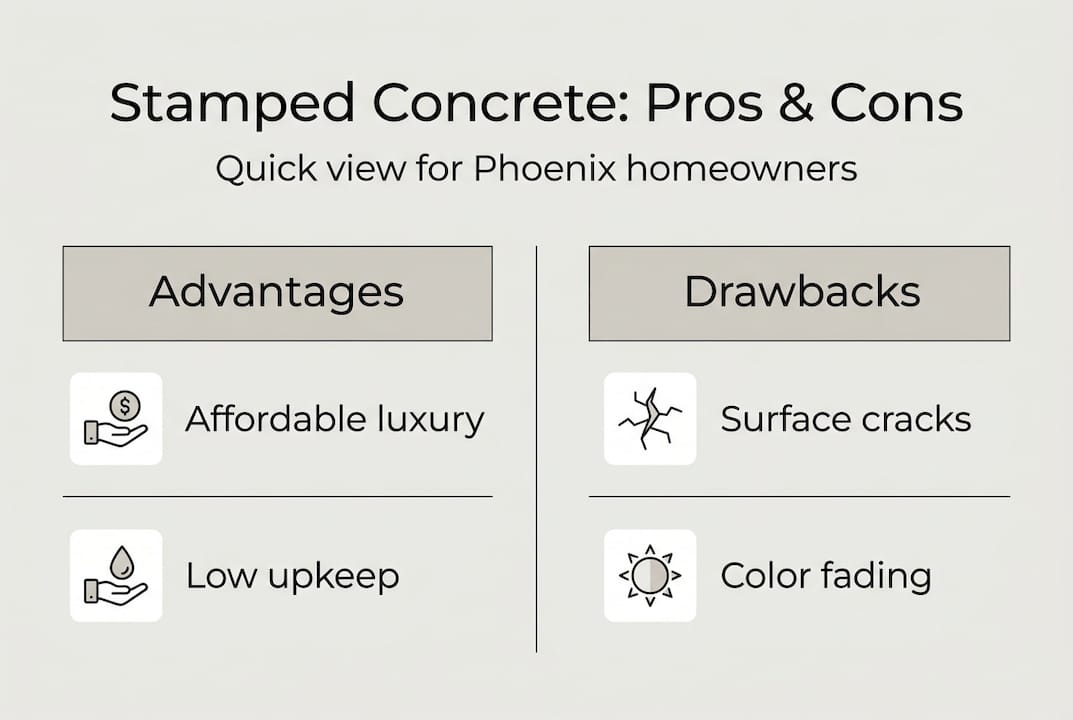
- Cracking risk: All concrete can crack over time. Expansion joints help manage this, but neglected maintenance accelerates the problem.
- Fading: UV exposure in Phoenix is intense. Without regular resealing, color can fade noticeably within a few years.
- Surface heat: Stamped concrete absorbs and retains heat. In full Arizona sun, it can become uncomfortably hot to walk on barefoot.
- Visible repairs: If a section cracks and needs patching, matching the original color and pattern exactly is difficult. Repairs tend to be more noticeable than simply swapping out a damaged paver.
- Vehicle and root stress: Heavy vehicles or nearby tree roots can stress the slab and lead to cracking.
- Monsoon and freeze cycles: Phoenix’s summer monsoons bring moisture, and occasional winter temperature drops create expansion and contraction stress on the slab.
Reality check: A 20-30+ year lifespan is achievable with proper sealing and cleaning, but cracks can occur if maintenance is neglected, particularly in Arizona’s climate extremes.
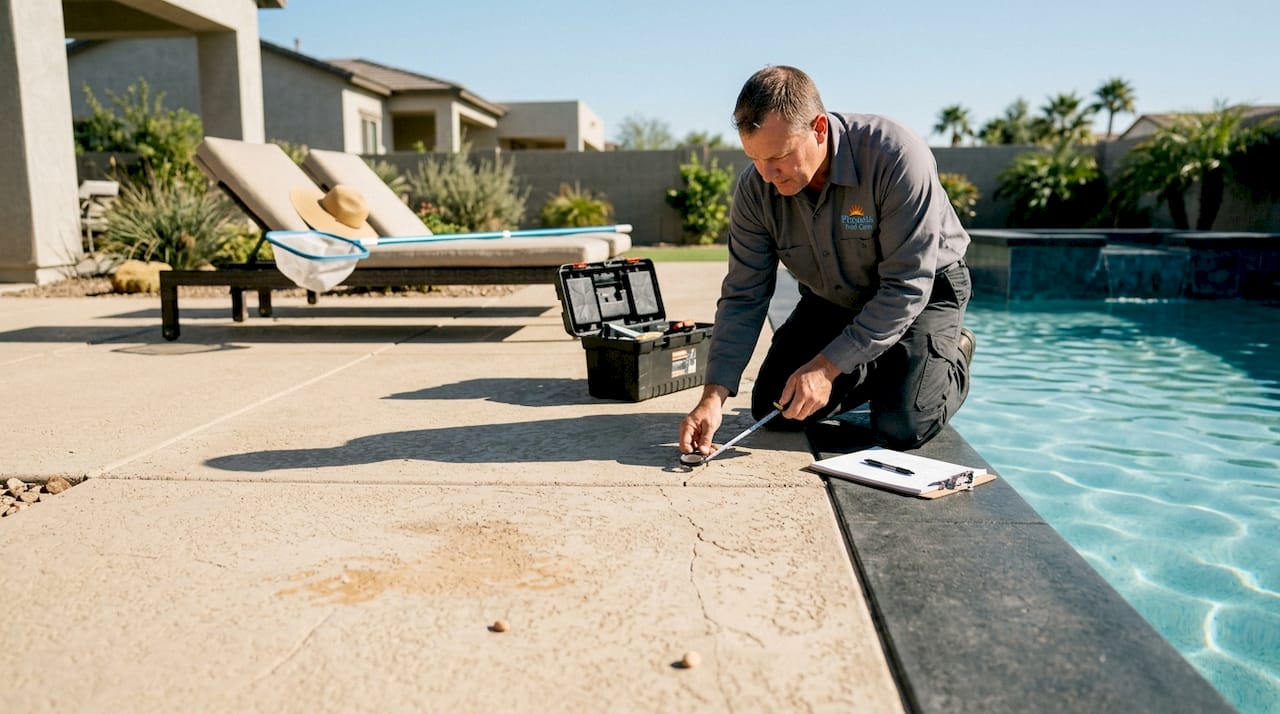
Pro Tip: After each monsoon season, inspect your stamped concrete for surface erosion, water pooling, or early crack formation. Catching issues early keeps repair costs low.
For guidance on how to care for outdoor concrete through Arizona’s wet season, and for winter concrete protection tips during cooler months, those resources are worth bookmarking before your project is complete.
Stamped concrete vs. pavers and natural stone: Cost, performance, and design comparison
If you’re deciding among materials, here’s how stamped concrete stacks up versus its main competitors.
| Feature | Stamped concrete | Pavers | Natural stone |
|---|---|---|---|
| Installed cost (per sq ft) | $12-$25 | $15-$30 | $15-$30+ |
| Design flexibility | High (patterns, colors, inlays) | Moderate (pattern limited by unit size) | Low to moderate |
| Durability | Monolithic slab, no shifting | Individual units can shift | Durable but heavy |
| Weed control | Excellent (no joints) | Requires joint maintenance | Requires joint maintenance |
| Repair ease | Difficult to match exactly | Easy (replace individual pieces) | Moderate |
| Heat retention | High | Moderate to high | Moderate |
| AZ climate suitability | Good with maintenance | Good | Good |
For a standard 400 square foot patio, stamped concrete typically runs $4,800 to $10,000 installed. The same area in pavers or natural stone would likely cost $6,000 to $12,000 or more, depending on material selection.
When pavers or stone may be the better call:
- You want the ability to repair individual sections without visible patching.
- Your design calls for a more organic, irregular layout that’s difficult to replicate with molds.
- Budget allows for the premium and long-term repairability is a priority.
Pro Tip: For pool surrounds specifically, stamped concrete’s seamless surface is easier to keep clean and provides a consistent non-slip texture when the right sealer is used.
Explore more about designing with pavers or browse Phoenix stone patios to see how the alternatives look in real Arizona projects.
Caring for stamped concrete in Phoenix: Maintenance tips for desert durability
Now that you’ve seen the comparisons, here’s how to make stamped concrete last for decades in Phoenix.
A consistent maintenance routine is the single biggest factor in longevity. Eight or more years without cracks is a realistic outcome for homeowners who commit to pressure washing and resealing every two to three years.
Recommended maintenance steps:
- Sweep weekly to remove debris, leaf litter, and grit that can scratch the sealer surface.
- Wash with mild detergent and a garden hose or pressure washer every few months, or after heavy monsoon activity.
- Reseal every two to three years using a product matched to your original sealer type (solvent-based or water-based).
- Inspect after monsoons and winter cold snaps for surface erosion, micro-cracks, or areas where water is pooling.
- Address stains promptly. Grill grease and organic debris from plants can stain the sealer if left too long.
- Add shade where possible. Pergolas, shade sails, or strategic landscaping reduce UV exposure and surface temperature, extending the life of both the color and the sealer.
Pro Tip: Never use harsh degreasers or acidic cleaners on stamped concrete. They strip the sealer and expose the color layer to UV damage. Mild dish soap diluted in water is usually all you need for routine cleaning.
For broader guidance on Arizona outdoor wellness and how landscape design choices affect your hardscape’s long-term performance, that’s a useful starting point for planning your full outdoor environment.
The overlooked opportunity in Phoenix luxury renovations
There’s a tendency in high-end outdoor projects to default to pavers or natural stone simply because they feel more prestigious. We’ve seen this pattern repeatedly over 24 years of building luxury outdoor spaces in Phoenix. The assumption is that stamped concrete belongs in a lower budget tier, and that assumption costs homeowners real money.
The truth is that stamped concrete, when designed thoughtfully and installed by an experienced contractor, is visually indistinguishable from stone in many applications. The material stigma is outdated. What matters is execution quality, pattern selection, and color integration with the surrounding landscape.
Where stamped concrete genuinely shines is in large, continuous surfaces like pool decks and expansive patio areas where a seamless look is actually more elegant than the grid pattern of individual pavers. It also wins on total project cost, freeing budget for other elements like outdoor kitchens or water features.
The pitfalls are real but avoidable. Hire a contractor with documented experience in stamped concrete, insist on a proper sealing schedule, and choose patterns that complement your home’s architecture rather than chasing trends. For homeowners who want to explore what’s possible, custom patio design insights are a good place to start building your vision.
Ready to upgrade your Phoenix outdoor space?
If you’re ready to put these insights to work in your own backyard, Unique Companies brings over 24 years of experience designing and building luxury outdoor environments across Phoenix, Scottsdale, Chandler, and Queen Creek.
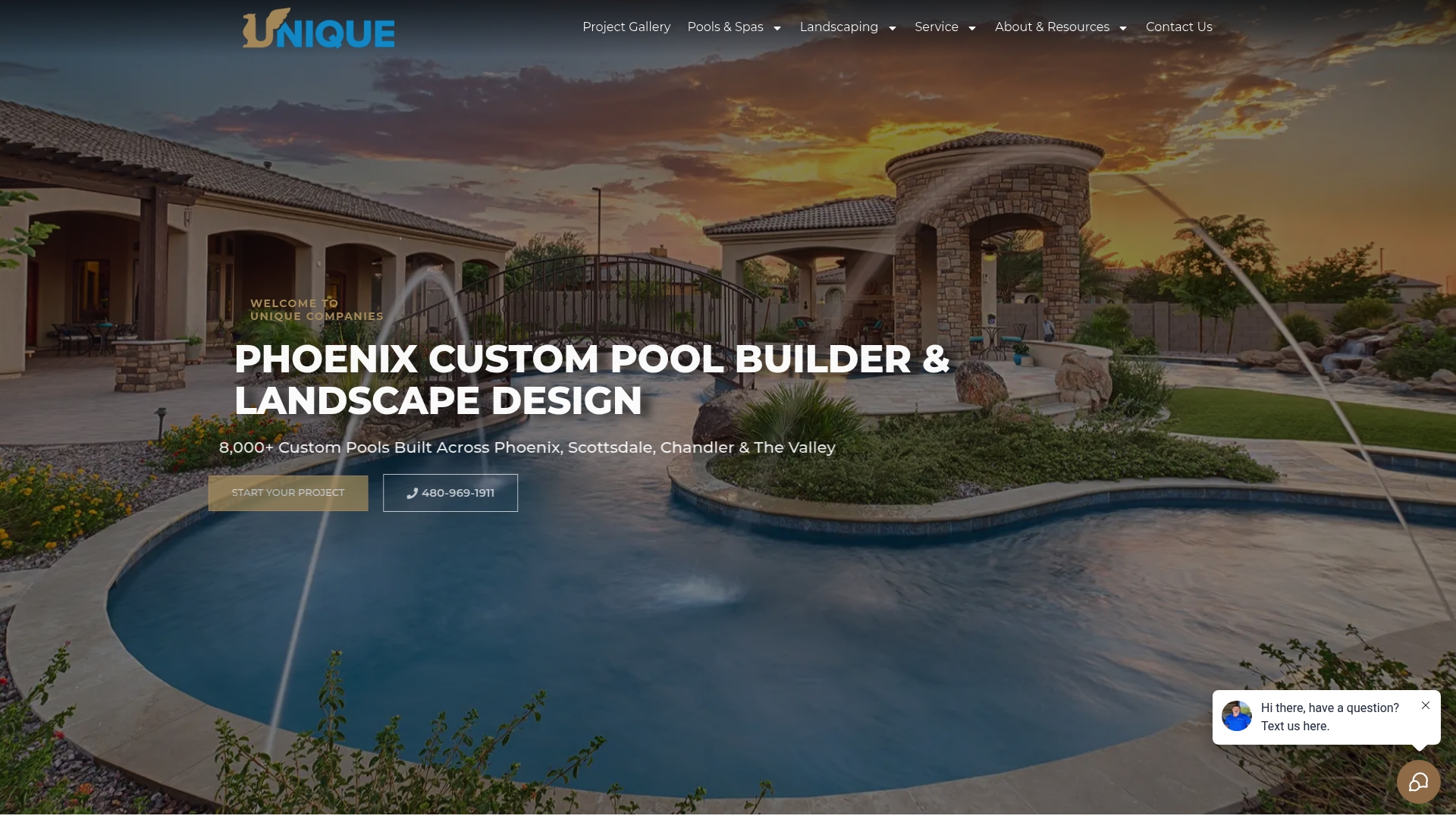
From hardscape design and installation to custom pool features and unique outdoor kitchens, our in-house team manages every step from design through construction. We use 3D visualization tools so you can see your project before a single shovel hits the ground. Whether stamped concrete is the right fit or another material better suits your goals, we’ll help you make a confident, informed decision. Reach out to schedule a consultation and start building the outdoor space you’ve been planning.
Frequently asked questions
How long does stamped concrete last in Phoenix?
With proper sealing and care, stamped concrete patios can last 20-30 years or more in the Phoenix climate. Consistent resealing every two to three years is the most important factor.
Is stamped concrete cheaper than pavers or stone in Arizona?
Yes. Stamped concrete typically runs $12-$25 per square foot installed, compared to $15-$30 per square foot for pavers or natural stone, making it a meaningful cost advantage on larger projects.
What maintenance does stamped concrete need in Phoenix?
Sweep regularly, wash with mild detergent, and reseal every 2-3 years to prevent fading and cracking. Post-monsoon inspections are also recommended to catch early surface issues.
Can stamped concrete crack or fade in Arizona?
Cracking and fading are possible if maintenance is skipped, but most issues can be prevented with proper care. Choosing a quality sealer and reapplying it on schedule is the most effective preventive measure.