TL;DR:
- Proper material selection and design integration maximize durability and aesthetic appeal in Phoenix outdoor spaces.
- Gas fireplaces are preferred for their cleanliness, ease of maintenance, and compliance with HOA rules.
- Luxury outdoor features offer a 60–80% ROI and enhance year-round outdoor living in Phoenix.
For Phoenix homeowners, the backyard is not just an afterthought. It is a primary living space that can rival any interior room in comfort, style, and function. Choosing the right custom fireplace and patio setup means balancing desert durability, HOA requirements, aesthetic goals, and long-term value. Get it right, and you add 60–80% ROI on resale while creating an outdoor environment you will actually use every month of the year. This guide walks you through every decision point, from materials and fireplace types to permits and cost ranges, so you can move forward with confidence.
Table of Contents
- How to choose the right fireplace and patio for your Phoenix backyard
- Top luxury patio materials and features for Phoenix homes
- Custom outdoor fireplaces: Design, types, and integration
- Costs, codes, and installation: What to expect in Phoenix
- Maximizing ROI and year-round enjoyment
- What most guides miss: Custom design is about flow, not just features
- Ready to elevate your Phoenix backyard?
- Frequently asked questions
Key Takeaways
| Point | Details |
|---|---|
| Material matters most | Select premium, desert-tested materials for patios and fireplaces to ensure longevity and style. |
| Integration boosts ROI | Tying fireplaces and patios together with other outdoor features maximizes home value and enjoyment. |
| Permits are essential | Securing city permits and following codes guarantees safety and smooth inspections. |
| Gas is top choice | Gas fireplaces lead in Phoenix for convenience and HOA compliance, but wood has unique charm. |
| Custom design pays off | Investing in tailored design brings the best function, aesthetics, and day-to-day value. |
How to choose the right fireplace and patio for your Phoenix backyard
Now that you know what’s at stake for your home’s value and comfort, let’s start with how to evaluate your options. Every strong outdoor living project begins with a clear set of selection criteria. Skipping this step leads to costly redesigns, permit delays, and features that look great in photos but underperform in real life.
When planning outdoor living spaces in Phoenix, these are the core criteria to evaluate:
- Premium materials: Natural stone, travertine, flagstone, stucco, and concrete pavers are the standard for desert-climate durability. Each handles heat expansion, UV exposure, and monsoon moisture differently.
- Climate durability: Phoenix summers push surface temperatures well above 100°F. Materials must resist cracking, fading, and thermal cycling without requiring constant maintenance.
- HOA and city codes: Many Phoenix-area communities restrict open flame types, chimney heights, and even patio cover designs. Confirm your HOA rules and city zoning before selecting a fireplace type.
- Design integration: A fireplace that doesn’t connect visually and functionally to your patio, pool, or outdoor kitchen will feel like an afterthought. Luxury custom patio features work best when designed as a unified system.
- Return on investment: Not all upgrades deliver equal value. Gas fireplaces, travertine patios, and covered outdoor kitchens consistently rank among the highest-ROI additions in the Phoenix luxury market.
Pro Tip: Before committing to any design, consult a local outdoor living specialist familiar with Phoenix microclimates and HOA regulations. What works in Scottsdale may face restrictions in Chandler or Queen Creek. Reviewing expert fireplace advice specific to Arizona conditions can also help you avoid common design mistakes before breaking ground.
Start by listing your non-negotiables, then layer in your wish-list features. This approach keeps your budget focused and your project on track from day one.
Top luxury patio materials and features for Phoenix homes
With your criteria in mind, explore what makes a patio stand out for both resilience and style in the Arizona sun. Material selection is arguably the most consequential decision you will make for your patio. The wrong choice leads to surfaces that are too hot to walk on barefoot, require frequent sealing, or crack after a single monsoon season.
Here is how the top options compare:
| Material | Heat resistance | Longevity | Maintenance | Relative cost |
|---|---|---|---|---|
| Travertine | Excellent (stays cool) | 25+ years | Low | High |
| Flagstone | Very good | 20+ years | Moderate | High |
| Concrete pavers | Good | 15–20 years | Low to moderate | Moderate |
| Natural stone | Excellent | 30+ years | Low | Very high |
| Stucco finish | Good | 10–15 years | Moderate | Moderate |
Travertine is a standout for poolside use because its porous surface stays noticeably cooler than solid stone or concrete in direct sun. Flagstone offers natural slip resistance, making it a smart choice around water features. Hardscape design options that combine two or more materials often deliver the best balance of function and visual interest.
Beyond the surface material, luxury patios in Phoenix typically include several key add-ons:
- Shade structures: Pergolas, ramadas, and motorized louvered roofs extend usability through the hottest months.
- Outdoor kitchens: Built-in grills, refrigerators, and prep stations turn the patio into a full entertainment hub.
- Pool integration: Seamless transitions between patio decking and pool coping create a resort-style aesthetic.
- Lighting systems: LED path lighting, uplighting, and string lights extend evening use year-round.
For covered patios, ensure your material choice accommodates proper drainage. Flat or low-slope covers can trap water during monsoon season, so slope and drainage planning matter as much as the surface finish itself.
Custom outdoor fireplaces: Design, types, and integration
Once your patio layout is set, adding the right fireplace completes the transformation. Phoenix homeowners have more fireplace options than ever, and each type comes with distinct trade-offs for desert living.
Here are the main outdoor fireplace types to consider:
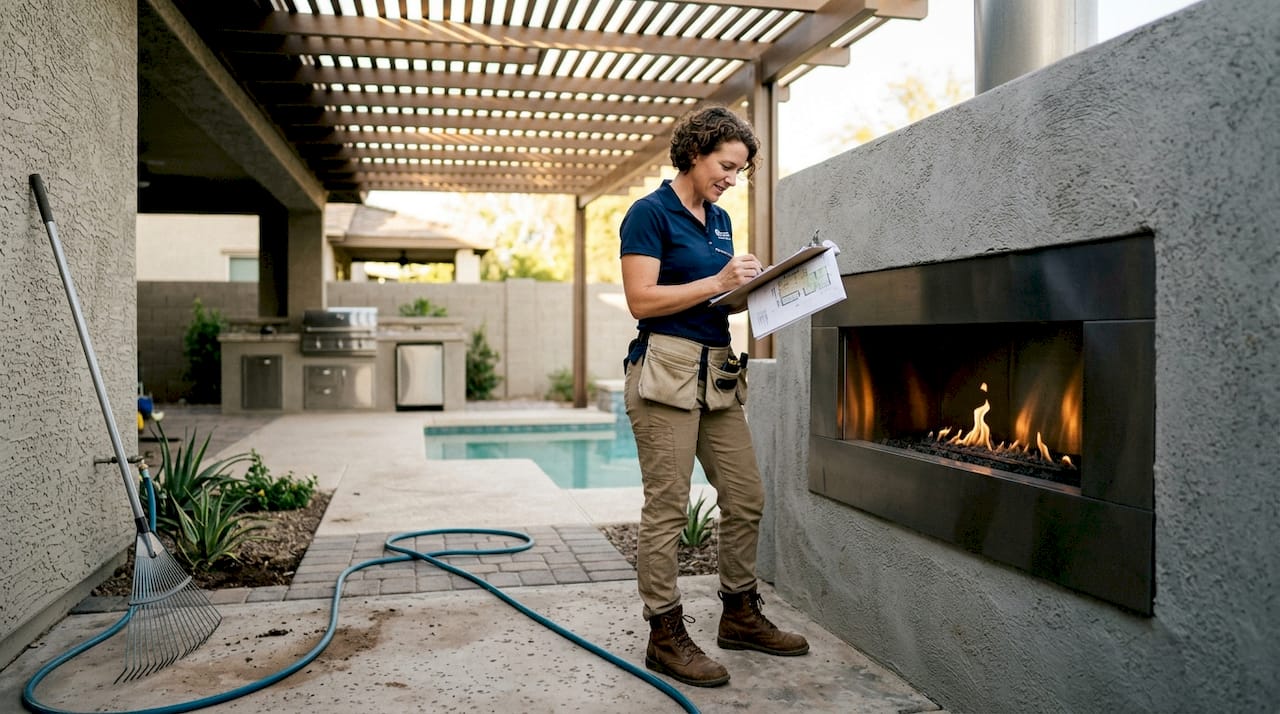
- Gas fireplaces: Clean burning, instant ignition, and HOA-friendly. Gas units are the most popular choice in Phoenix subdivisions where open wood burning is restricted.
- Wood-burning fireplaces: Deliver an authentic crackling fire experience but require more maintenance, produce smoke, and may conflict with HOA or air quality rules.
- Fire pits: Open or enclosed, these work well for casual seating arrangements and cost less than full fireplace structures.
- Custom masonry fireplaces: Built from natural stone or stucco, these become architectural focal points and can be shaped to match any design style.
- Linear gas fire features: Sleek, modern flame presentations that integrate cleanly into contemporary patio designs.
Gas is preferred over wood for most Phoenix homeowners because it offers cleaner operation, instant ignition, and far less maintenance. Wood burning provides an authentic experience but comes with smoke management challenges and stricter local restrictions.
“When selecting a gas fireplace for an Arizona backyard, BTU output should match the intended flame height and viewing distance. A unit sized too small will underwhelm, while an oversized unit in a covered patio creates ventilation risks.” — Ardan Construction, outdoor fireplace design insights
Pro Tip: For covered patios, always specify a vented gas unit and confirm clearance requirements before finalizing your design. Placement near pool equipment or gas meters also requires a minimum separation distance per Phoenix fire code.
For fire feature installation that integrates with pools, kitchens, and hardscape, the placement of your fireplace relative to prevailing wind patterns matters. Position the firebox so that smoke and heat exhaust away from primary seating areas. Explore fireplaces, fire pits, and fire effects to understand the full range of design possibilities before finalizing your layout.
Costs, codes, and installation: What to expect in Phoenix
Having chosen your style, understand the practical aspects that ensure your investment pays off and passes inspection. Cost transparency is one of the most common gaps in outdoor living projects, and surprises at the permit stage can delay a build by weeks.
Here is a realistic cost breakdown for Phoenix luxury projects:
| Feature | Typical cost range |
|---|---|
| Fire pit (gas or wood) | $3,500–$12,000 |
| Custom gas fireplace | $8,000–$45,000+ |
| Travertine patio (per sq ft) | $15–$35 |
| Covered patio structure | $20,000–$60,000+ |
| Outdoor kitchen integration | $15,000–$50,000+ |
Costs range from $3,000 to $60,000+ depending on the type of feature, materials selected, gas line requirements, and integration complexity with patios or kitchens.
Permitting is non-negotiable for gas and structural features. Key requirements include:
- Gas appliances require a city permit and inspection under the 2024 IFGC/IRC codes
- Gas shut-off valves must be located within 6 feet of the appliance
- Structural masonry fireplaces require separate structural permits
- Chimney clearances from combustibles must meet minimum code distances
- HOA approval letters are often required before city permit submission
Timeline expectations for a full luxury build typically run 6–10 weeks, covering design consultation, permitting, site prep, foundation work, masonry, and finishing. Delays most often occur at the permit review stage, so submitting complete documentation upfront saves significant time. Reviewing the Phoenix building permits process before you start helps set realistic expectations.
If you are also planning an outdoor kitchen build, coordinate all permits simultaneously to avoid sequential delays that stretch your timeline unnecessarily.
Statistic callout: Luxury outdoor projects in Phoenix deliver 60–80% ROI on resale, making them one of the stronger home improvement investments available in the current market.
Maximizing ROI and year-round enjoyment
With the numbers clear, tie it all together with what luxury really means for your lifestyle and long-term value. Phoenix’s climate is genuinely unique in the United States. Mild winters, low humidity from October through April, and long spring and fall seasons mean your outdoor space can function as a primary living area for eight to nine months annually. That usability window is far wider than most other U.S. markets.
The key ROI-boosting patio features that consistently perform well in Phoenix include:
- Travertine or natural stone surfaces: Buyers recognize quality materials immediately, and these surfaces hold up visually over decades.
- Gas fireplace or fire pit: Adds a focal point that photographs well and signals luxury to prospective buyers.
- Integrated outdoor kitchen: Increases perceived living square footage and appeals to the strong entertaining culture in Phoenix suburbs.
- Shade and lighting systems: Extend usability into summer evenings and hot afternoon hours, directly increasing the number of days per year the space gets used.
- Pool and spa coordination: When the patio, fireplace, and pool are designed together, the cohesive result commands a premium in resale scenarios.
Beyond resale, the lifestyle value is immediate. A well-designed outdoor space reduces the friction of hosting, relaxing, and spending time outside. You stop treating the backyard as a project and start treating it as a room.
What most guides miss: Custom design is about flow, not just features
Most articles about luxury outdoor living focus on individual features: the best fireplace model, the most durable patio stone, the top kitchen appliance brands. That framing misses the point. The homeowners who end up most satisfied with their outdoor spaces are not the ones who selected the most expensive individual components. They are the ones who designed the entire environment as a connected system.
Flow matters more than features. Can you move naturally from the kitchen to the seating area to the pool without navigating awkward transitions? Does the fireplace anchor the space visually without blocking sightlines? Are the shade structures positioned to cool the areas you actually use?
Prefabricated outdoor features rarely deliver the same experience as a well-integrated custom build because they are designed in isolation. A custom seamless fire feature integration accounts for your specific yard dimensions, wind patterns, and how you actually live outdoors.
Expert design guidance consistently reinforces that gas BTU sizing, covered patio ventilation, and fireplace placement relative to the overall landscape are decisions that require site-specific knowledge. The best investment you can make early in this process is working with a designer who evaluates the whole environment, not just the individual components.
Ready to elevate your Phoenix backyard?
If you are ready to move from planning to building, Unique Companies brings over 24 years of experience designing and constructing luxury outdoor environments across Scottsdale, Chandler, Queen Creek, and the greater Phoenix area.
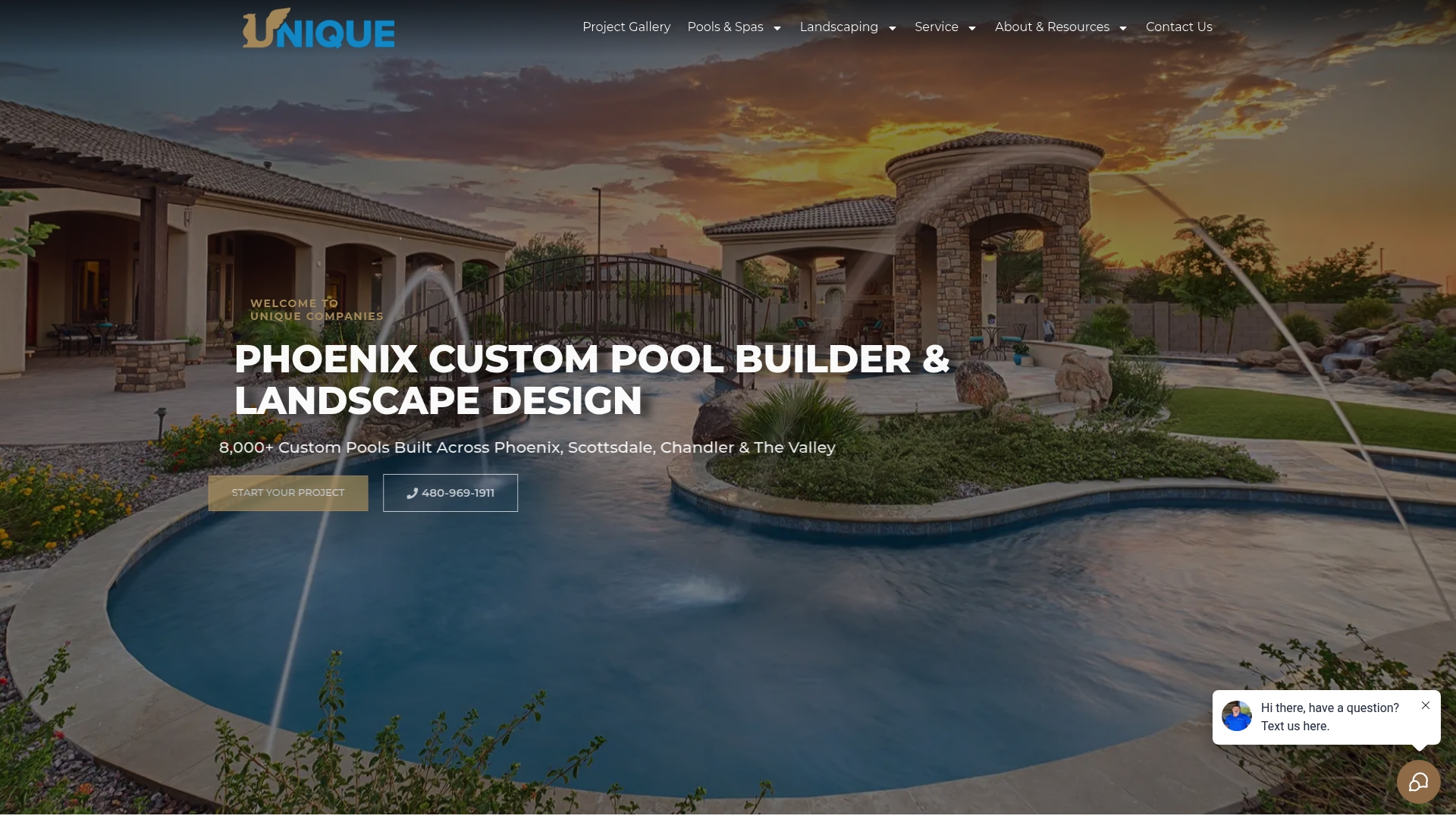
From luxury fire features and custom outdoor kitchens to complete patio and hardscape solutions, every project is handled in-house from design through final inspection. Our team manages permitting, 3D design previews, and construction coordination so you get a stress-free build and a finished space that performs exactly as planned. Schedule a design consultation to see what your backyard can become.
Frequently asked questions
What is the average cost of a custom fireplace and patio in Phoenix?
Luxury fireplaces range from $8,000 to $45,000+ depending on type and materials, while patio additions typically start at $15,000 and scale with size, surface material, and integrated features.
How long does it take to build a new fireplace and patio in Phoenix?
Most luxury projects run 6–10 weeks from start to finish, covering design, permitting, site preparation, masonry, and final finishing work.
Do I need a permit for a gas fireplace in my backyard?
Yes. Gas appliances and structural masonry features require city permits and must comply with 2024 IFGC/IRC safety codes, including gas shut-off placement and chimney clearance requirements.
Is it better to choose gas or wood for fireplaces in Phoenix?
Gas outperforms wood for most Phoenix homeowners because it is cleaner, HOA-friendly, and requires minimal upkeep, though wood burning suits those who prioritize an authentic fire experience.
What ROI can I expect from a luxury fireplace and patio addition?
Phoenix luxury outdoor projects typically return 60%–80% of costs on resale, plus deliver immediate lifestyle value through expanded year-round outdoor living.