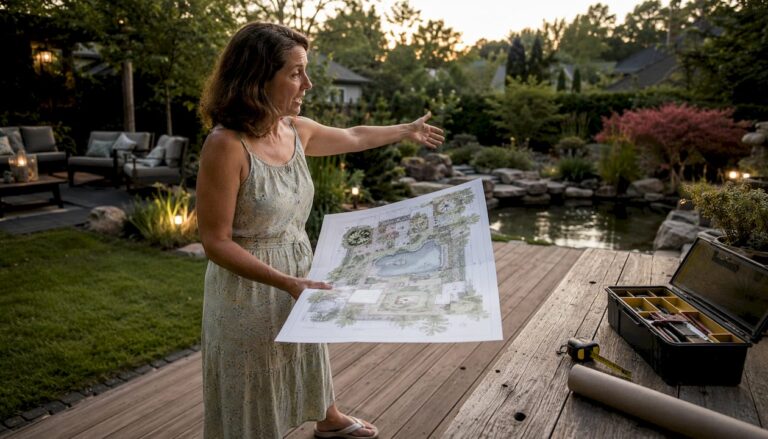
San Tan Valley is unique within the greater Phoenix area. While master-planned communities continue to expand, many properties — especially those on larger or semi-rural parcels — rely on septic systems rather than municipal sewer connections. That reality changes how backyard construction must be approached.
Homeowners often begin planning a pool assuming layout flexibility across the entire yard. On a septic-served property, that assumption can lead to redesigns, delays, or costly adjustments. Septic tanks, leach fields, required reserve areas, and access considerations all influence where a pool can and cannot be built.
If you’re evaluating backyard construction in this area, start with the broader planning context on our San Tan Valley pool builder page, then understand how septic infrastructure directly affects pool placement, drainage strategy, and long-term performance.
Understanding What a Septic System Actually Includes
Many homeowners think of a septic system as simply “a tank in the yard.” In reality, a typical system includes multiple components that extend well beyond a single buried structure.
On many San Tan Valley properties, a septic layout may include:
The primary septic tank
Distribution lines
A leach field (also called a drain field)
A designated reserve area for future system replacement
Access lids that must remain serviceable
The leach field is particularly important. It is a network of perforated pipes buried in soil that allows treated wastewater to disperse gradually. That soil must remain uncompacted and unobstructed to function properly.
When planning a pool, it is not enough to know where the tank sits. The full septic footprint must be identified before layout decisions are finalized.
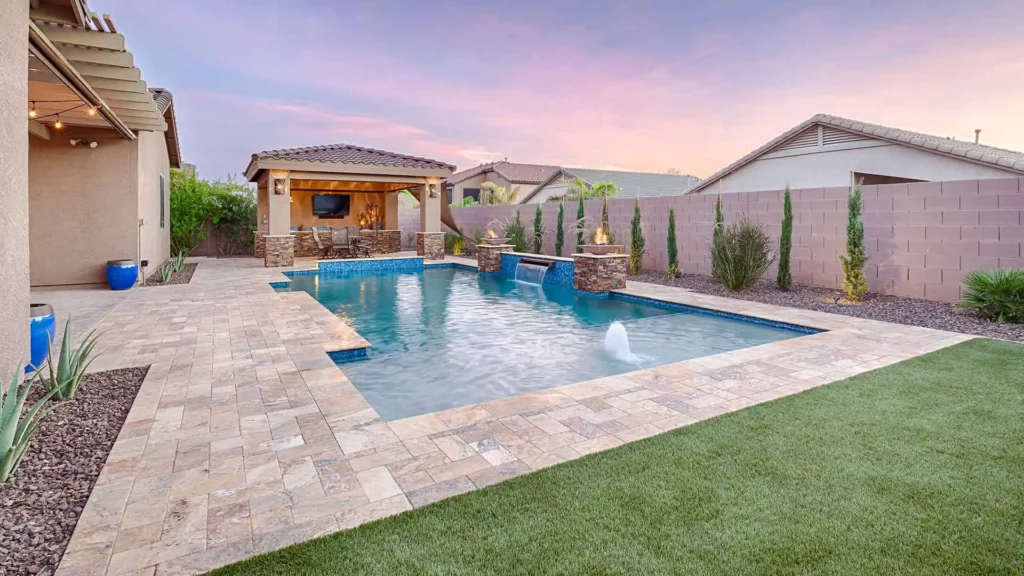
Why You Cannot Build Over a Leach Field
One of the most common misconceptions in San Tan Valley pool planning is that a leach field can simply be “worked around later.” Structurally and functionally, that approach creates serious problems.
A leach field depends on:
Uncompacted soil
Proper oxygen exchange
Unrestricted absorption capacity
Accessibility for future repair
Placing a pool, deck, retaining wall, or even heavy hardscape over a leach field can:
Compress soil and reduce absorption
Interfere with system performance
Block access for repair or replacement
Create long-term liability
Even if the system functions initially, obstruction can shorten its lifespan.
That’s why confirming septic layout early — before pool shape is locked in — is critical. Designing first and discovering septic conflicts later often forces significant redesign.
Separation Distances and Local Requirements
Septic systems are governed by county-level regulations, and San Tan Valley falls within Pinal County jurisdiction. While specific setback distances must always be verified with current county guidelines, there are typically required separation distances between:
Septic tanks and swimming pools
Leach fields and structural elements
Property lines and reserve areas
These offsets exist to protect both structural integrity and system functionality.
Rather than guessing or relying on outdated information, proper planning involves:
Confirming recorded septic layout (if available)
Identifying tank and field locations accurately
Reviewing county requirements before final design approval
This prevents late-stage surprises during permitting.
How Septic Placement Directly Impacts Pool Layout
Once septic boundaries are confirmed, the backyard “usable envelope” may change significantly. On some San Tan Valley properties, septic placement consumes a large central portion of the yard. On others, it may run along one side or rear quadrant.
Septic positioning can influence:
Pool orientation
Maximum pool dimensions
Deck allocation
Equipment pad placement
Utility routing
For example, if the leach field occupies the center rear yard, the pool may need to shift laterally. That shift may affect patio symmetry, traffic flow, and shade planning.
If the tank lid sits in a commonly used area, deck layout must allow ongoing access without requiring demolition years later.
In many cases, thoughtful master planning allows for both a properly placed pool and protected septic functionality. But that only happens when septic mapping occurs early in the design process.
For homeowners pursuing fully custom backyard environments, this is where understanding the broader custom pool design and construction process becomes critical. Septic coordination is not an afterthought — it’s an early design constraint.
Drainage Planning Around Septic Zones
Drainage becomes especially important on septic-served properties. Excess surface water directed into a leach field can overwhelm soil absorption capacity. Conversely, redirecting irrigation improperly can create unintended saturation zones.
When integrating pool construction with septic infrastructure, drainage planning should address:
Deck slope direction
Area drain placement
Irrigation layout coordination
Downspout discharge routing
Avoiding concentration of water over leach lines
The goal is to protect both the pool structure and the septic system’s long-term functionality.
Drainage strategy should never compromise the leach field’s ability to operate properly.
Equipment Placement and Service Access
Septic systems require periodic maintenance and pump-out access. Equipment lids must remain reachable by service providers, often with vehicle access considerations.
When designing around septic systems, it’s important to avoid:
Blocking access with permanent structures
Installing heavy features over service lids
Placing equipment pads where future excavation would be required
Strategic layout planning ensures:
Clear, unobstructed lid access
Reasonable truck proximity
Logical separation between pool equipment and septic infrastructure
Protecting future serviceability prevents unnecessary disruption years after installation.
Planning Large San Tan Valley Lots With Septic in Mind
Many San Tan Valley properties sit on larger parcels than typical suburban lots. While extra space can offer flexibility, septic placement often defines how that space can be used.
On larger parcels, homeowners should consider:
Future casita additions
RV gate access routes
Outdoor kitchen placement
Reserve septic areas required by county
Master planning the entire yard — even if construction occurs in phases — prevents conflicts between current and future improvements.
The key is to treat septic infrastructure as a permanent structural boundary, not a temporary inconvenience.
Long-Term Value and Structural Responsibility
A properly designed pool on a septic-served property can perform just as reliably as one on municipal sewer. The difference lies in respecting the infrastructure already in place.
Thoughtful coordination protects:
Structural integrity
Septic system longevity
Property resale value
Long-term usability
When backyard construction in San Tan Valley acknowledges septic realities from the beginning, the result is a cohesive, durable environment rather than a compromised one.
Yes, but septic layout must be confirmed before finalizing pool placement. The pool cannot interfere with the tank, leach field, or required reserve area. Early coordination ensures structural integrity and system functionality are preserved.
Property records, as-built diagrams, or septic inspection reports may show tank and field placement. If documentation is unavailable, professional location services can identify components. Accurate mapping should occur before design approval.
Cost impact depends on layout constraints. If septic placement limits pool positioning significantly, design adjustments may be required. Early identification minimizes redesign expenses.